
Review: WASO’s Winter Daydreams at Winthrop Hall
WASO’s Winter Daydreams at Winthrop Hall
Saturday, May 25, 2025
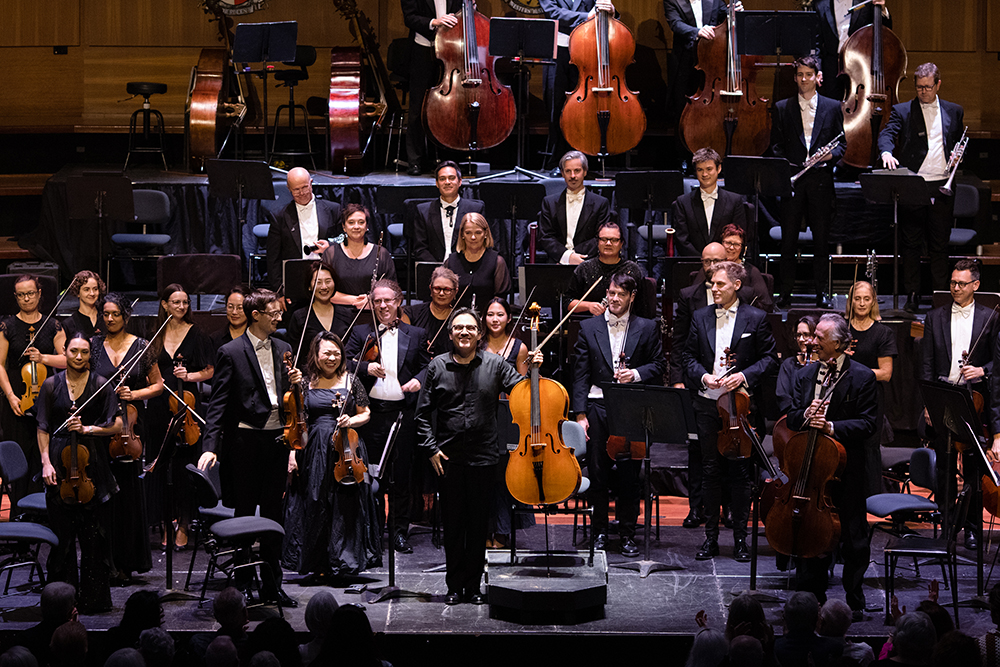
A great orchestra in full flight becomes invisible. Not literally, how could you possibly not notice that number of people swarming a stage, but metaphorically: the players disappear into the music. It’s uncanny, a kind of vanishing act. No matter how big the orchestra—and the WASO ensemble last weekend was very big, eighty-one players—as a unit they become a series of selfless cyphers. Sure, there are some egos involved but these tend to be concentrated into the figures of the conductor and, if there is one, the soloist. The only time you become acutely aware of an individual player is if they make a mistake. As WASO’s players rarely make mistakes (this reviewer has never noticed one), this doesn’t apply.
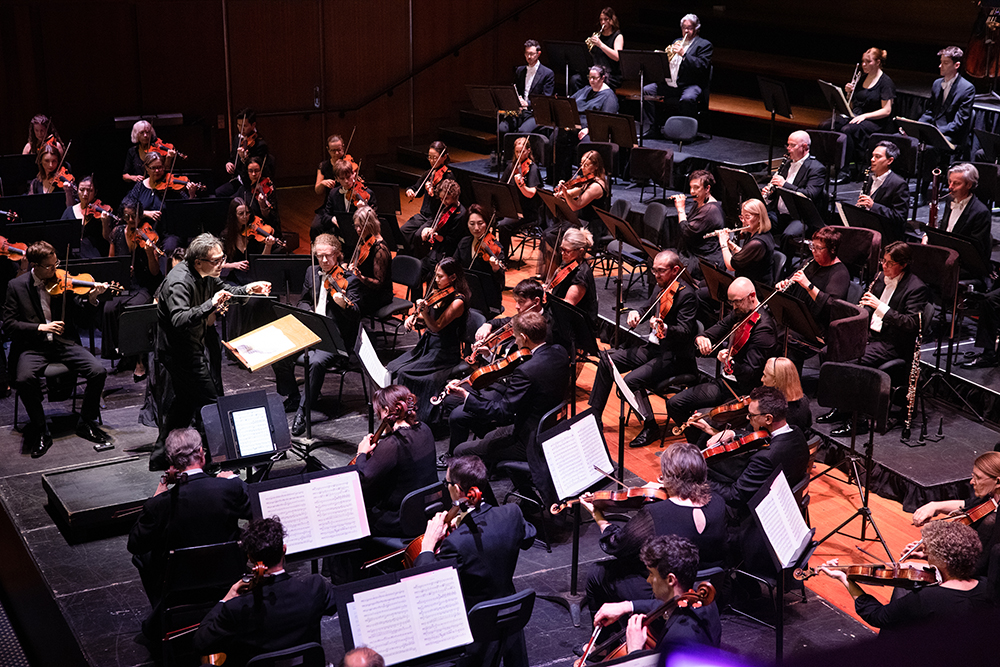
In marked contrast to the previous week’s concert, there were twenty-eight violins in Winter Daydreams, more than the entire ensemble for the charming Baroque Brilliance. You’d think with this number of players that the show would be very loud but it wasn’t. Instead, in keeping with the theme, the power lay in the depth and resonance.
The daydreams in question were mainly romantic. With the exception of the encore at the end of Act I (anon), the music came from the high romantic era of the mid 19th century: Hector Berlioz’ Roman Carnival (1844); Camille Saint-Saëns’ Cello Concerto #1 in A minor (1872); and Peter Tchaikovsky’s Symphony #1 in G minor (1868), the eponymous Winter Daydreams.
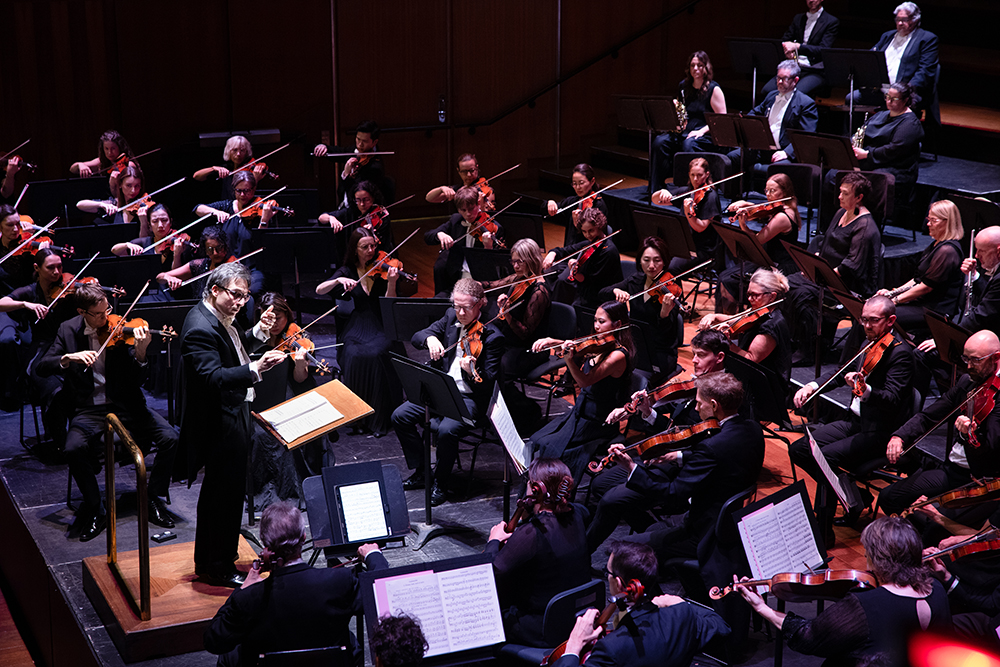
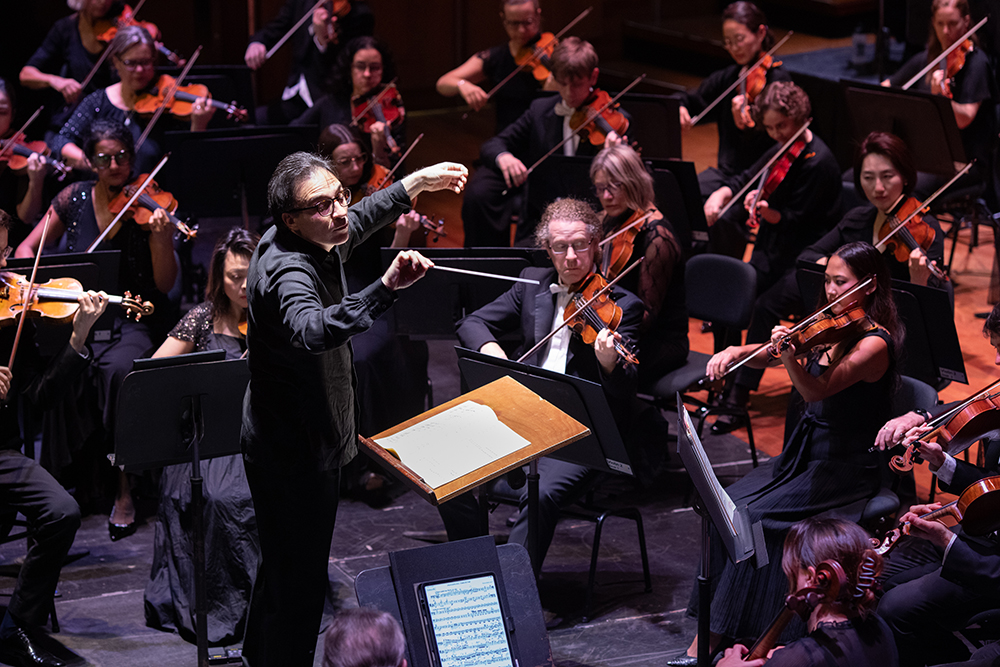
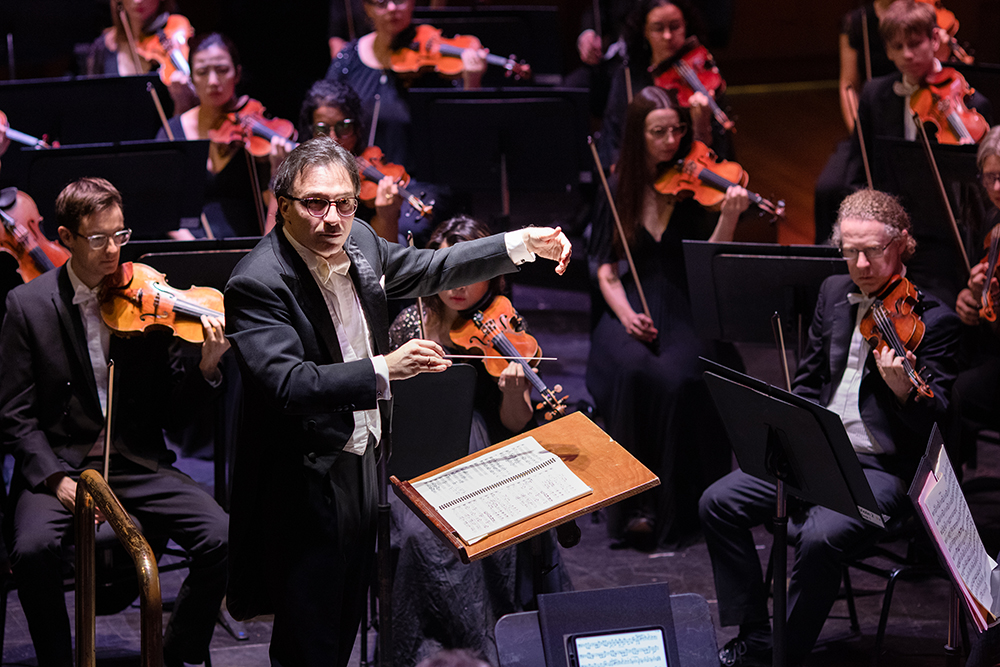
On arrival, Winthrop Hall was a cacophony of the gathering audience and warming-up orchestra. Laughter and chatter intertwined with bass arpeggios, twittering horns and a rattling timpani. Soon the lights dimmed and the orchestra stood as guest conductor, Umberto Clerici, jauntily made his way onto the stage and mounted the podium.
Berlioz’s Roman Carnival began life as an opera, Benvenuto Cellini. After it bombed at its 1838 French premiere, Berlioz plundered the work and melded its most memorable melodies into this concert overture. Smart move, the reconditioned work was an instant hit.
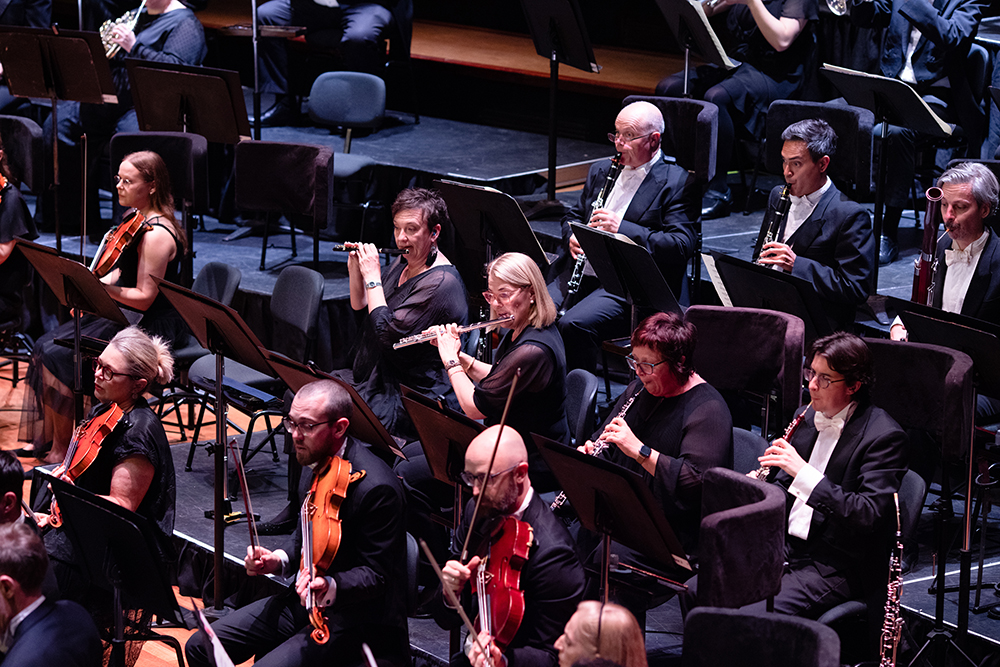
Grand and elegant, the piece begins with a lively Italian dance (a saltarello) that quickly morphs into a cor-anglais swoon underpinned by the rich swirling strings. From there, this nine minute, essentially happy piece builds through that rattling timpani, subtle strings, restrained flutes, sublime woodwinds and brass to explode in a furious climax. The audience were thrown into a romantic rapture, the perfect frame of mind for what was to follow.
Whereas the male members of an orchestra are required to dress uniformly (in this case white tie and tails), the conductor and soloist are allowed to show some individual flair. As Clerici was both conductor and soloist, he was sanctioned to cut completely loose. Chez casual, his unjacketed, black, open-necked shirt made him a unique figure stage front and centre.
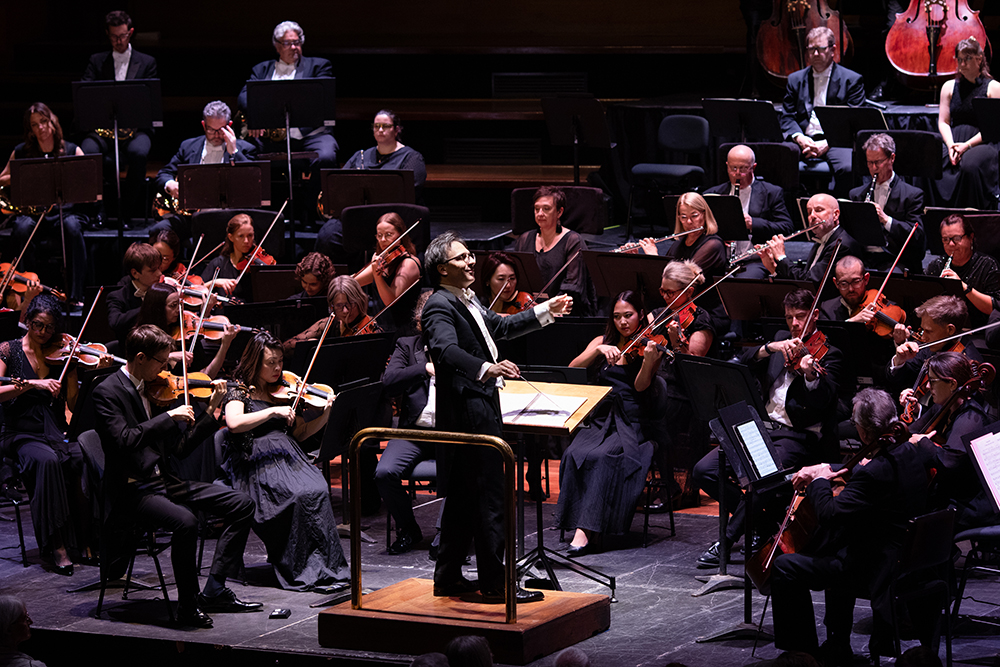
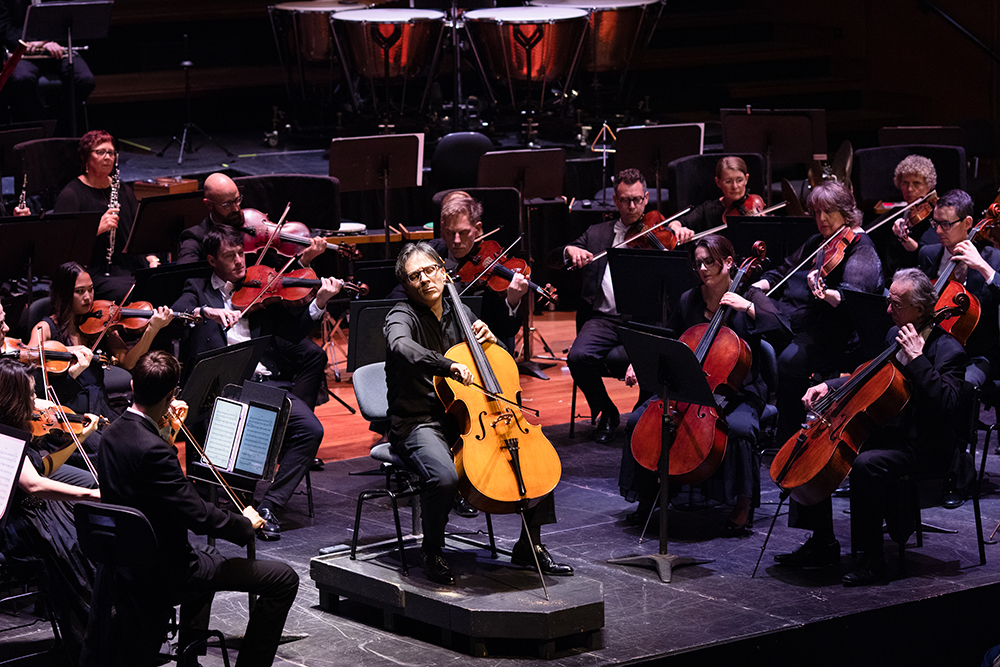
This is the second time this year the soloist has doubled as guest conductor (see Satu Vänskä’s Mozart). No mean feat at the best of times but when Clerici took his seat on the riser and aimed his cello squarely at the audience, his back to the band, one wondered how the heck he was going to do it. But then, not exclusively a baton person—he threw his whole body into the Berlioz—it soon became apparent he had an arsenal of gestures and tricks literally in his head.
At times he would glance right at concertmaster, Riley Skevington, at others left to Principal Viola, Daniel Schmitt, engage their eye and by a look trigger the next passage. In the bits where he wasn’t playing he would flourish his bow in the air to clock the rhythm and pace. When playing, he would sometimes flick his head backwards toward the strings or basses. It was very clever. With the insouciance of a lead singer in a rock band, at times it seemed more like he was conducting the audience than the orchestra. Overall, though, it was an object lesson in how to lead without apparently leading.
And the Saint-Saëns cello concerto was a wonderful piece on which to do this. High romantic, the three movements—Allegro non troppo (fast but not too fast), Allegretto con moto (slightly slower and sweeter), Allegro non troppo—meld together into one continuous sweep, each with a distinctly textured cello solo. In the first movement it was delicate and sensitive, the second beguiling, the final darker and a tad turgid.
As Saint-Saëns’ biographer, James Harding observed (as quoted in G.K. Williams’ program note), the first cello concerto ‘gives the instrument an excellent opportunity to display its resources without straining after needless virtuosity.’ Even so, when melded with his directing, Clerici’s virtuosity was subtly on display, as evidenced by the two ‘curtain calls’ his performance received.
Acceding to the applause, he played a truly virtuoso encore: contemporary Sicilian composer, Giovanni Sollima’s Alone (1999). In this short, vibrant piece, Clerici pulled a Jimi Hendrix and played three distinct parts at once as that legendary guitarist was known to do. While his thumb swirled a line on the bass string, he bowed a melody on the middle ones and used his little finger to flick a two note ostinato on the top. Extraordinary to watch him do it, you kept glancing at the celli section to see if someone was helping him out.
The second act was given over to Tchaikovsky’s first symphony. Forsaking his privilege, Clerici returned to the stage in white tie and tails, just another male member of the orchestra.
Tchaikovski composed his first symphony when he was twenty-seven. A youthful work, or as he later described it ‘a sin of my sweet youth’, it held a special place in his heart and he twice revised it—in 1874 and 1883.
A powerful work, displaying the composer’s great confidence with orchestration, it was one of the first Russian symphonies to become popular with a general audience. As such it opened the door for the many great Russian composers that were to follow.
Over four movements, many of the ideas that are now identified with Tchaikovsky’s mature work—the great ballets Swan Lake and Nutcracker Suite, the legendary 1812 Overture—are already in place : his unique blending of flutes, woodwinds and horns that we associate with The Sugar Plumb Fairy, his sublime strings and swelling cadenzas.
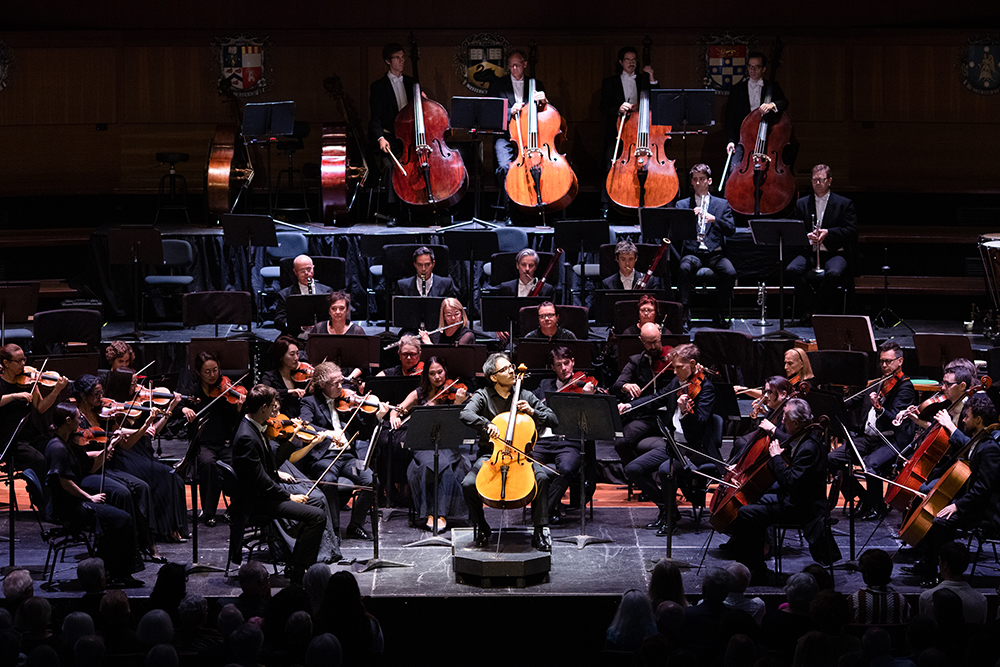
It was also in the execution of this final piece that the full, subtle force of those twenty eight violins came to the fore. The power of their working gently in unison gave the work great depth.
What is not displayed in this work, though, is Tchaikovsky’s flair for extraordinary melodies, those complex catchy airs that always delight the ear. It was some years yet before these would appear in his compositions. In part, this is because, when composing his first symphony, Tchaikovsky was consciously traversing the terrain the earlier Romantic composer, Felix Mendelssohn, had so thoroughly delineated.
At other times the composer’s youthfulness pokes out. Although the finale is rousing, almost spine tingling, there is too strong a sense that this was included because it is how all symphonies must end. Speed it up to come crashing down. It was too obvious, a cliché. If only there were some of the self-deprecating humour you find in Beethoven’s finales, or a last great melody to hum as your walked out into the night.
But even so, the audience last Saturday night loved it. And rightly so. There were three curtain calls and everyone left Winthrop Hall with a smile, if not on their face, at least in their mind’s eye.
IAN LILBURNE
Photos by Daniel James Grant