WASO’s Side by Side Symphony at Winthrop Hall
WASO’s Side by Side Symphony at Winthrop Hall
Monday, June 28, 2025
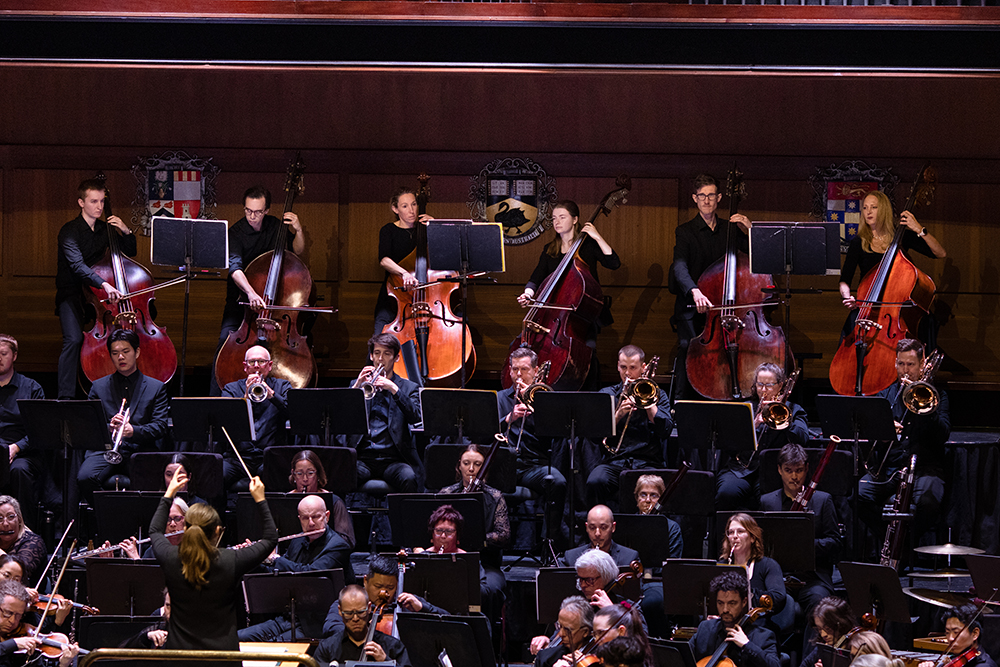
The last week in June was possibly the busiest so far this year for the WA Symphony. Over the span of five days, the orchestra delivered three separate programs. All were oblique to the typical main house presentation; two were but an hour long, and only a dozen musicians from the permanent ensemble of seventy-two players appeared more than once (and never more than twice), yet it was still an impressive showing.
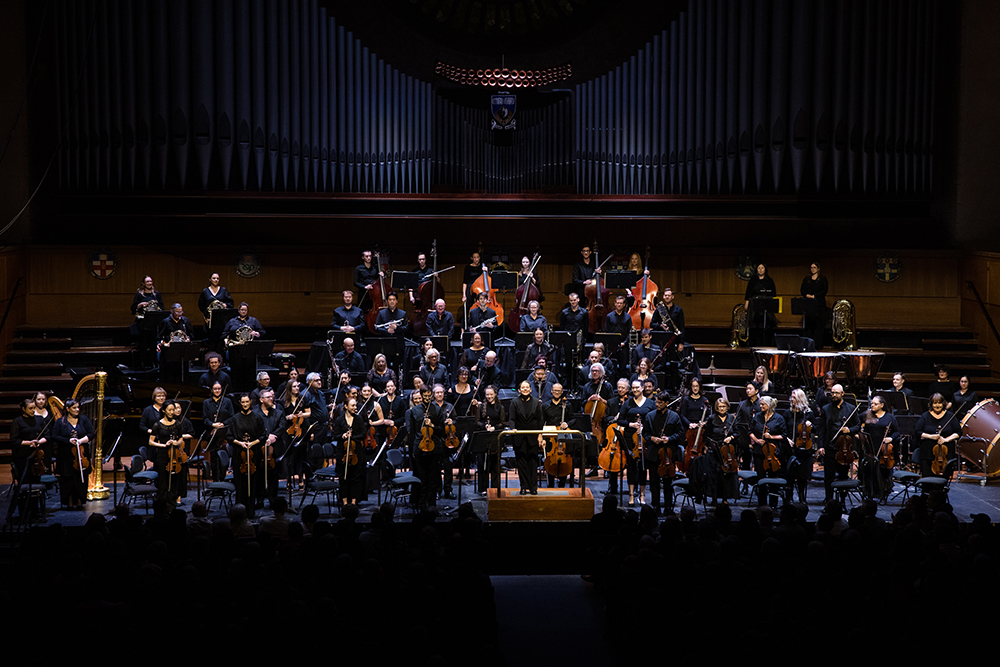
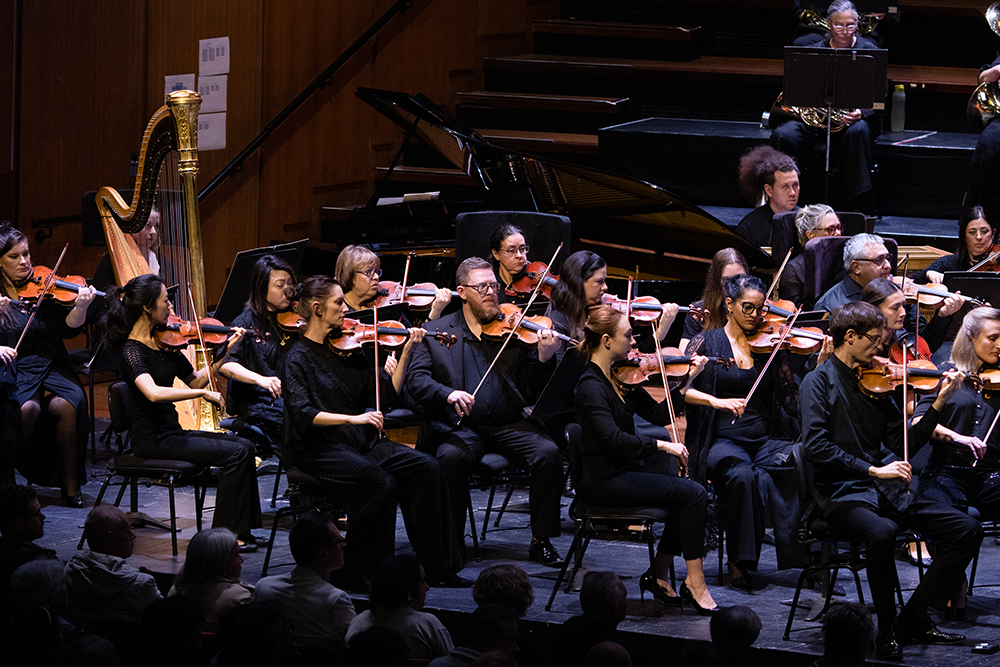
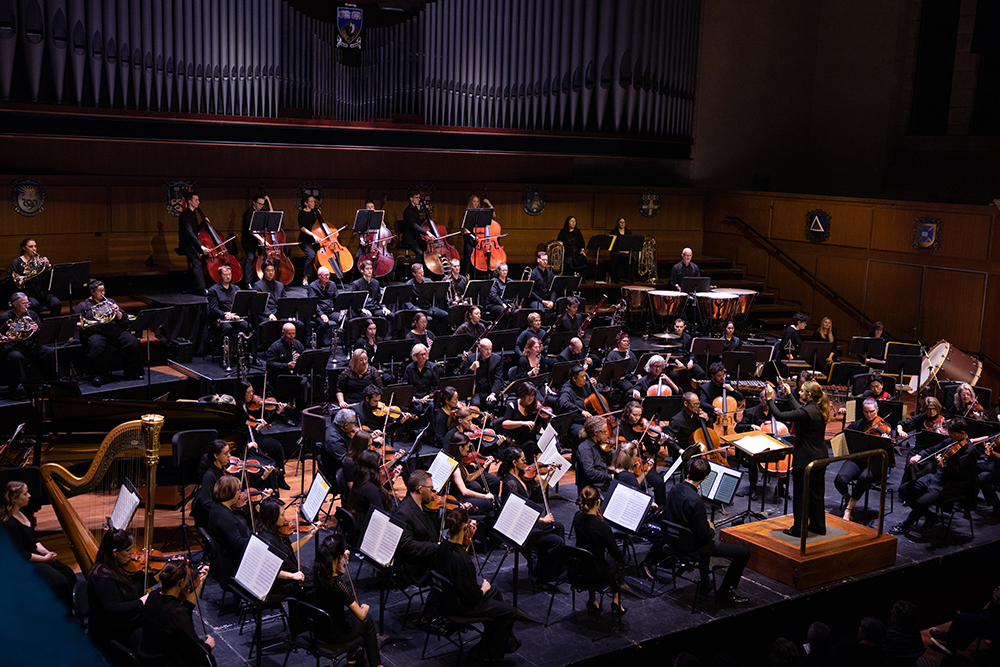
The final concert in the series, Side by Side Symphony, was the most typical in terms of music—great orchestral works from the 19th and 20th centuries—but the most unusual in terms of the on-stage ensemble. Thirty-four WASO players joined forces with forty-three community musicians to create a truly big band. The guest musicians comprised committed players from Perth’s community orchestra scene as well as teachers and recent graduates. Some had travelled from across the state to participate.
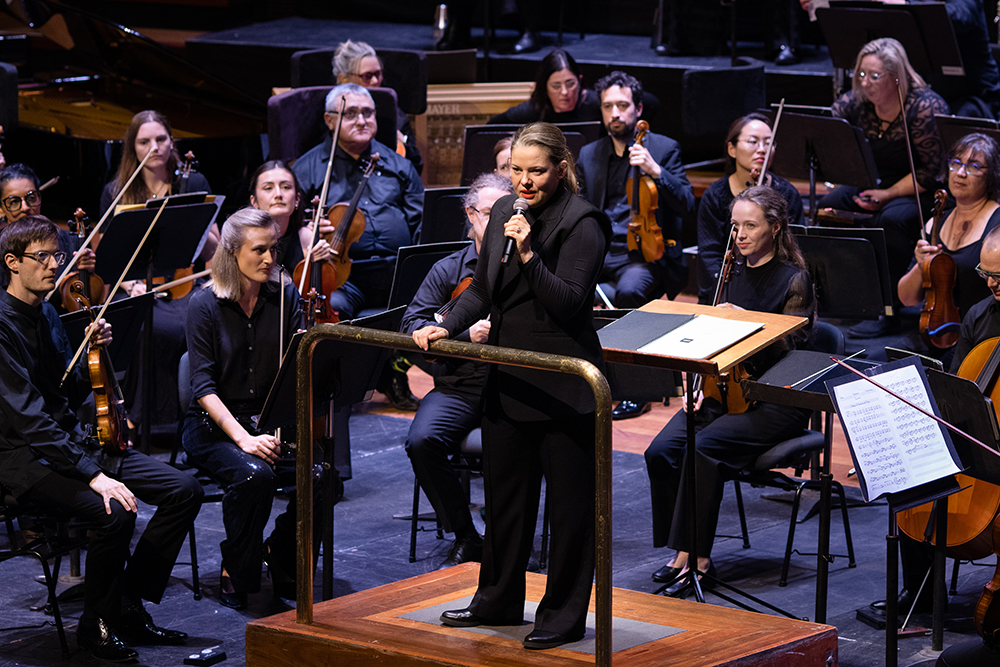
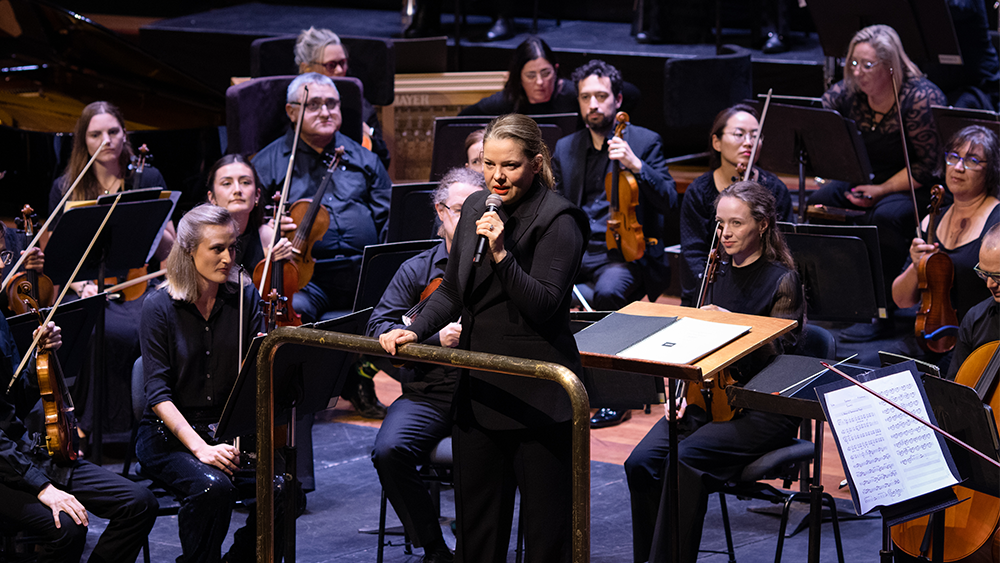
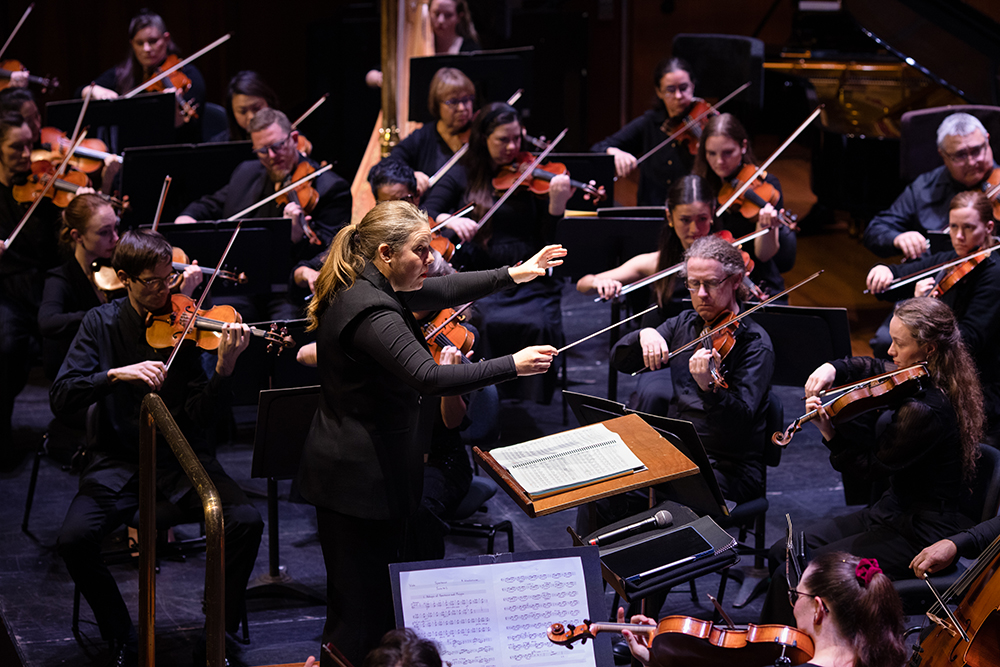
WASO’s Associate Conductor, Jen Winley, who directed the project, described it as “about connection, community and collaboration; reigniting the joy of creating music together to share with loved ones and pushing ourselves to exceed our own expectations in a supportive environment.”
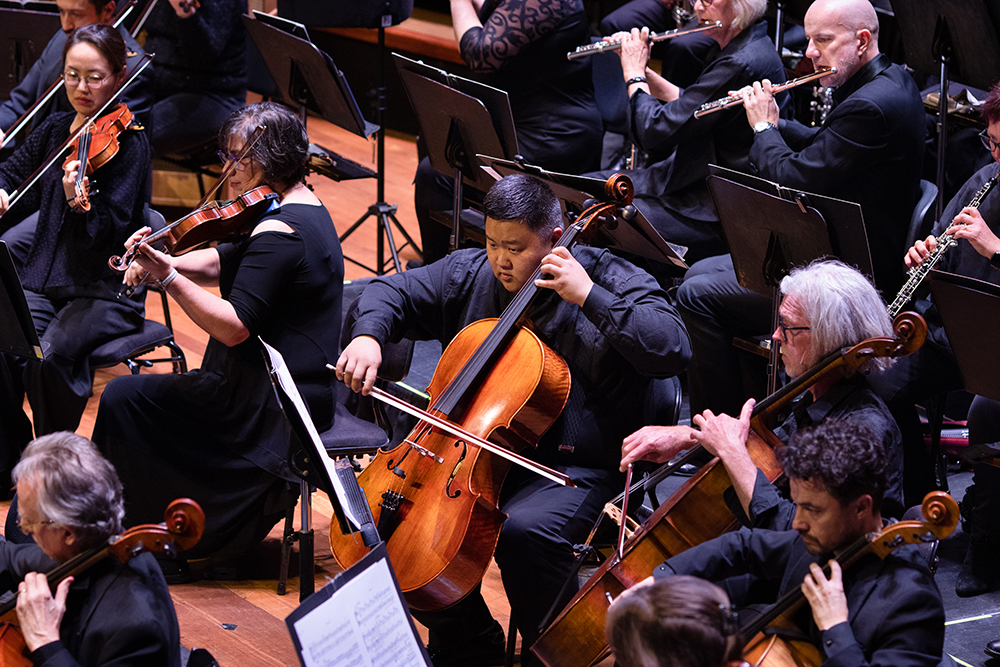
The result was an incredibly joyous concert. The players on stage were clearly having a great time. The community artists relished the experience of working with their professional peers, while the permanent members of the orchestra were fired by their guests’ enthusiasm. It is amazing to think that this faultless performance came together after just a day and a half of rehearsals—all day Friday and Saturday morning. The music was vibrant and lively, as though the ensemble had been playing together for decades, not days.
The selection of work enhanced the upbeat nature of the show.
The concert opened with symbolist composer Lili Boulanger’s spritely and reflective D’un matin de printemps (Of a spring morning) from 1918.
A contemporary of Debussy, Boulanger’s life was cut tragically short by tuberculosis—she died at age twenty-four. Her work was characteristically melancholic, reflecting both her ill health and the early 20th century penchant for solitude and alienation. In contrast Of a spring morning, the last work she composed before her death, was light-hearted and ‘written to charm.’ A bank of pizzicato double basses to a section of spiccato violas made this short piece literally bounce along and revealed an upbeat sense of humour.
This was followed by Soviet composer Aram Khachaturian’s famous Adagio of Spartacus and Phrygia from his ballet Spartacus (1954).
Spartacus and Phrygia pervaded popular culture in the 1970s after the BBC chose it as the title score for the series The Onedin Line. For many, its lush, swelling theme will always conjure a billowing sailing ship tacking through a brisk wind, not the love story of two slaves and an interlude of gladiatorial combat.
Khachaturian, along with his contemporaries Shostakovich and Prokofiev, was briefly denounced by the Stalinist regime for being ‘formalist’ and ‘anti-people.’ One wonders whether the sense of freedom and openness captured in this piece also reflected the feeling of liberation the Russian people experienced in the immediate aftermath of Stalin’s death? A moment of joy and release, a true swoon.
The third piece ventured back to 19th-century Bohemia (modern-day Czech Republic). Vlatava (the Moldau—after the river) comes from the Má vlast (My Fatherland) suite (1874) by Bedřich Smetana.
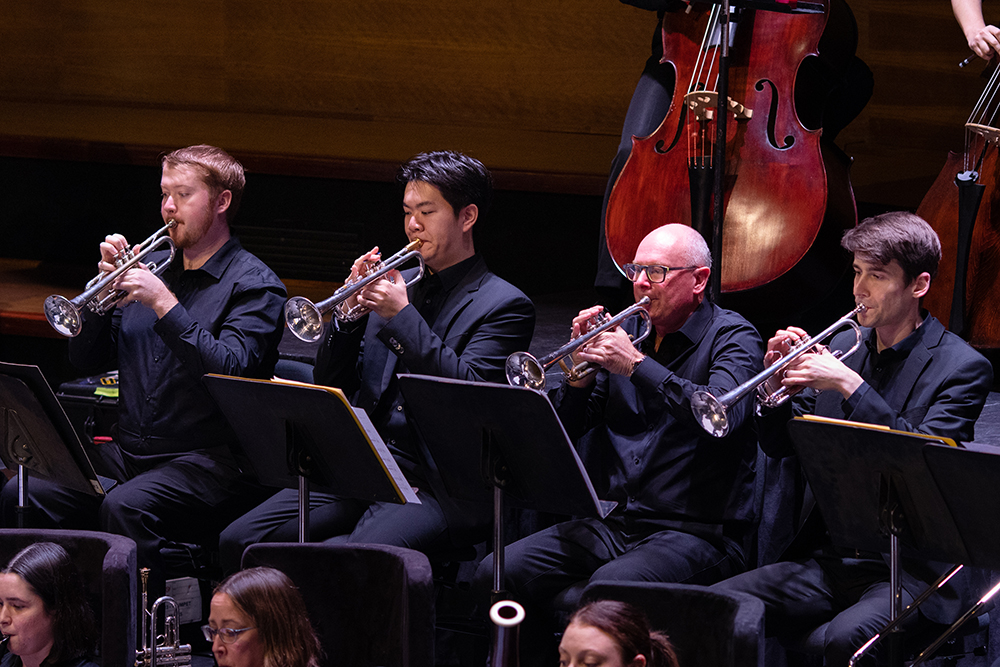
This longer, cinematic piece, another lush swoon, is built around a beautiful Bohemian folk song carried on the strings. Embellished by delicate woodwind passages and stirring brass melodies, the theme ducks and weaves, is broken by a climactic thunderstorm (big orchestras are so good at depicting them), and then returns in varied form before resolving in a slow, drawn-out finale. You could just imagine the river flowing through a rich, rural landscape.
This symphonic poem is arguably Smetana’s most famous work. A fierce nationalist, in his homeland he has come to be regarded as the father of Czech music. The Má vlast suite overall, though Vlatava in particular, combines the influence of Franz Liszt with Smetana’s strong nationalist sentiments and love for the landscape of his birth.
The final work in the program was the orchestral suite from the movie Back to the Future (1985) by contemporary American composer Alan Silvestri. Emotional and populist, bright, upbeat and swelling, Silvestri pulled all the orchestral tricks to create this exuberant work. Designed to hit you in the chest, it did—the emotion spilt over and out into the audience.
All up, the music in this concert wasn’t as challenging as WASO’s more serious and dark orchestral programs can be, but it was powerful, deeply moving, complex and readily accessible.
With tickets at a flat $10, a 6pm start, and lasting just an hour, Side by Side Symphony was squarely aimed at a family audience. More than half the people in the hall, many of them children, were there to see someone they knew play. Great community fare, it was the ideal concert to introduce young kids to the wonders of serious orchestral music and an indication of the orchestra’s commitment to and support of the broad cohort of serious West Australian musicians. Its successful delivery is another feather in WASO’s cap.
IAN LILBURNE
Photos by Daniel Grant