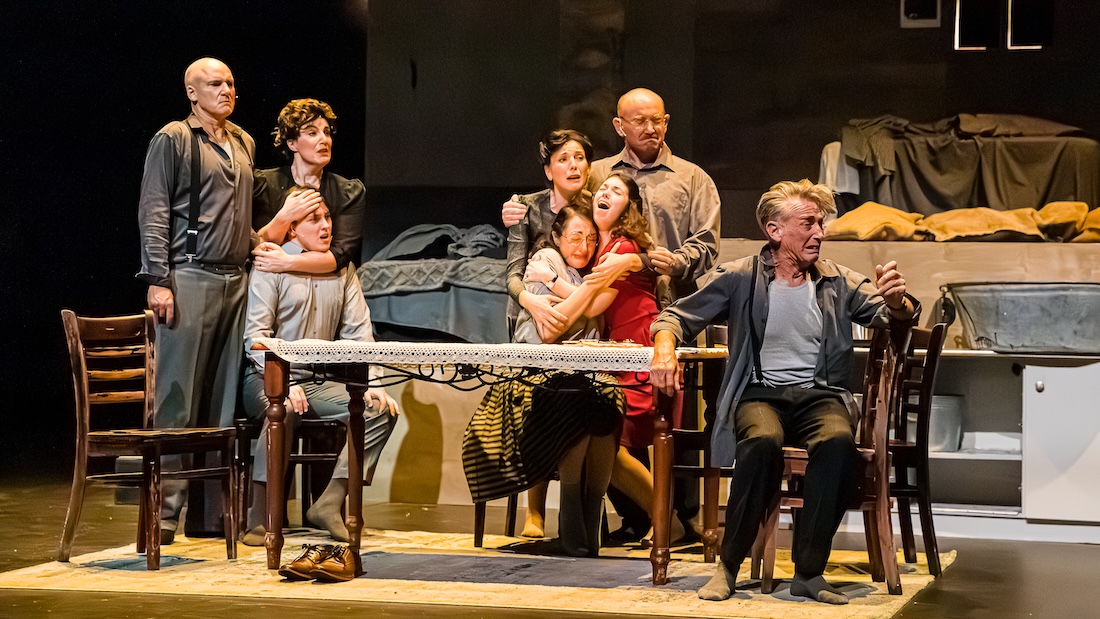
Review: The Diary of Anne Frank at State Theatre Centre of WA
The Diary of Anne Frank at State Theatre Centre of Western Australia
Friday, July 17, 2026
After its debut season in Perth fifteen months ago and a subsequent tour to the east coast last year, Drew Anthony Creative’s retelling of The Diary of Anne Frank returned to the Heath Ledger Theatre for 2026. Based on Frances Goodrich and Albert Hackett’s Pulitzer Prize-winning stage adaptation of Frank’s real diary, this was an important tale of hope through adversity and life through persecution.
The Franks were a Jewish family who left Frankfurt for Amsterdam shortly after the Nazis took power in their homeland in 1933. Overtaken by events in May 1940 when The Netherlands was invaded and swiftly taken under German occupation, the family endured the same erasure from public life as millions of others across the continent, considered undesirable by the fascist regime.
The timeline this evening started in July 1942, with Dutch Jews under heightened threat of deportation to the concentration camps, as the Franks—father Otto, mother Edith, and daughters Anna and Margot—took refuge in an annexe of the factory that Otto had run before the war. Their location was a closely guarded secret held by an extremely small coterie of trusted factory employees, in as much danger themselves if caught as those they were protecting.
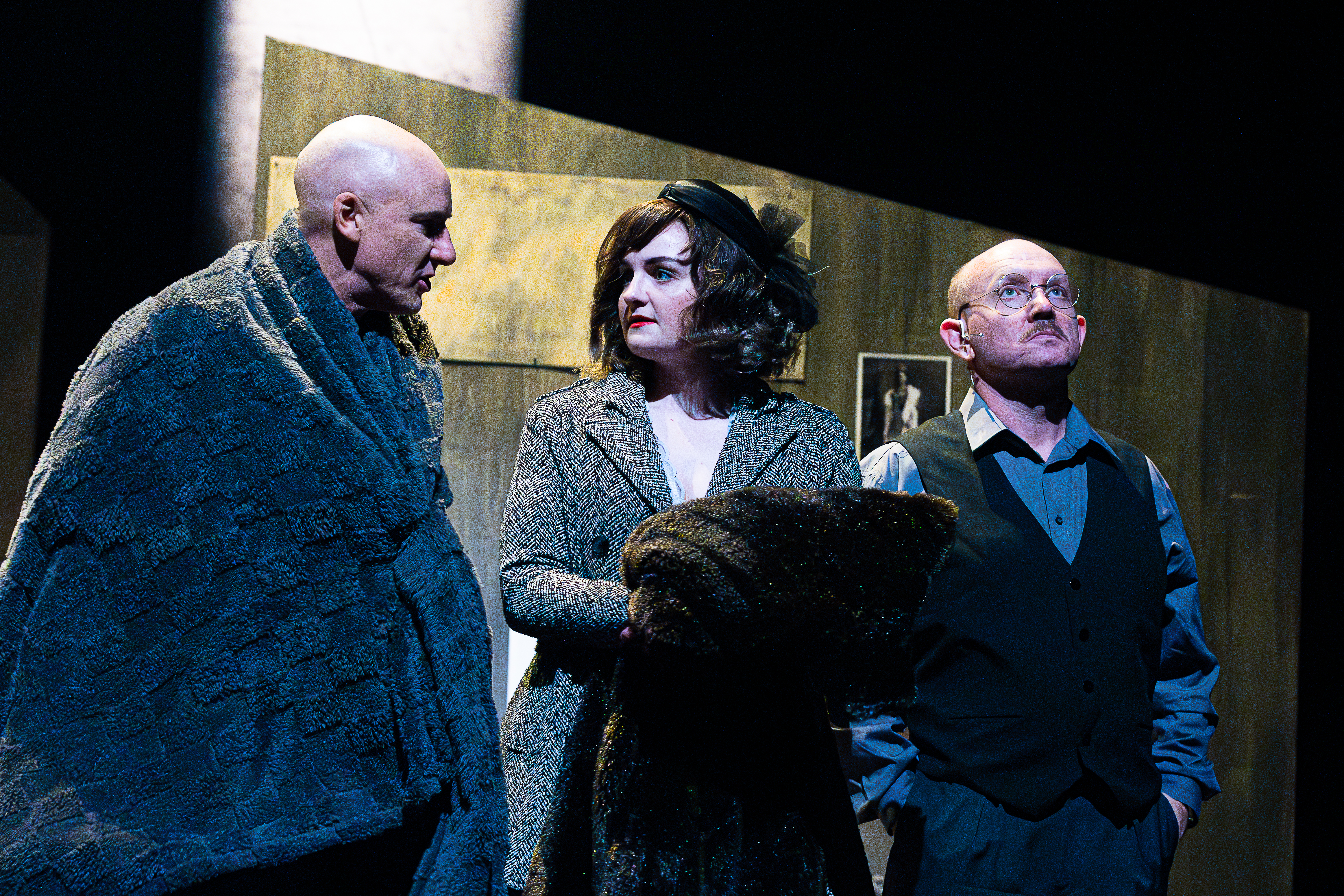
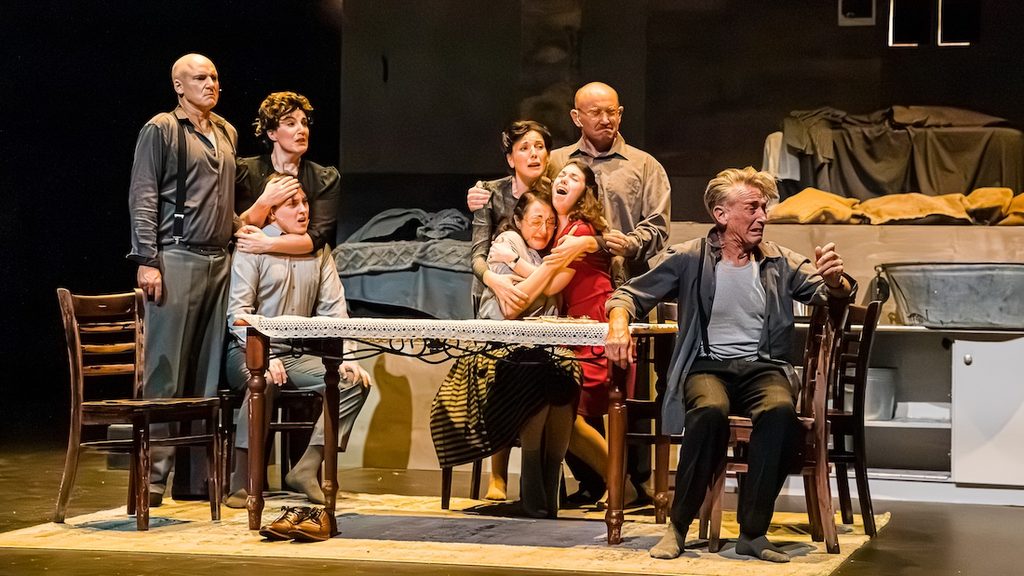
Joined by the van Daan family—Putti, Petronella, and son Peter—and later another refugee, Jan Dussel, the space ended up hiding five adults, three teenagers, and a cat, all attempting to survive on minimal supplies, mostly procured via fraudulent ration books. Added in with a regimen of near-total silence for ten hours each weekday while the factory was populated around them, those watching the performance were left to consider whether they could tolerate similar conditions under constant fear of discovery.
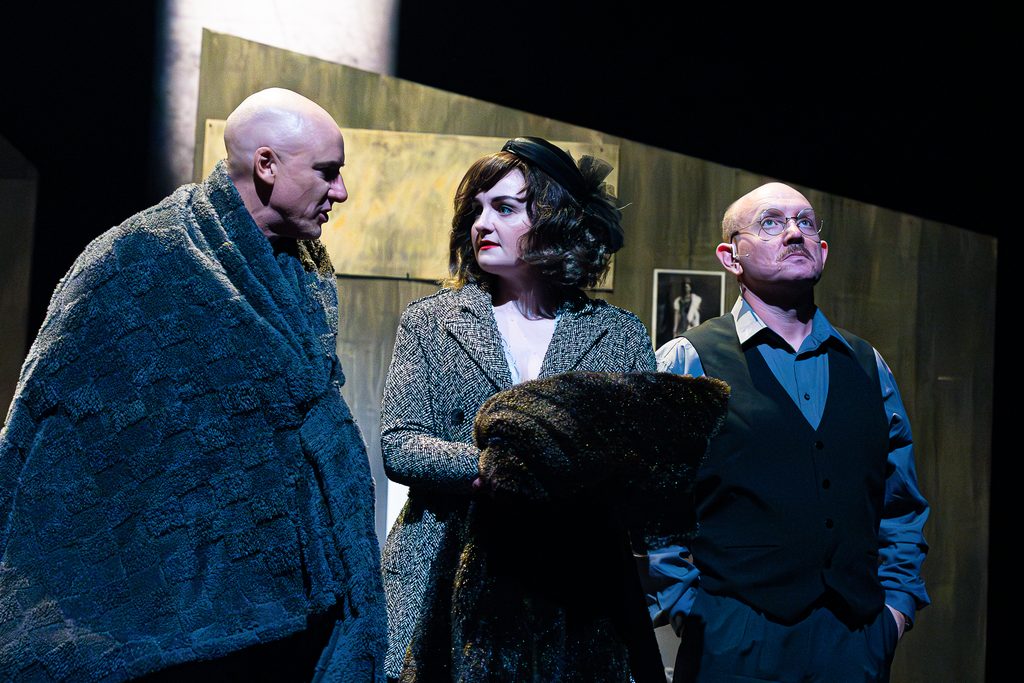
The staging this evening evoked a continual sense of confinement and claustrophobia. Once introduced, all characters who remained in the annexe historically always remained on stage thereafter—while the lighting and sound focused on a singular scene or conversation at any one time, all on stage had their own routines and performed awkward dances around each other, even in the background. The only two allowed to attend or depart were Miep Gies and Mr Kraler (Grace Tolich and Kingsley Judd), the staff who kept the location and those within supplied.
The occupying forces and the police were left mostly unseen, the only visual motif being two swastika flags projected high above the set, coloured sepia rather than red, their visceral impact slightly softened with that change of shade. Perhaps far more dread was brought to bear by the sound design, whether it were the squeak of brakes as a car slowed nearby, a phone in the factory constantly ringing, or even Allied air raids overhead, that sound of eventual liberation with all too imperfect targeting to feel safe in the moment.
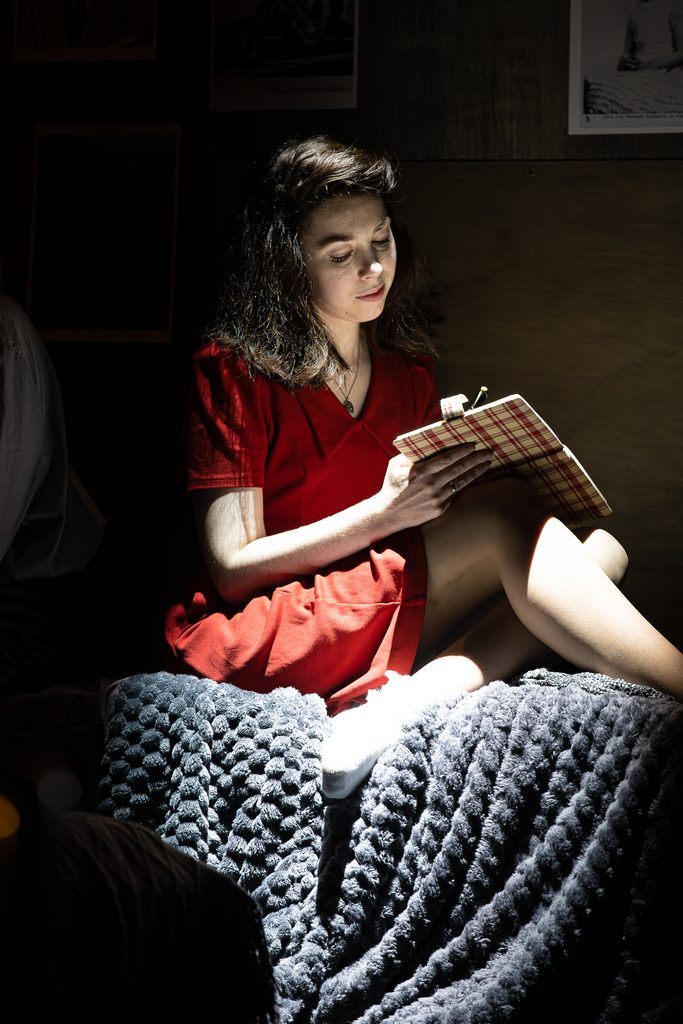
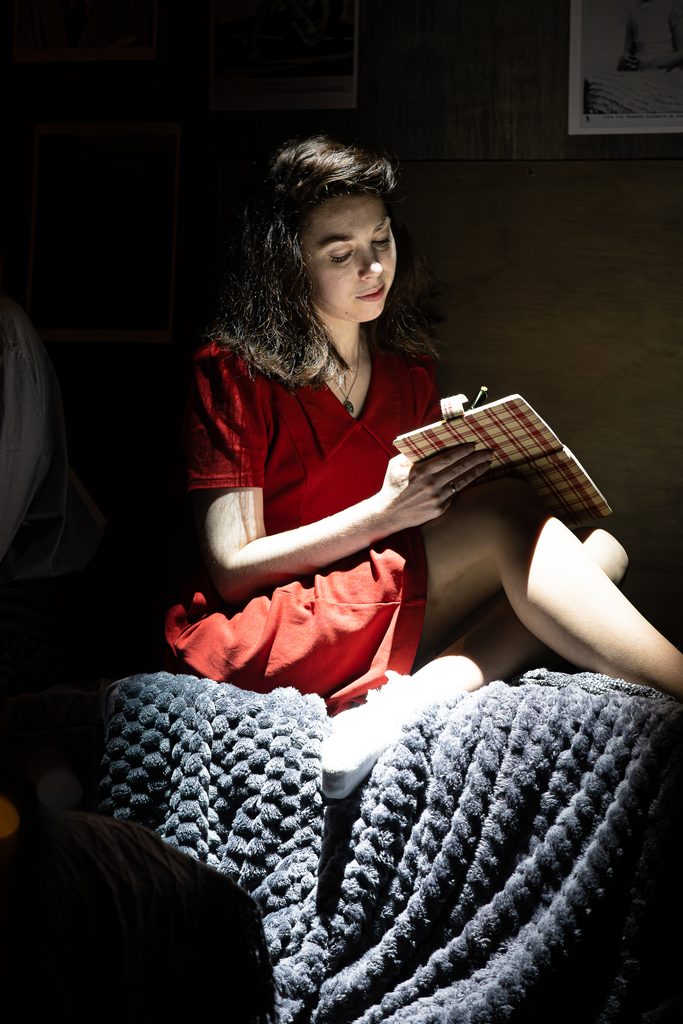
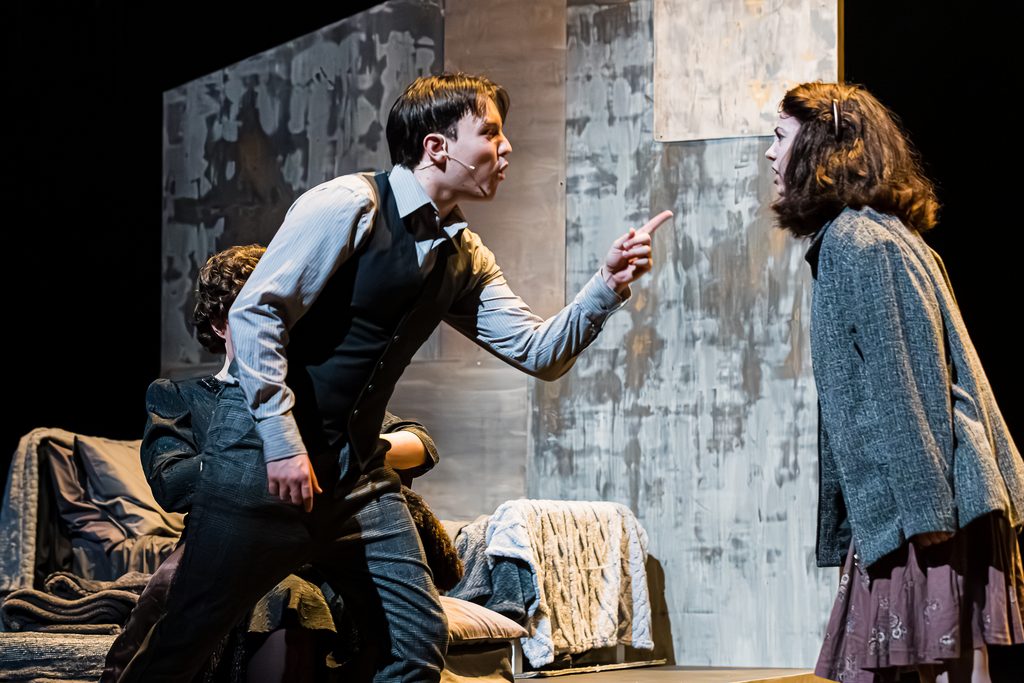
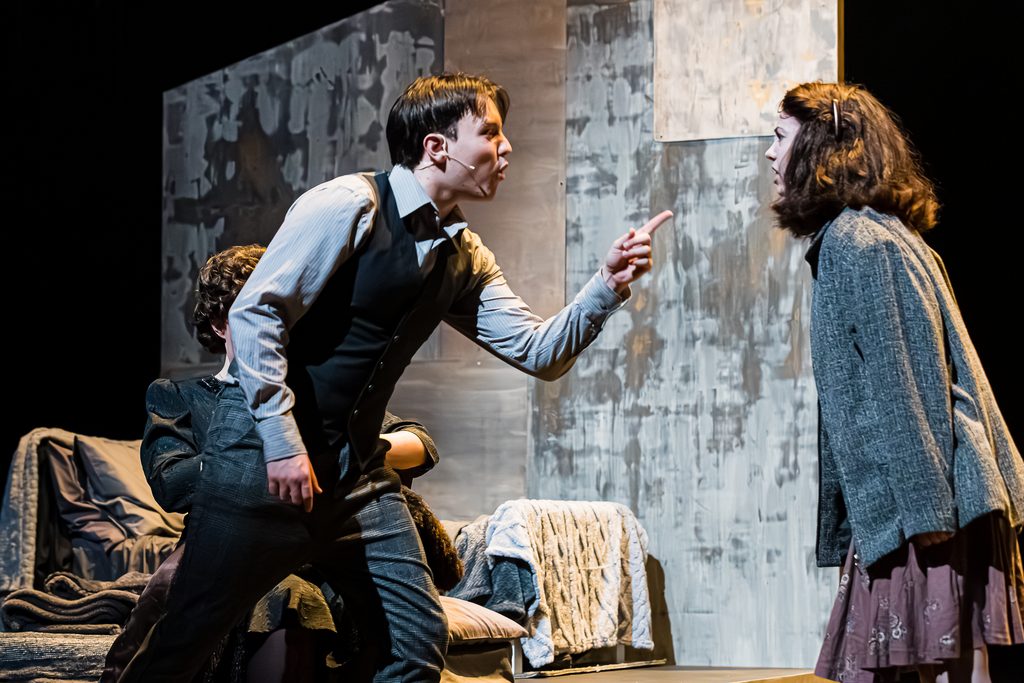
Another major source of tension was the lack of personal space or any possible breaks away from those within the annexe. Taken from Anne’s perspective, as she was the one who journalled during this time, there was immense friction between herself and her mother, as Anne weighed the love she had for both parents and found Edith wanting. She also compared herself with sister Margot, who was easy-going and pleasant, the seeming antithesis of Anne herself.
At the core of the performance as Anne Frank herself was Chloe-Jean Vincent, who acted with a sense of positive wonder for all that happened to her, while also at times merely trying to be a typical teenager—this gave the audience pause, putting those watching in mind as to who Anne could have been without the war, two years confinement, and her eventual fate.
Phil Bedworth as Otto brought a calm gravitas to the role, as he juggled multiple divergent opinions and personality clashes within this odd household, while Jamie Jewell as Dussel also shone for completely different reasoning, with some very funny, very barbed lines intended for those around to absolutely hear.
Though not a one-for-one recreation of the original writings, The Diary of Anne Frank as a theatre-piece convinced in its reconstruction of a situation far removed from anything found in modern Australia. Even while being dehumanised and hunted, and sent to Bergen-Belsen in the end, Anne Frank looked towards the good in the world, her family, and those others around her.
With the way the current decade appears to be unravelling, Anne’s attitude has a lot going for it. Even though she didn’t survive the war, her words, her story, and her life continue to echo well into the twenty-first century. An incredible impact for papers that could easily have been lost to any of the various forms of destruction in those chaotic years.
PAUL MEEK