Review: At What Cost? at Subiaco Arts Centre
At What Cost? at Subiaco Arts Centre
Tuesday, July 21, 2026
Debuted to sell-out crowds at Sydney’s Belvoir Theatre in 2022 and brought to its Western Australian premiere on Tuesday by Yirra Yaakin Theatre Company, At What Cost? was a stunning and tragic tour de force, elevated in creation and production by all involved, and is all but an essential piece of contemporary Australian theatre already.
Writer Nathan Maynard transported the theatre and its audience to Putalina (Oyster Cove) on the southern coast of Lutruwita (Tasmania), a portion of the state handed back to Palawa traditional owners in 1995 after a decade-long occupation which sought, and eventually attained, state government recognition of land rights.
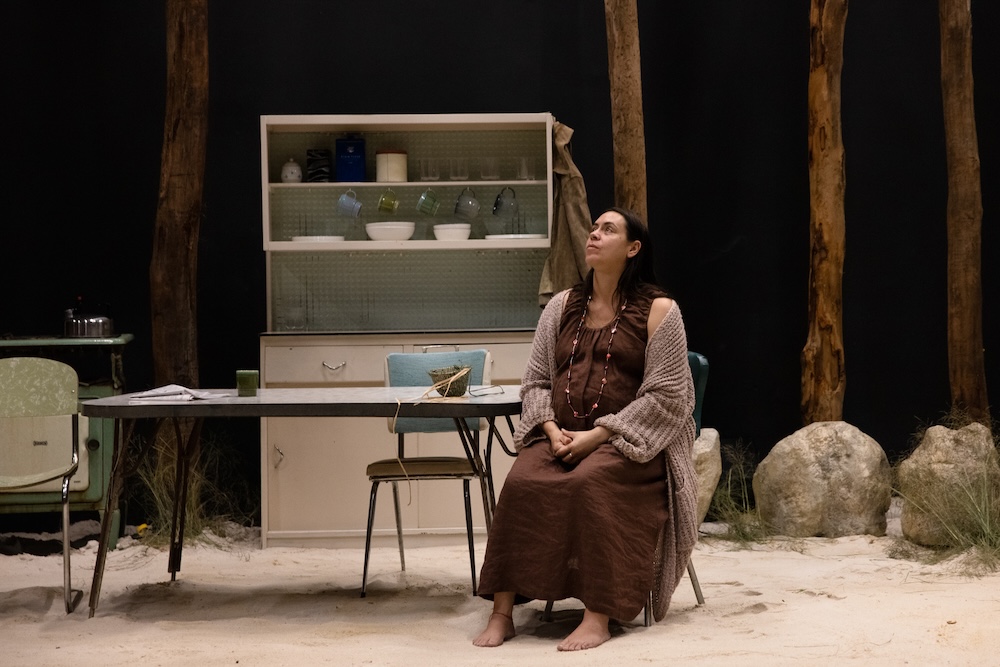
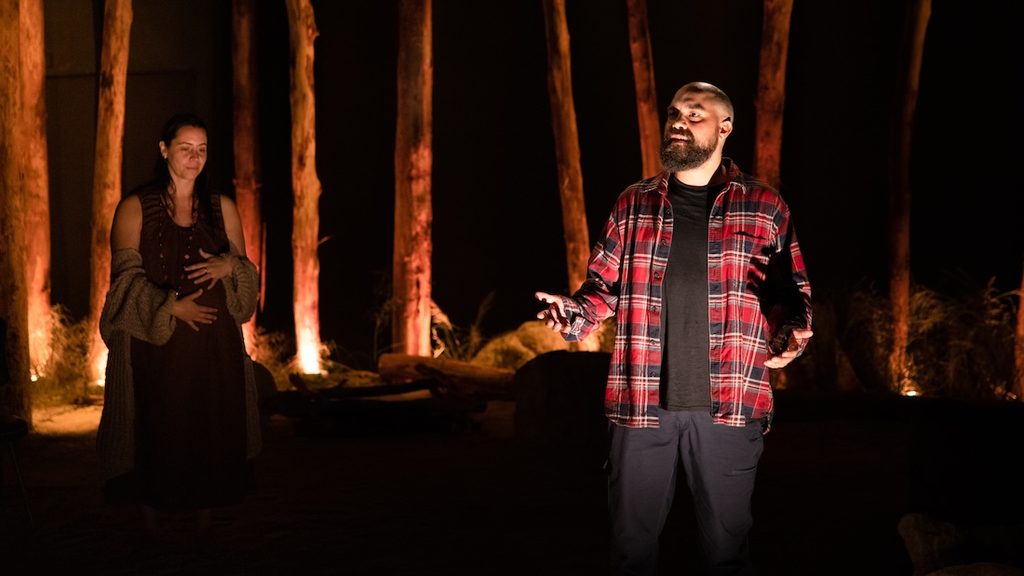
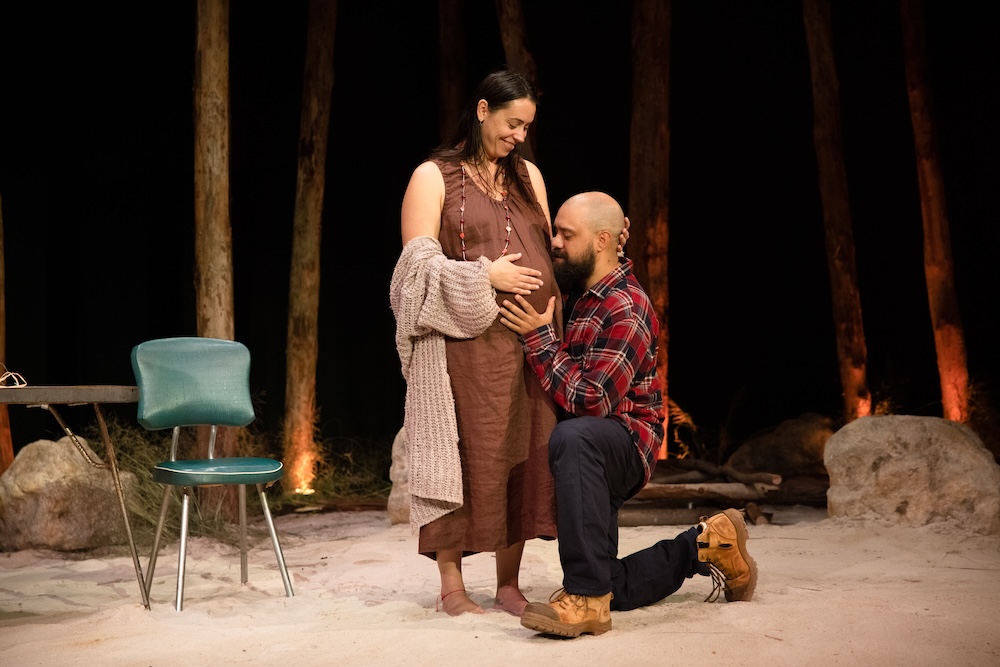
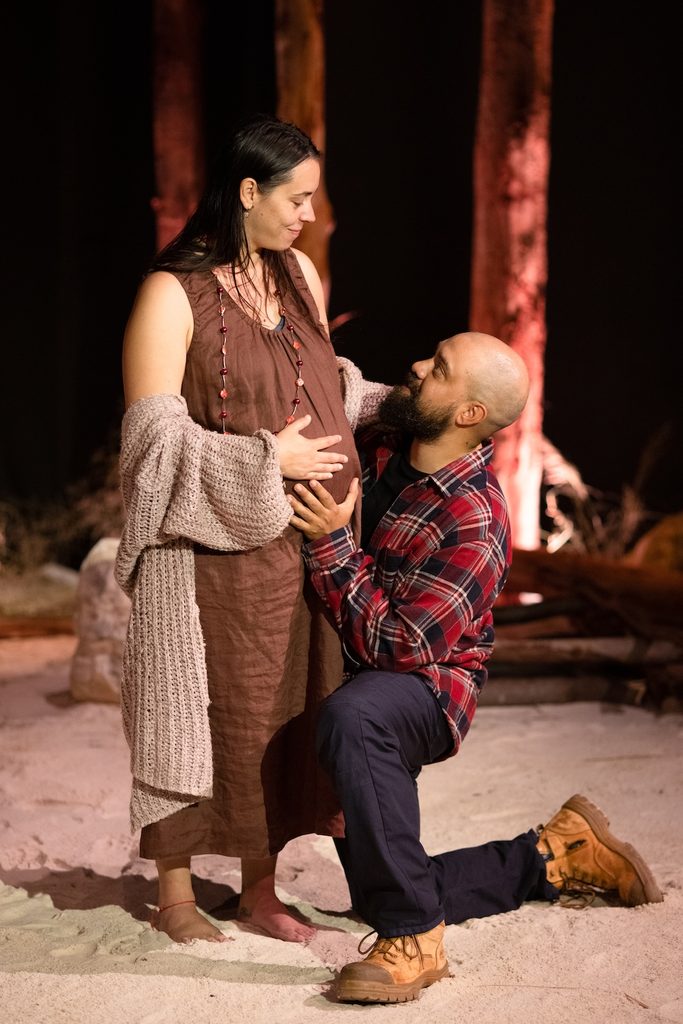
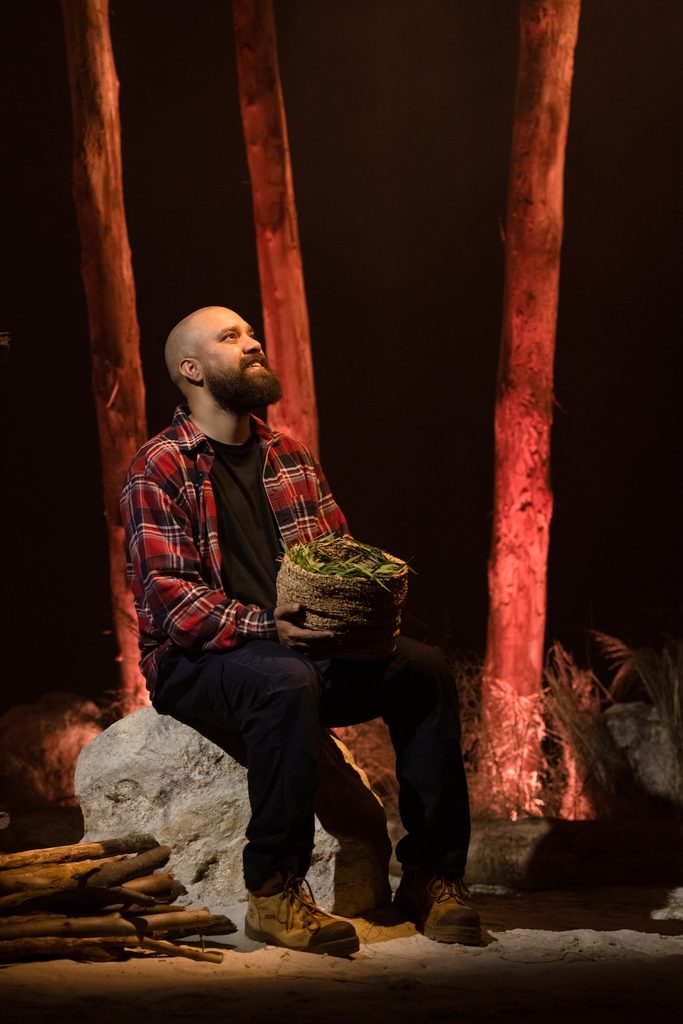
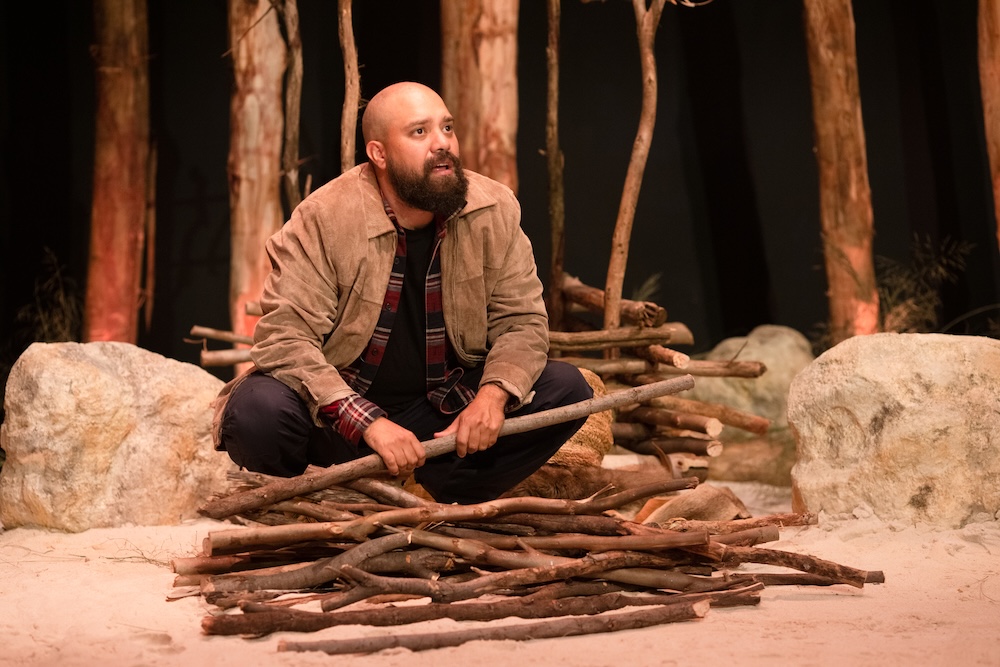
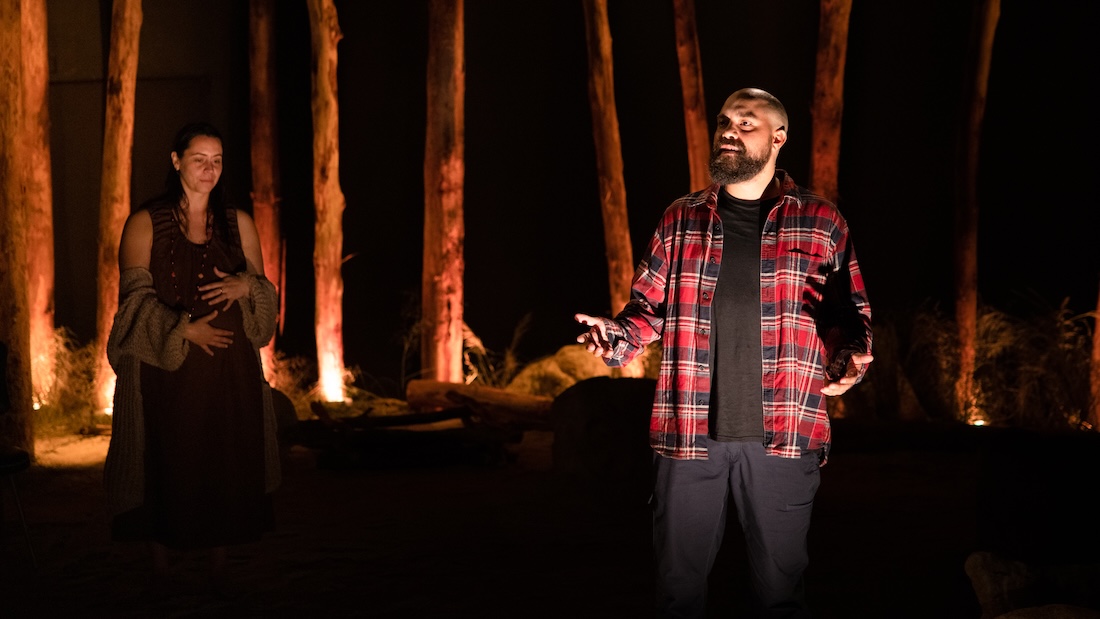
A slice of paradise, Putalina held sweeping views of Bruny Island across the waters. Managing the property on behalf of the local land council was Boyd Mansell (Calen Tassone), who had been on country since his mother’s pregnancy and, as the performance began, was telling the land’s history to his own unborn child through the belly of his wife Nala (Jessie Ward).
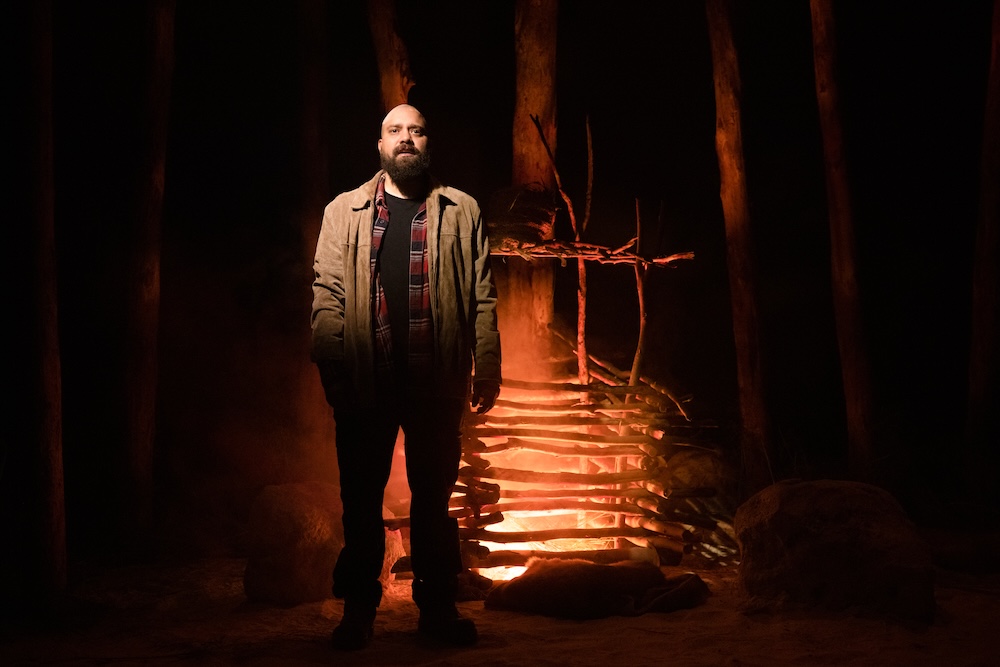
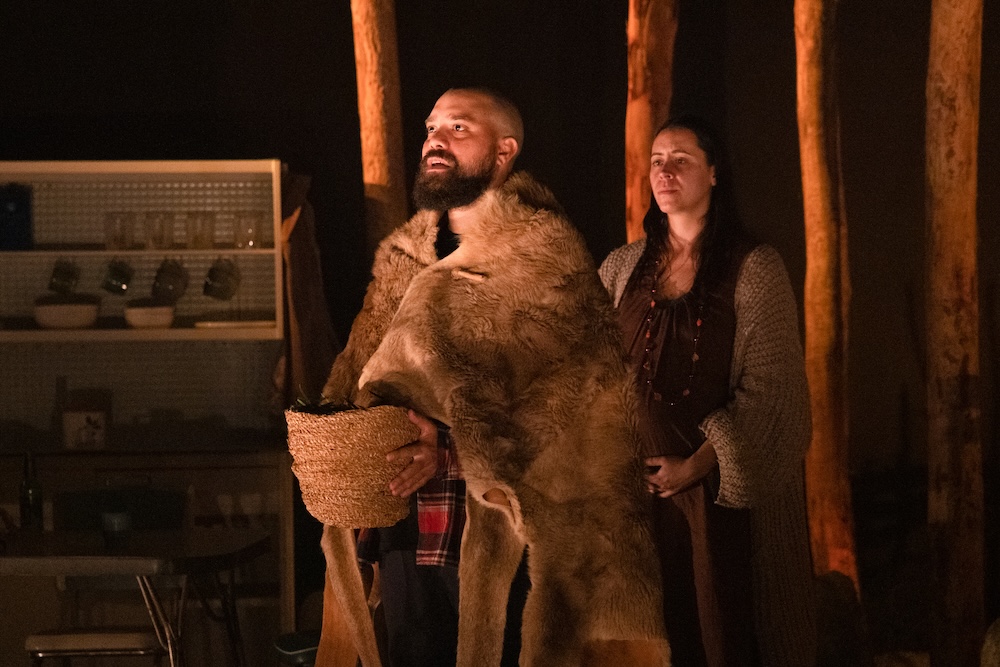
The community was preparing for the return of William Lanne’s remains from one of the British museums after an undignified century and a half away from home. Nala opined on the reasons for King Billy’s return—“150 years in a basement is not a good story”—and Boyd had been selected by the council to construct the funeral pyre that would create a sky ladder, returning Billy to his family and ancestors. A huge responsibility to be sure, but one which Boyd approached with the deepest respect and honour.
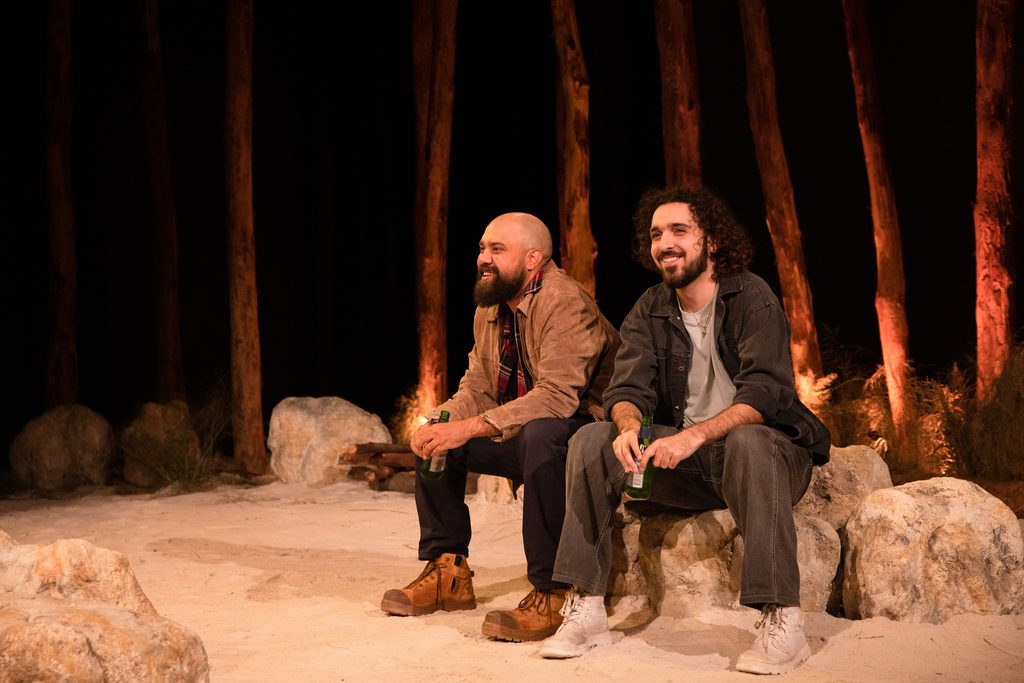
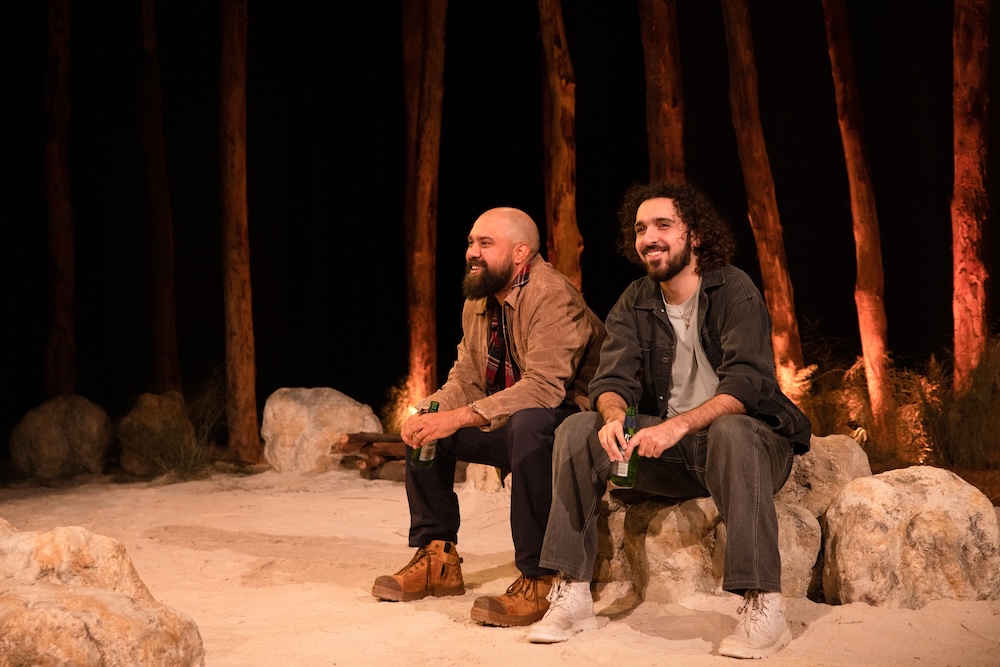
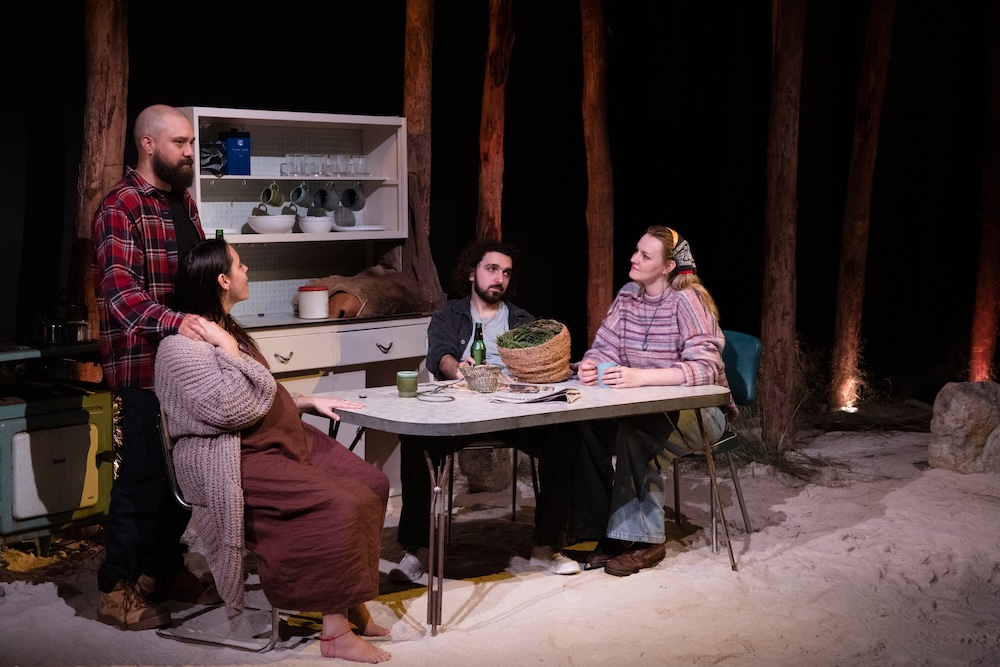
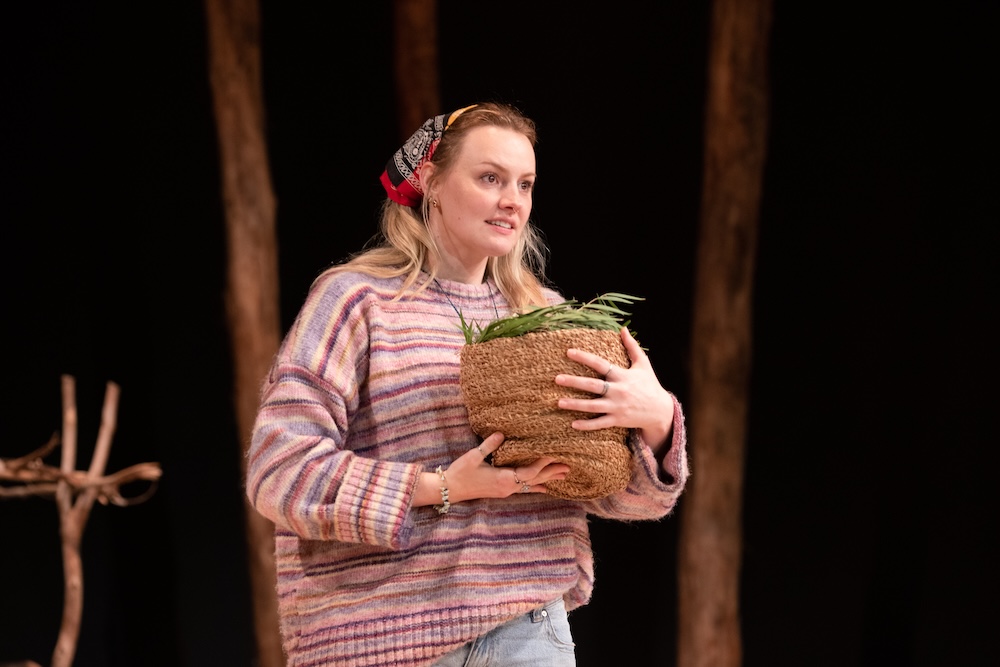
These two characters were joined on stage by Boyd’s cousin Daniel (Jarrad Inman), who had lived in Melbourne for a time and had now returned home, and Gracie Ranson (Aimee Honor), a graduate student doing research on Tasmania’s colonial-era history. Gracie had set up a tent outside the fenceline of Putalina but was invited on country by Daniel, with the brusque assent of Boyd.
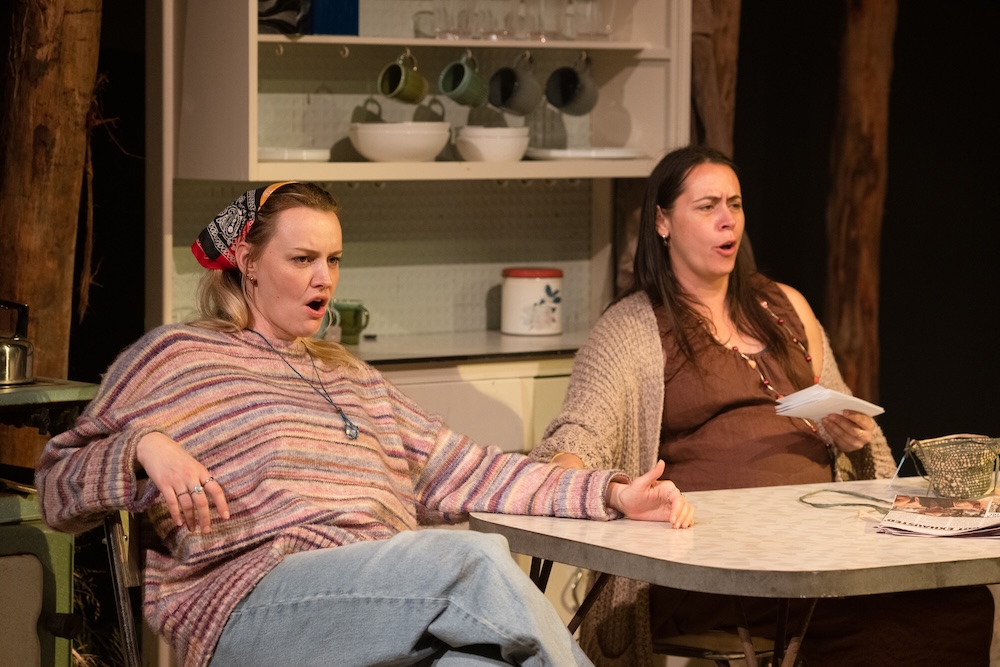
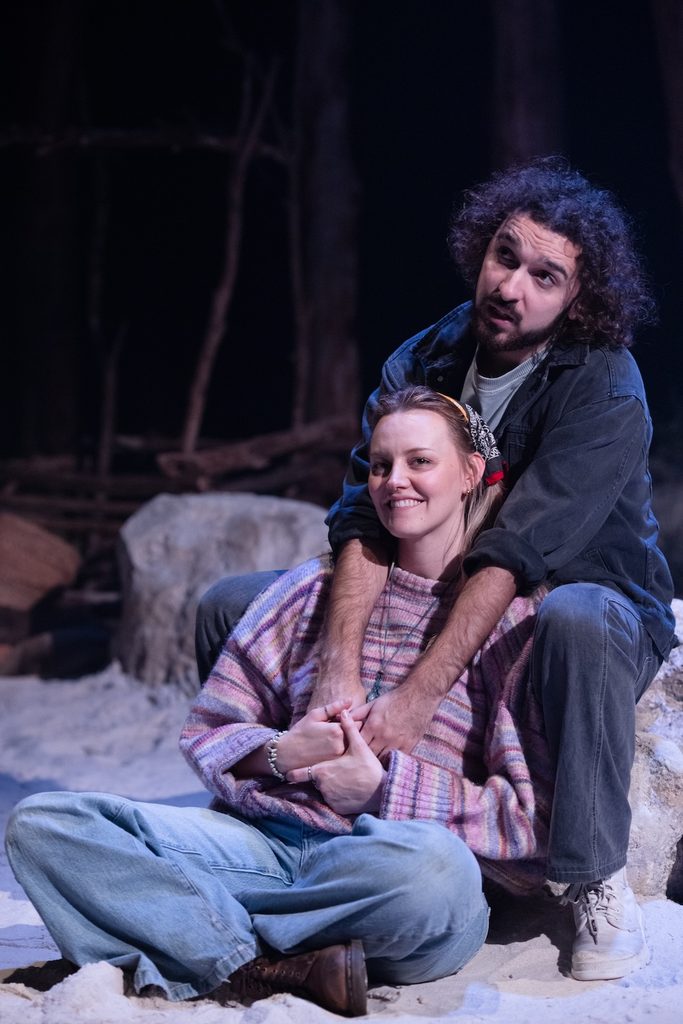
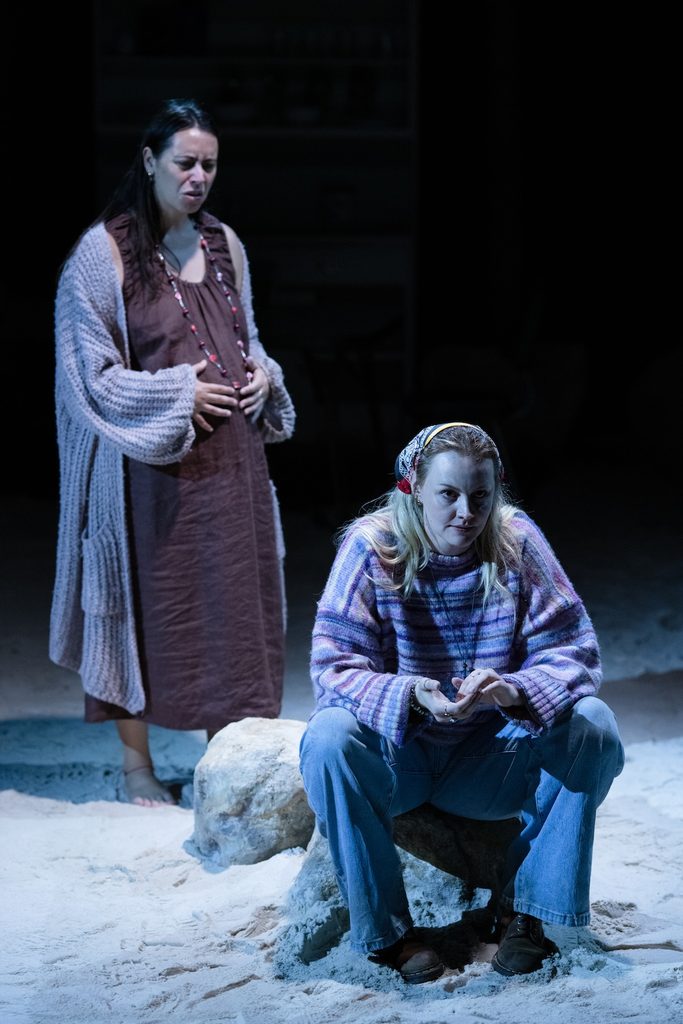
When Gracie and Nala met, another layer of connection was added, as they had both been “parkies” perhaps a decade before, a designation which seemed to indicate communal public drinking in the parks of Hobart. Daniel and Gracie entered into a fun and casual relationship, and the set-up of the piece was complete.
At What Cost was anchored magnificently by Tassone as Boyd, his character absolutely certain of his own power, decision-making, and righteousness at the start of the performance but constantly challenged from that moment on, weighed under by the responsibility of perfection, which allowed small cracks of doubt to emerge. Although the audience would never know for sure, there was every chance that Boyd had been correct about everything, but he mentally unravelled all the same.
The script as provided by Maynard was authentic in its language, believable in terms of character dynamics and even employed a degree of light comedy, all while the underlying unease and anxiety escalated. Indeed, most laughter this evening rippled through the audience at varied speeds, as each pocket of the crowd connected with the humour at different times in different ways.
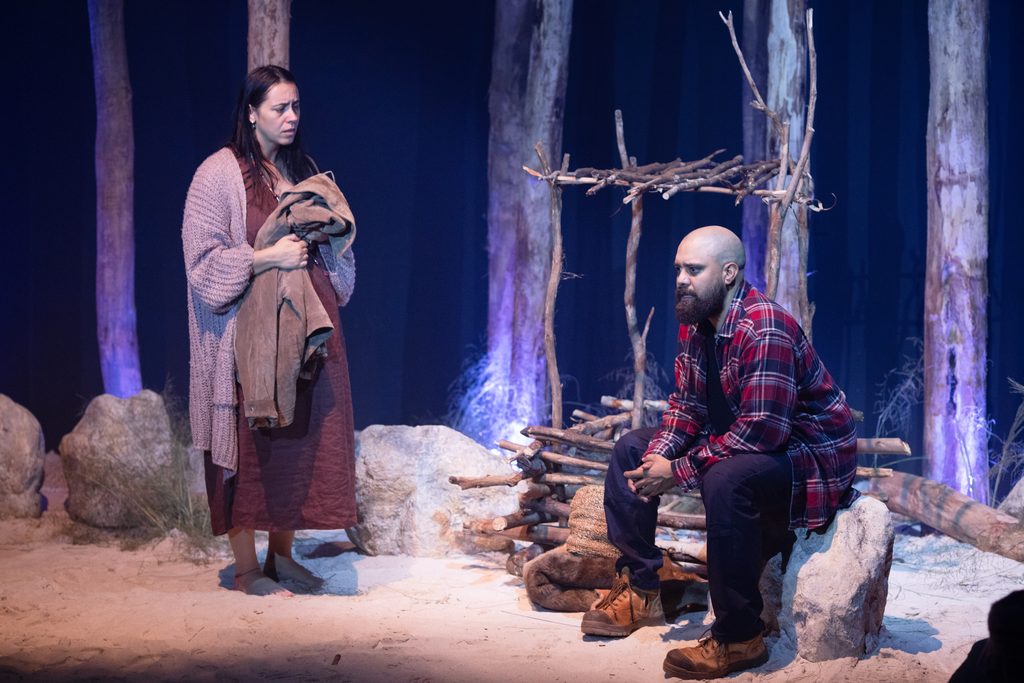
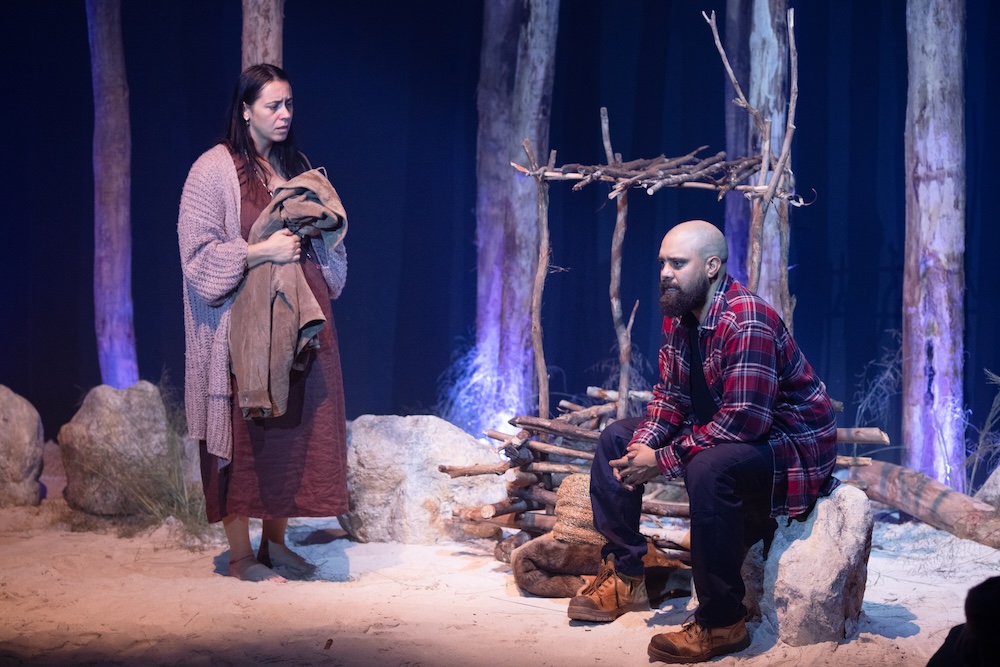
The stage design was fabulous in its apparent simplicity. The theatre floor was covered in ochre sand and scattered white rocks, tree trunks were lined along the back, and a country-style kitchen was installed stage right, which even included a wood burner stove. When the actors rubbed sand through their hands, the audience could almost believe they were on a beach in Lutruwita, rather than across the continent in Boorloo.
Another subtle nod to the distinct sense of place tonight, this time via sound design, was the sound of waves crashing against the Putalina shore, which acted as a sonic spine throughout the piece. Birdsong was also added for day scenes, while crickets and frogs indicated moments more nocturnal.
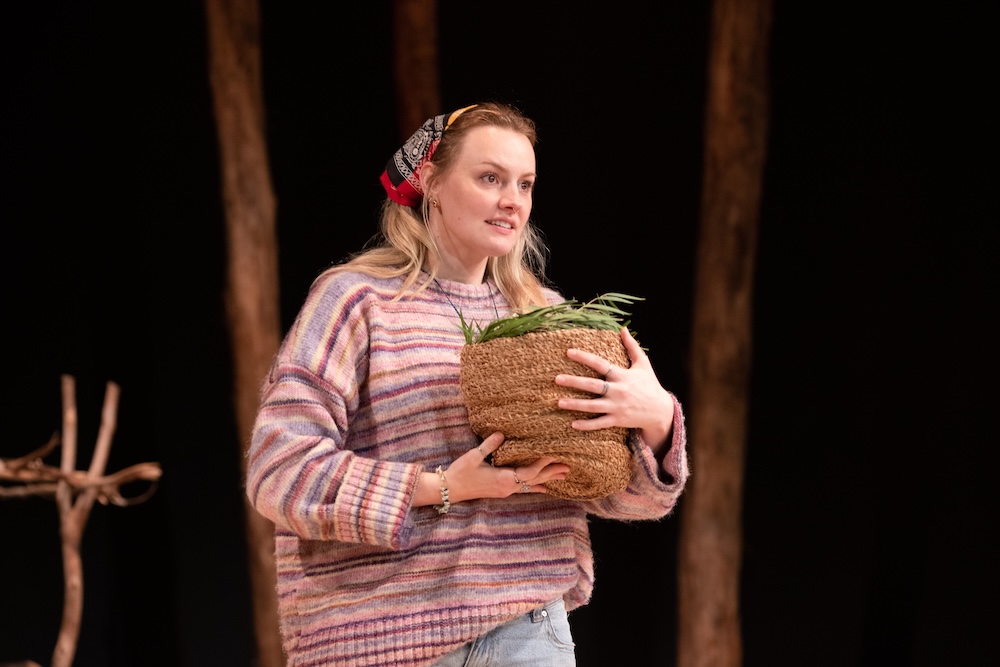
Inman and Ward both gave outstanding performances, their characters were linked to Boyd intimately as family but each with their own agency away from him. The trio engaged in an intricate dance around each other, either strengthening or unsettling their combined balance, but it was perhaps Honor who had the most complex role this evening. An outsider yet still connected in various ways to the others, with a script that gave her some frankly ridiculous, guffaw-inducing lines to say aloud, it was somewhat startling to note that At What Cost is Honor’s professional stage debut.
The performance concluded with a passionate, sensational indictment of Australia’s relationship with its original inhabitants, which left the audience speechless and stunned, even as they immediately rose and gave a standing ovation.
A bold and piercingly direct examination of identity, culture, history, and struggle, At What Cost was also a guttural howl of rage, evoking the pain of dispossession, time and again. It held a mirror up to those who watched, challenging them as to whether this country had made all that much progress since the colonial era.
An absolute must-see.
PAUL MEEK
Photos by Daniel J Grant