Review: Stereolab at Freo.Social
Stereolab at Freo.Social
w/ Mick Harvey & Amanda Acevedo
Tuesday, June 16, 2026
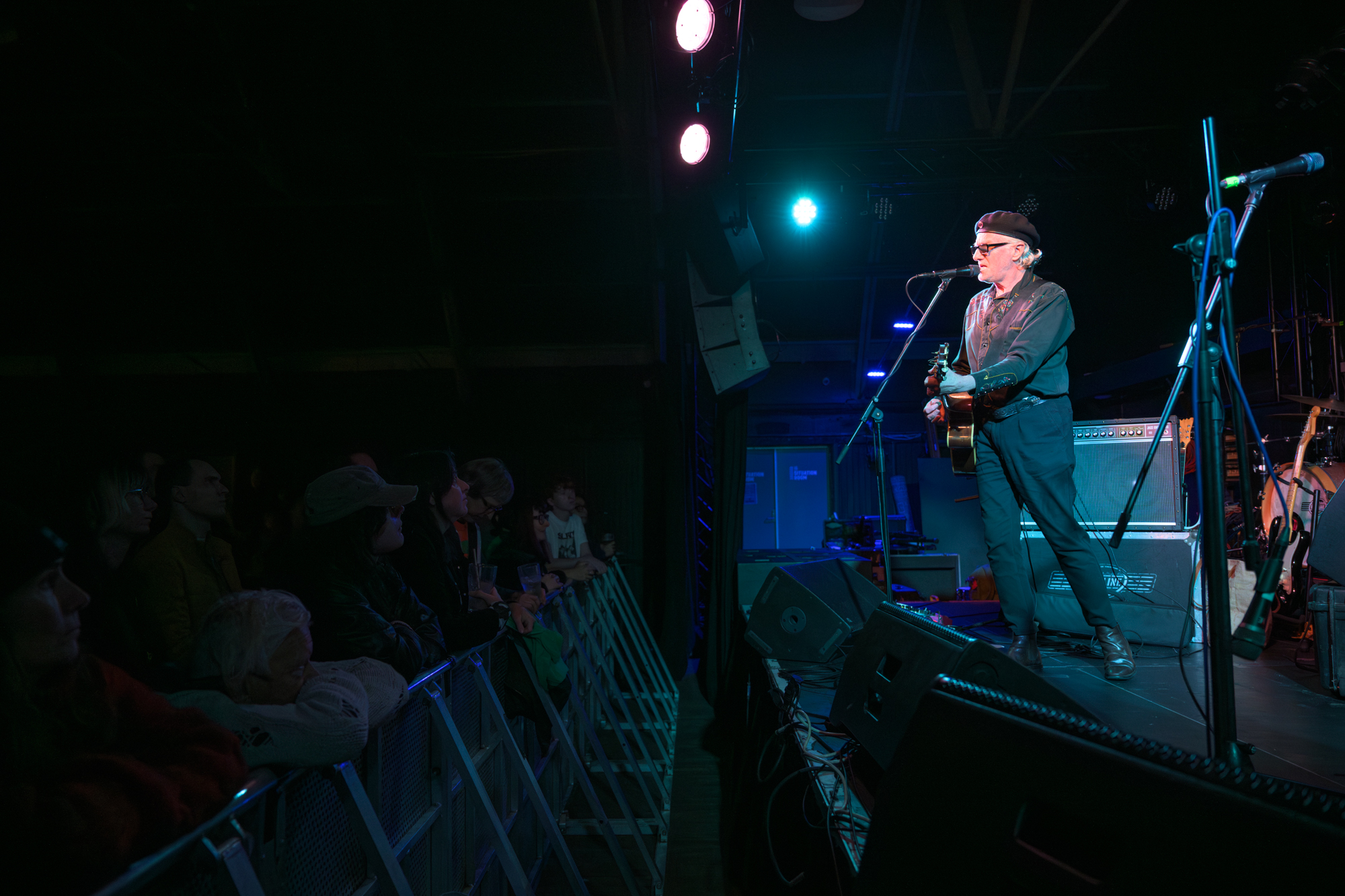
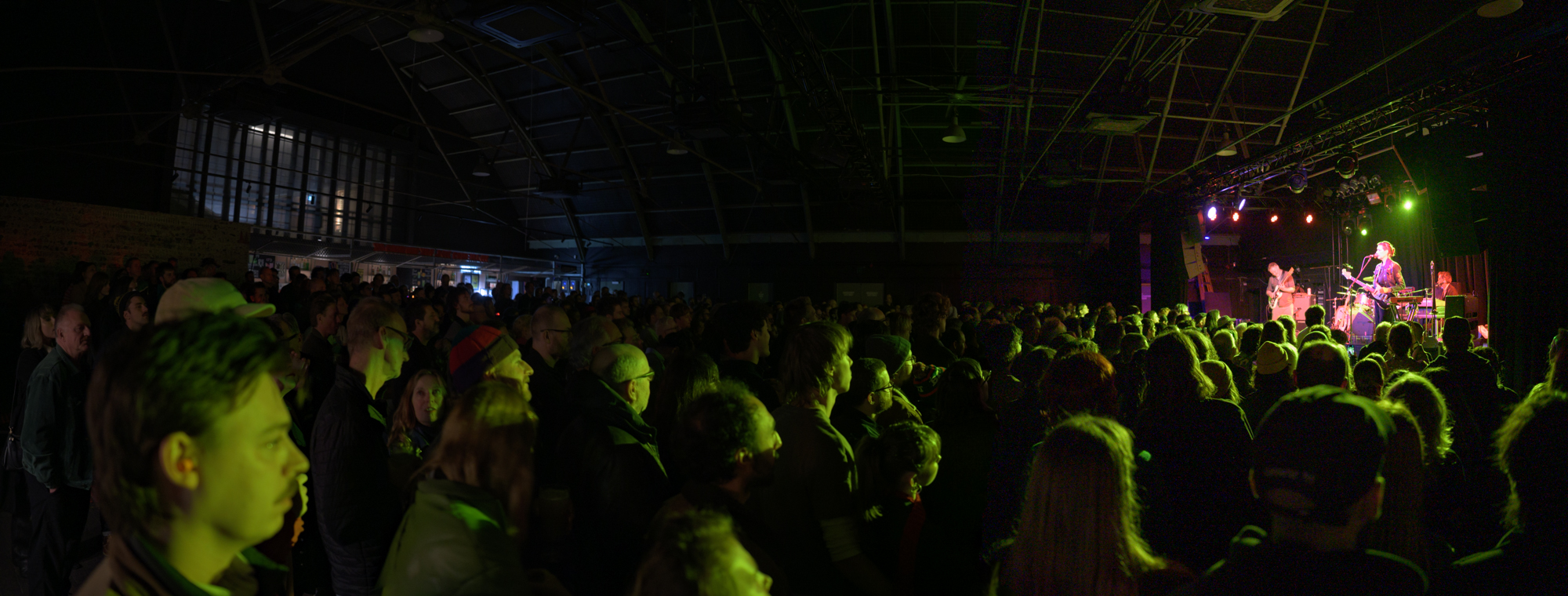
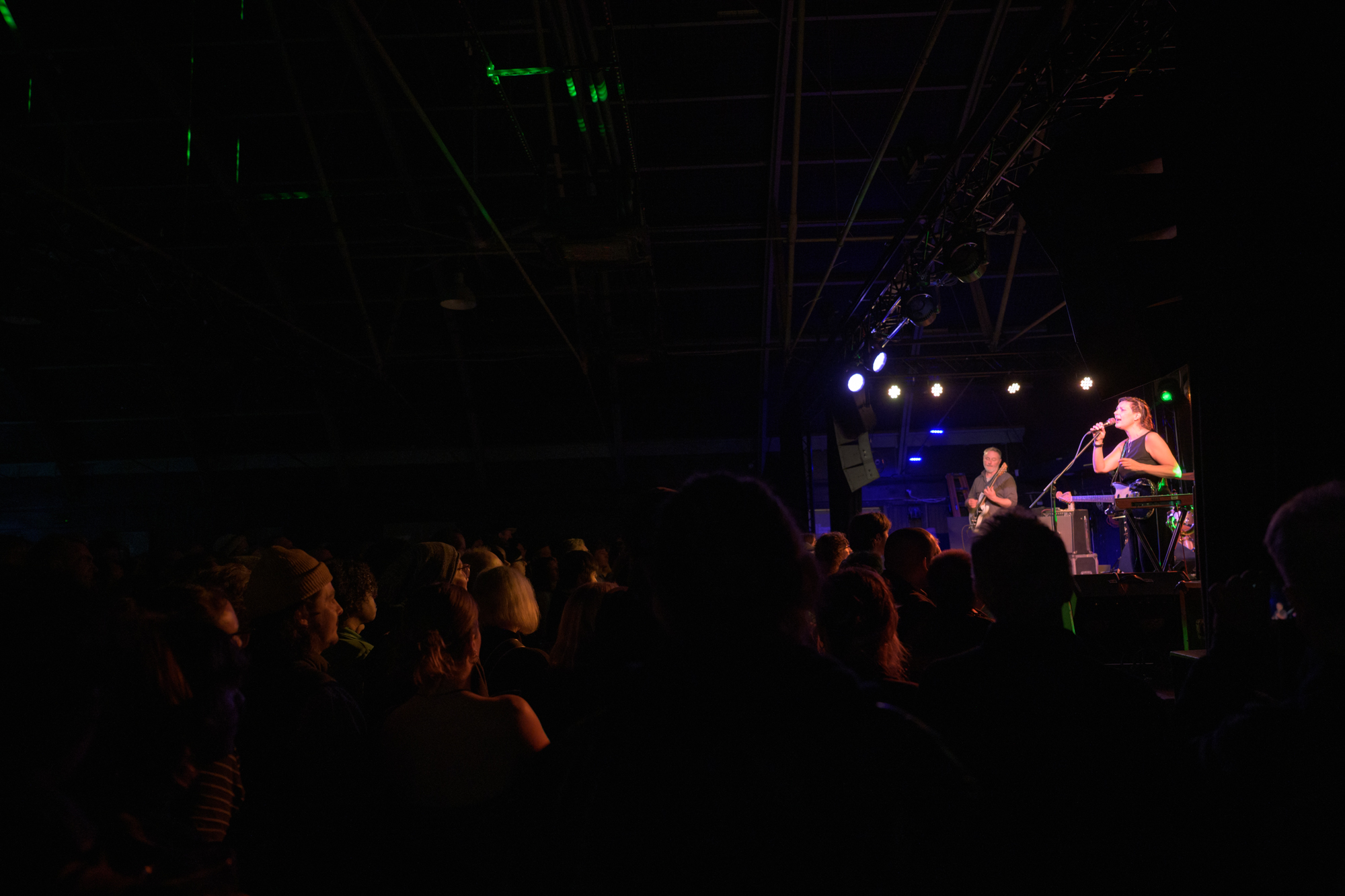
Looking around Freo.Social before the lights dimmed, it was clear this was no mere casual night out. The crowd arrived early, settling into place well before the headliner and rewarding the support act with the sort of attentiveness a little too rare at contemporary gigs. Anticipation carried a hint of nostalgia, certainly, yet what followed felt far less like a retrospective than a reminder that Stereolab’s peculiar vision of the future remains remarkably alive.
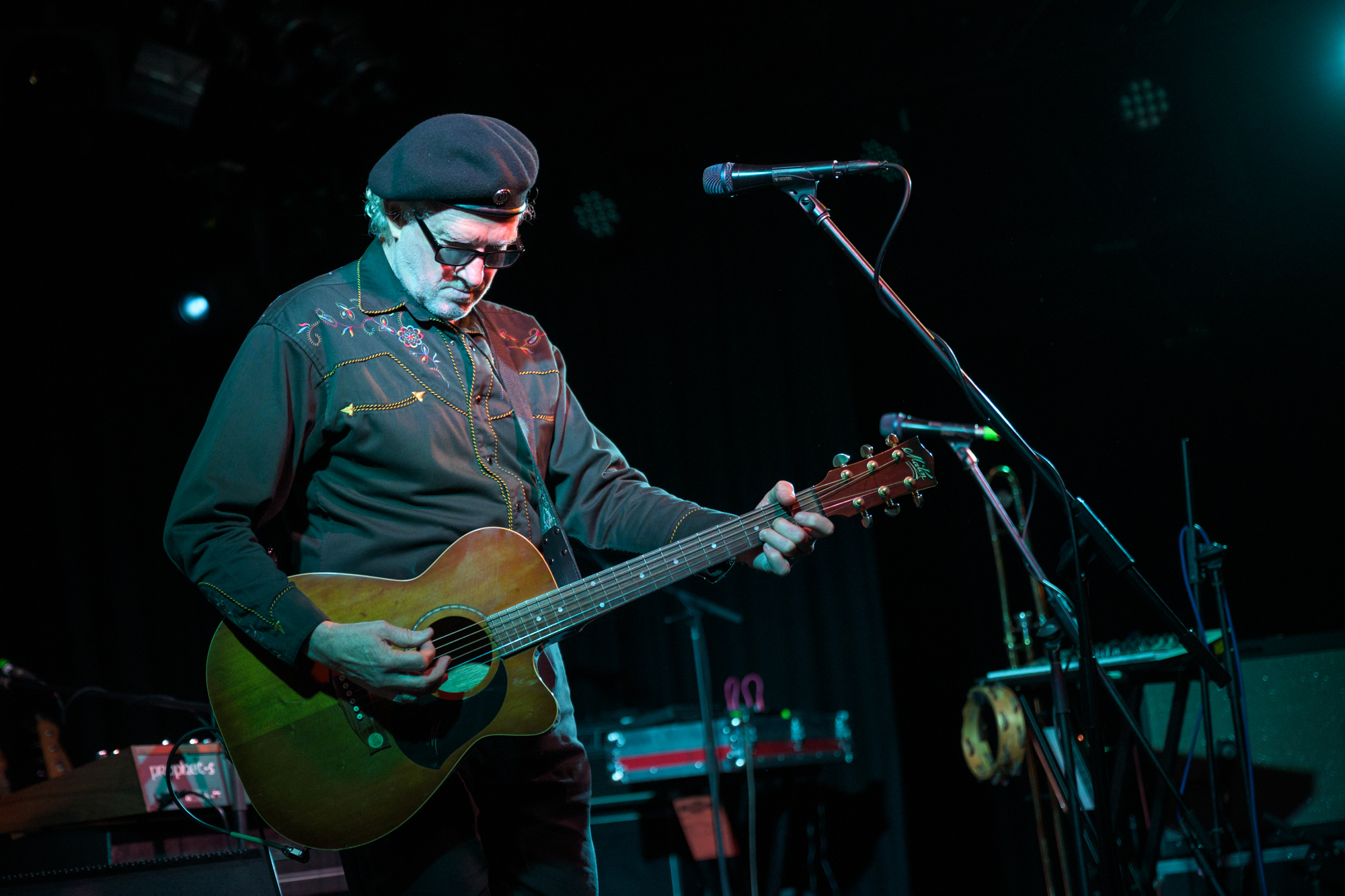
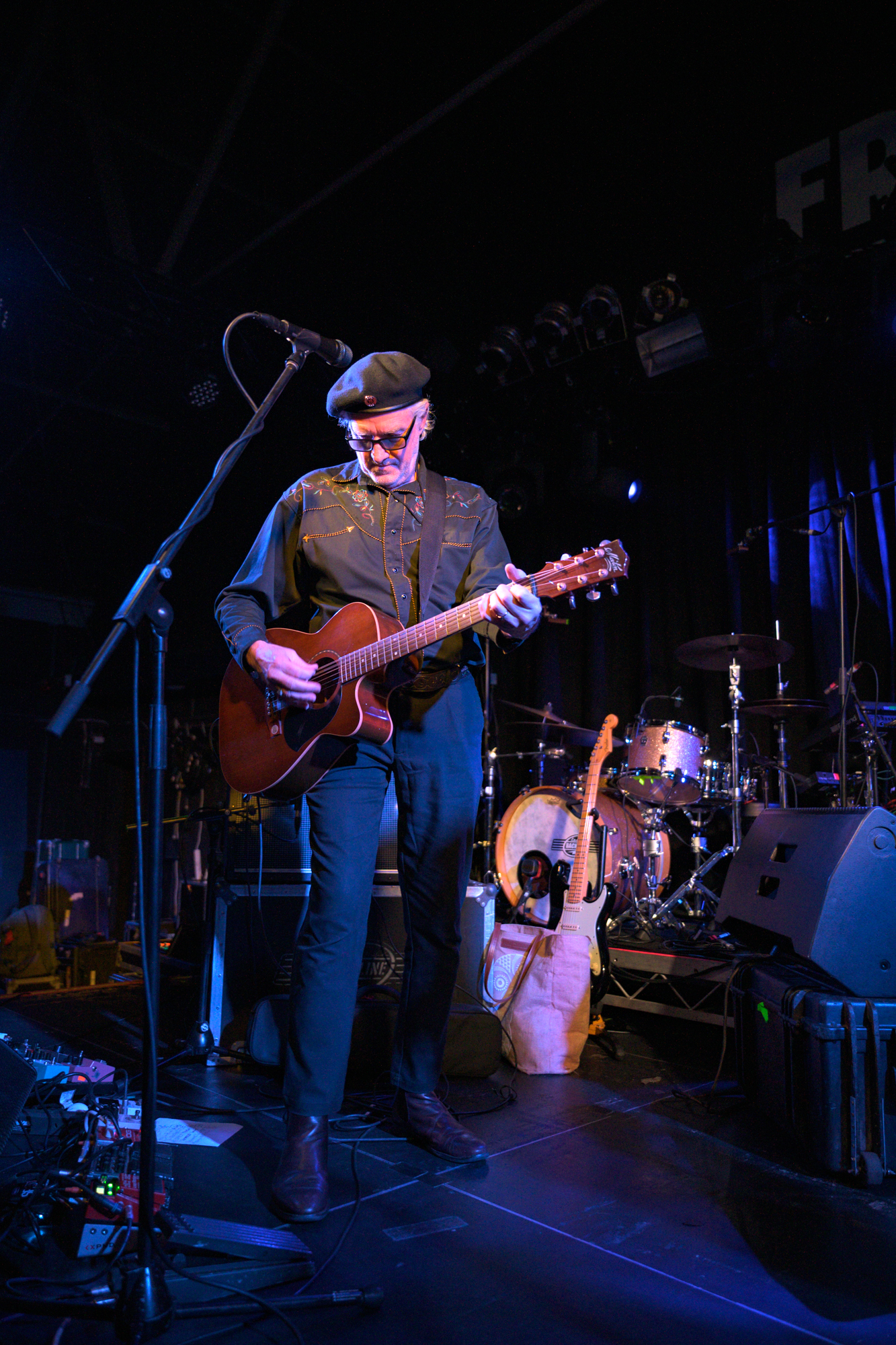
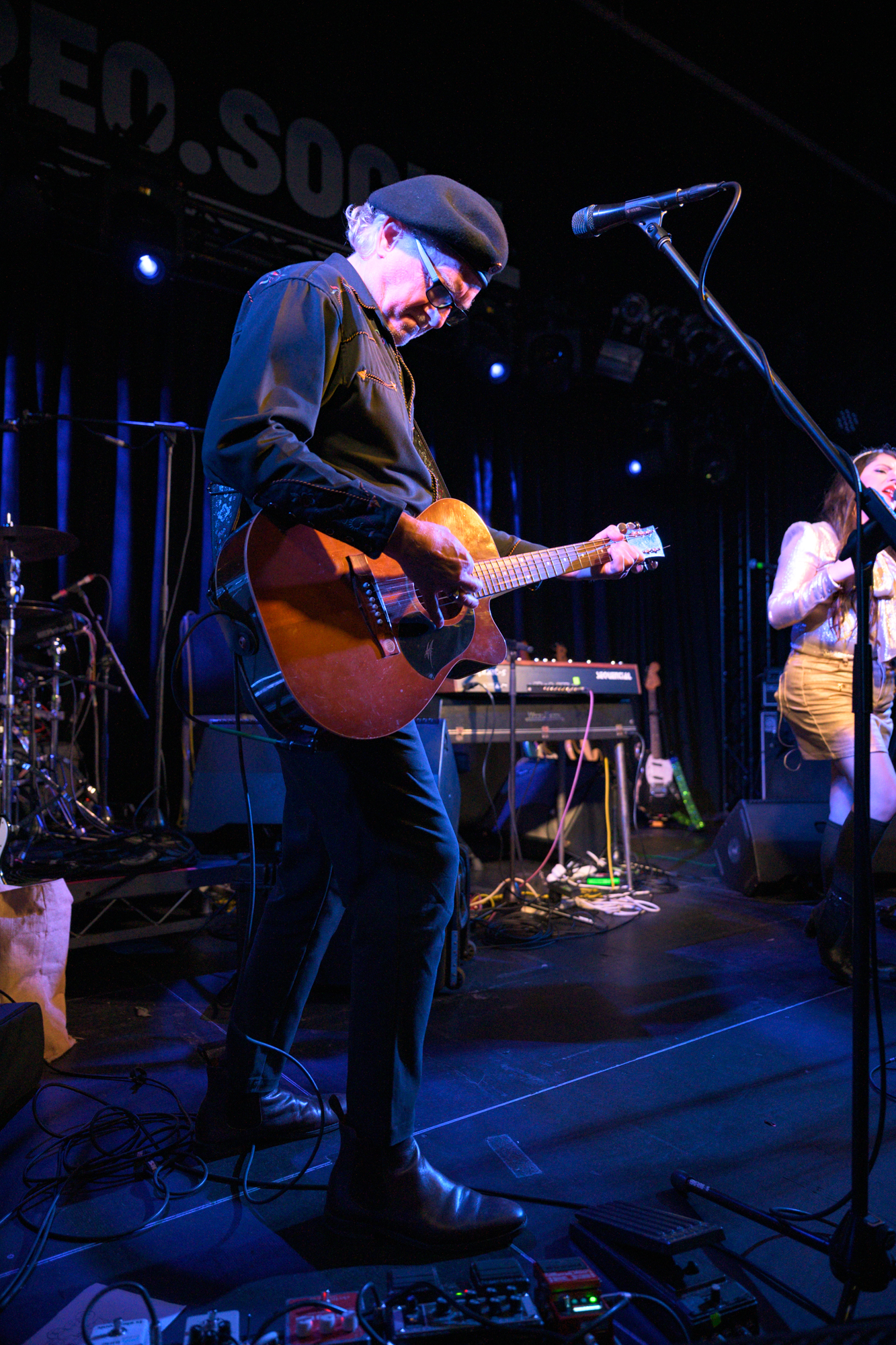
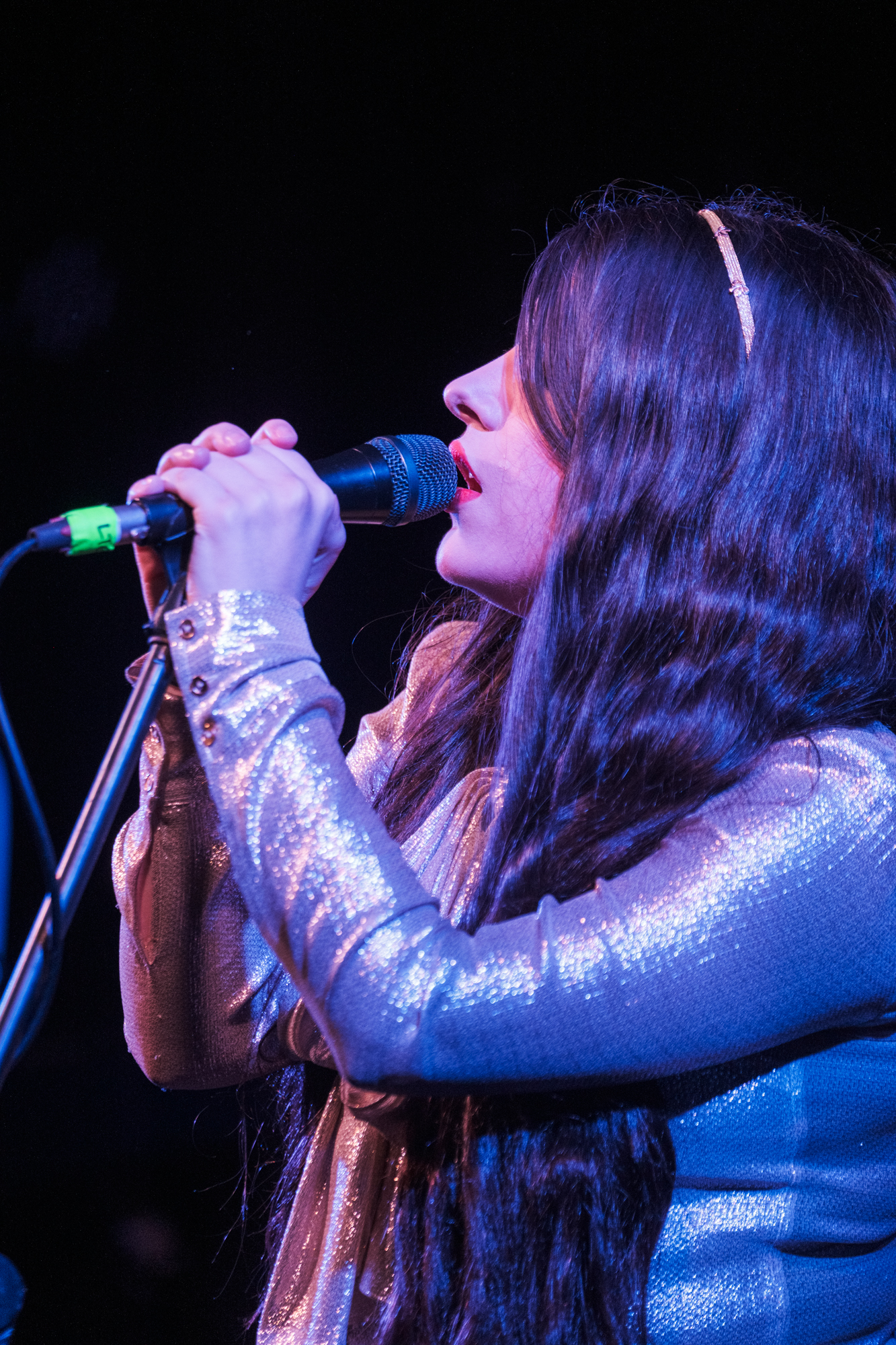
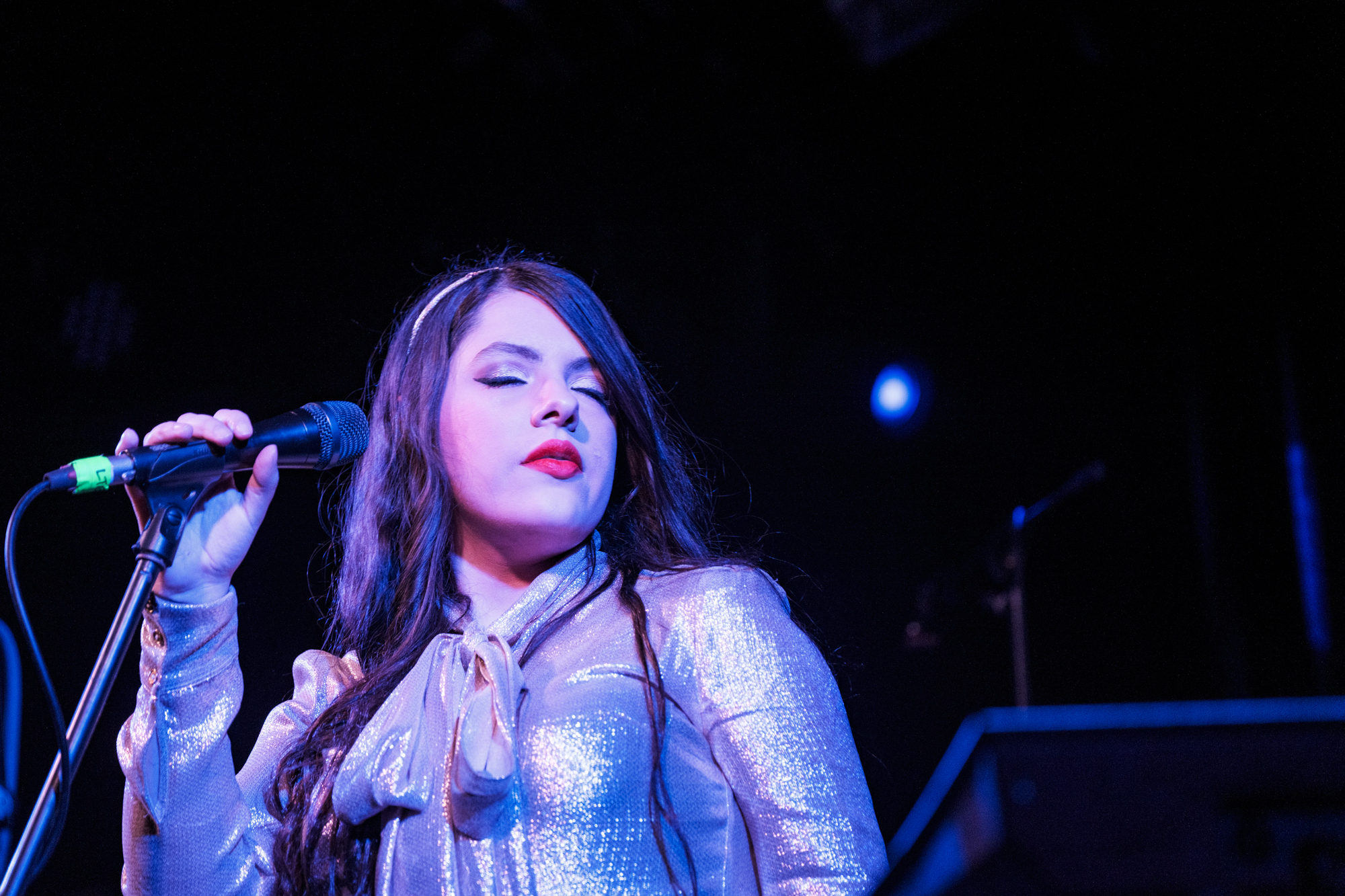
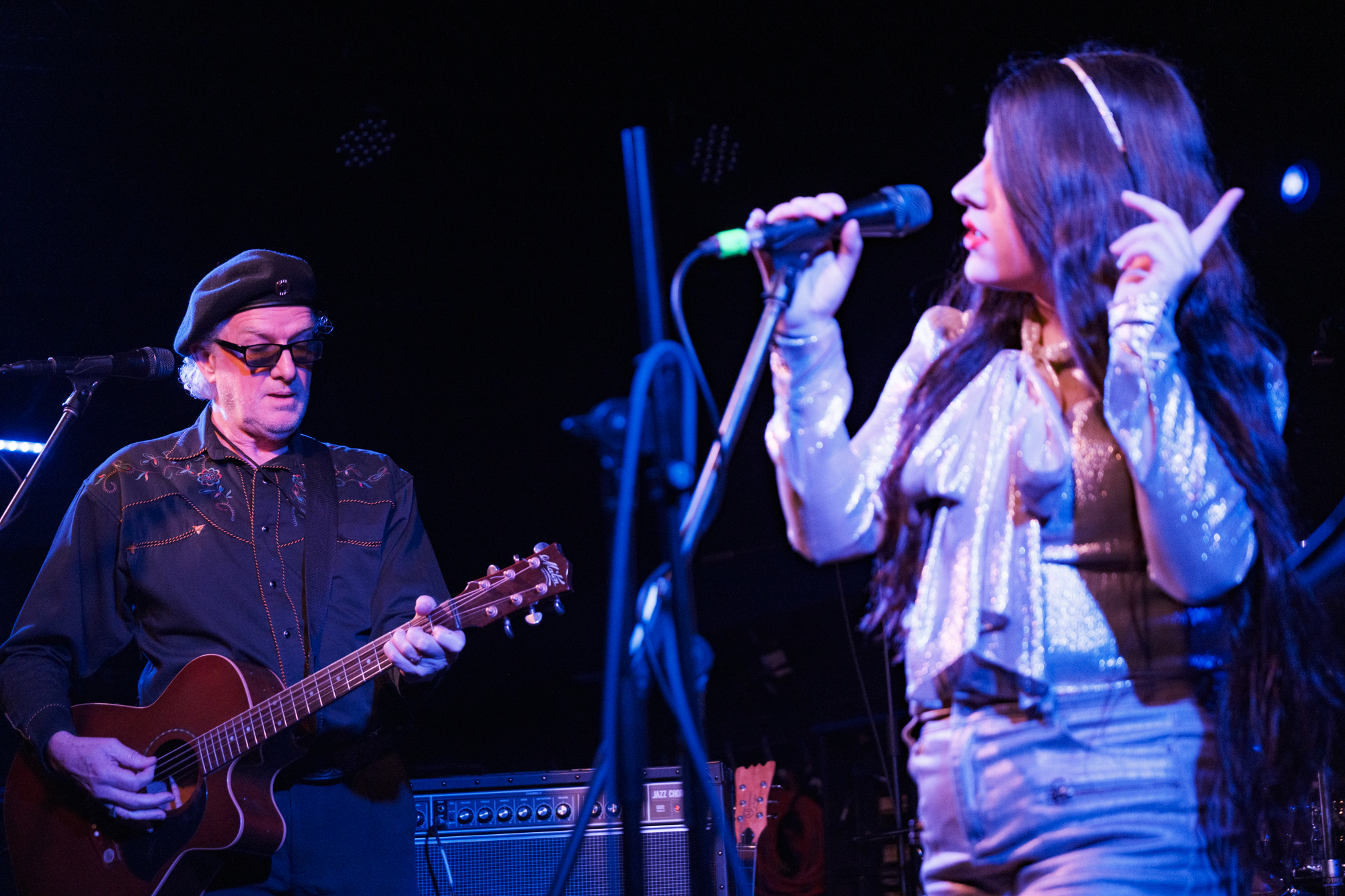
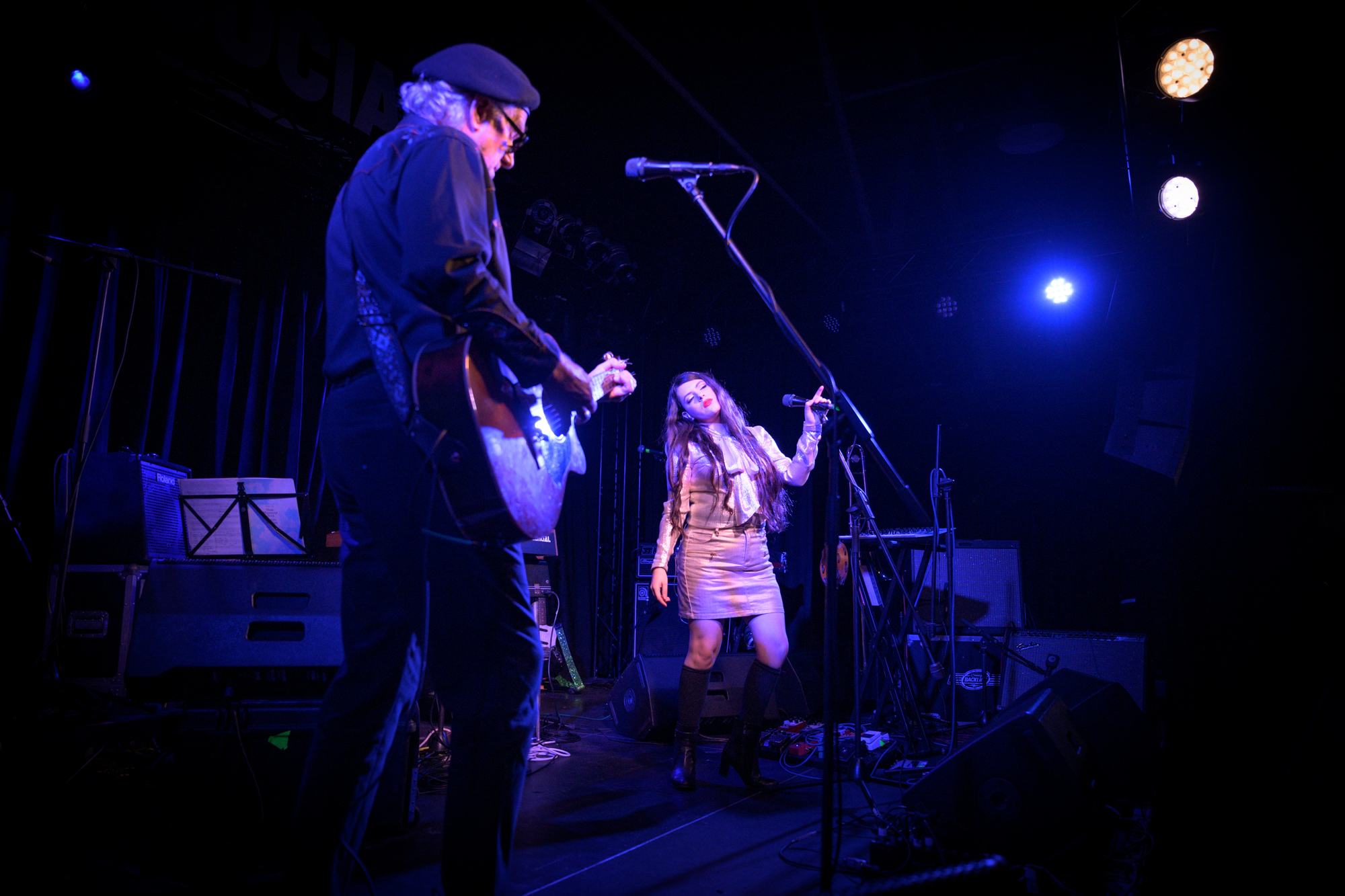
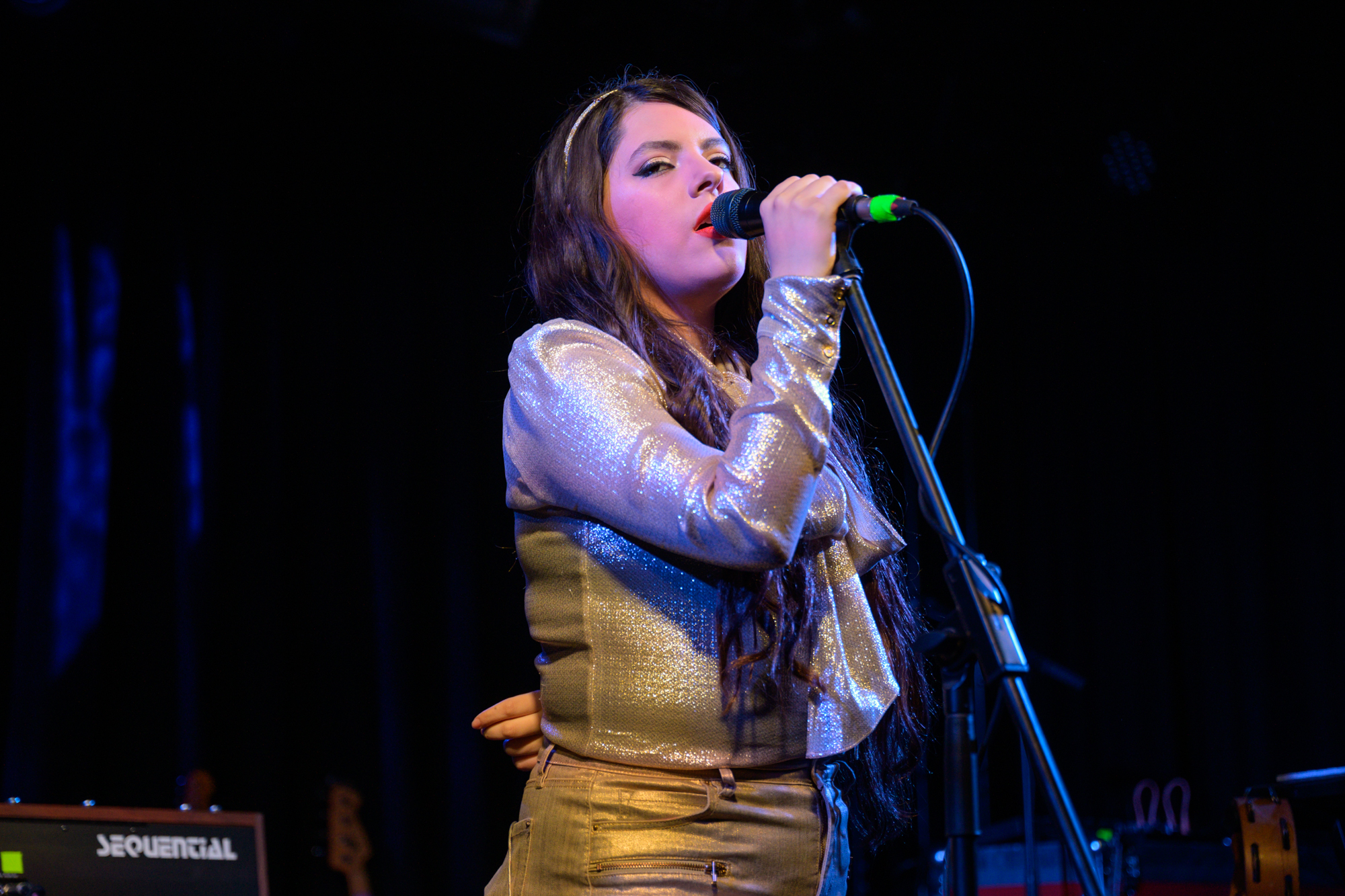
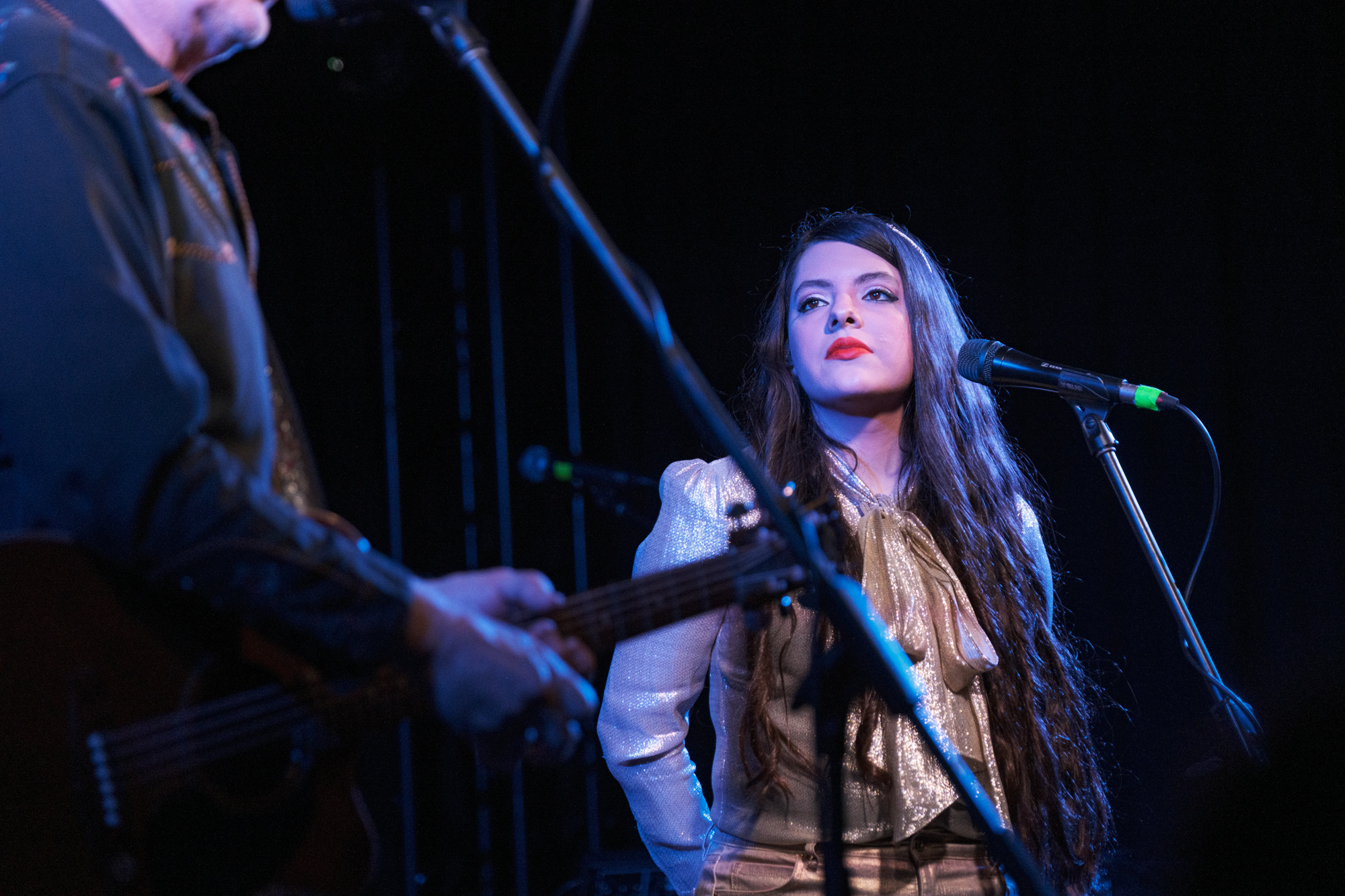
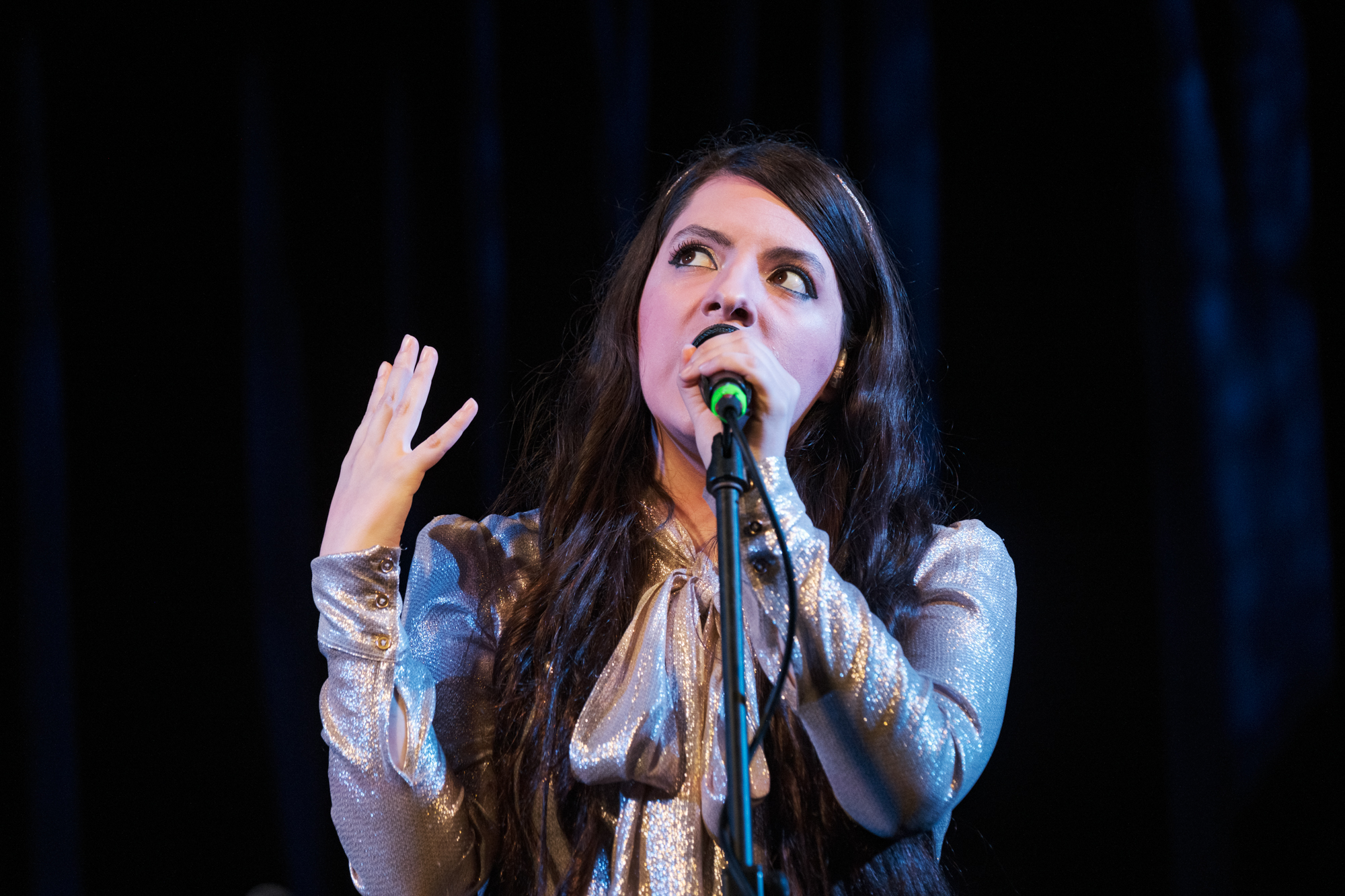
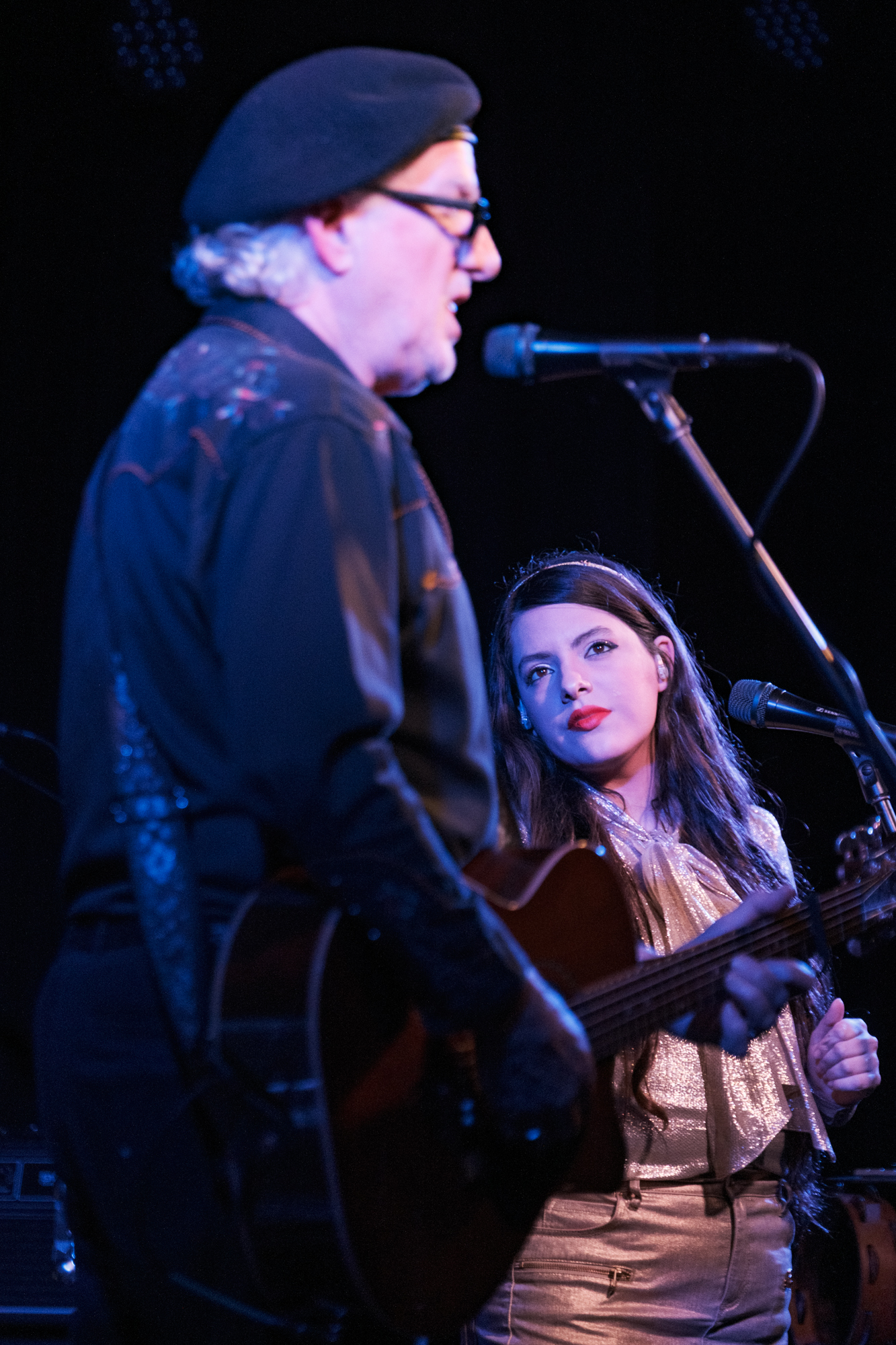
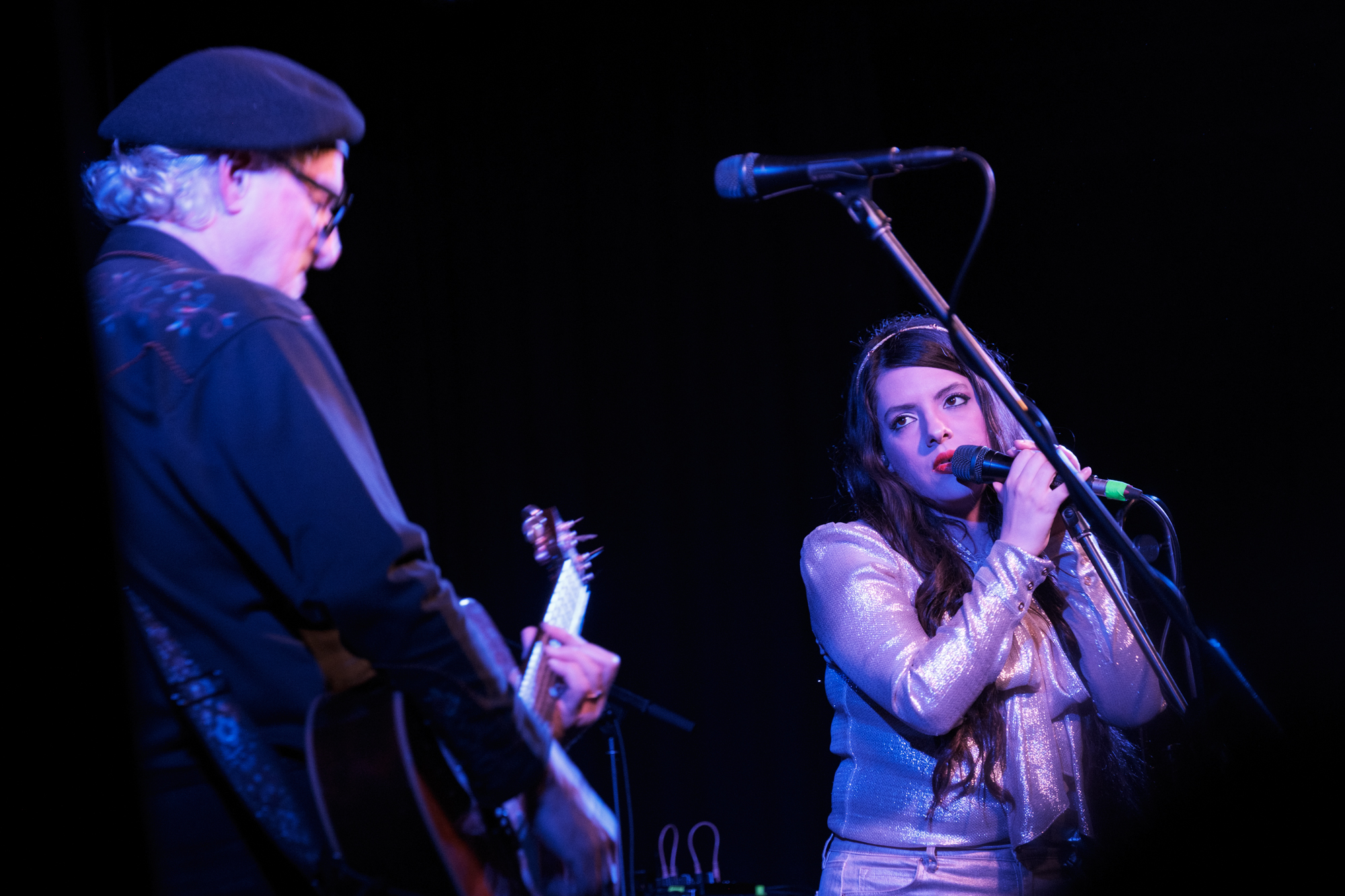
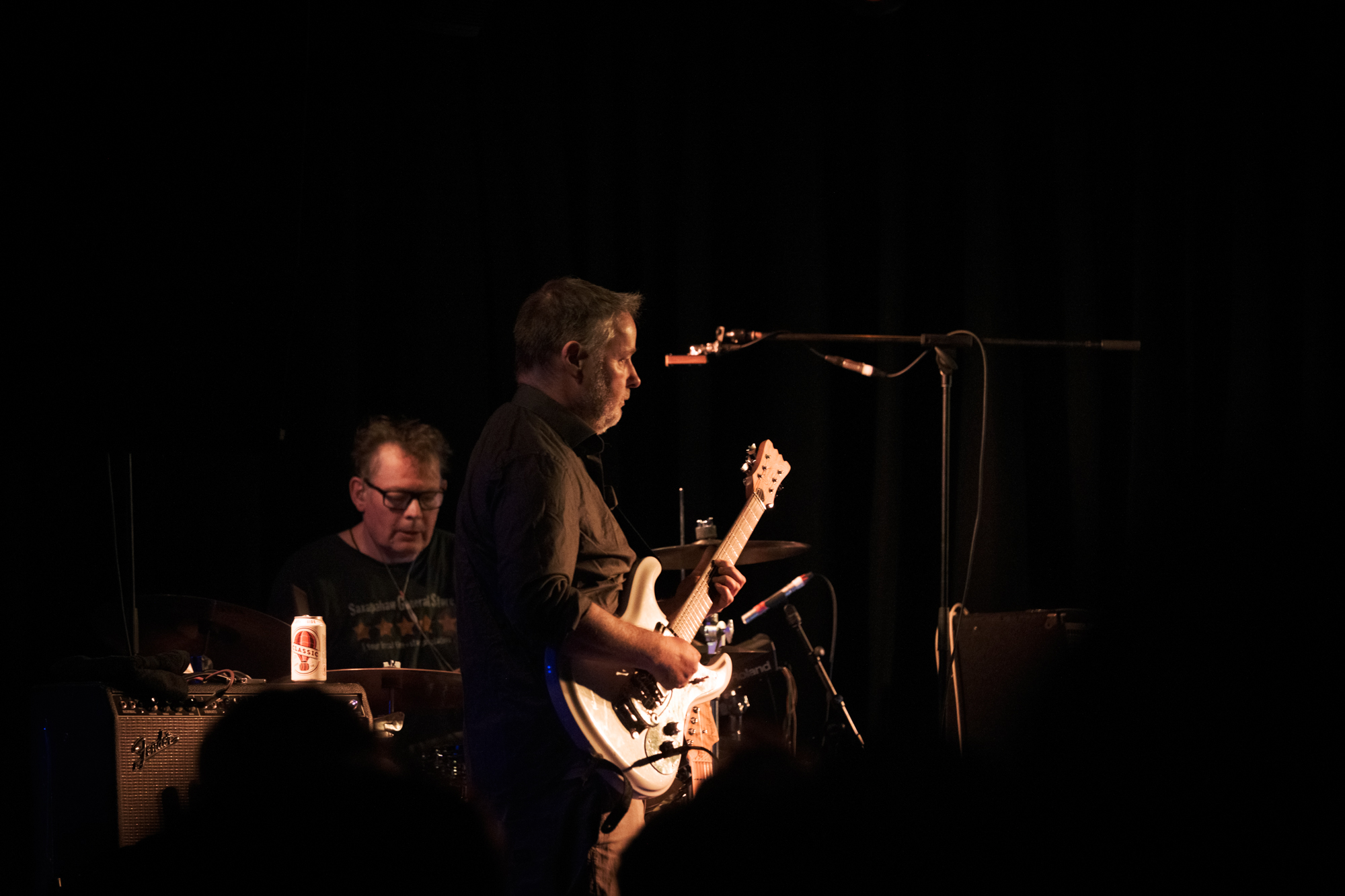
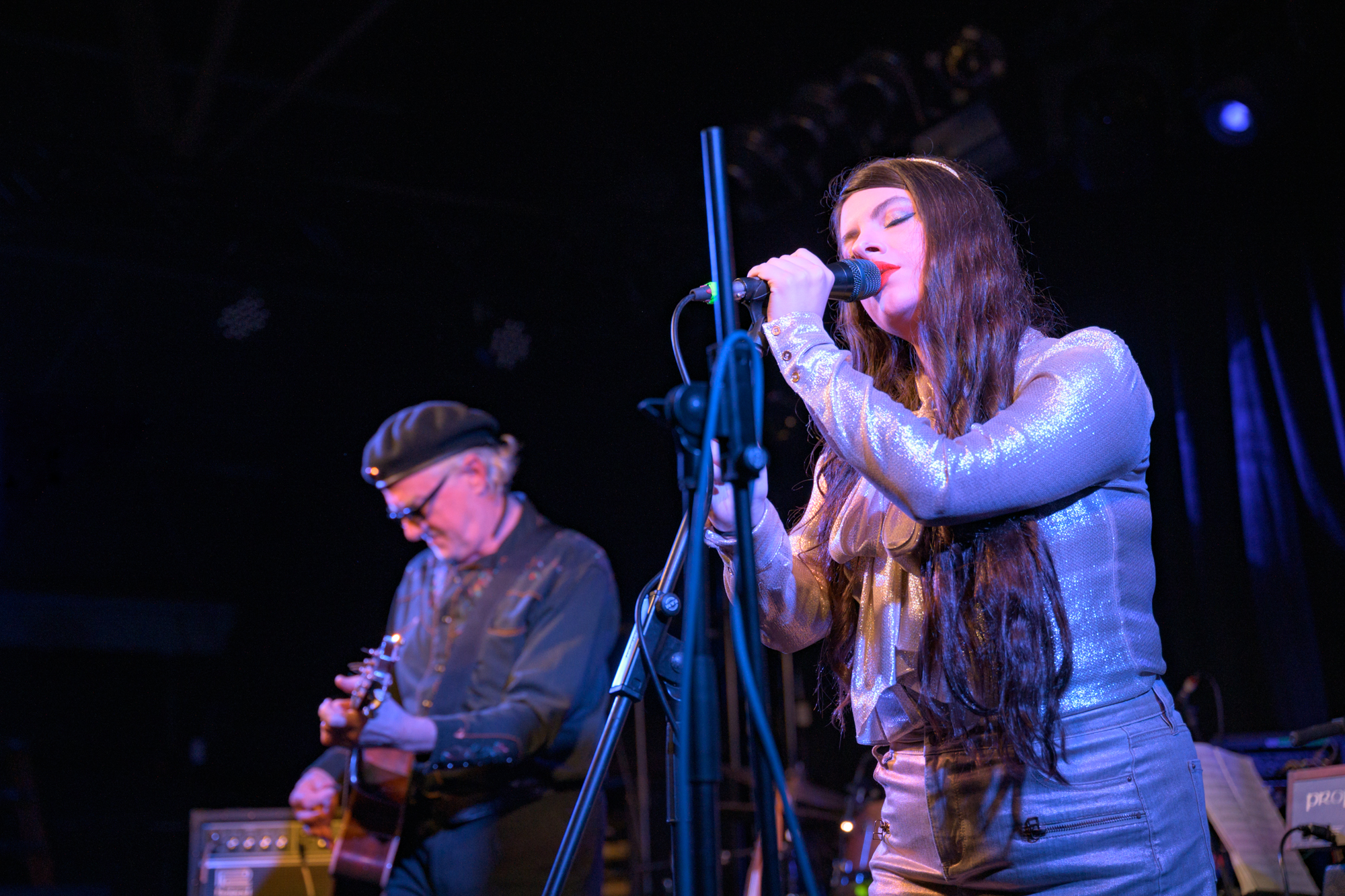
Before that, however, came an intriguing support set from Mick Harvey and Amanda Acevedo. Dressed in a black beret and dark denim, Harvey cut a solitary figure as he opened with guitar-led material that felt earthy and weathered. Joined by Acevedo, the pair drew upon a lineage of masculine-feminine vocal interplay stretching from Serge Gainsbourg and Brigitte Bardot onwards. Their rendition of Bonnie and Clyde felt notably less flirtatious than the original, Harvey’s guitar lending the material a gravitas that prevented it from drifting into nostalgia, while Acevedo’s deeper register grounded the song further still.
Newly released single Perfect Storm proved a highlight. Built from looping guitar figures, rumbling thunder and storm-brewing rhythms that felt almost ritualistic, the song conjured weather rather than merely describing it. Much of the material carried the feeling of something still being tested in real time, a quality Harvey embraced with humility. For a musician with such a storied—or “chequered”, as he himself put it—career, the vulnerability and openness felt unexpectedly touching.
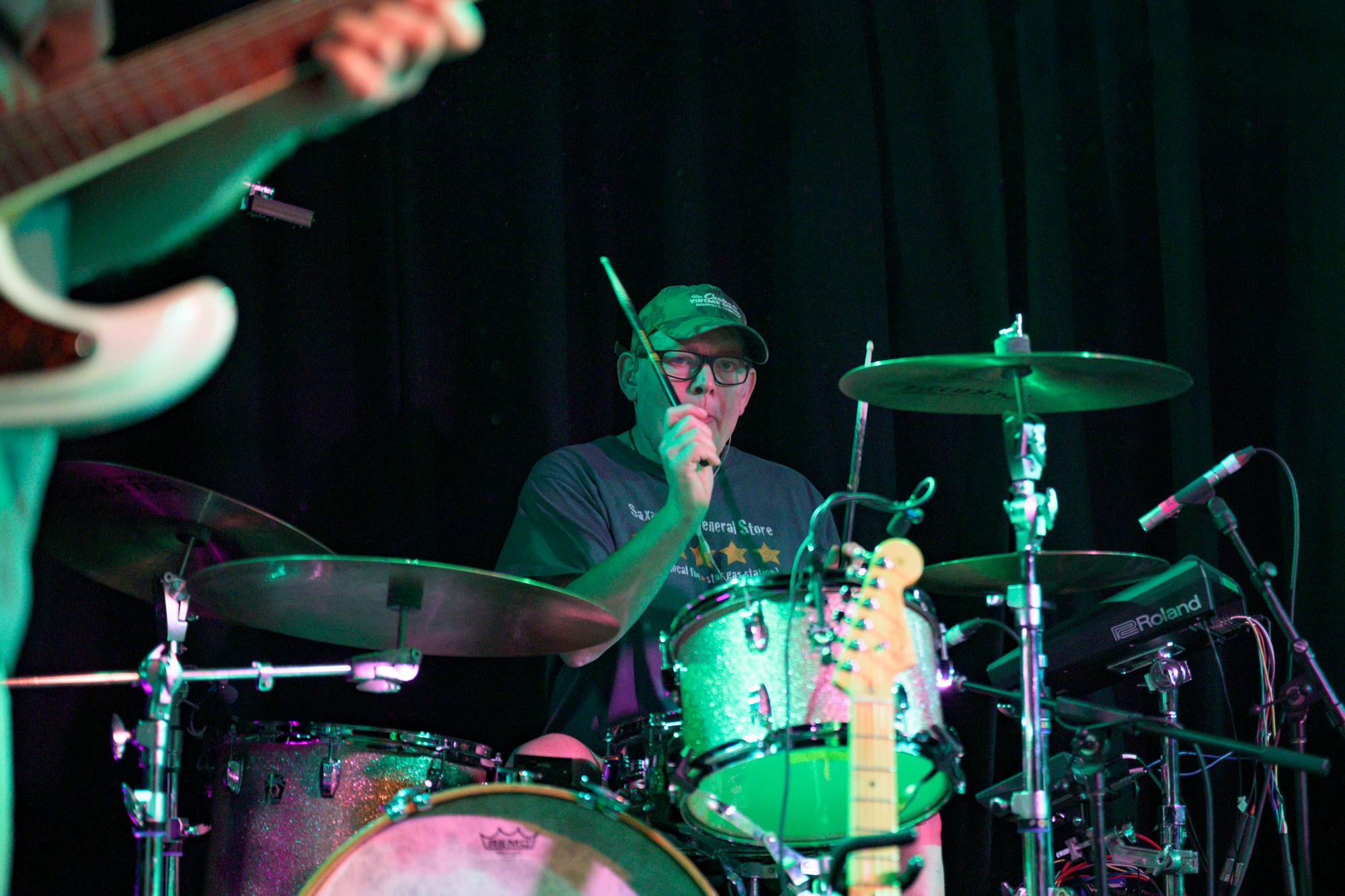
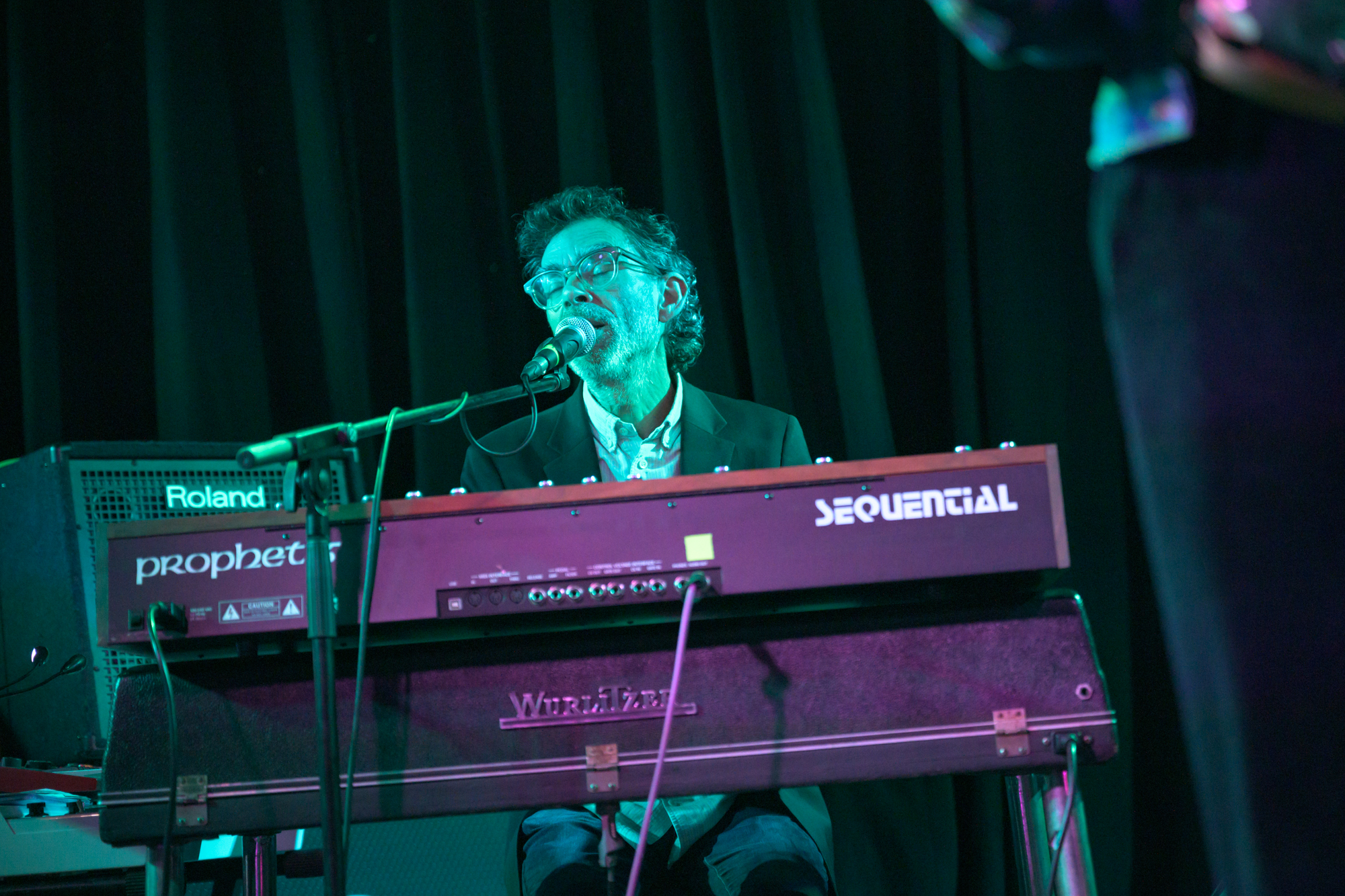
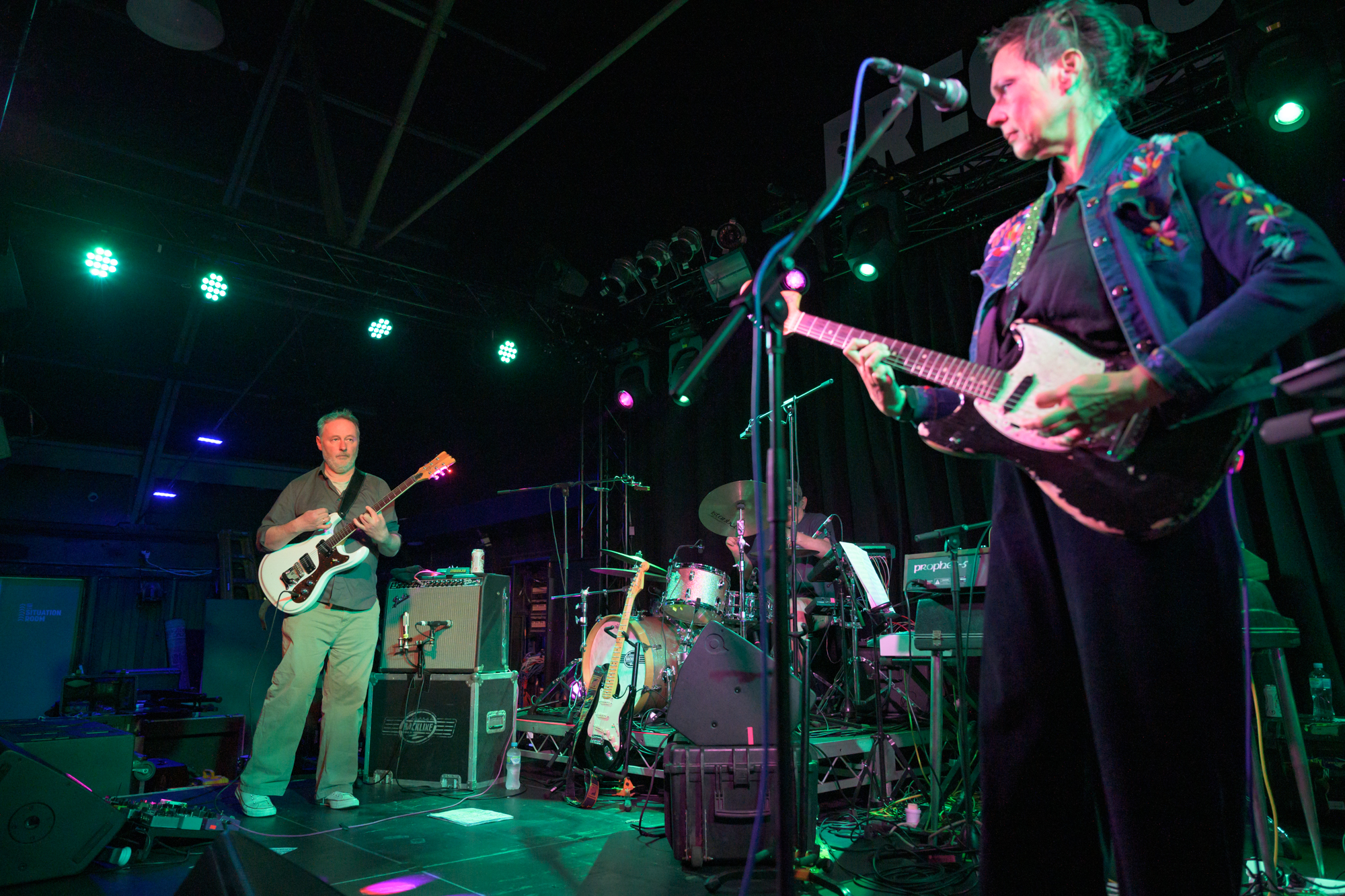
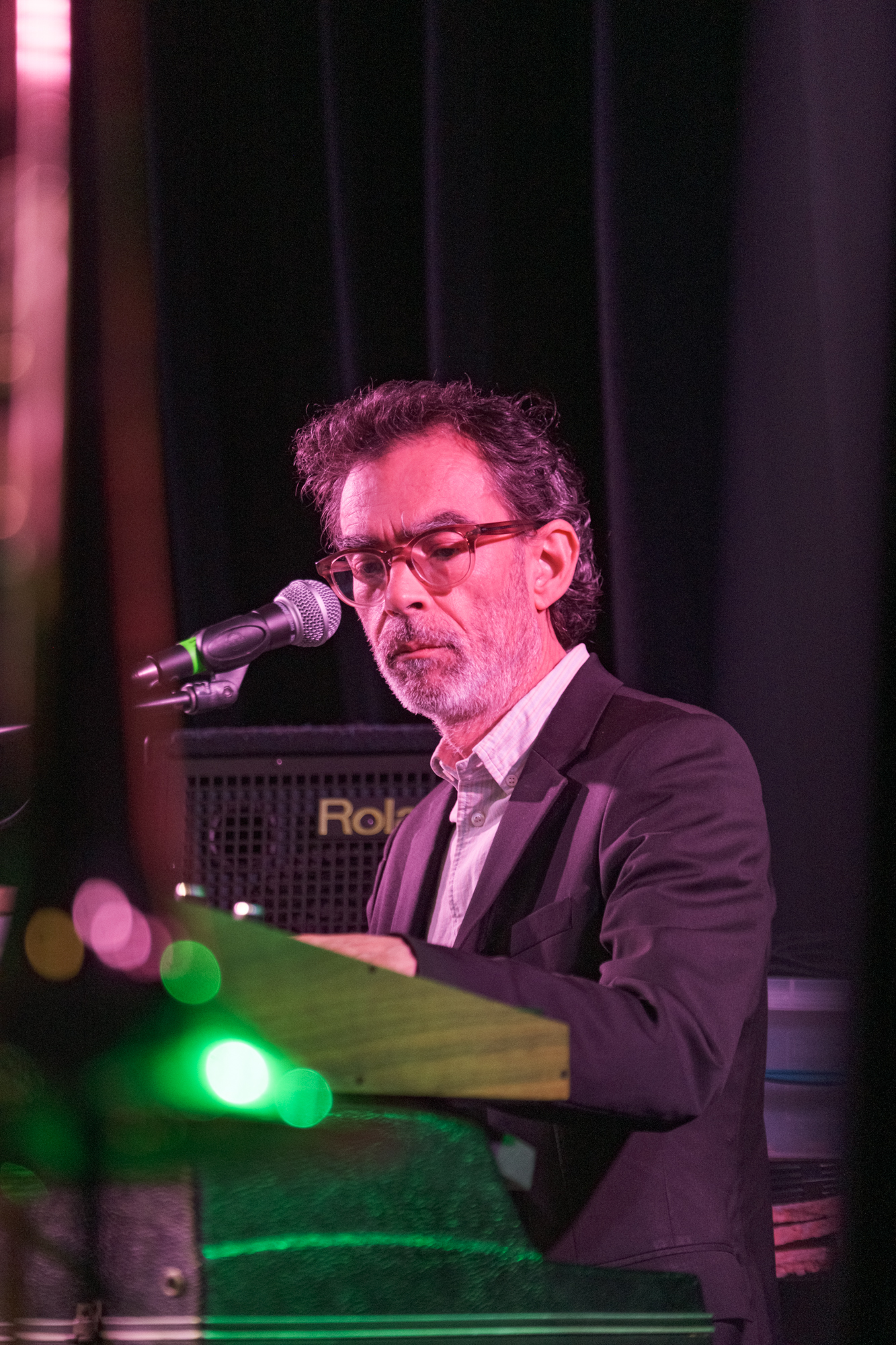
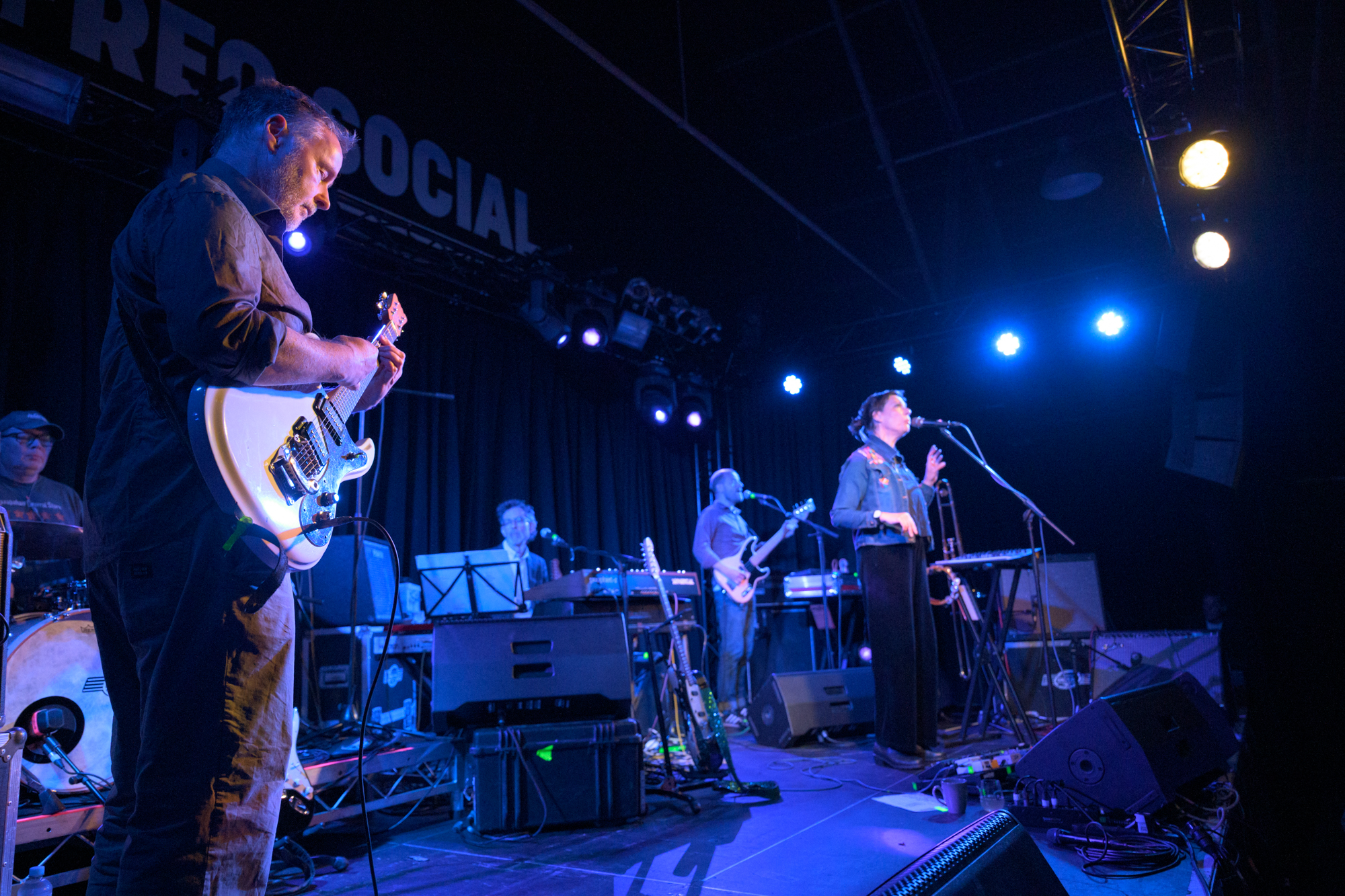
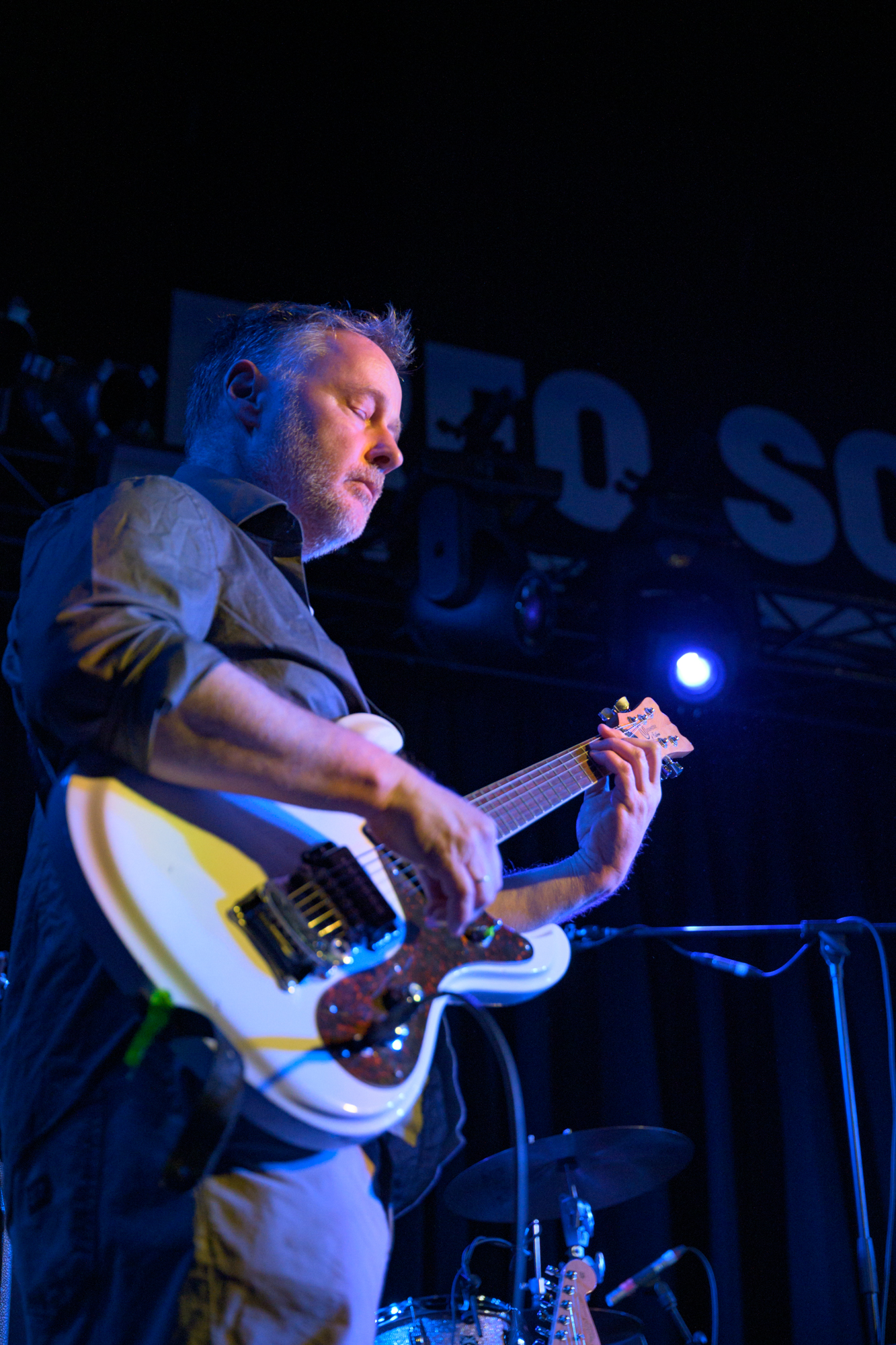
Stereolab, by contrast, wasted little time easing into the evening. Entering the stage after a bustling rhythm that felt lifted from a seventies police procedural, the band immediately established that they would be far less dreamy or twee than some might expect. A burst of electronics and tightly wound rhythm set the group’s intent. The opening run of songs served as a reminder that while Stereolab are often discussed in terms of influences, theories and aesthetics, their music is fundamentally physical. Motorik rhythms locked drums, bass and guitar together with remarkable precision, generating grooves that were impossible to resist.
Live, one of the band’s enduring achievements is their ability to make electronic music feel handmade. Rather than machines producing rhythm, the musicians collectively became the machine. Every repetitive pulse, synth flourish and rhythmic pattern emerged through human interaction. It is an idea inherited from the great krautrock innovators who first imagined humans performing machine logic, yet hearing it realised by flesh-and-blood performers remains quietly astonishing. The result was not cold or clinical, but infectious and bouncy.
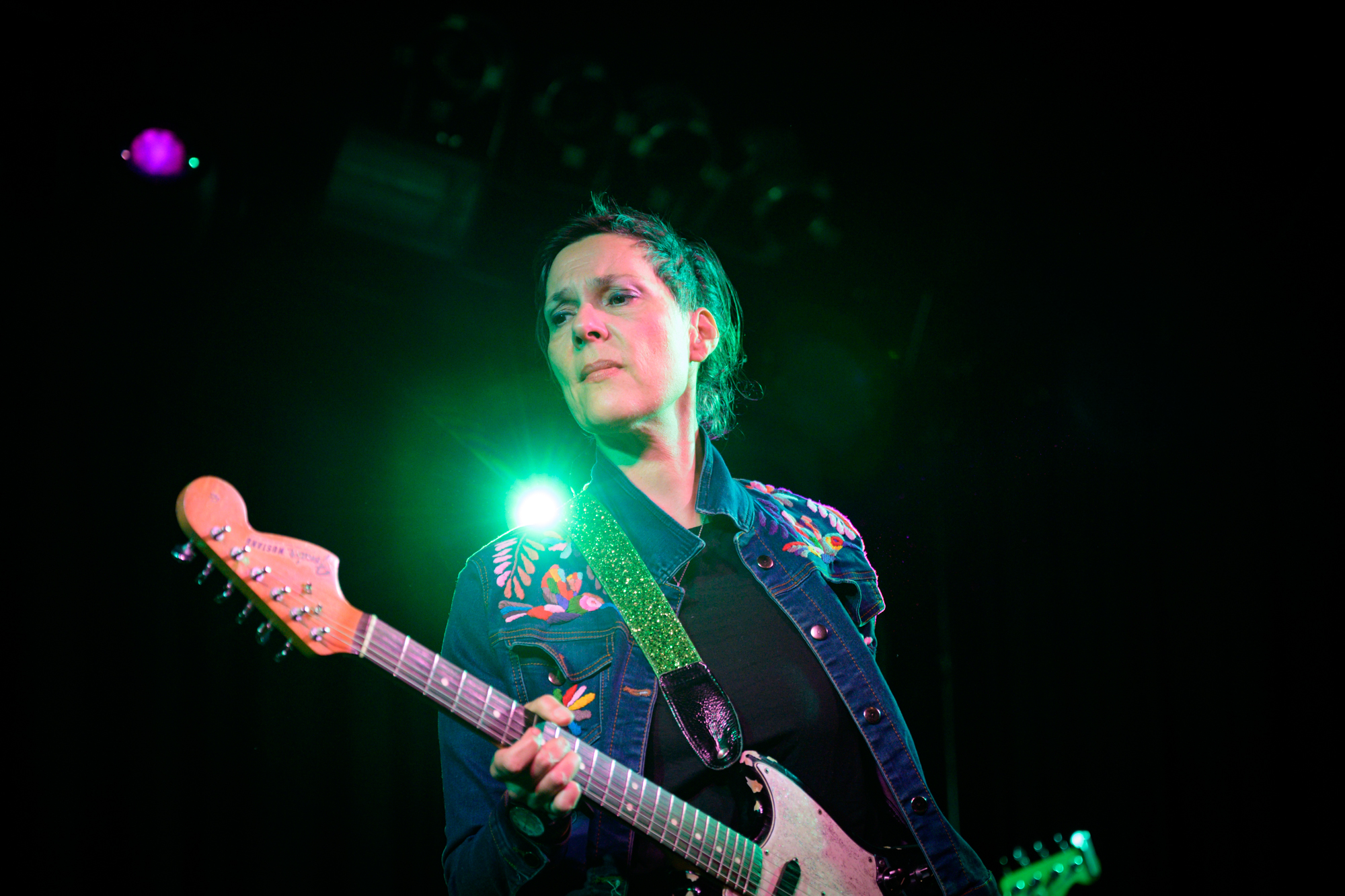
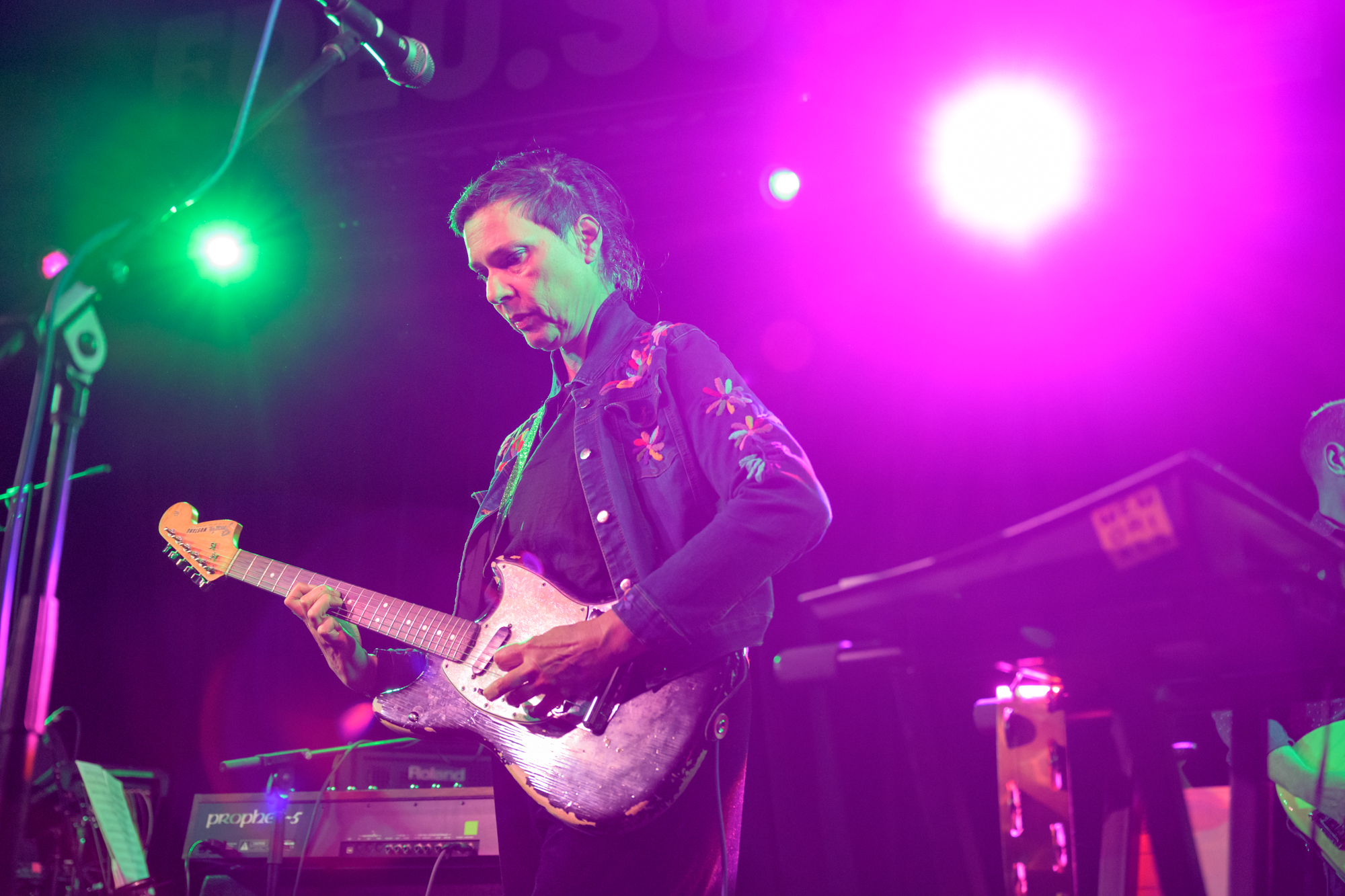
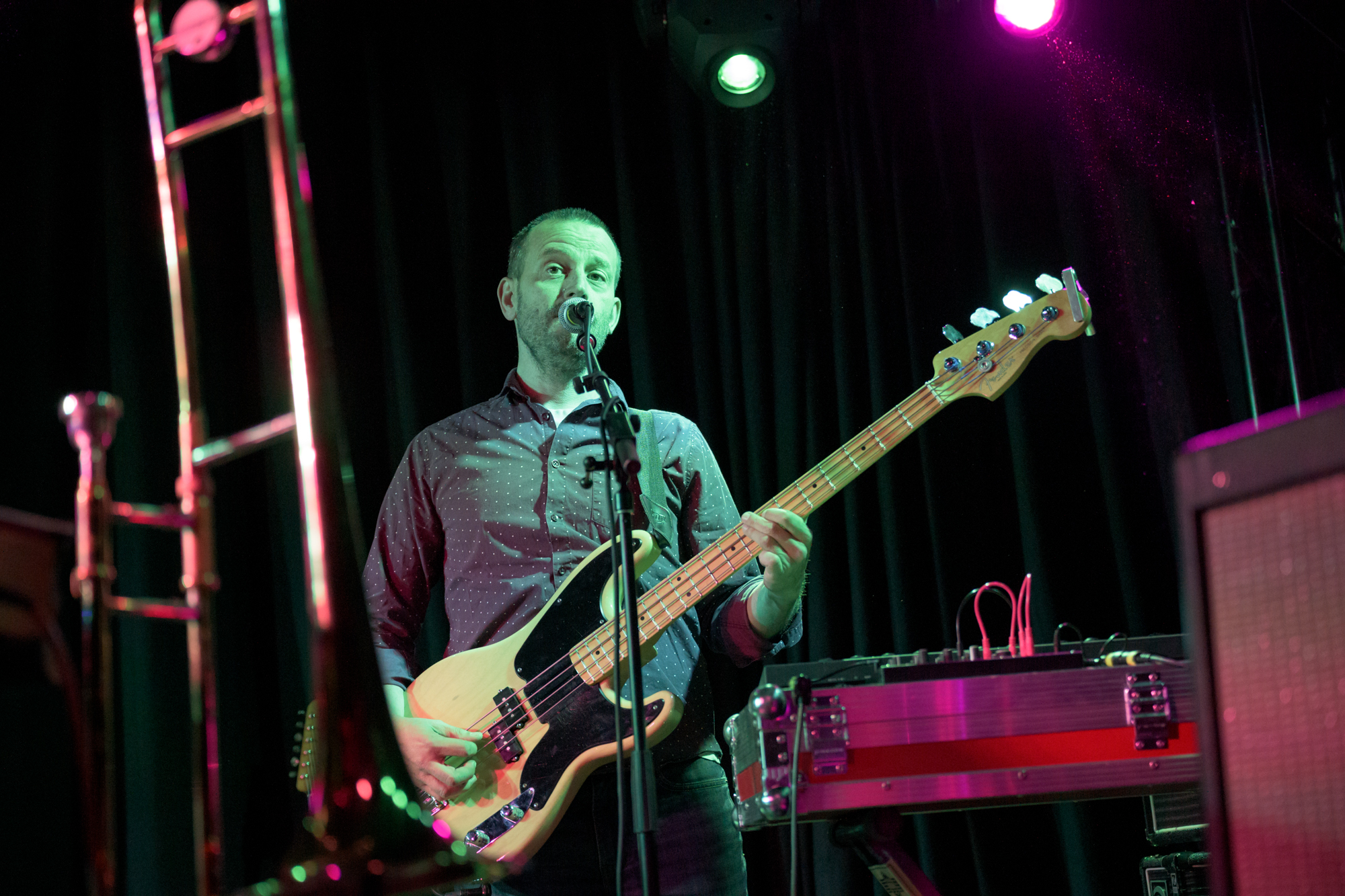
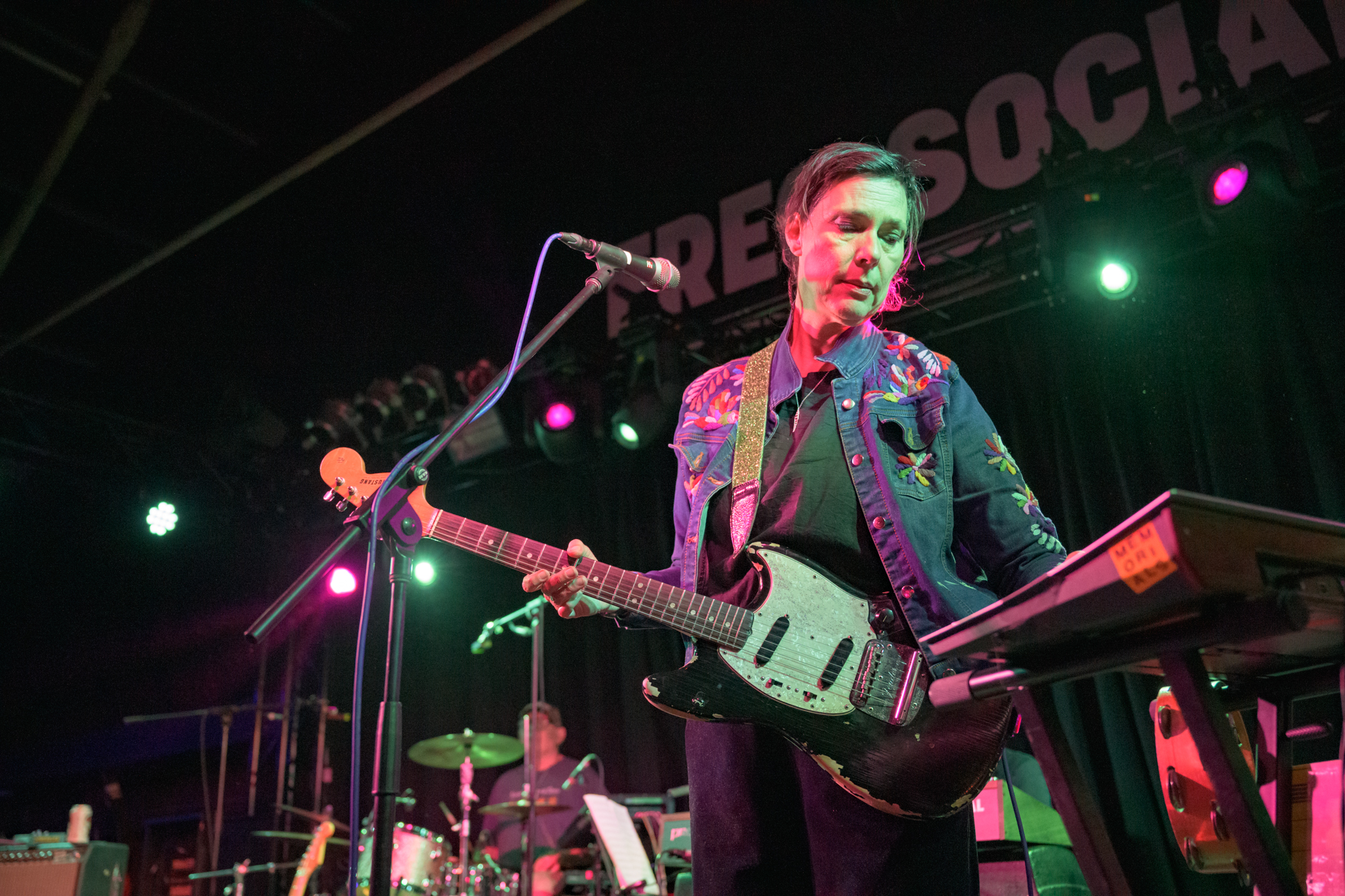
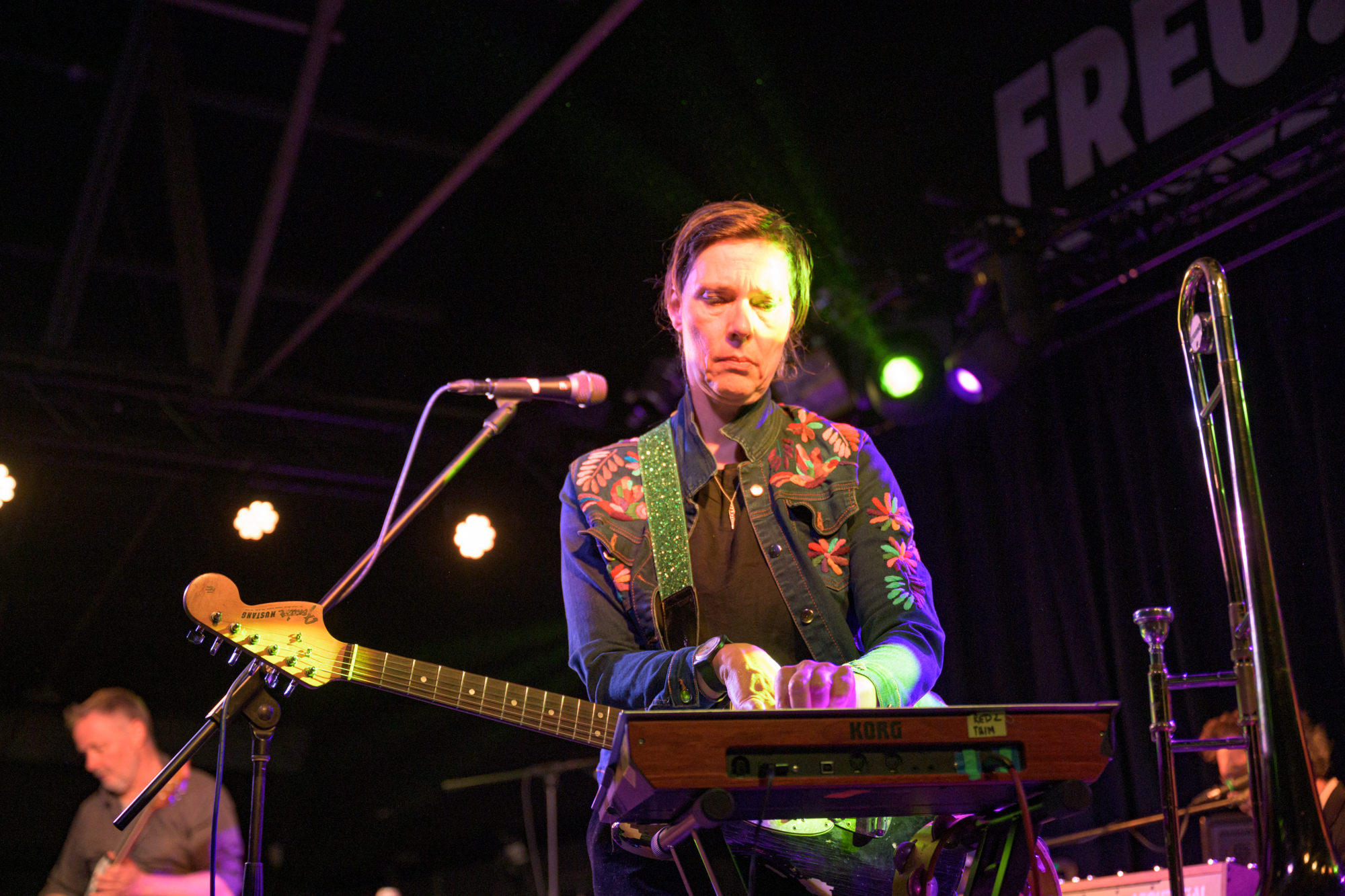
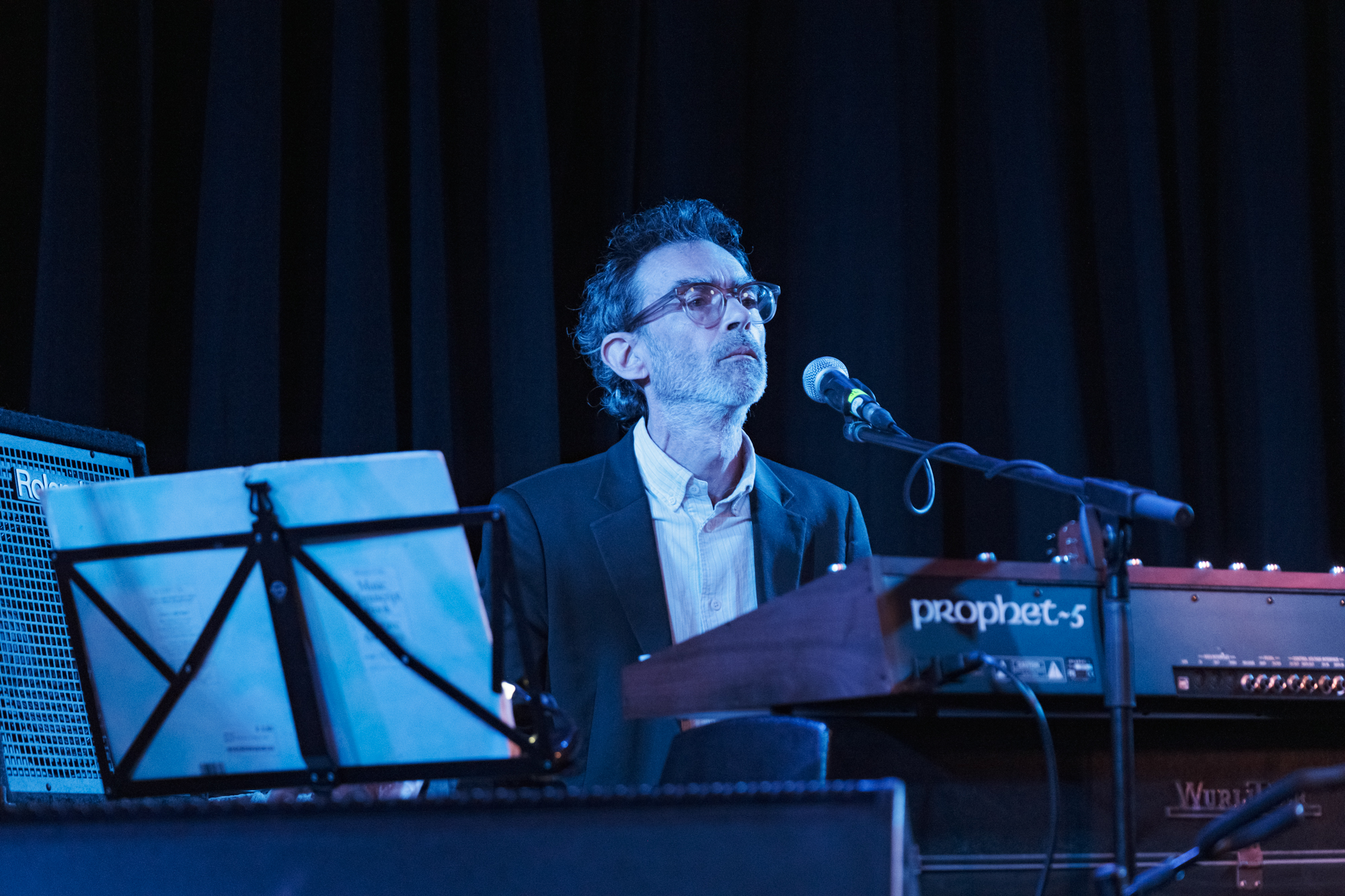
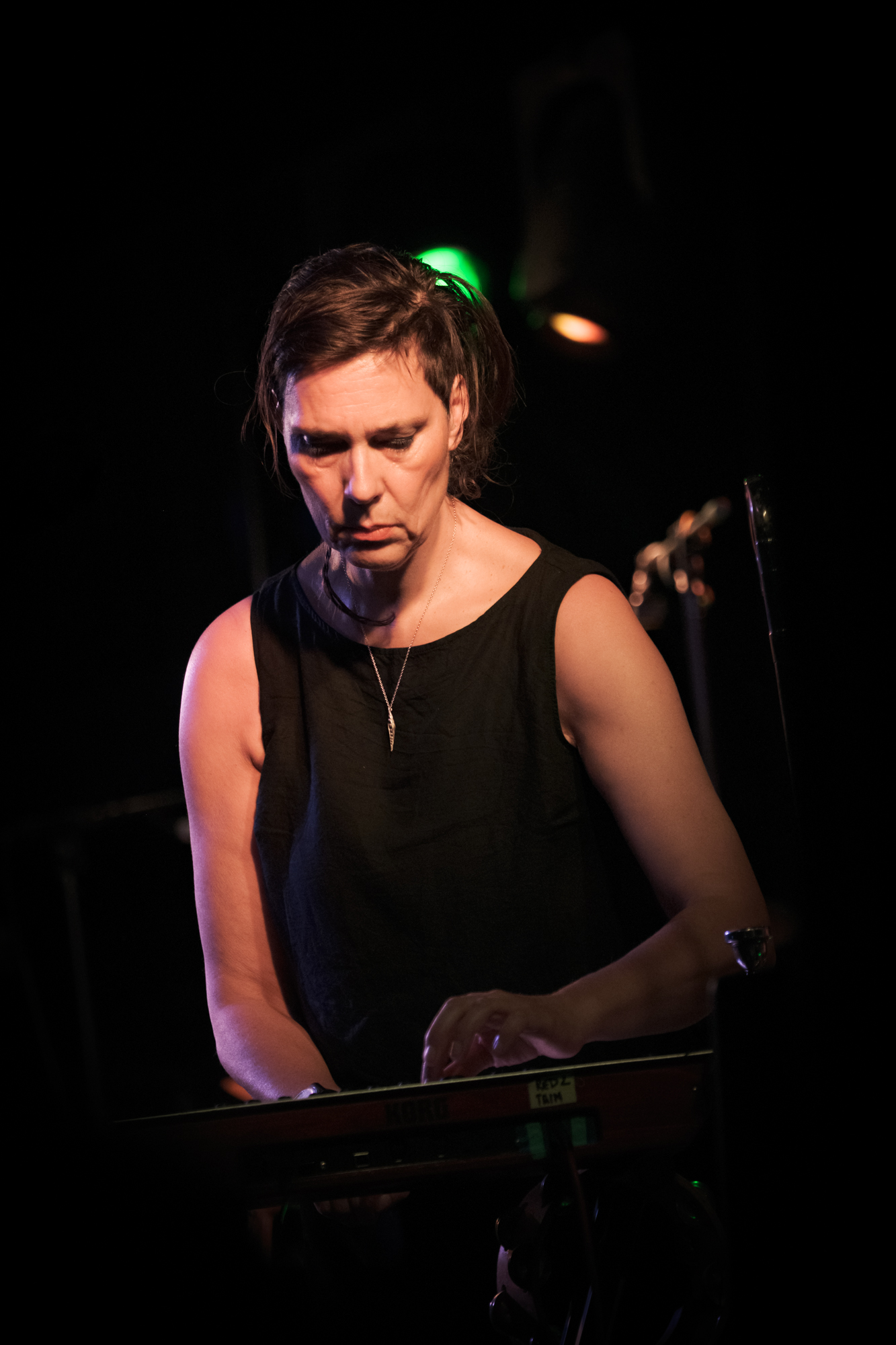
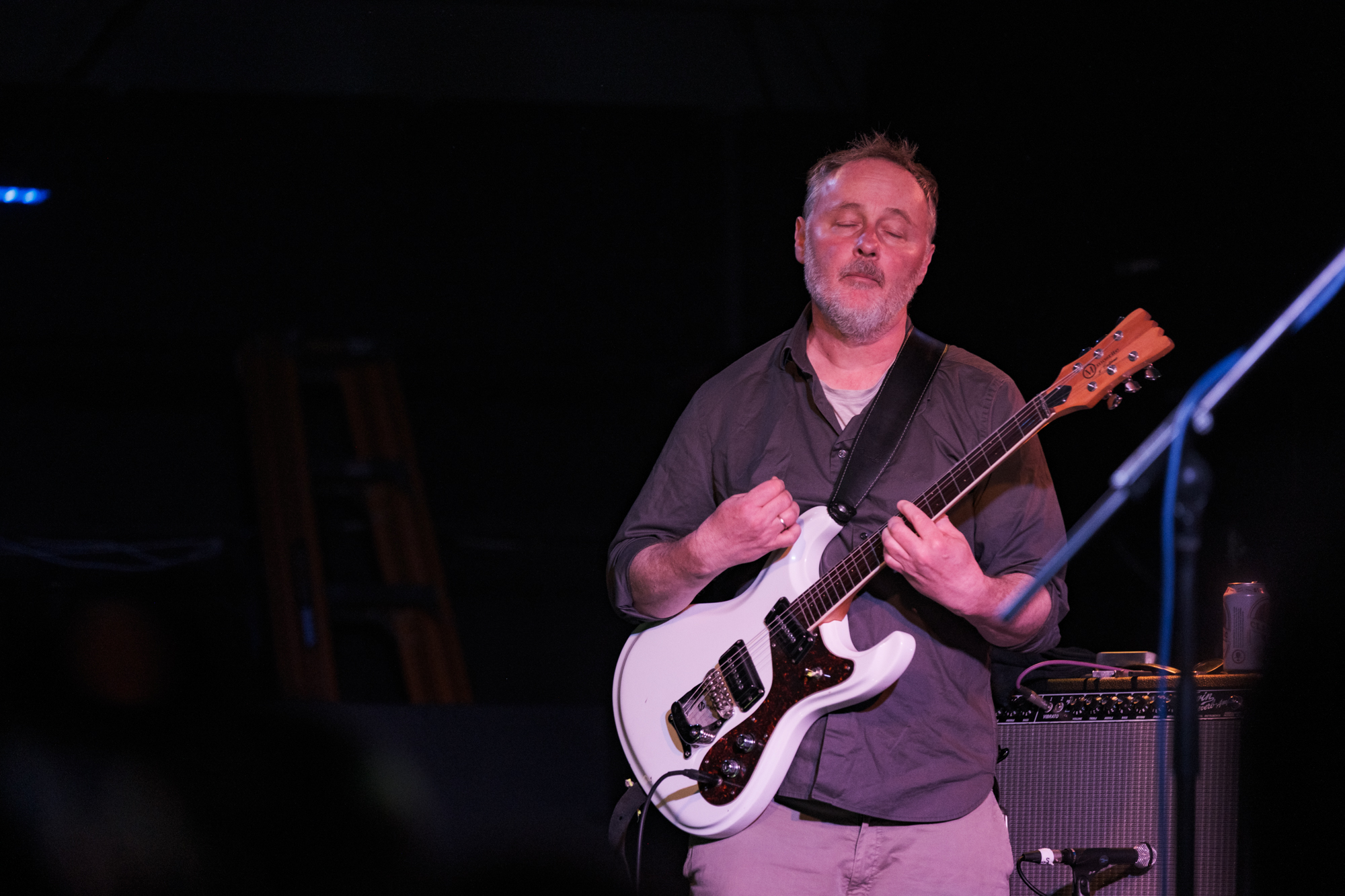
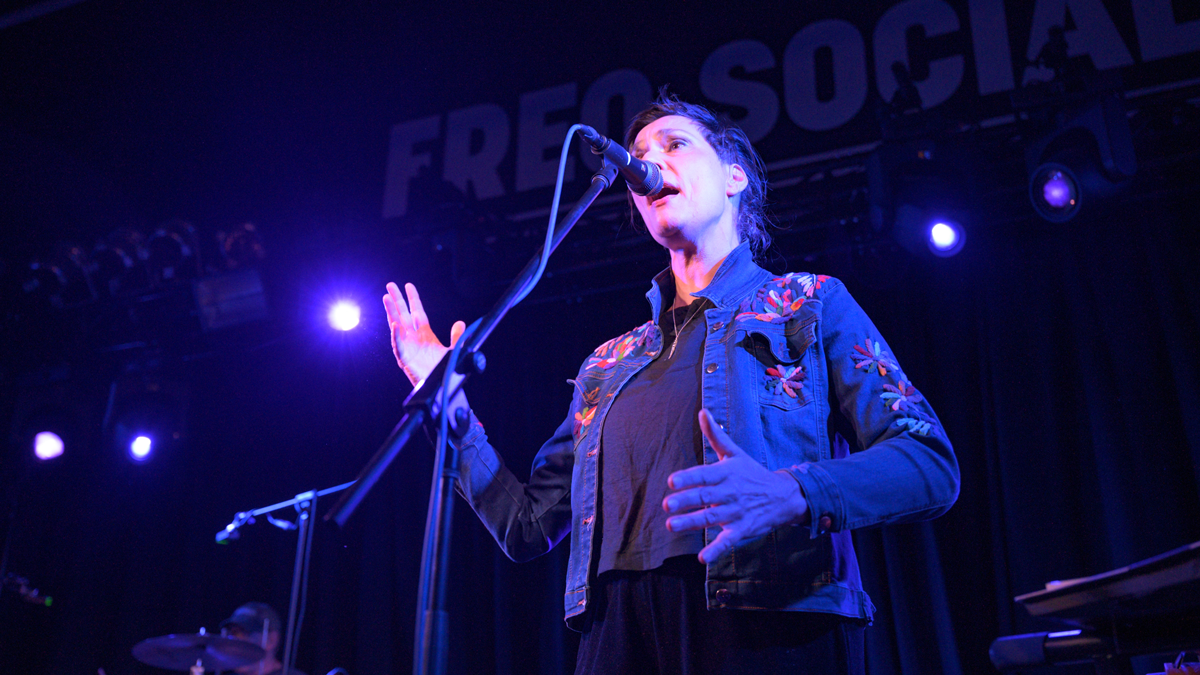
At centre stage, Lætitia Sadier remained a quietly magnetic presence, her glittering guitar strap catching the light. Her voice sounded almost exactly as generations of listeners would hope: poised between strength and fragility, carrying the spirit of French ye-yé without ever becoming mere ornament. Beside her, bassist Xavier Muñoz provided vocal counterpoints that highlighted one of Stereolab’s enduring strengths: melodies that unfold through conversation and harmonic contrast.
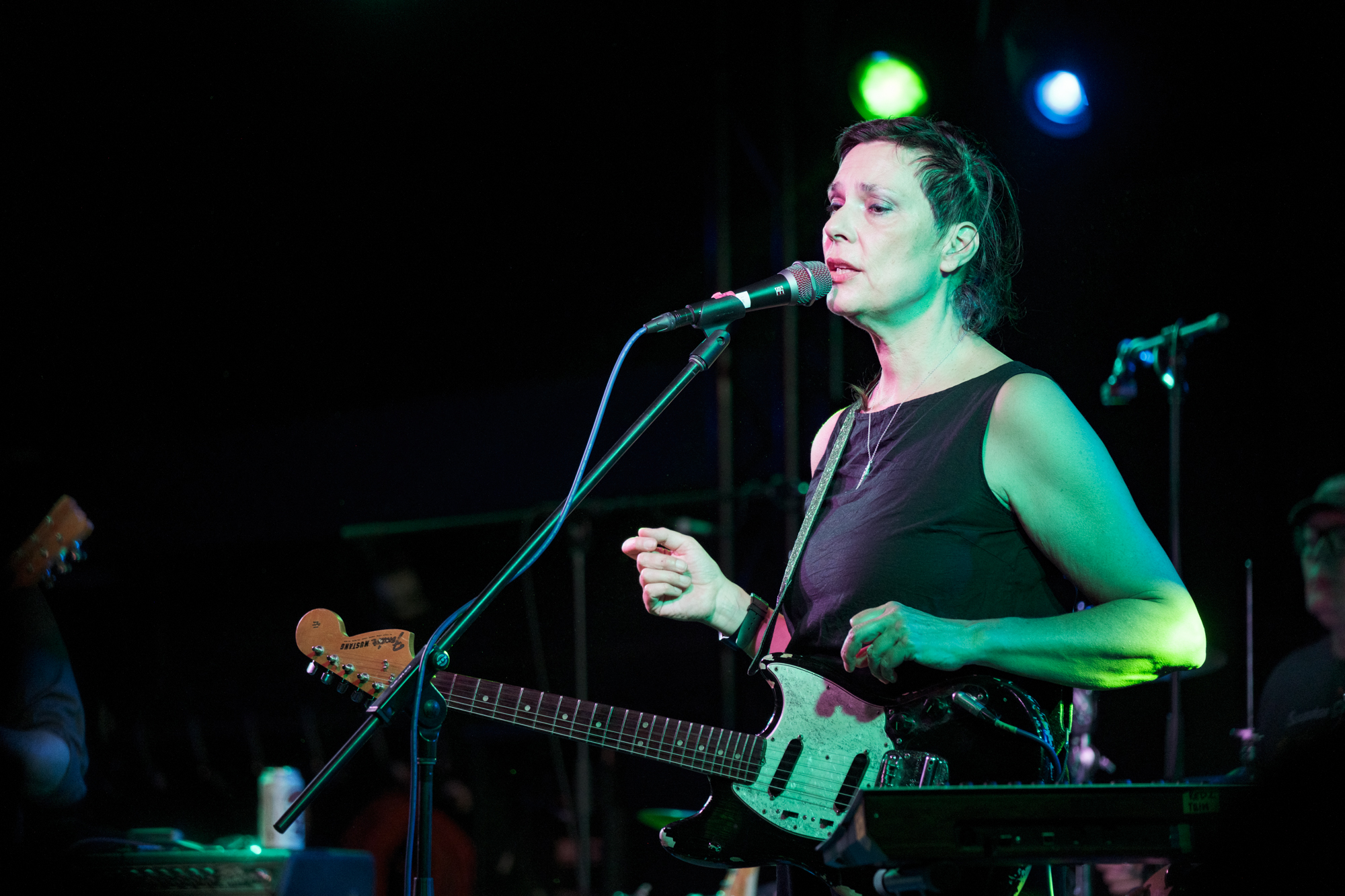
Aerial Troubles and Vermona F Transistor signalled early that the band’s most recent album would form the backbone of the evening before Peng! 33 drew one of the first major eruptions of recognition. Introduced, not once but twice, as “one from the nineties”, the song’s call-and-response vocal lines generated an almost naive sense of wonder. Curiously, it also felt a little looser around the edges than the material surrounding it. Whether it reflected the band’s relationship with a well-worn favourite or simply highlighted the precision of the newer songs was difficult to say, but fans clearly enjoyed the way Stereolab’s recent material sat alongside their celebrated catalogue.
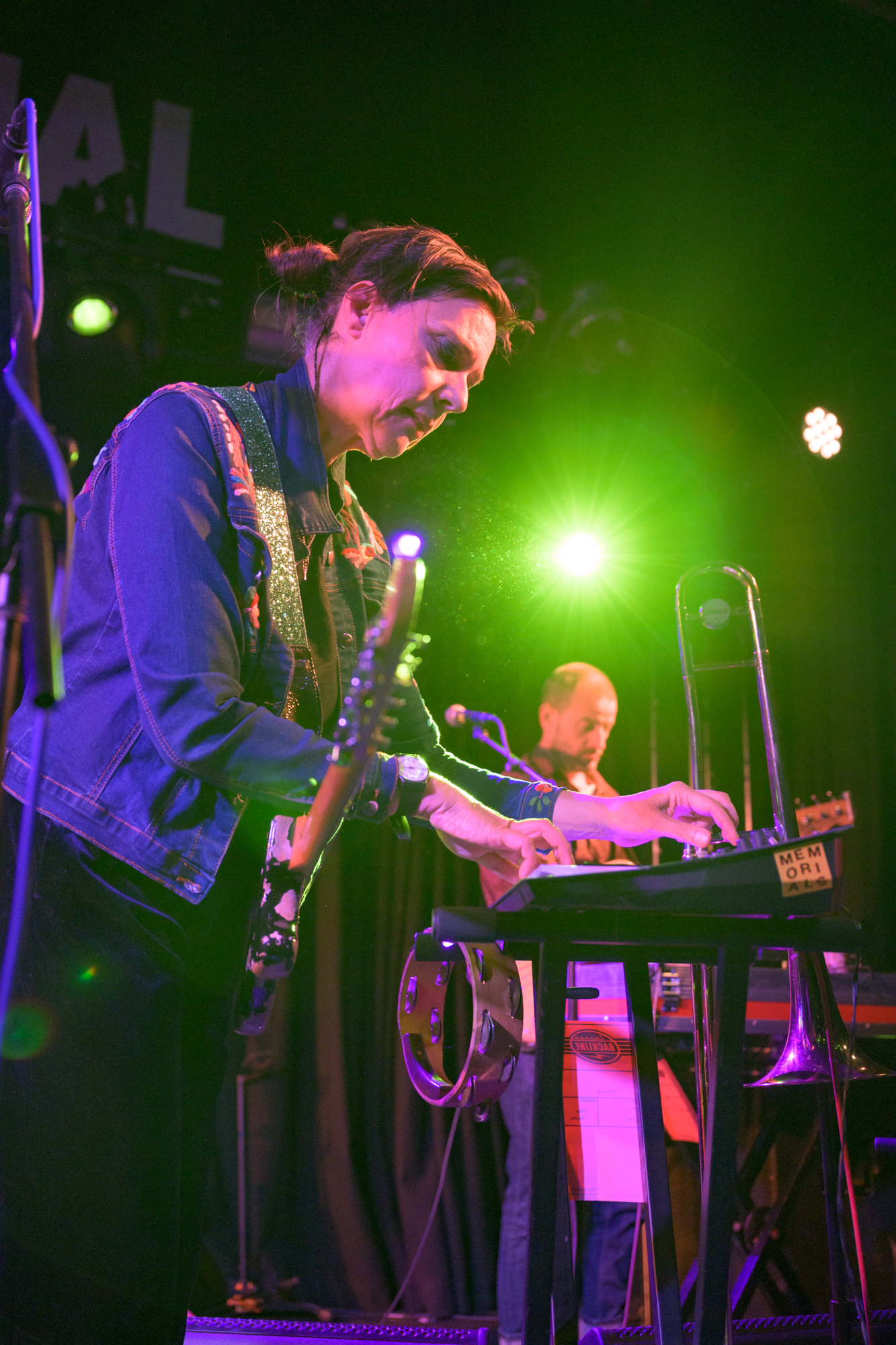
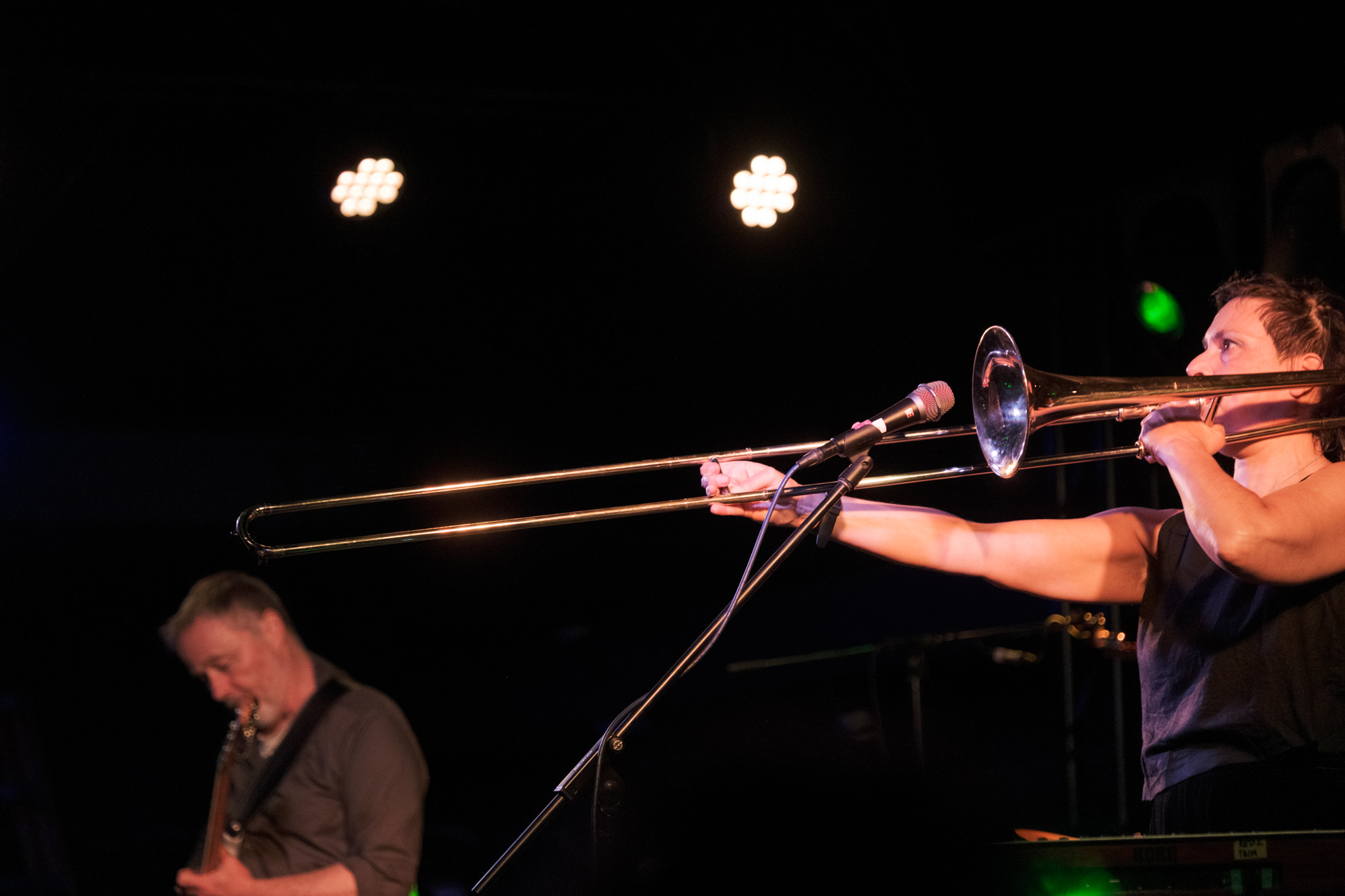
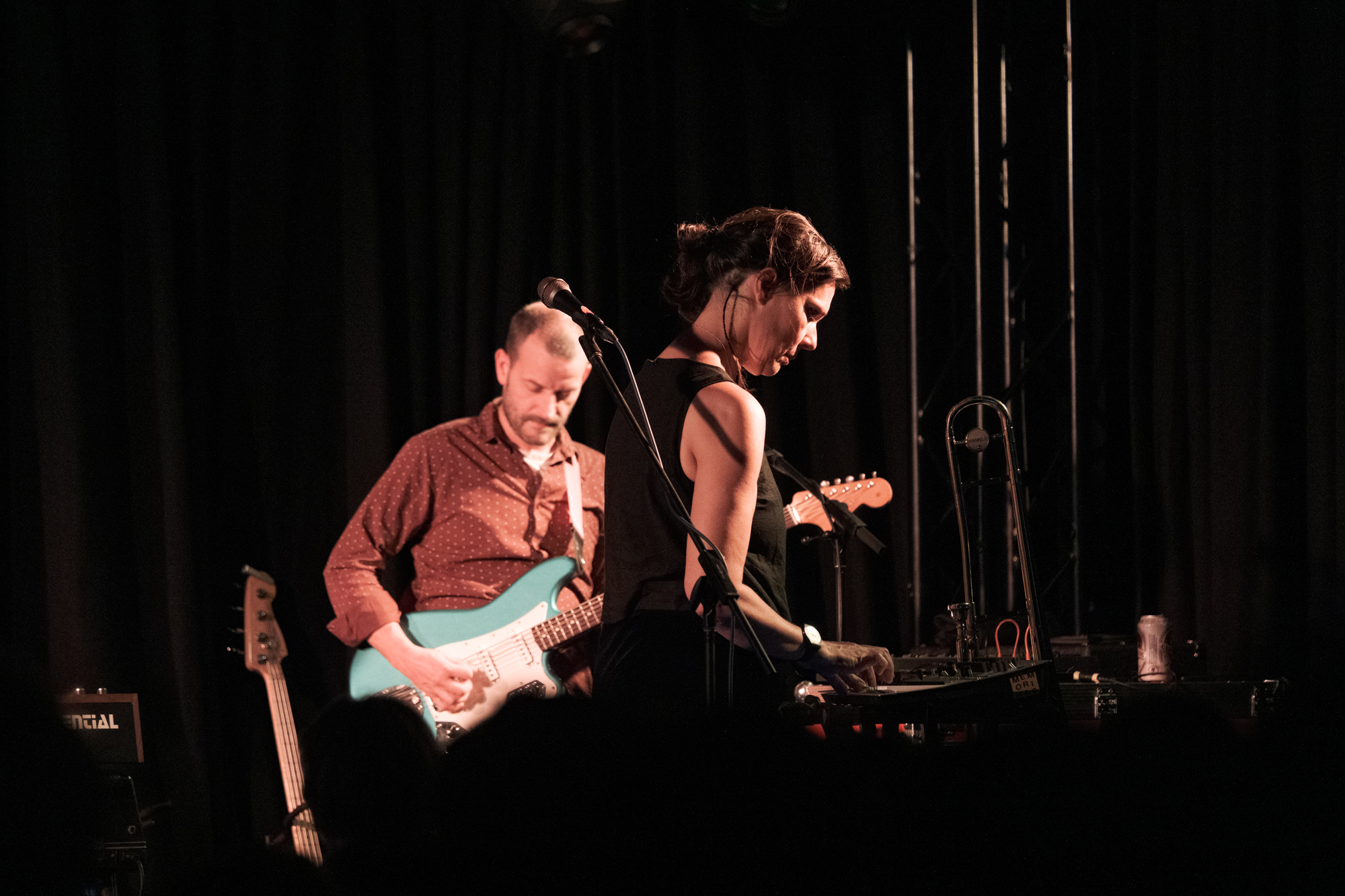
If there was a centrepiece, however, it arrived with Melodie Is A Wound. Introduced understatedly as “capitalism is a wound”, echoing the political lineage stretching back through Sadier and Tim Gane’s work with McCarthy, the piece became a meditation on melody itself: a sonic poem revolting against taut framework and melodic expectation. Punctuated by amelodic vocal lines and drum fills that crackled like little bursts of energy, Sadier moved effortlessly between instruments, picking up trombone before returning to electronics. What began as tightly controlled patterning slowly dissolved into ecstatic exploration. The groove fractured into squeaking distortions, orbital patterns and drifting textures before reassembling itself once more. Here the connection to Can and the broader krautrock tradition felt impossible to ignore. When the rhythm section finally pulled everything back into alignment, the room erupted in applause.
Following such a glorious freak-out, If You Remember I Forgot How To Dream arrived as a welcome return to songcraft. Rich in retro French pop flavour and buoyed by an infectious bounce, it began like a song begging for a dance. Sadier’s trombone was clearer and less affected than earlier appearances, responding conversationally to Gane’s guitar lines as the piece unfolded.
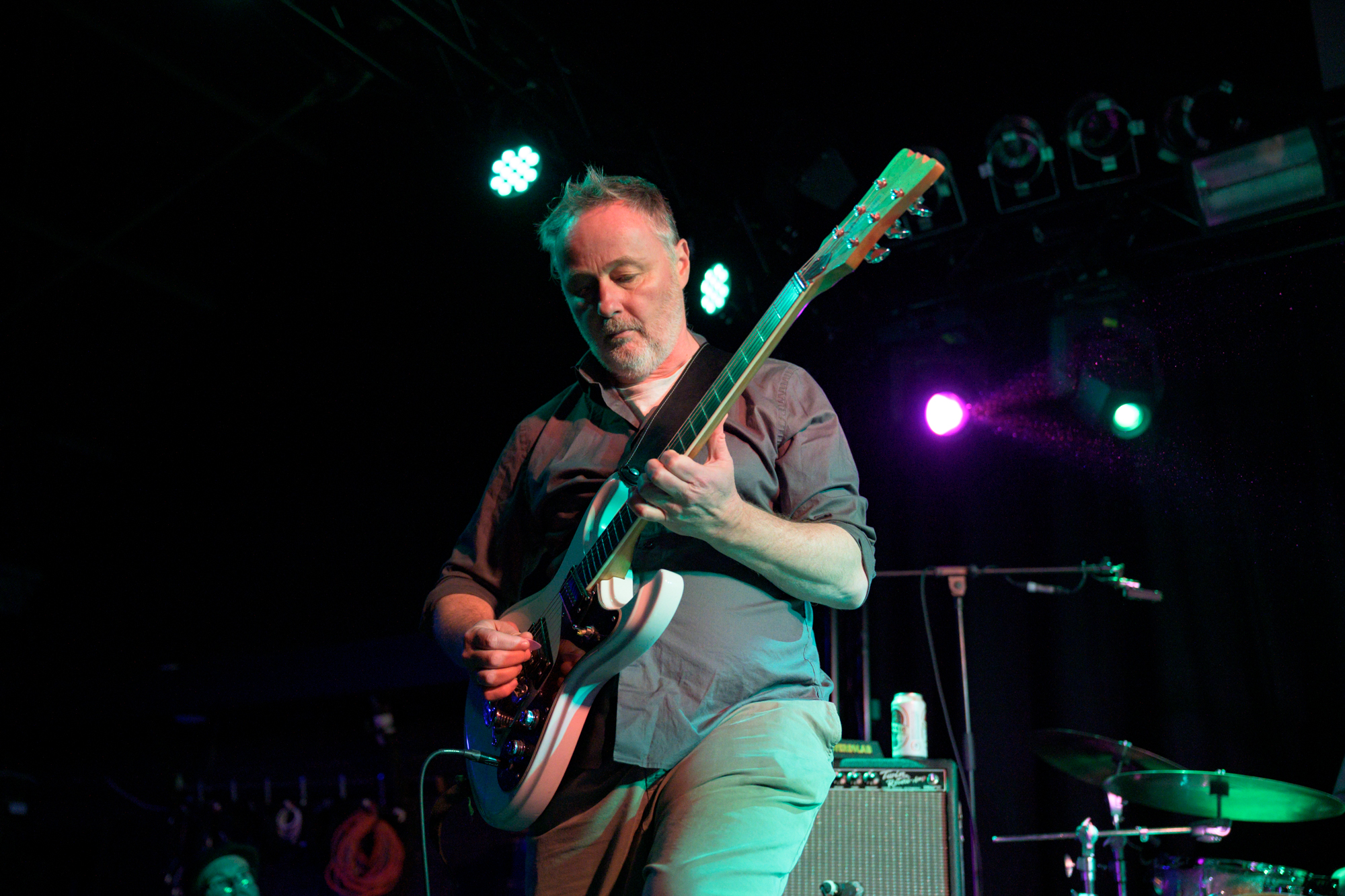
As songs stretched outward into abstraction, they never descended into indulgence. The tension between structure and release generated much of the evening’s excitement. Household Names briefly recalled BadBadNotGood at their more pop-facing, groove-centric moments, while Esemplastic Creeping Eruption proved particularly effective, letting off alien phrases and refracted instrumental conversations while warped, modem-like distortions collided with near-muzak keyboard passages. Magenta light flickered around the hangar beams overhead as synths increasingly took command of the piece.
The audience, meanwhile, seemed entirely under Stereolab’s spell. Heads bobbed from front to back. Smiles appeared everywhere. By the time Percolator arrived, its bubbling synth lines and infectious groove demonstrated how effortlessly Stereolab blur the boundaries between avant-garde experimentation and pure pop pleasure. Framed by Sadier as a song about fear and acting anyway, it resonated strongly with an audience already fully invested in the band’s world.
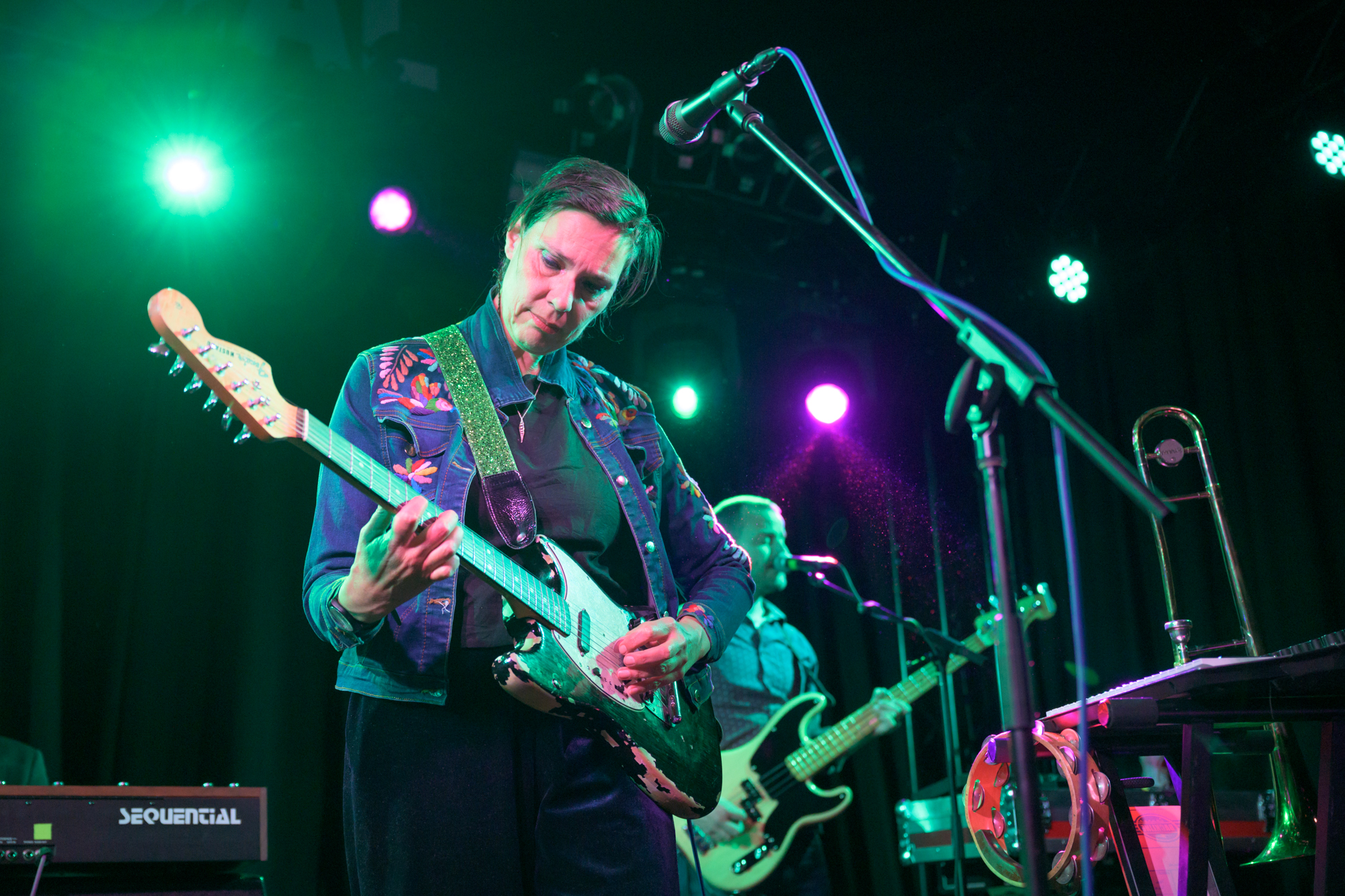
If anything, Electrified Teenybop! demonstrated how remarkable the band’s stamina remains. Even this late in the set, its relentless momentum and proto-electronica pulse felt urgent rather than nostalgic, providing a natural climax before the encore.
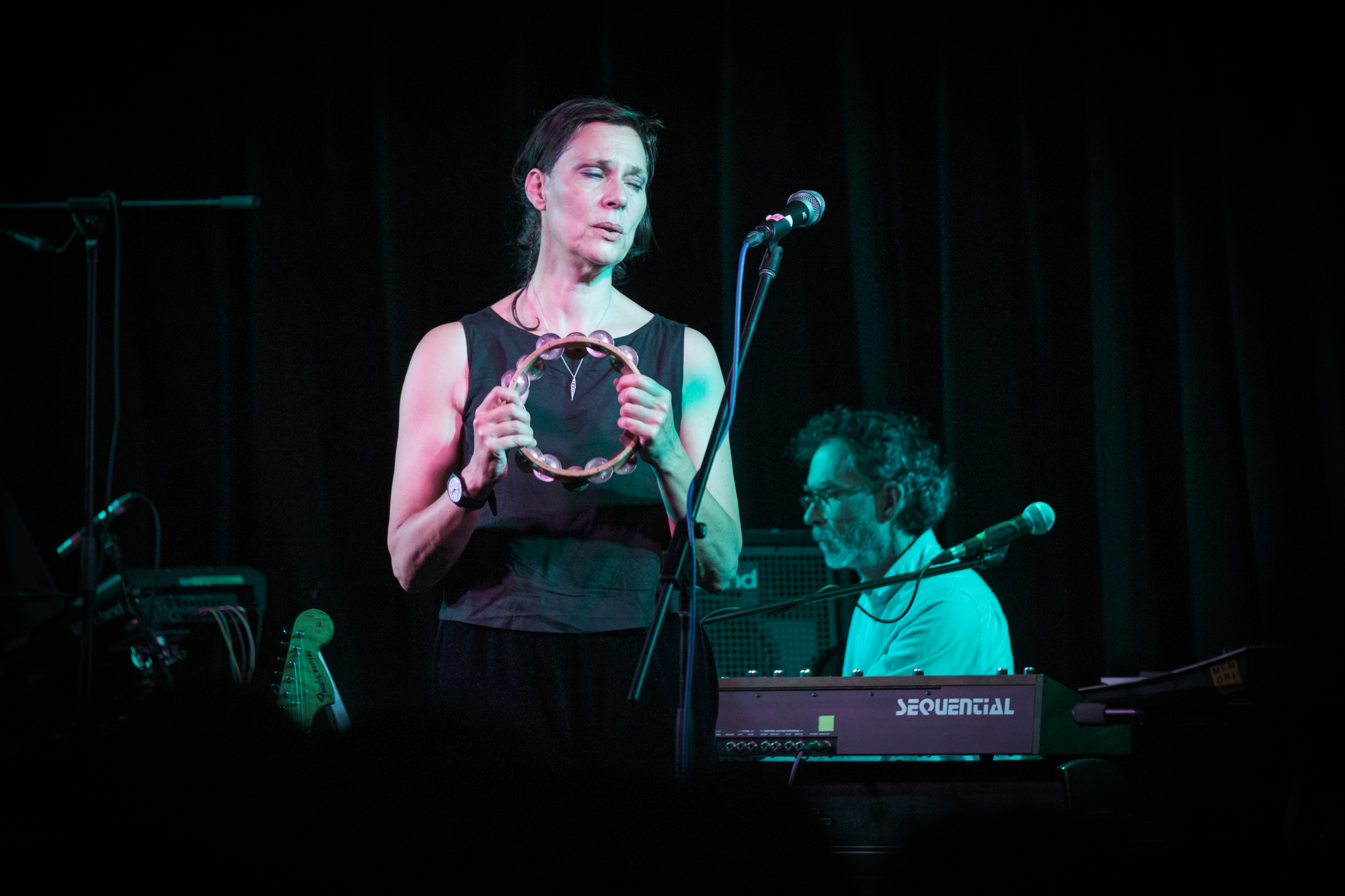
Still, Immortal Hands and Cybele’s Reverie provided a joyous send-off. More energetic than its title might suggest, the latter found Sadier clutching a tambourine while vocal inflections toyed with Björk-esque quirks. Beneath washes of teal and magenta light, the piece felt suspended somewhere between past and future, equal parts French pop reverie and Close Encounters wonder.
It was difficult not to muse where all the younger psych, experimental and groove-oriented music fans were. The room was full of devoted lifers, yet many of the ideas celebrated by contemporary acts—from motorik propulsion to analogue synthesisers and repetition as a creative force—remain right here in Stereolab’s music.
For a band so often described through machinery, what lingered longest was the humanity. More than three decades after their formation, Stereolab continue to transform disciplined repetition into collective joy, sounding less like a relic of the past than a future still waiting to arrive.
CAT LANDRO
Photos by Adrian Thomson