
Review: Drag Roast at Astor Theatre
Drag Roast at Astor Theatre
Tuesday, July 28, 2026
Drag has always prized wit as highly as beauty. Long before reality television, queens earned their reputations reading one another in bars and dressing rooms, where the sharpest tongue mattered more than the tallest wig. Few formats expose those instincts quite like the roast, where a microphone and a room full of queens waiting to return fire leave nowhere to hide.
Appropriately, Reuben Kaye spent the opening minutes ensuring Perth understood the assignment. The Astor felt full of roast virgins, their hesitant response confirming many had never seen one live before. After gauging the room’s levels of “heterostupidity”, Kaye warned that queer spaces might normally be safe spaces, “but not tonight”. Less disclaimer than contract, everyone present—from audience to performers—had willingly signed away the right to be offended.
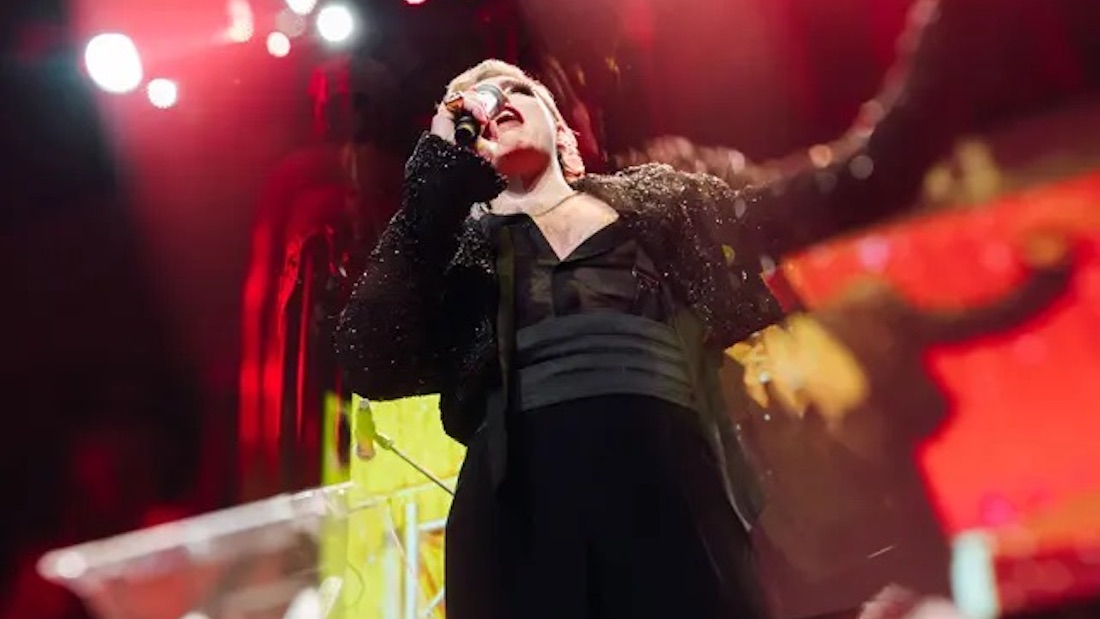
Visually, the production struck the right balance between Drag Race familiarity and theatrical excess. Four glittering panel desks draped in cascading red sequins sat beneath infernal lighting, transforming the Astor into a plush minimalist hellscape somewhere between Snatch Game and a Vegas awards show. Each queen established a comic identity before uttering a word. Raja glided with stately Chanel poise; Willam—a delightfully corrupted pocket Barbie and Thorgy Thor seemingly styled like an exploding feather duster.
Having survived the East Coast leg, the show had loosened beautifully by Perth. Running jokes accumulated, performers repeatedly ignored Kaye’s increasingly futile time limits, and his threat to replace their prep pills with Tic Tacs barely slowed eight drag queens armed with microphones and grudges.
Current RuPaul’s Drag Race All Stars: Down Under contestants Art Simone and Nicole Paige Brooks lent the tour an added promotional hook, though Simone’s set remained closest to the familiar Drag Race roast blueprint. Her strongest jab welcomed Raja by observing Western Australia was usually very good at keeping “old fruit” out. Otherwise, the panel remained notably restrained; whether the jokes had dulled over weeks on the road or simply lacked sting, Simone never found the momentum others would seize.
Raja barely acknowledged the need to compete, reminding everyone she was “the only one who’s actually won Drag Race” before theatrically dropping the mic. Surveying what she declared a “yoghurt factory”, she lamented the panel’s overwhelming whiteness, dismissed Kaye as a “Temu Adam Lambert” and eventually recruited Kween Kong with: “You and I against the colonisers.” Her fantasy of sleeping with every cast member—punctuated by Nicole theatrically choking—became one of the night’s best recurring gags.
If Raja floated elegantly above the fray, Thorgy Thor detonated inside it. Towering in glittering white, she abandoned the podium almost immediately, screaming, kicking and ricocheting around the stage with manic elasticity that owed as much to Jim Carrey as stand-up. Every shriek, high kick and physical flourish threatened glorious collapse without ever actually losing control. Even her repeated references to her own drinking habits became ammunition turned inward before anyone else could fire it. By the time she’d overrun her slot, she still seemed only to be warming up.
Introduced by Kaye as “the neon jack-o’-lantern of a woman” and “the Forrest Gump of drag”, Darlene Mitchell emerged to Looney Tunes fanfare carrying an oversized bag of props. Giant pills, flying cue cards and broad cartoon energy shifted the evening into something closer to vaudeville than insult comedy. Her crowd-wandering lip-sync proved that, for a self-professed bedroom queen, Mitchell looked remarkably comfortable commanding an entire theatre.
After interval, Jane Don’t delivered perhaps the evening’s sharpest writing. Labelled “Fanny DeVito” by Kaye, she immediately returned serve with “Lame Edna” before settling into an observational style that stood apart from rapid-fire one-liners. Blaming the audience for the panel’s whiteness—”otherwise Australians wouldn’t come”—cut deep. Fresh from an arguably premature Season 18 exit, Jane demonstrated why viewers wanted far more. Even her outrageous lime-green, shoulder-padded bodysuit—equal parts Michelle Visage bait and colour theory masterclass—felt like part of the joke.
Willam, meanwhile, embodied supreme self-awareness. Opening with the declaration she’d prefer to spend her set talking about herself, she understood exactly what audiences expected after fifteen years of television notoriety and internet infamy. Her reads landed with trademark dryness before she stripped at the close, revealing her arsehole after ninety minutes of everyone else making jokes about it. There was nothing left to say. An attempted audience read immediately afterwards fell noticeably flatter, perhaps demonstrating that the sharpest roasts rely on familiarity rather than simply targeting strangers.
The evening’s most fascinating performance, however, belonged to Nicole Paige Brooks. Recently dispatched all too quickly on All Stars: Down Under, Brooks reminded Perth why she’s long remained a drag queen’s drag queen. Beginning with “Hi y’all” before correcting herself to “I’m high, y’all” and producing reading glasses, her set unravelled into glorious eccentricity. She consulted notebooks mid-routine, abandoned jokes halfway through, tangled herself in her own punchlines and barked “Silence!” like an increasingly exasperated schoolmarm. On paper, it sounded chaotic. In practice, the uncertainty became the comedy itself. Brooks trusted hesitation, awkwardness and glorious rambling to generate laughter in ways polished comics rarely dare.
Closing proceedings, Kween Kong possessed the kind of stage presence that immediately recalibrates a room. Draped beneath an enormous halo of curls and speaking in velvet tones, she effortlessly reclaimed the evening’s recurring jokes about her size, heritage and “delicate build” before turning each back upon the panel with effortless authority. It was difficult not to reflect on the insecurity that shadowed parts of her first Drag Race appearance; here stood an artist fully inhabiting her power.
Throughout, Kaye remained the indispensable conductor, simultaneously target, referee and instigator, absorbing endless punishment while somehow keeping eight enormous personalities moving in roughly the same direction.
Drag Race may have popularised the form, but Drag Roast demonstrated why the tradition long predates reality television. Glitter fades, wigs come off and lip-syncs eventually end, but the ability to make someone double over with laughter while completely eviscerating them remains one of drag’s oldest—and most dangerous—arts.
CAT LANDRO