Review: Balingup Medieval Carnivale at Balingup Community Grounds
Balingup Medieval Carnivale at Balingup Community Grounds
Saturday, August 22–Sunday, August 23, 2026
Long before reaching Balingup Medieval Carnivale, the landscape begins doing some of the imaginative work. Green hills roll past the car windows, lush enough to suggest the Shire—funny how it seems a collective idea of “medieval” is confined to one particularly verdant corner of inland Europe.
An hour before opening, queues were already forming. Streets and verges heaved with enough improvised parking to make a council ranger break into a sweat, while trails of cloaked figures wound towards the grounds from wherever they had managed to abandon their modern conveyances. Here, arriving in ordinary clothes risked making you the conspicuous one.
This was less Burning Swan than nerdcore pilgrimage: a place to upgrade your Dungeons & Dragons dice, acquire an alarming array of weaponry, and find your tribe if you were so inclined to spend the weekend in elf ears. The Carnivale’s “medieval” period proved gloriously elastic, encompassing the Dark Ages, Renaissance finery, Game of Thrones, Monty Python and the Holy Grail, the Black Death, and people dressed as the rats accused of carrying it. There was even Star Wars. It did happen a long time ago.
Saturday’s crowd was intensely, almost unnervingly dense. Returning attendees claimed it was the busiest they had ever seen it, and the pulsating stream inside the gates gave little reason to doubt them. There was an unfortunate contradiction here: an event likely to attract plenty of autistic and neurodivergent people by offering the rare pleasure of finding one’s fellow obsessives became almost impossible to navigate. The opening crush tipped quickly from excitement into sensory overload, with little room to stop, orient oneself, or escape the flow of bodies.
Thankfully, the day was mild enough to prevent mass heatstroke beneath all that velour, chainmail and synthetic monk-brown. Even so, the predicament resembled that faced by the Australian goth: remaining committed to excessive layers while the climate maintains an opposing vision.
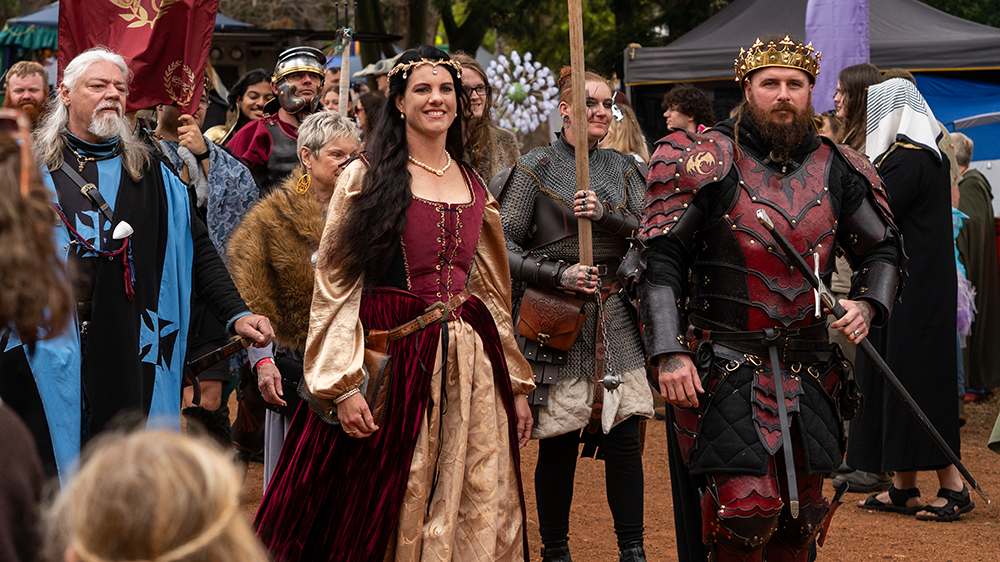
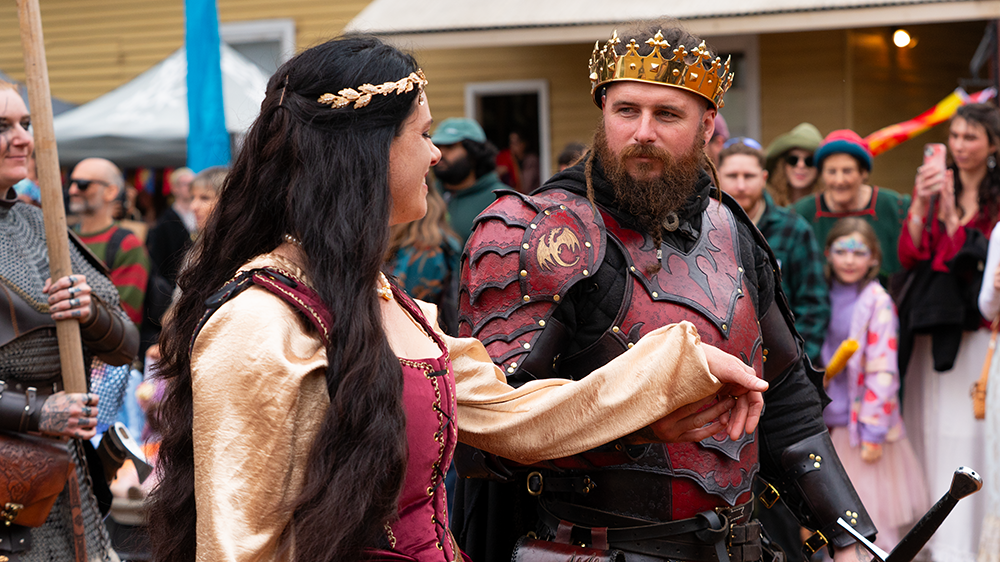
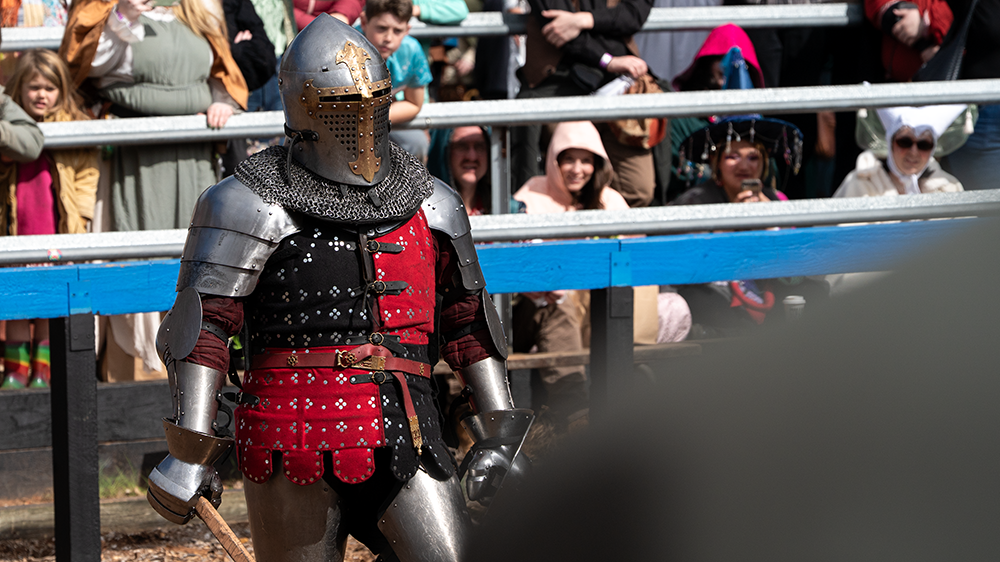
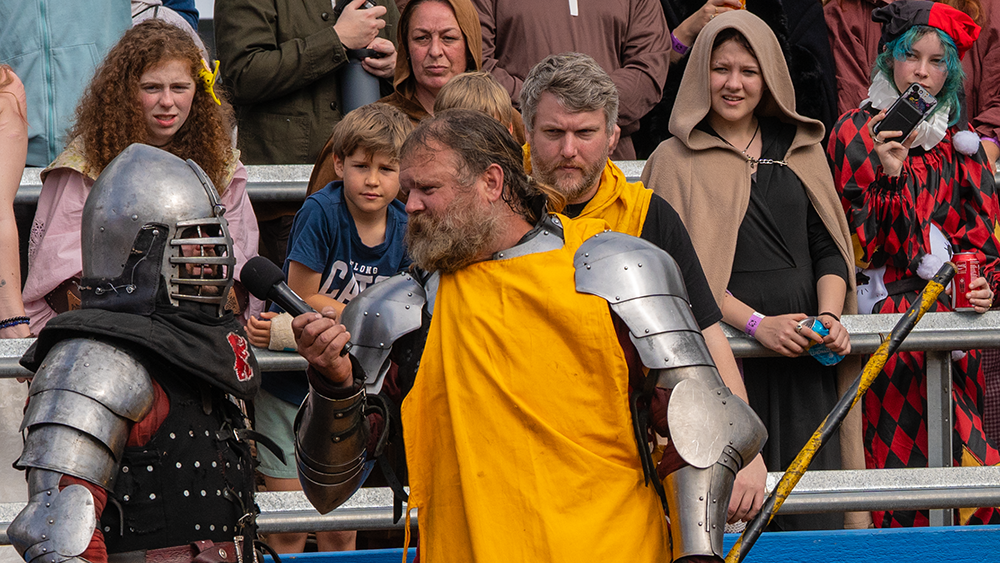
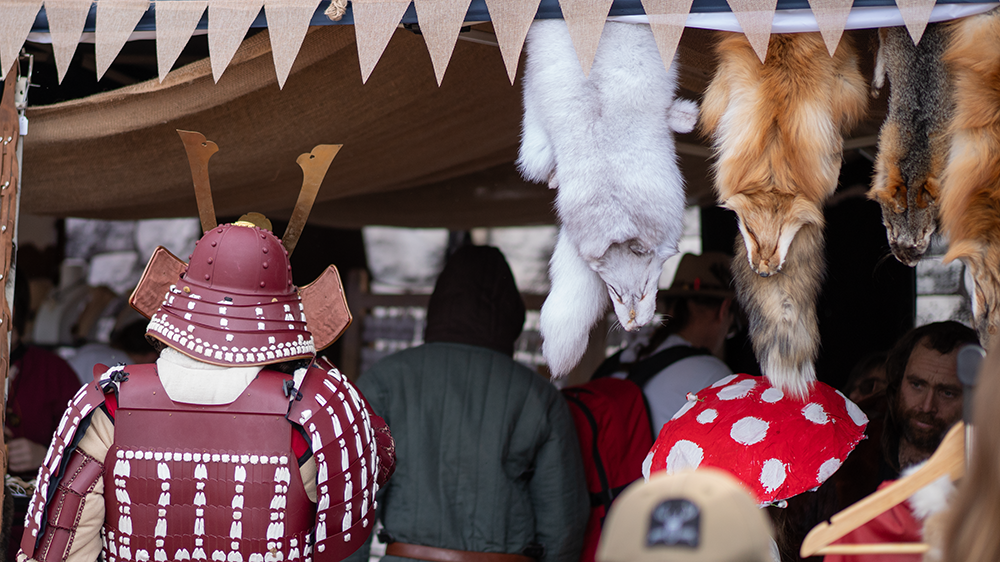
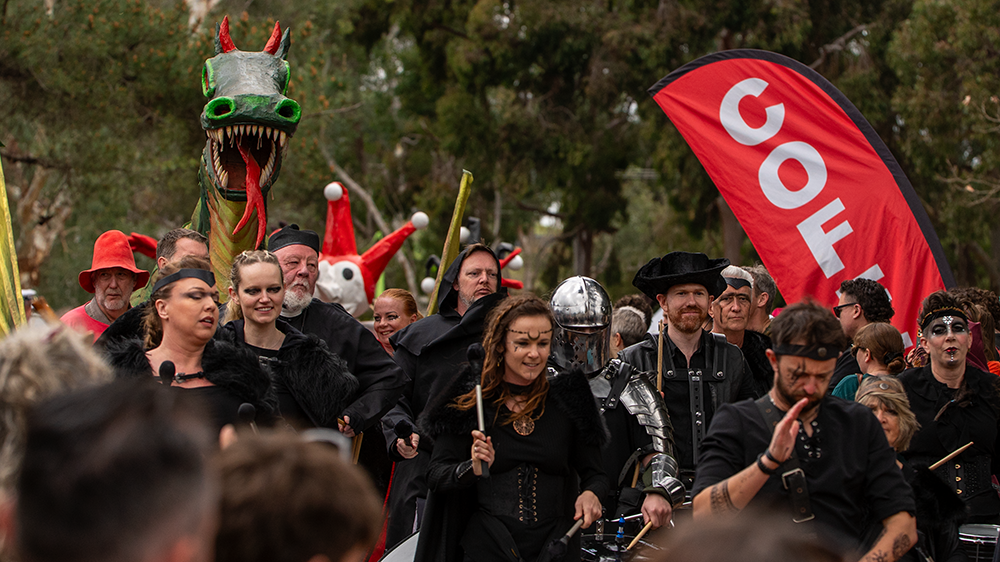
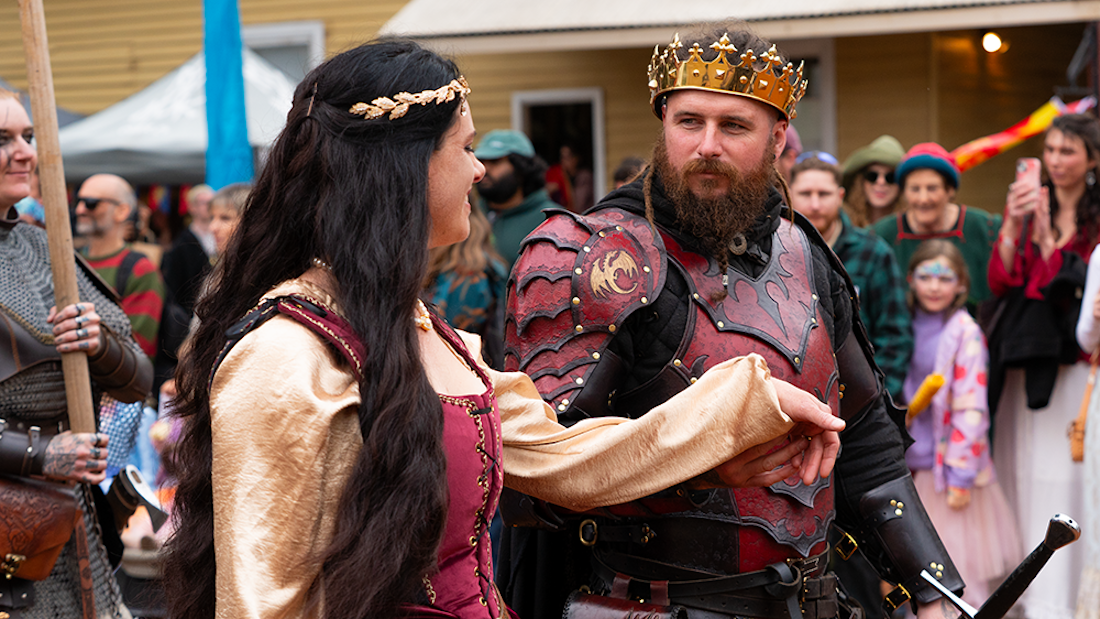
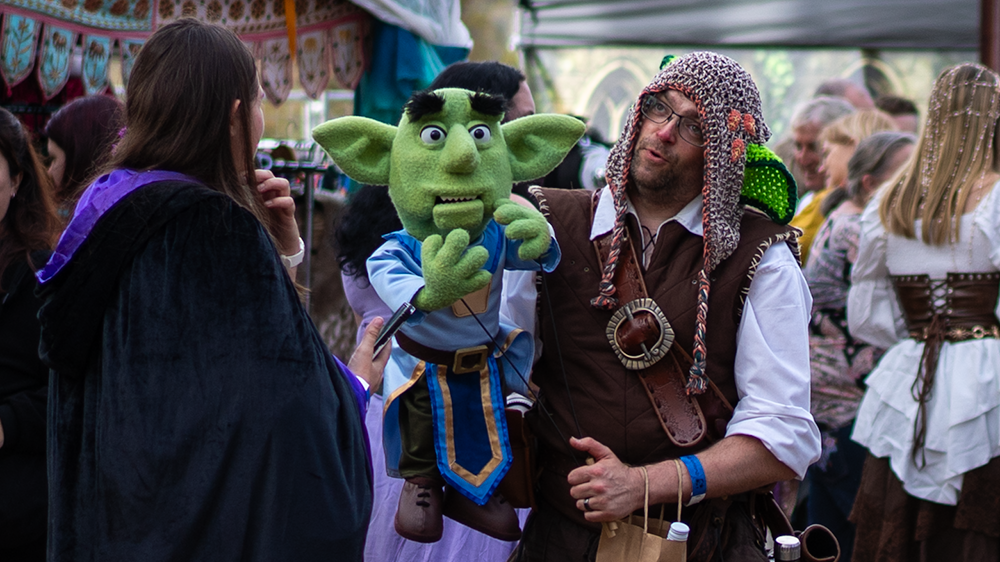
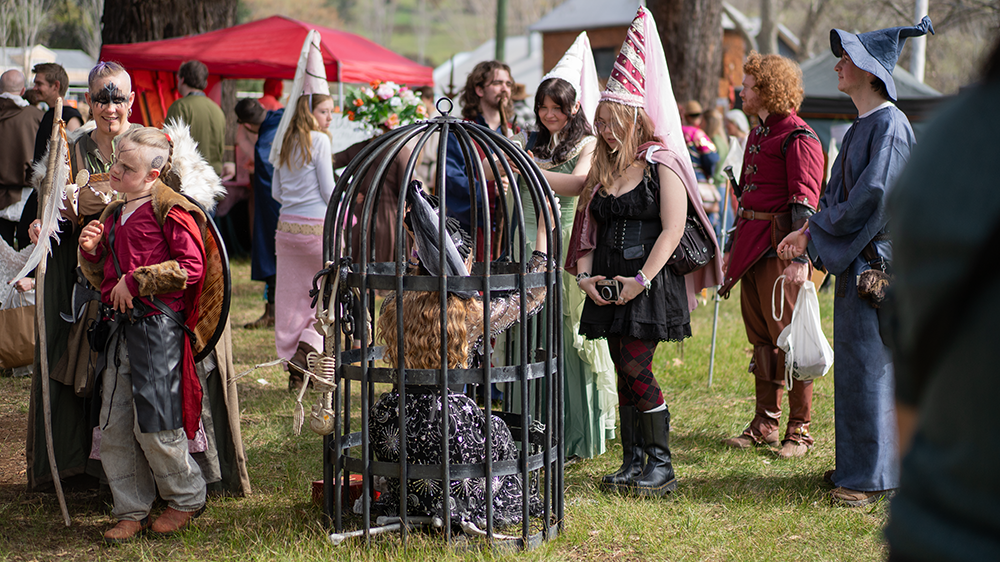
The costumes ranged from painstakingly constructed to Amazon chic. Knights clanked past in armour restrictive enough to dictate their stilted gait; drinking horns and pewter mugs swung from belts; braids and mushroom hats filled the grounds. Damsels appeared in various states of dress, some in elaborate DIY ensembles and others seemingly outfitted from the Carnivale’s extensive costume-hire collection. Then came the monks: far too many monks, some betrayed around the ankles by Adidas track pants and sneakers.
Yet that low bar only made the commitment elsewhere more impressive. Op-shop fabrics had been tailored into custom gowns, scavenged materials assembled into armour and entire families coordinated into miniature adventuring parties. These were not festival hangers-on hunting for somewhere to wear glitter and behave badly. Almost everyone appeared to be there for the love of the thing—even when no two people could agree upon what, historically, that thing was.
Around the encampments, the distinction between costuming and reenactment sharpened. Members of the Grey Company worked on chainmail, runes and coins beside a small fire, wearing garments that appeared lived in rather than pulled from plastic packaging that morning.
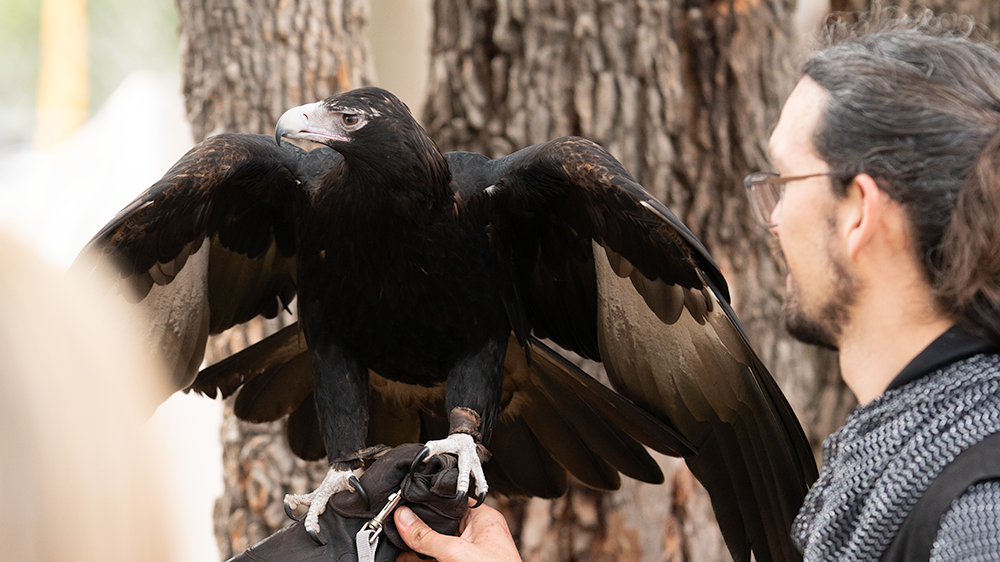
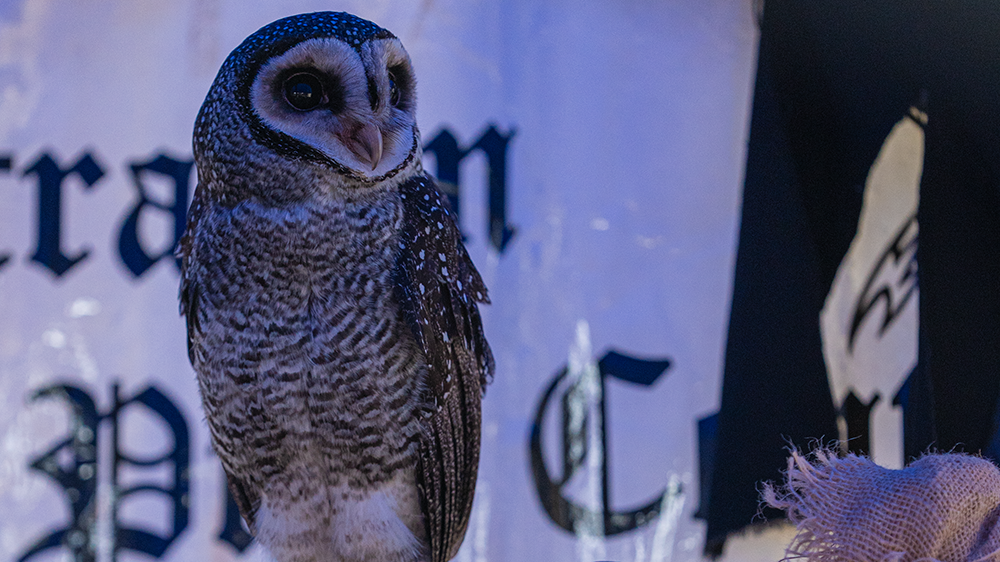
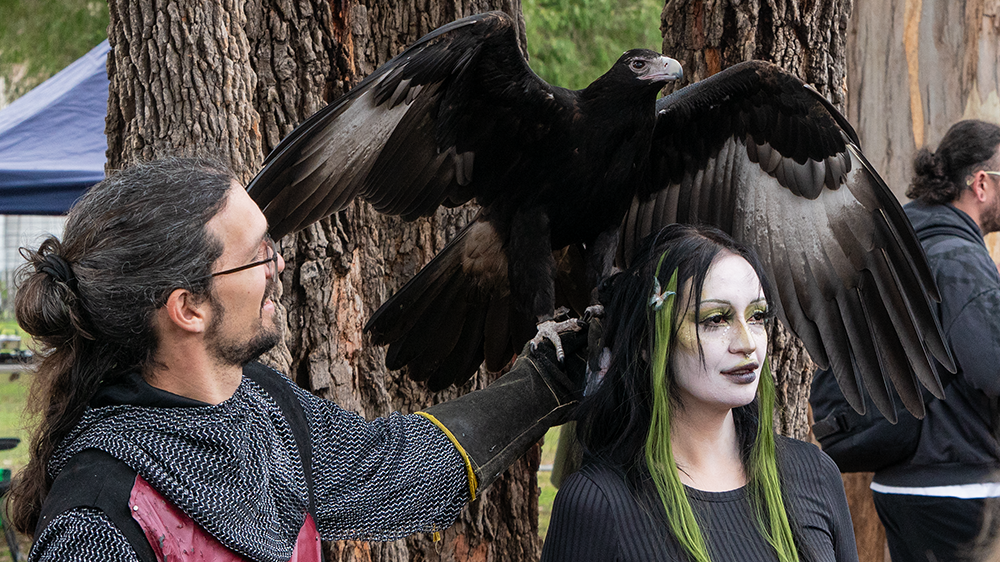
Elsewhere, birds of prey and reptiles remained uncannily composed amid the human influx. Owls, falcons, a kestrel and an eagle watched from their perches with the majesty and implied wisdom humans have always projected upon them, while even small children were invited to experience holding a bird. Nearby, an olive python draped elegantly around a camping chair offered either delight or an immediate change of direction.
The food was more conventional festival fare than medieval feast. Turkish kebabs, paella and chips punctured the fantasy somewhat; where, one wondered, was the enormous joint of meat still attached to a bone? Tipplers’ Yard offered tastings of local wine, gin and mead, but alcohol could not be freely consumed inside the grounds. Given the density of the crowd, this restriction was probably for the best: it maintained some minimum of family-friendly order and prevented the field from becoming clogged with drunk dickheads. For extended tavern roleplay, the pub across the road became the unofficial next stop.
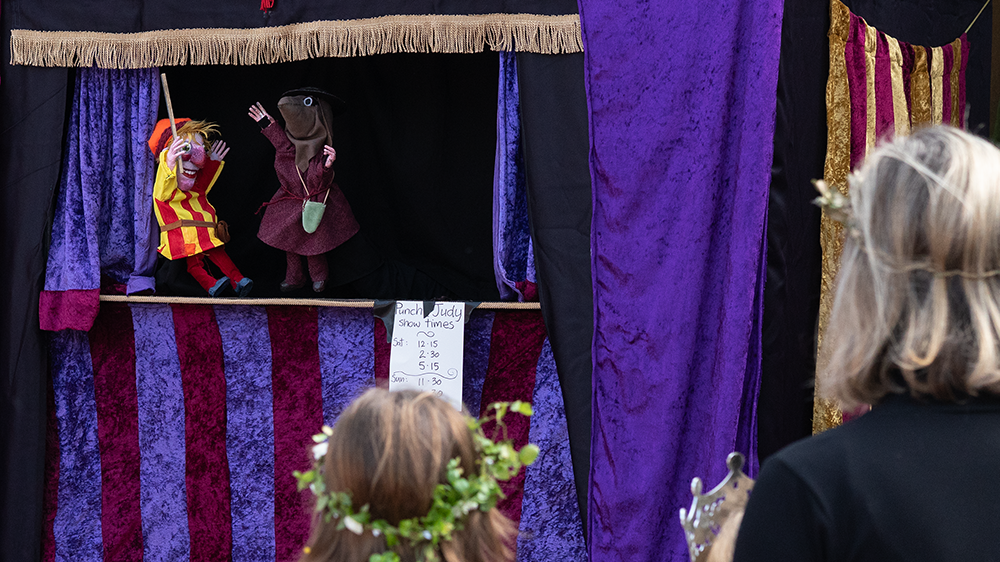
A Punch and Judy show delivered bawdy slapstick between what appeared to be two male puppets, with enough talk of bordellos to raise a few parental eyebrows. Whatever satire might once have lurked within the form’s ritualised violence, this incarnation remained chiefly committed to hitting things and making indecent jokes in front of children.
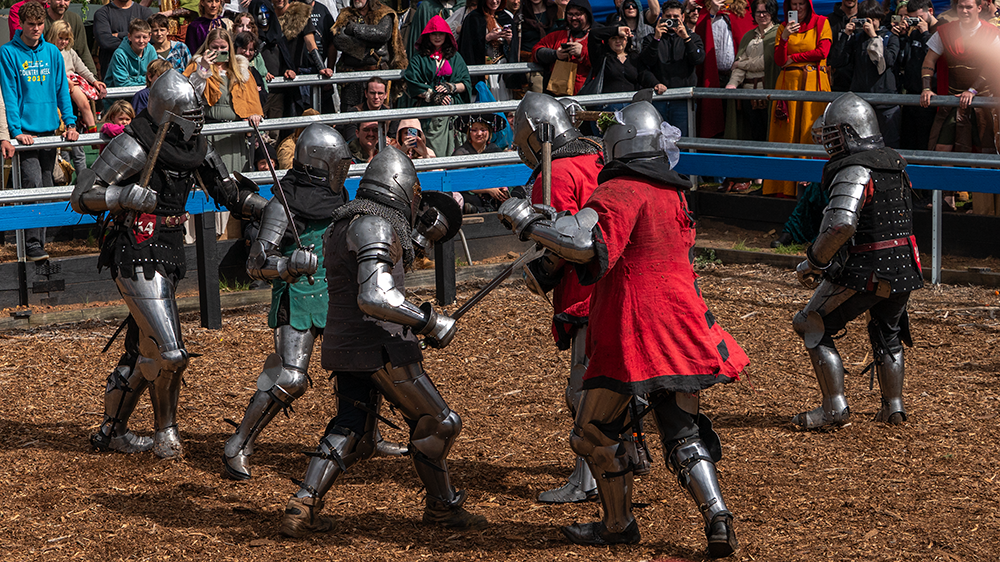
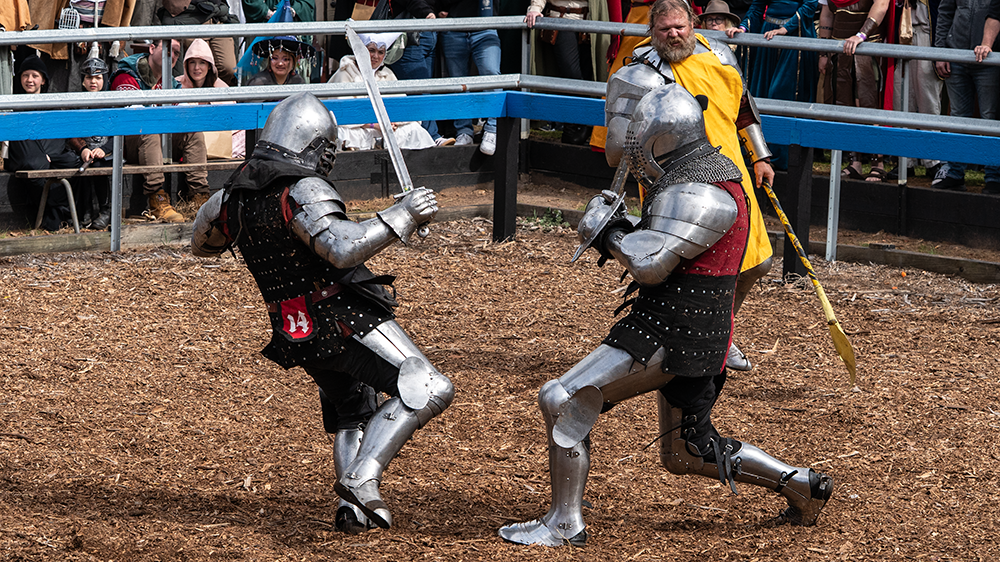
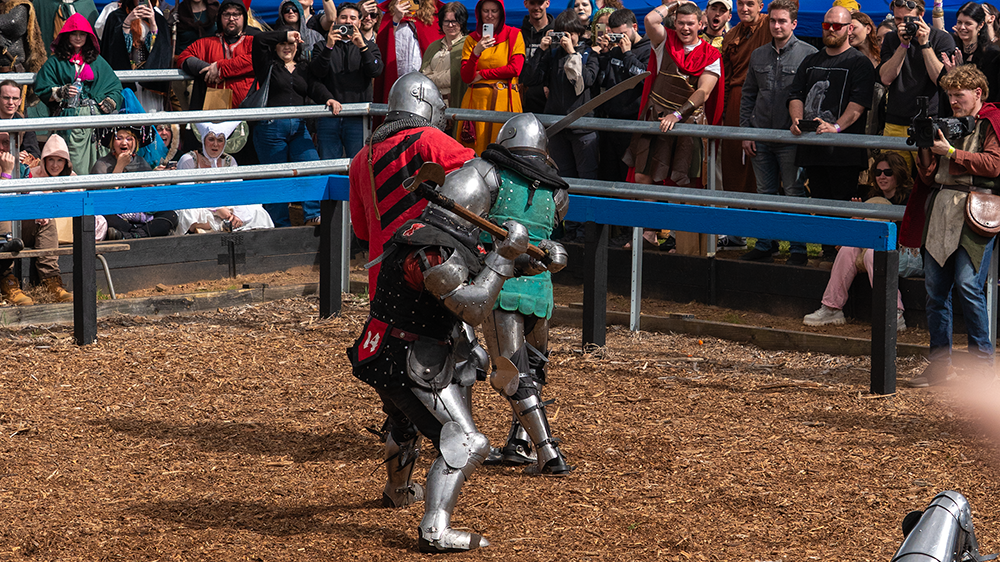
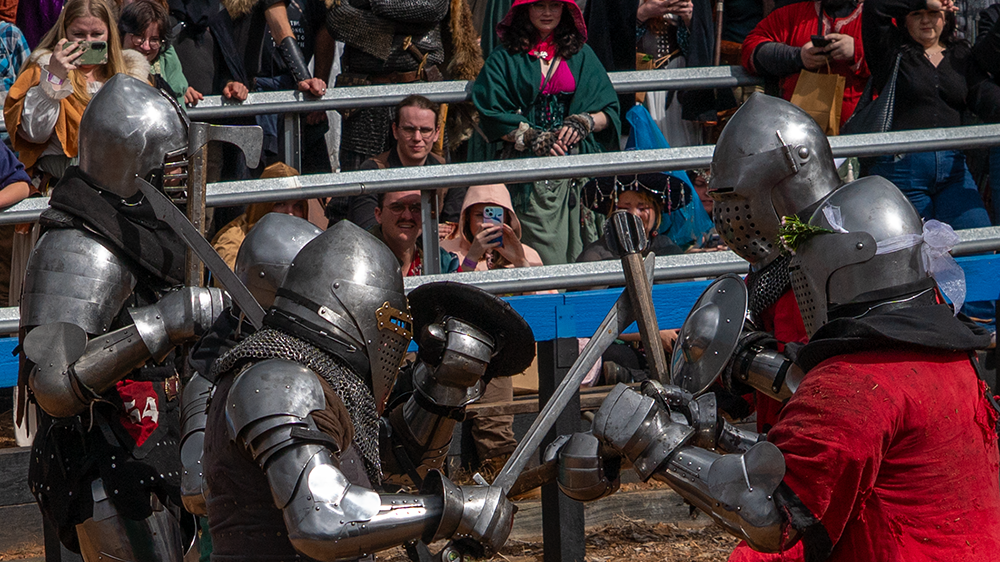
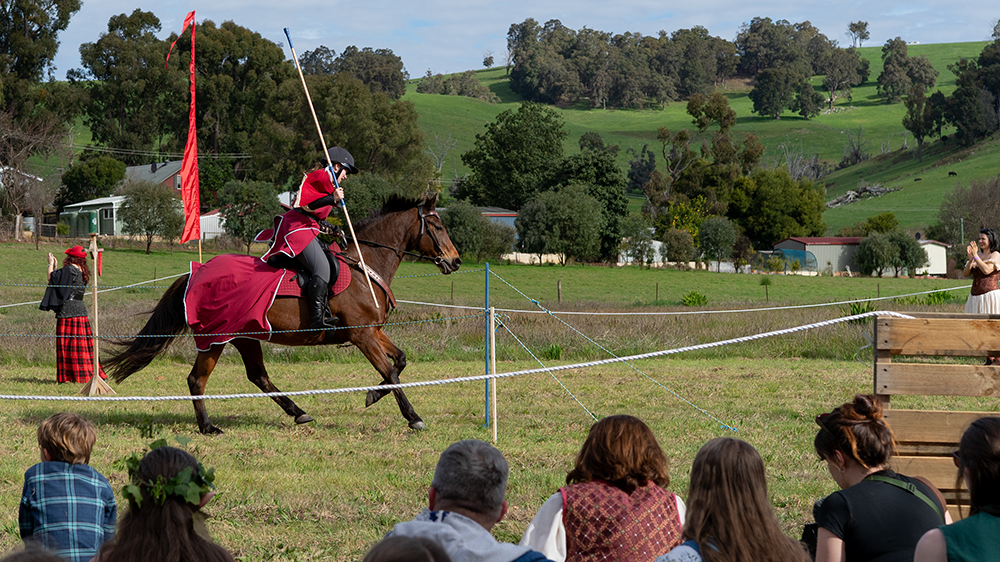
The Combat Arena offered a more muscular form of historical immersion, although its ground-level layout meant anyone arriving late saw mostly the backs of other spectators’ heads. It was one of several signs that the grassroots Carnivale had swollen beyond the scale some of its infrastructure could comfortably support. Amplified sound struggled to carry across the huge crowd, movement became overwhelming, and tickets were still being sold after 4pm as thousands packed around the grounds.
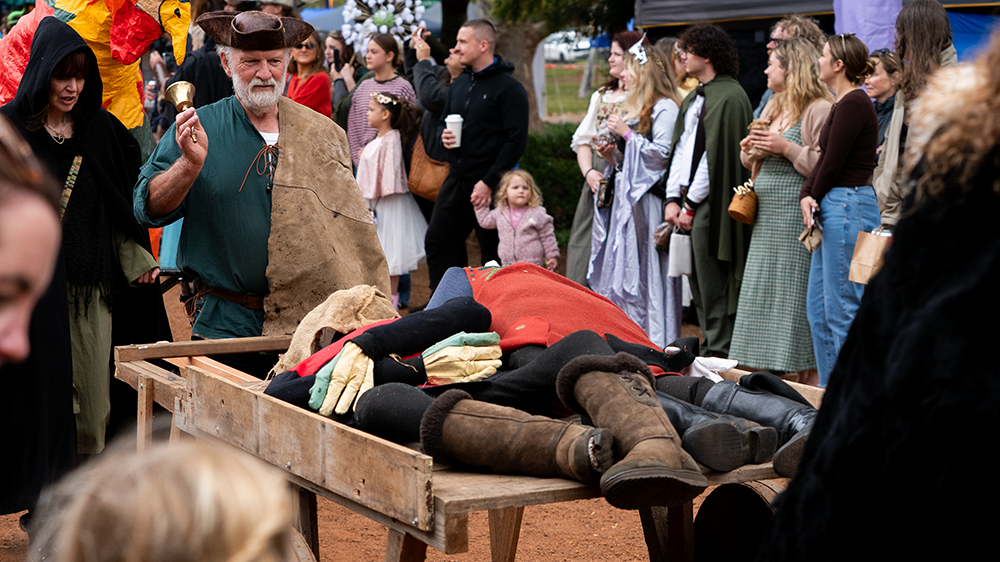
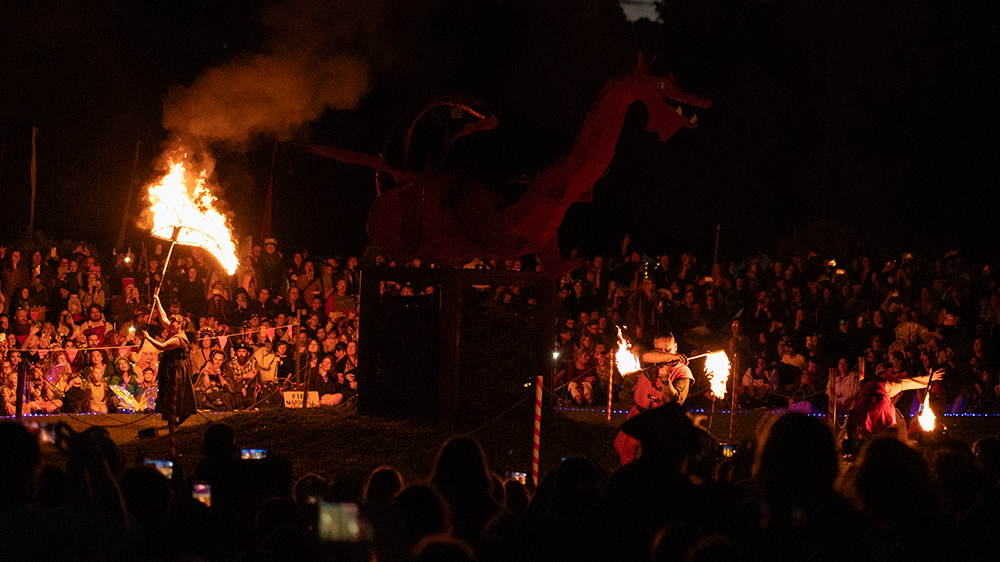
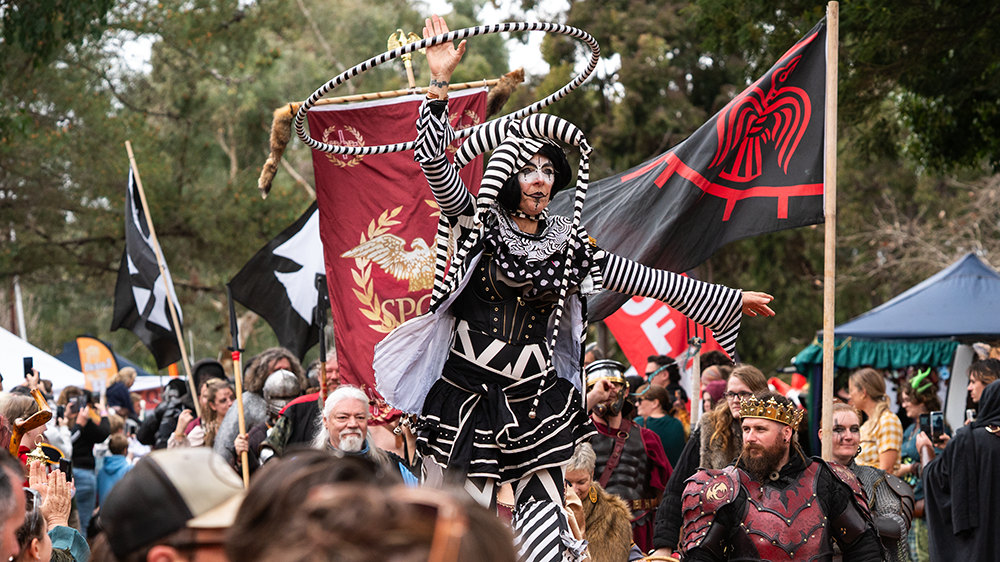
Then, circling the enormous red dragon, came a parade of the weekend’s most extravagant creatures: jesters, a human wolf, gnomes, a tiny child dragon greeted with an enormous cheer and a swaggering behemoth of a knight. Most memorable was a scarecrow whose loose, spasmodic body seemed animated without bones, all undead jelly-limbs and genuine Batman-villain menace.
As dusk approached, folk dancers circled the dragon while drummers and fire performers gathered, lending proceedings distinctly cultish, Wicker Man energy. Anticipation slowly curdled into impatience. Was the delay carefully calibrated to the sunset, or was somebody struggling with the matches?
“Burn the beast!” the crowd began to chant.
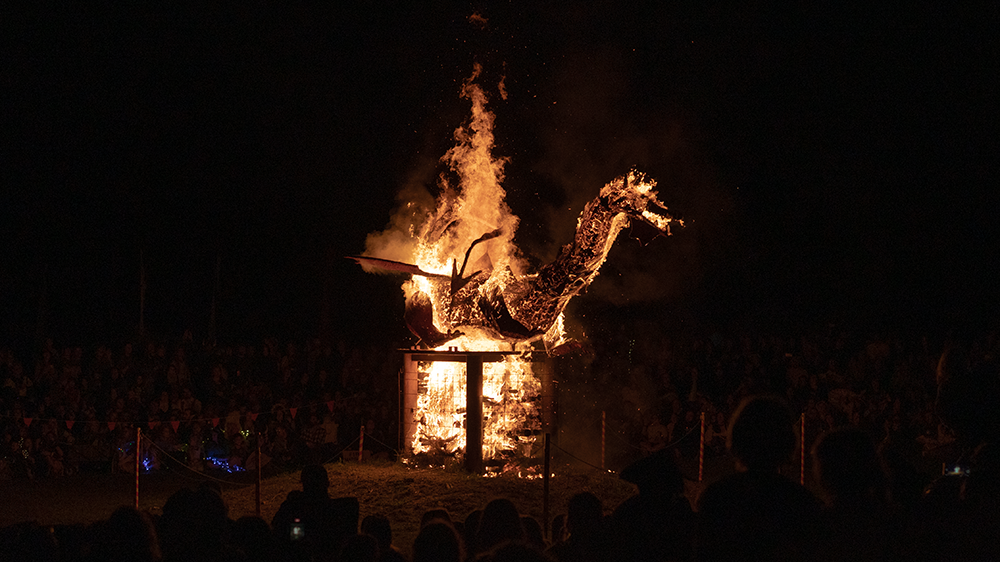
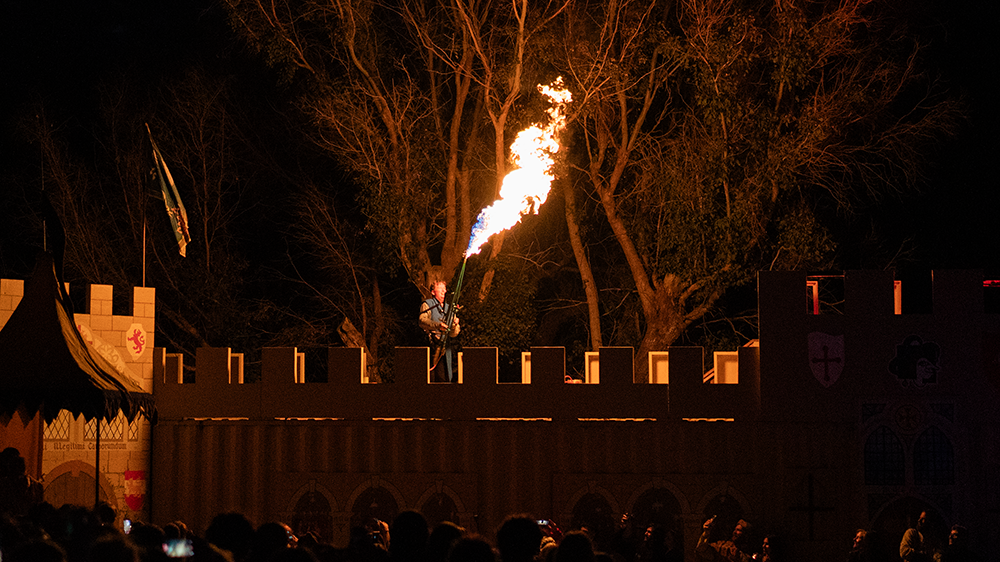
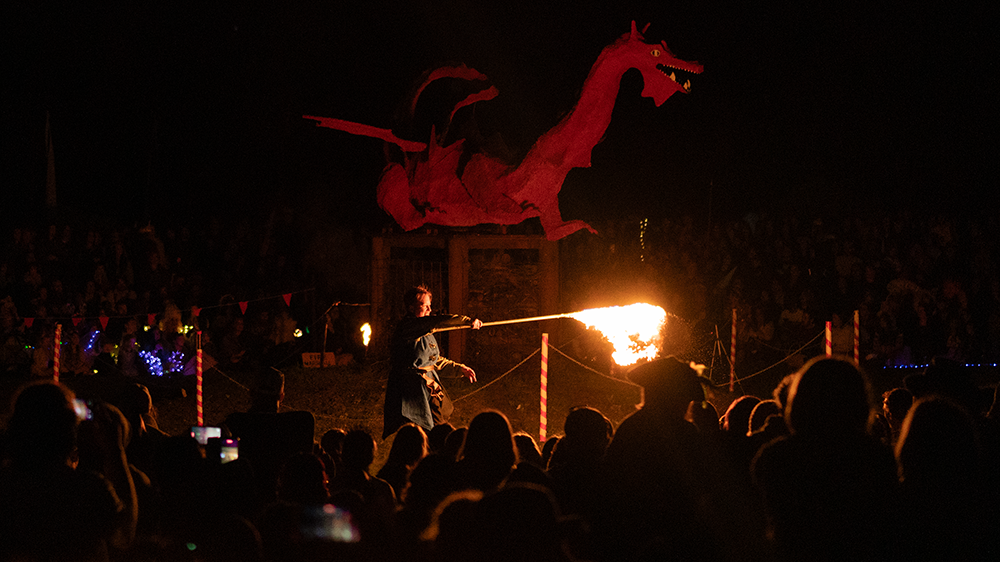
Fire twirlers answered with staffs, fans and a formidable flaming scythe, their choreography developing into combat beneath Celtic and quasi-Game of Thrones music. Two dancers holding fiery fans resembled birds in pursuit, phoenixes courting or duelling. As the soundtrack edged towards near-Rammstein industrial metal, twin flamethrowers erupted from the castle above, bathing thousands of upturned faces in orange light. It carried the unmistakable energy of boys delighted to show off their most dangerous toys.
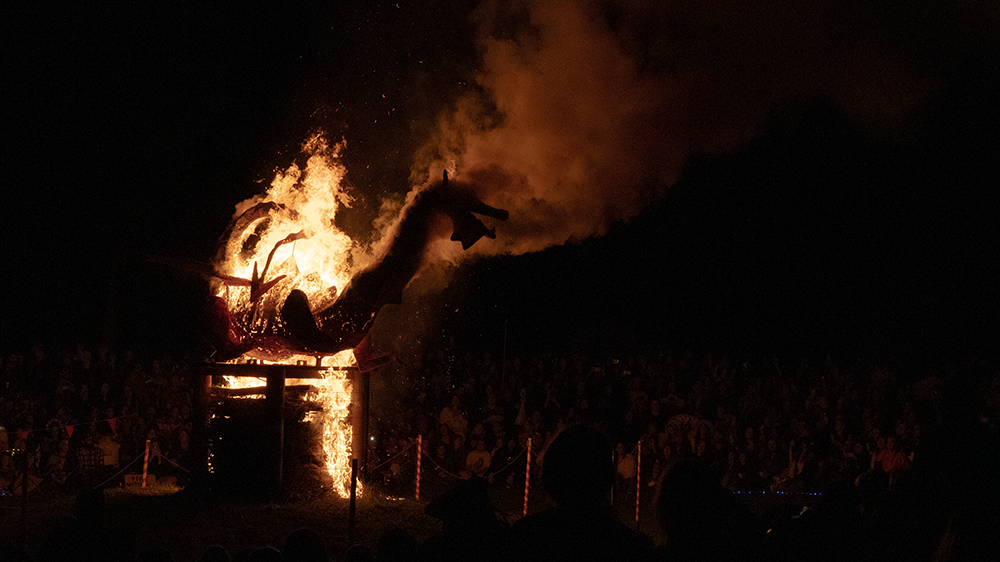
At last, flame took hold of the dragon. Smoke exhaled from its mouth as if the beast itself had awakened, before fire began consuming it from within. Its black silhouette fractured into a glowing mosaic; threads of flame traced across the surface until they licked above its head and embers flew high into the night. When live drumming resumed, it restored an immediacy the recorded soundtrack could not manufacture. The burning felt briefly less like entertainment than ritual: a theatre in the round made communal through heat, smoke and the roar of the crowd.
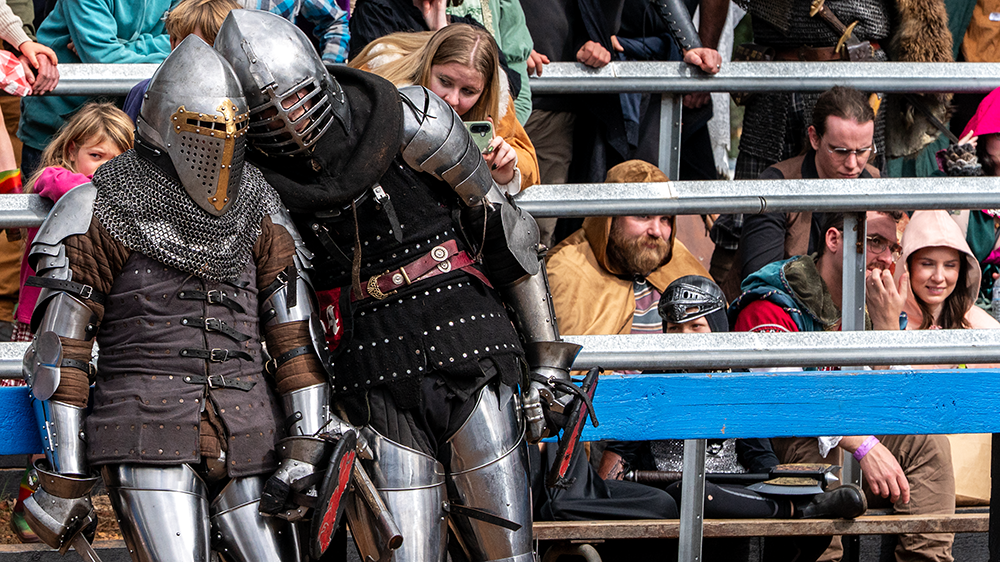
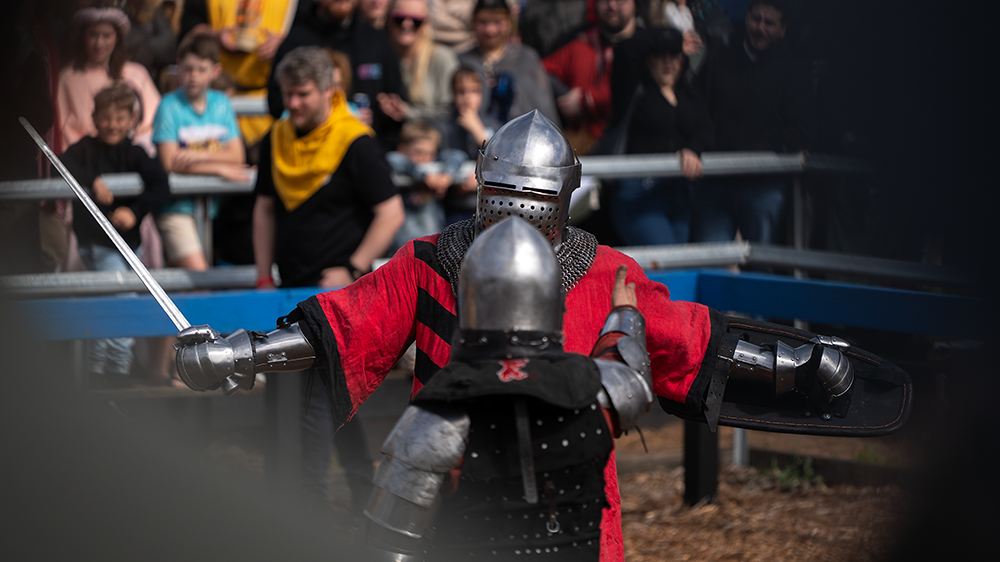
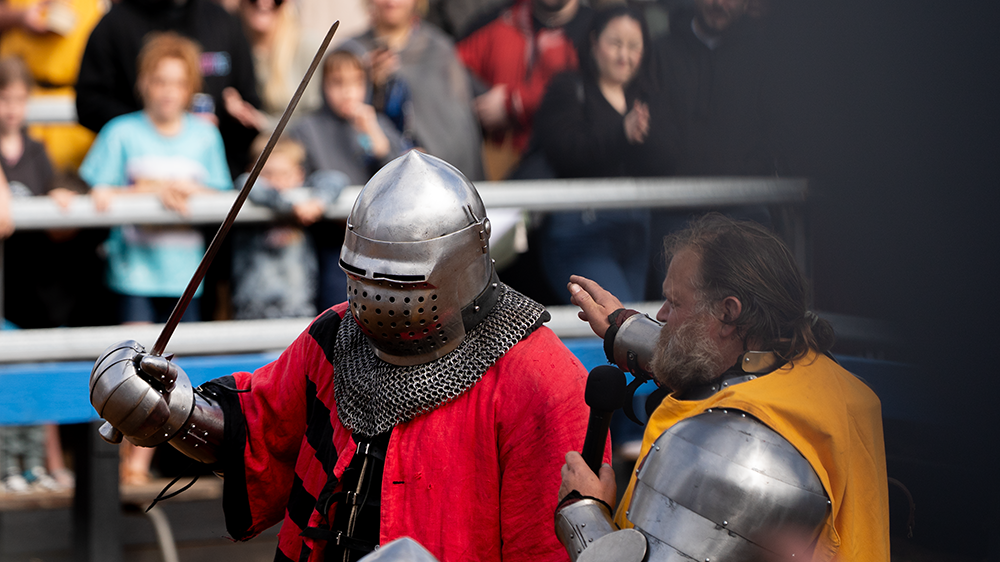
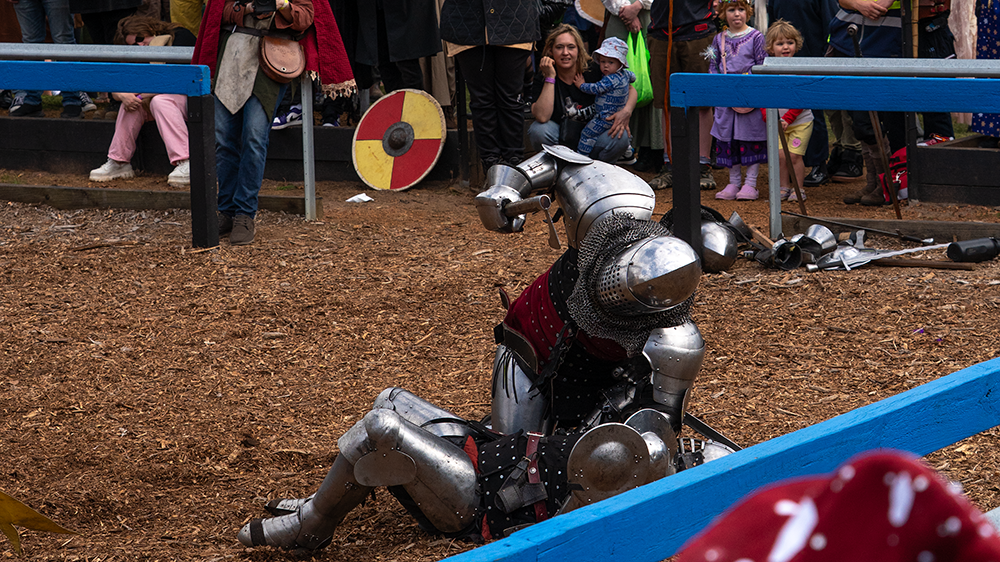
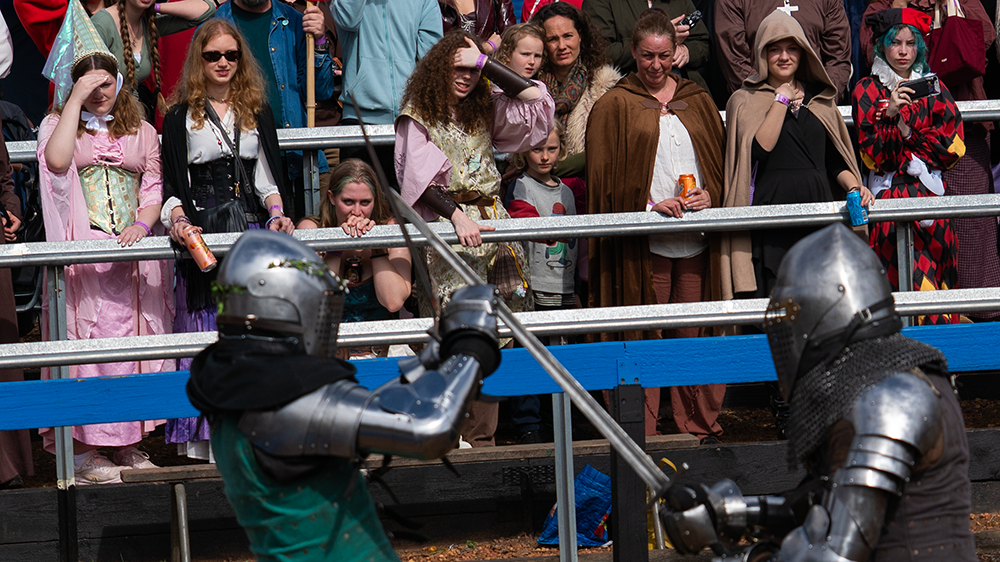
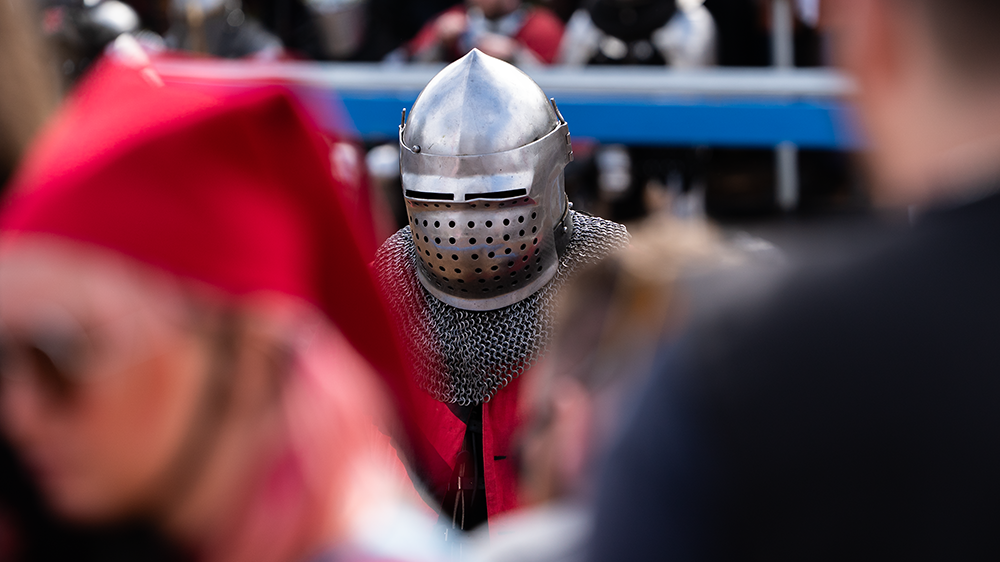
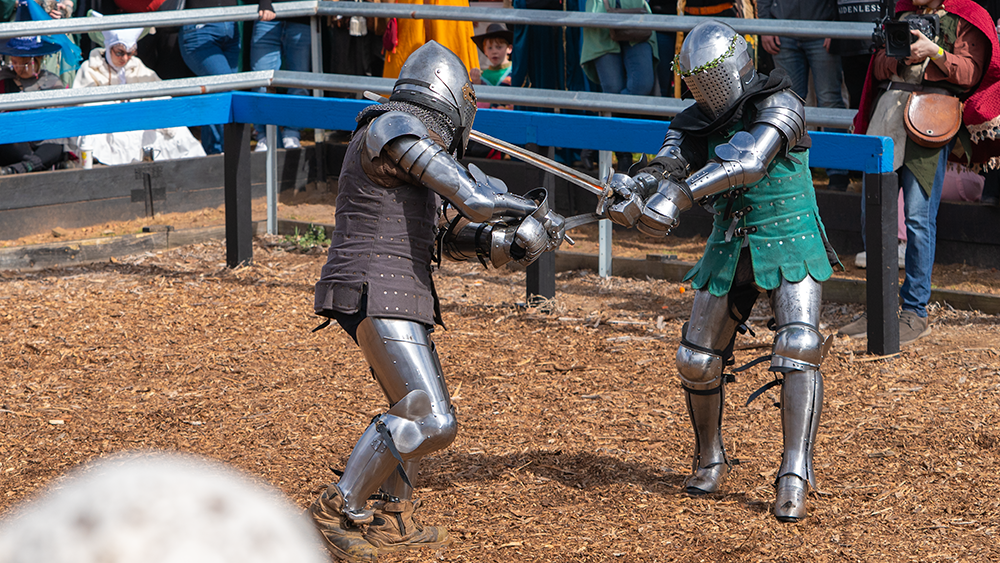
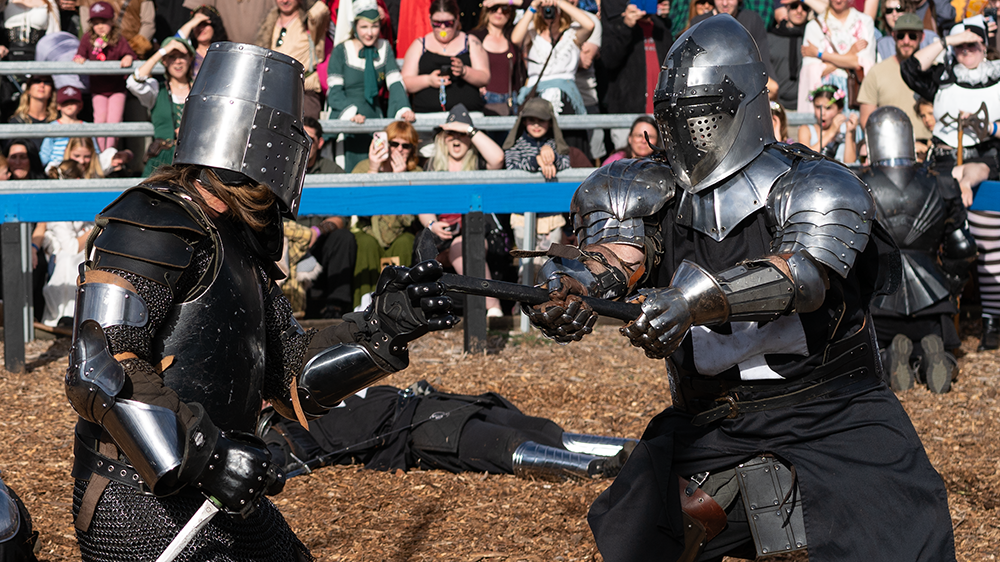
Sunday brought gentler weather and far more room to move, populated by the diehards ready to do it all again. In the Combat Arena, the Berserkers demonstrated how wearing up to 40 kilograms of armour restricts even the strongest body. Blows landed with a sickening weight, helmets rang and fighters rested their heads together between attacks, somewhere between bracing and embracing.
“If you’re feeling hot in the sun, imagine how these boys feel wearing an oven,” the announcer offered.
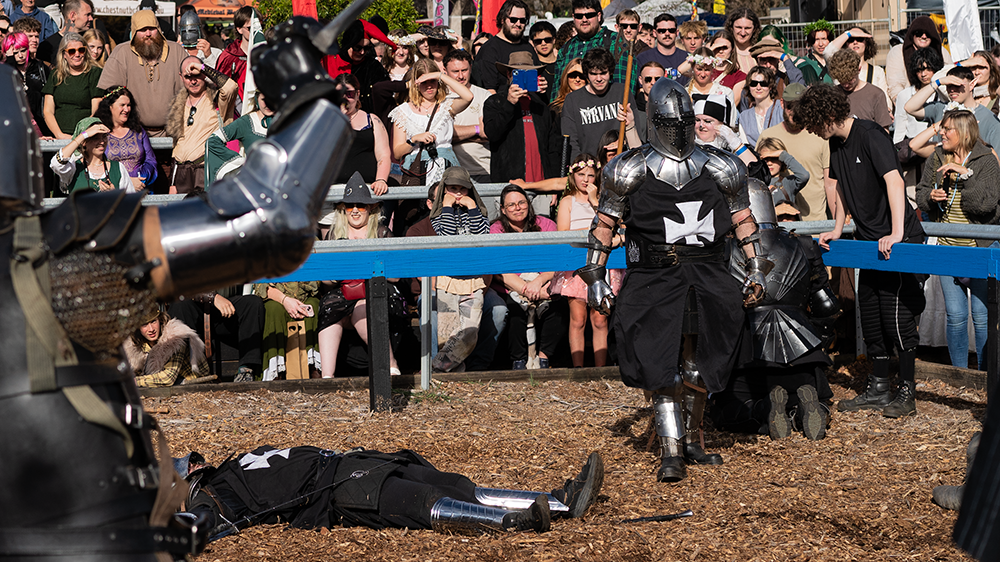
There were axes, swords, grappling and knees to the groin, but also nicknames and signature moves that shifted the spectacle towards WWE territory. The crowd knew what to demand, yelling for individual favourites and egging the fighters on. At 41, Tim was introduced as the oldest Berserkers combatant; his signature Tim Tam Slam became an eagerly anticipated manoeuvre. Another fighter, professing his love for an enormous axe, conceded he had to “compensate somehow.”
The joke acquired an edge during the climactic three-on-three melee. The fighter swung his axe towards an opponent’s back, leaving him down and eventually stretchered from the arena. The sudden quiet made clear that, beneath the theatrical taunts and crowd participation, the physical stakes were real. Only later did we learn that the injured fighter had not suffered permanent harm.
What draws so many people towards this unruly approximation of the past? There is some rear-viewism in the medieval revival: the seductive fallacy that life was once simpler, purer and less corrupted by technology. Yet Balingup’s version feels less like a rejection of the present than temporary permission to play within it. Historical accuracy matters deeply to some and barely at all to others. The shared investment is in making something—with fabric, metal, fire, performance and collective imagination—rather than merely consuming it.
Founded by Roz Benson in 1995 as a celebration of Balingup’s creativity and eccentricity, the Carnivale remains powered by local volunteers and conspicuously free from dominant corporate branding. Its scale now strains against its grassroots organisation, creating queues, obstructed sightlines and logistical uncertainty. The format may need to stretch with its popularity: an additional day, a cap on daily ticket sales or a broader spread of major attractions could relieve some of the pressure. Yet the central difficulty remains that almost everyone wants to see the dragon burn, concentrating the greatest numbers into Saturday and around a single climactic spectacle.
Those rough seams are evidence of a festival outgrowing its current form but also of what makes it worth protecting. For one weekend, a town of roughly 600 people accommodates thousands of knights, witches, monks, fighters, families, gamers and committed oddballs. They come not to sneer at make-believe, but to sustain it together. Balingup does not recreate the Middle Ages so much as construct its own impossible era—less historically pure, thankfully, than generous enough for almost anyone to find a place inside it.
CAT LANDRO
Photos by Ben Mulvey