Mike Burns and the boundless journey of a musical outsider
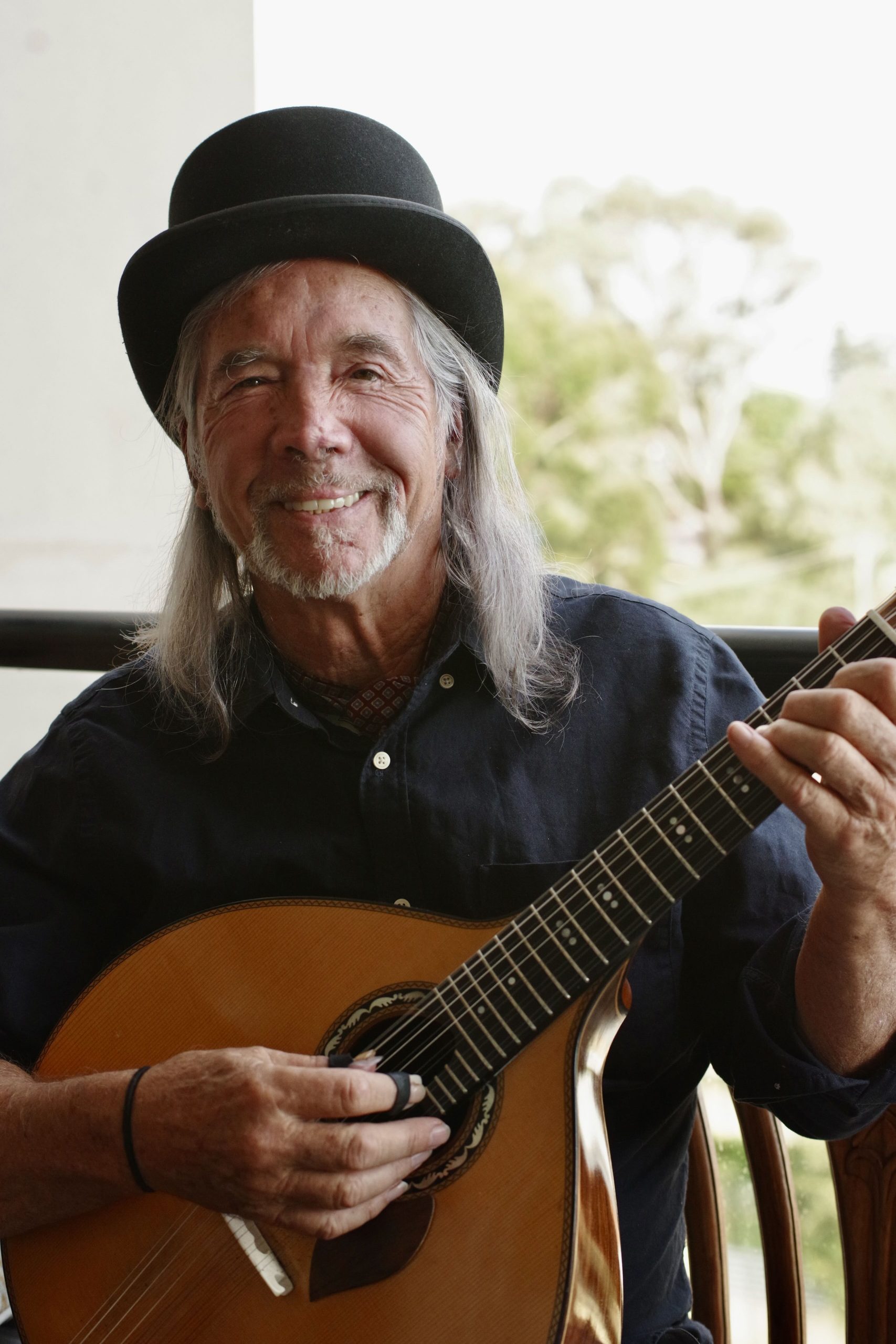
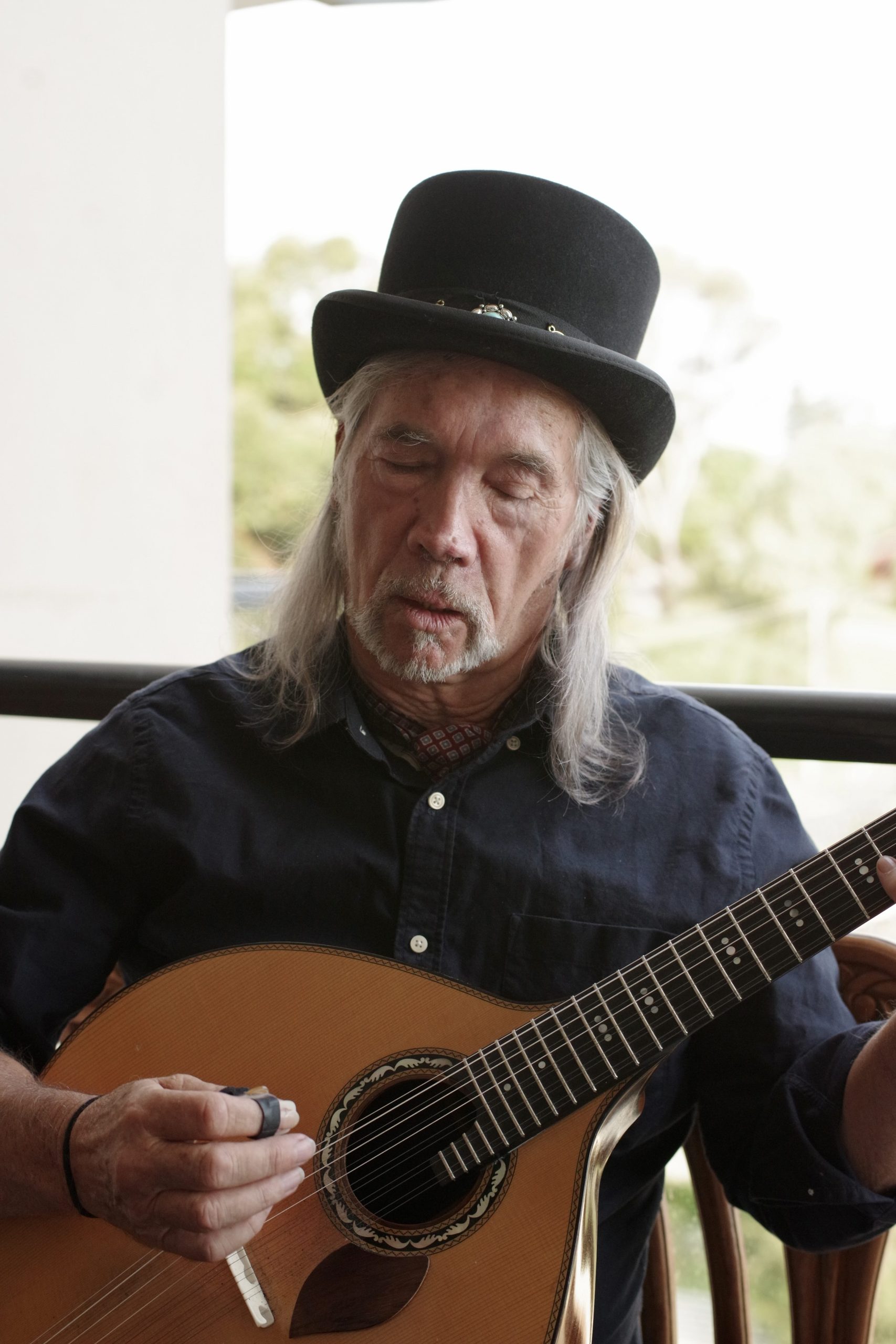
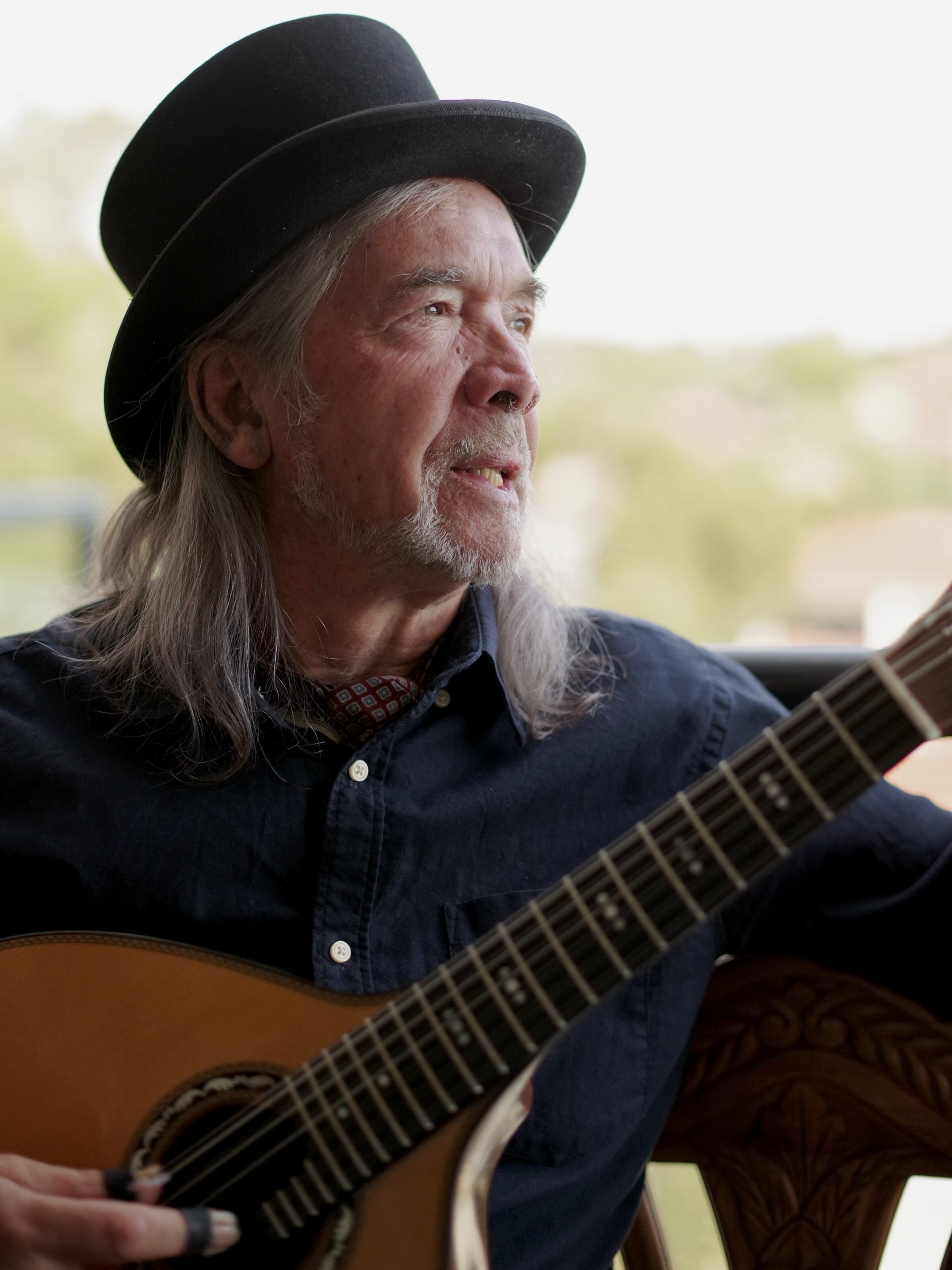
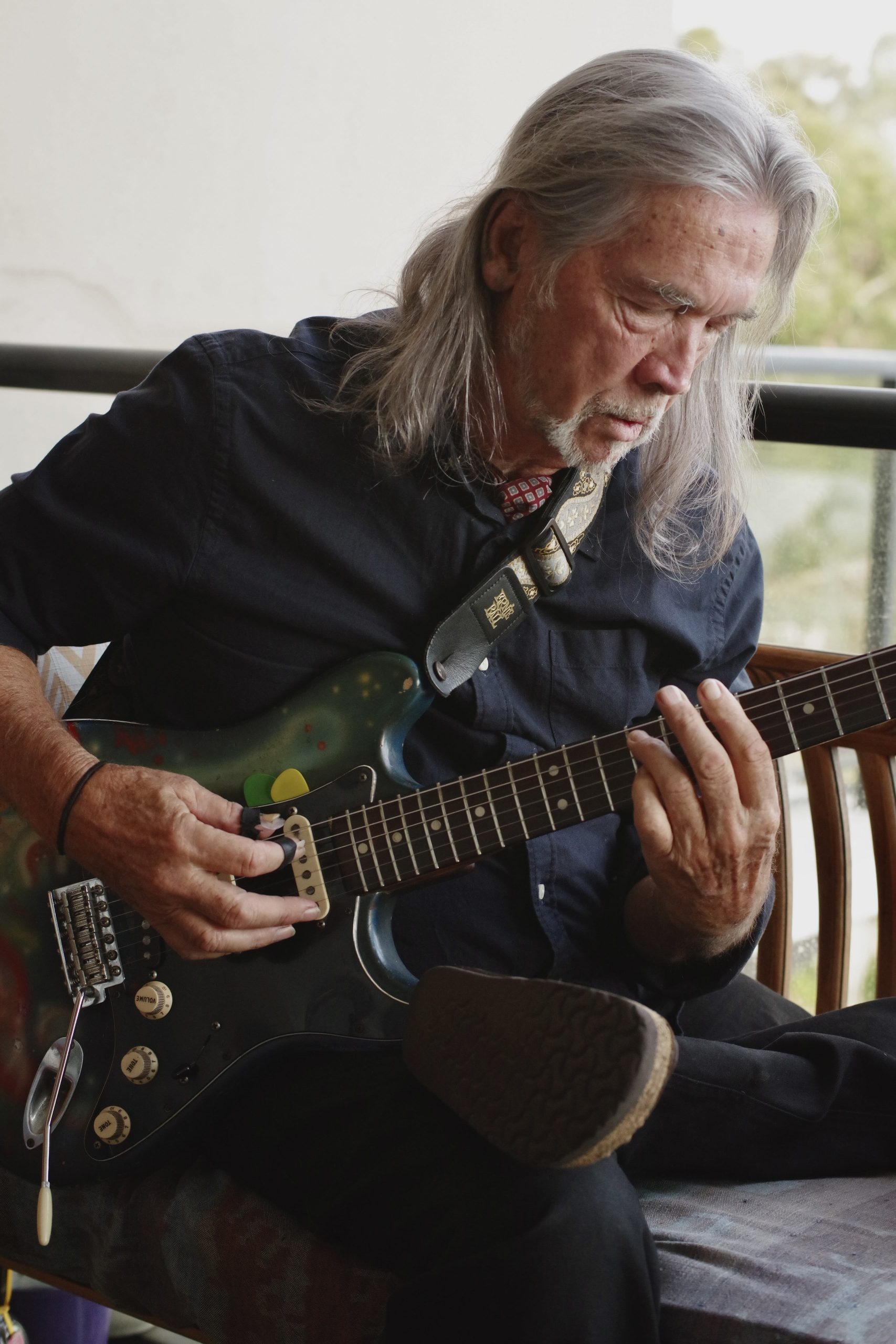
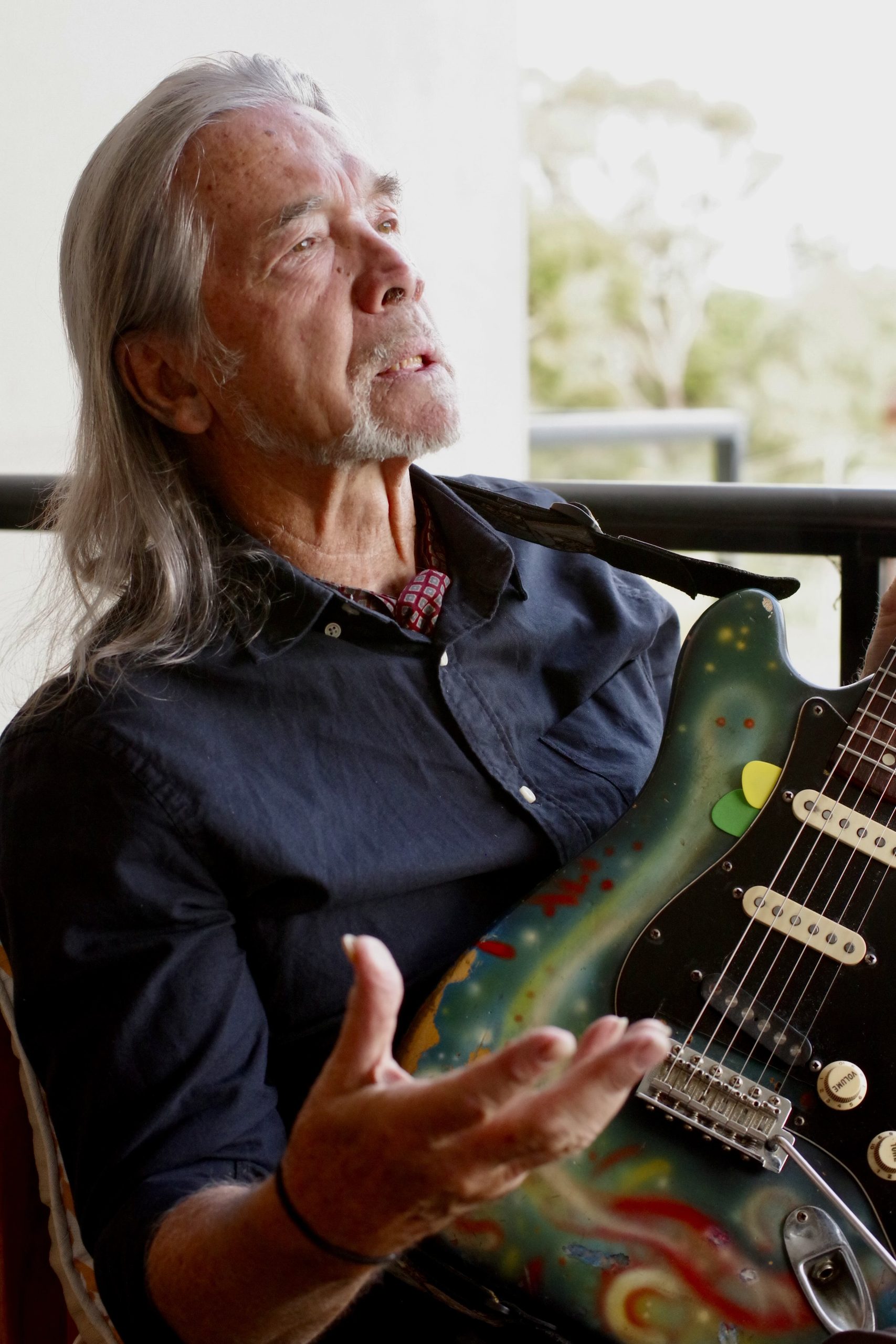
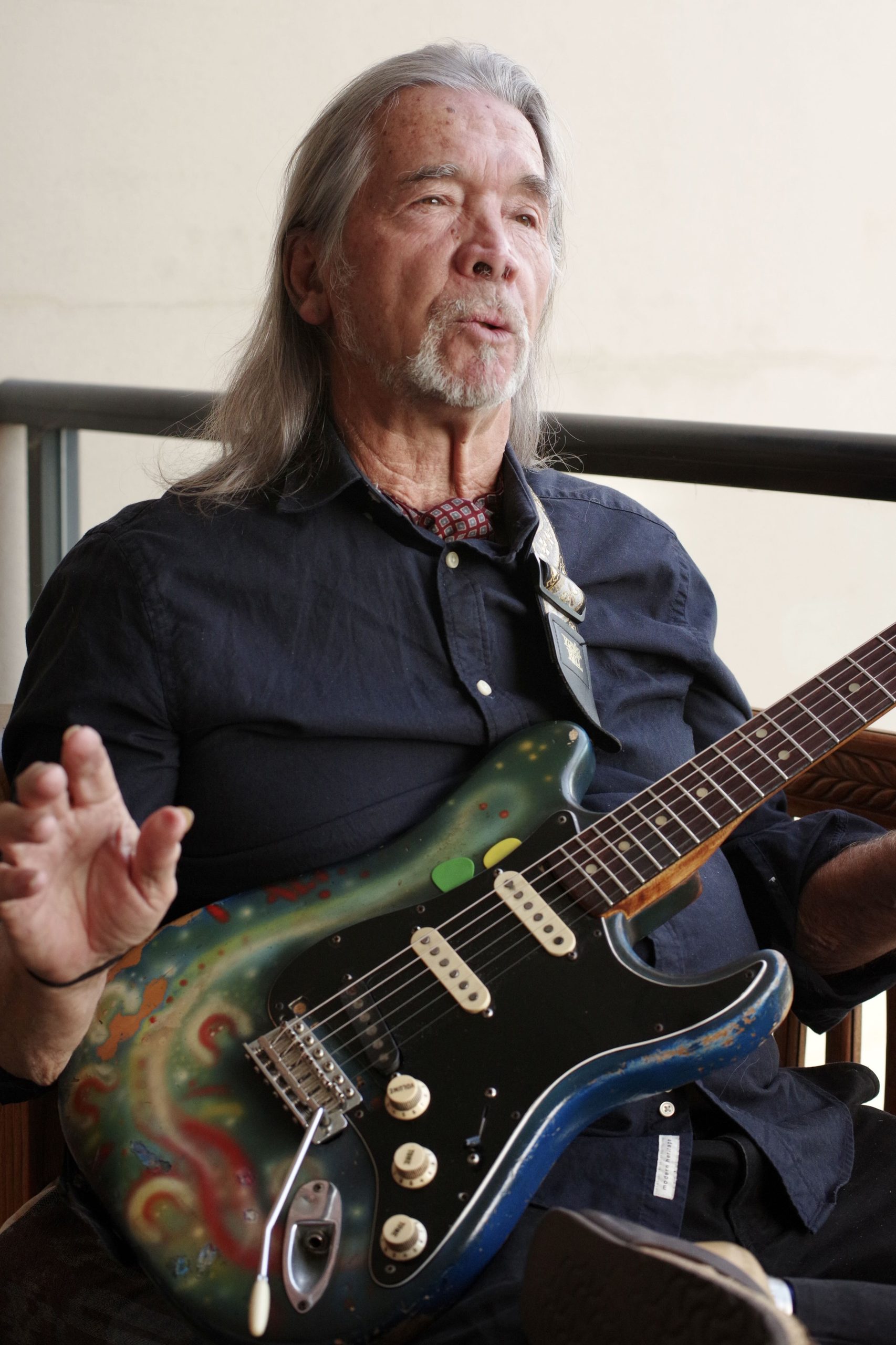
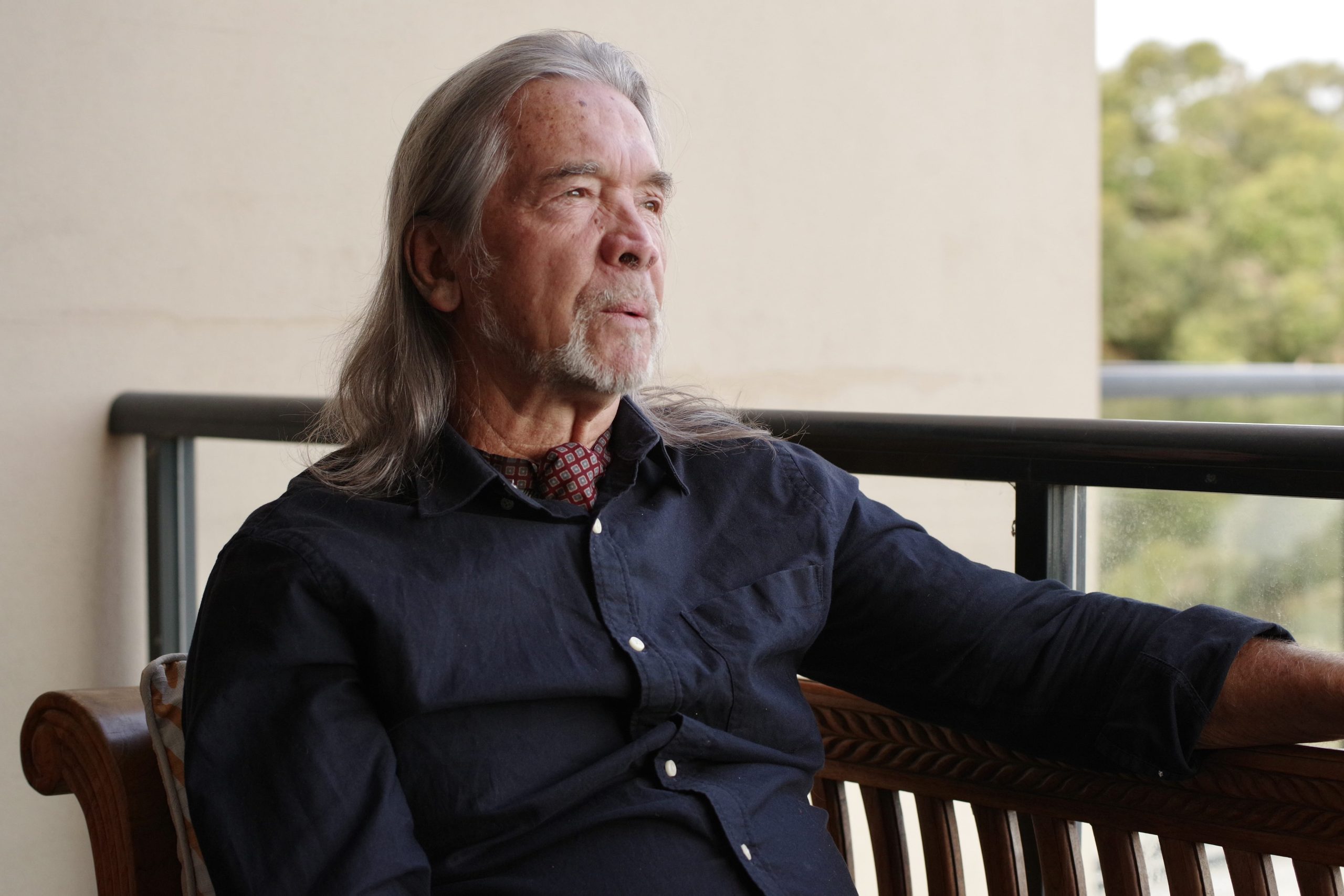
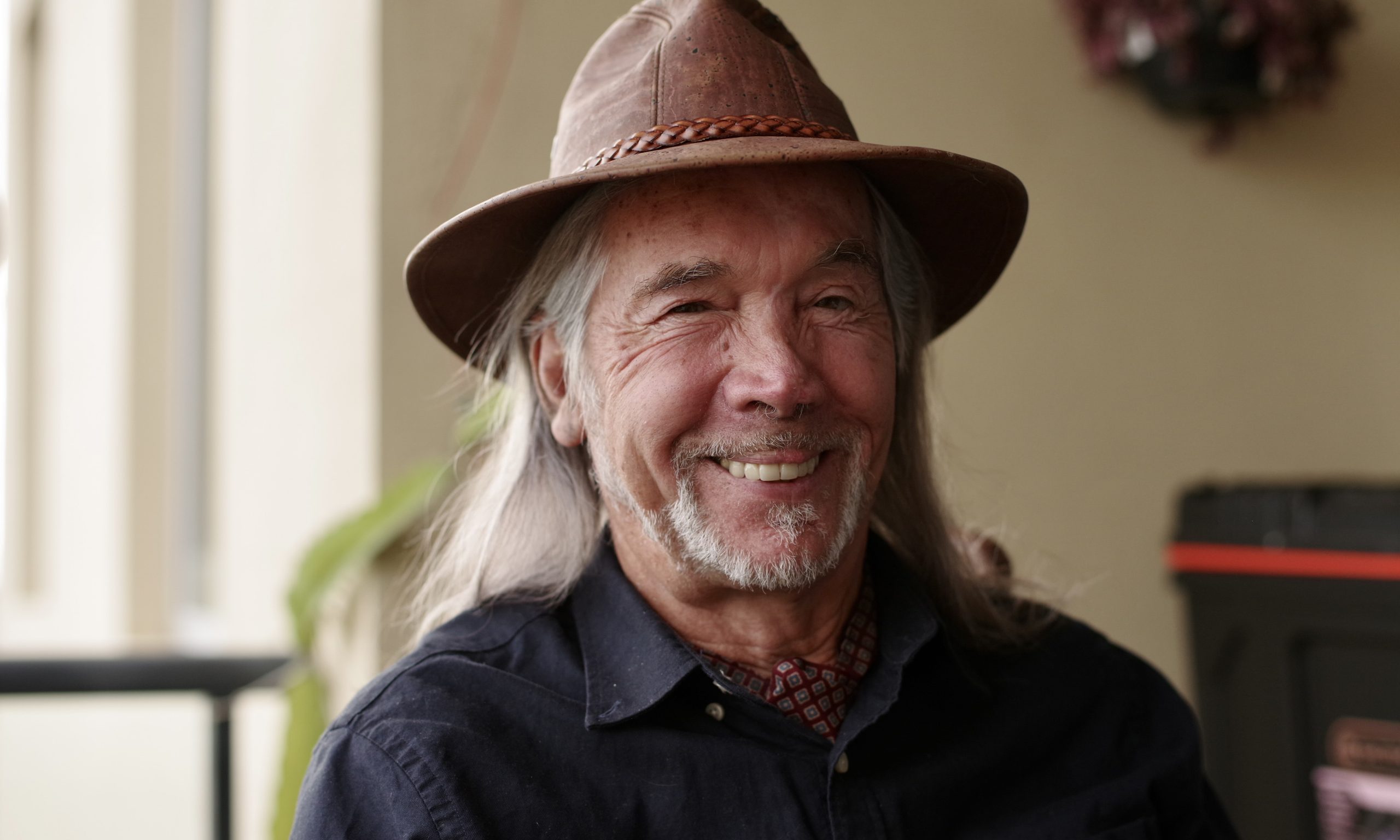
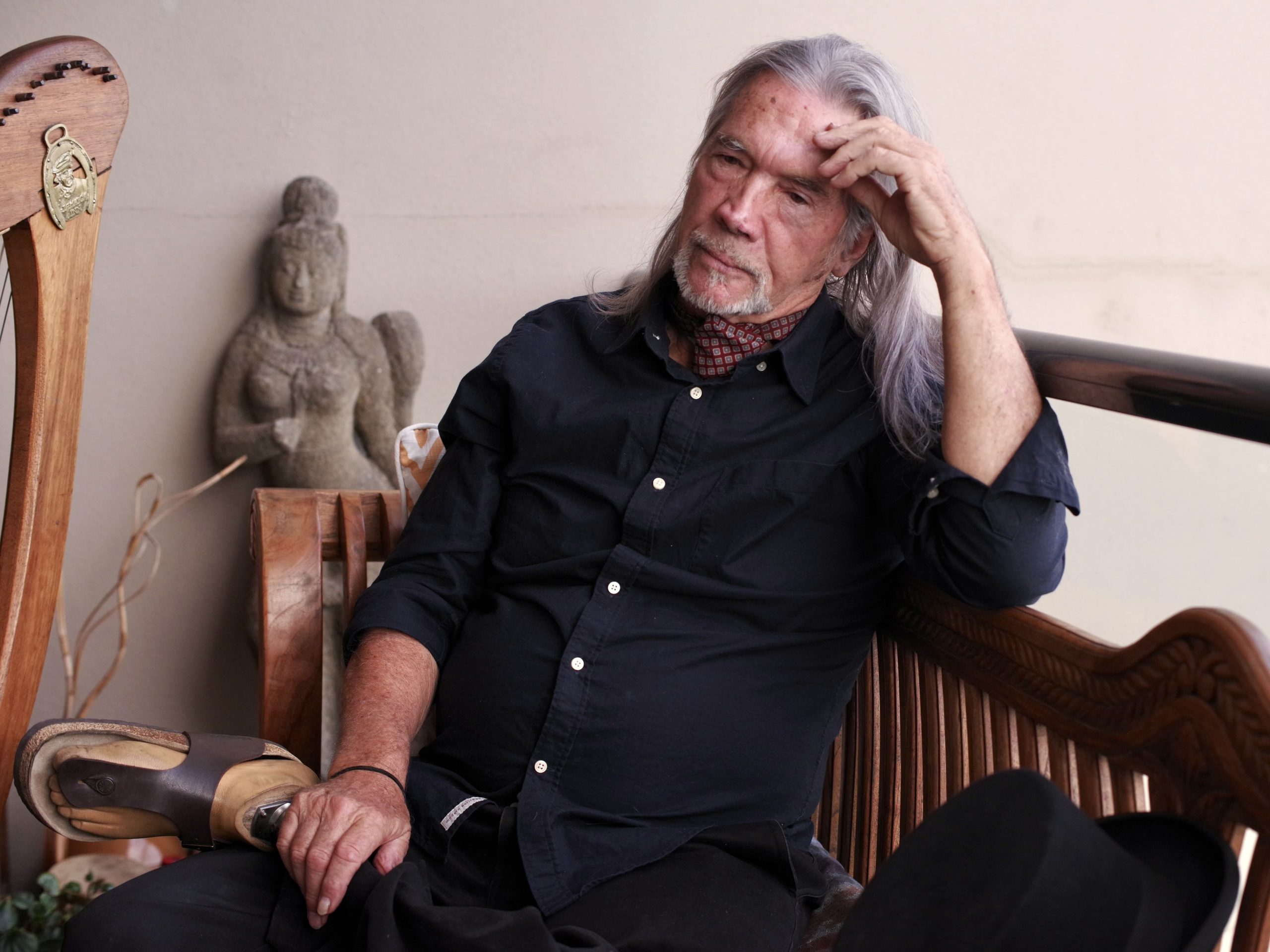
There are some people who ghost a music scene, popping up all over the shop, playing an extraordinary array of styles and genres in a long run of bands and ensembles. Within the West Australian alternative music community, Mike Burns is one such character. In a career spanning more than half a century, Burns has thrown himself into rock, blues, soul, jazz, Indian raga, Indonesian gamelan, Portuguese fado, indigenous (West) Australian, Celtic folk, bush band, orchestral and new music. He has made his mark in each genre, distinguishing himself as an adept string player (guitar, Celtic harp, mandolin and Portuguese guitarra) and interpreter of these various traditions. His has been a fascinating musical journey—with a tragic twist in the third act.
Born in Melbourne in 1951, Burns had a peripatetic childhood while his father, a political scientist, took up teaching posts around the world. He initially schooled in Canberra, though in the late 1950s and early 1960s he spent a year each in New Jersey and London. Significantly, en route to New Jersey, the family stopped off in New Zealand, Fiji, Hawaii and Taos, New Mexico, where the young Burns was exposed to a range of indigenous cultures.
His fascination with music was fired in Canberra in 1964 when he saw Indian sarod master Ali Akbar Khan in concert at the Albert Hall. The two-hour free improvisation captivated him; he knew then that he wanted to be a musician. Within two years he had also encountered the music of Jimi Hendrix and Dimitri Shoshtakovich. This eclectic trio maps the broad range of Burns’ oeuvre. Throw in some Beatles and Stones, and the crosscurrents become even more complicated.
Ever the non-conformist, Burns was expelled from Scotch College, Melbourne, in his matriculation year and asked to leave the Canberra School of Music at the end of his second year. By then he had already played in a swag of bands, including Through A Glass Darkly, Wally and The Wombats, and the Kingston Kats. He finished his stay in Canberra working at the Institute of Aboriginal Studies as assistant to acclaimed ethnomusicologist Alice Moyle OAM.
During these years, Burns picked up on what he calls ‘the skills of a musician’. Perform the music you really feel; compose music from existing forms with variation; research music from near and far; teach in classrooms and one-on-one, and repair instruments, understanding the physics and natural materials from which they are made. These five elements have guided him pretty well ever since.
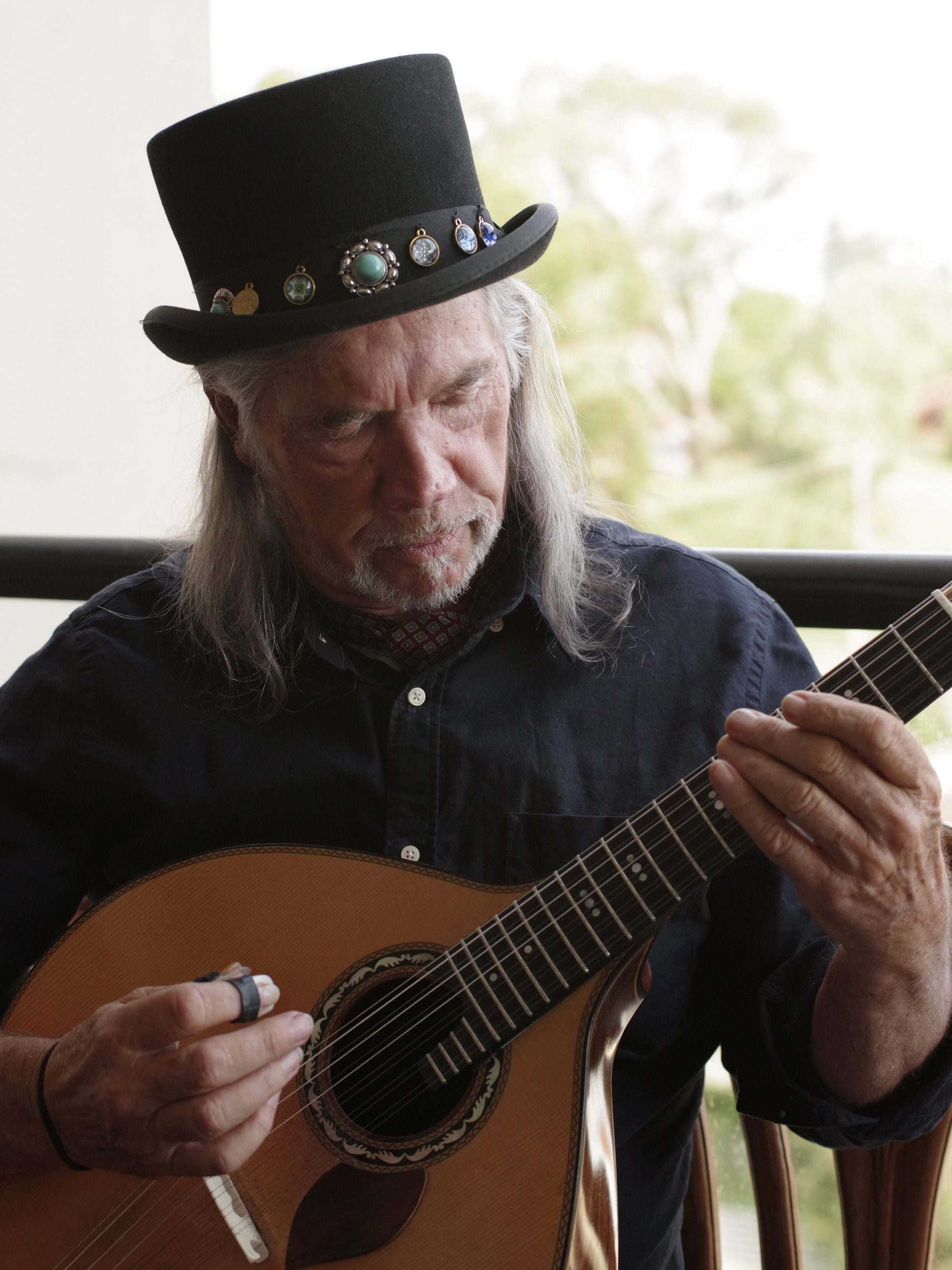
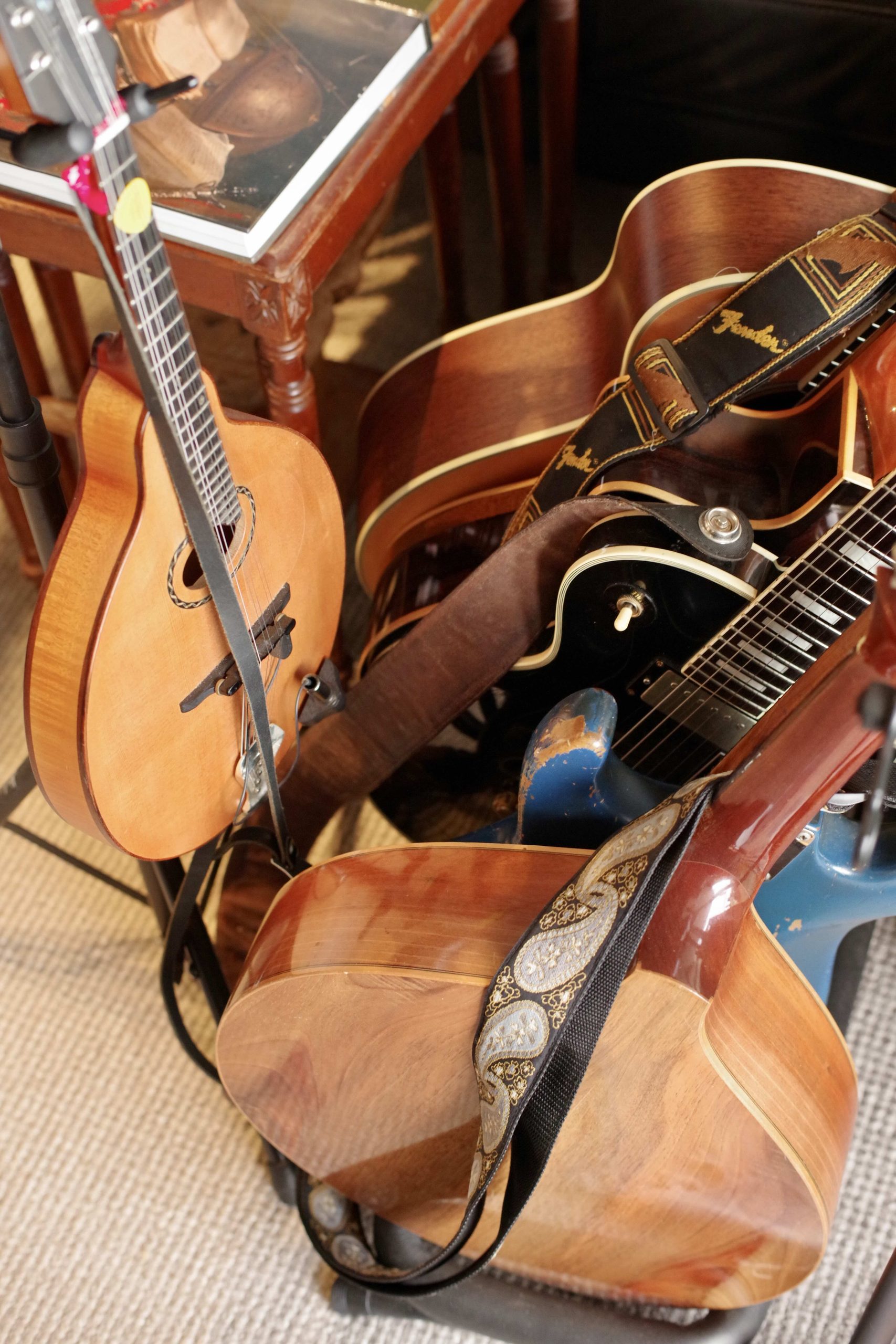
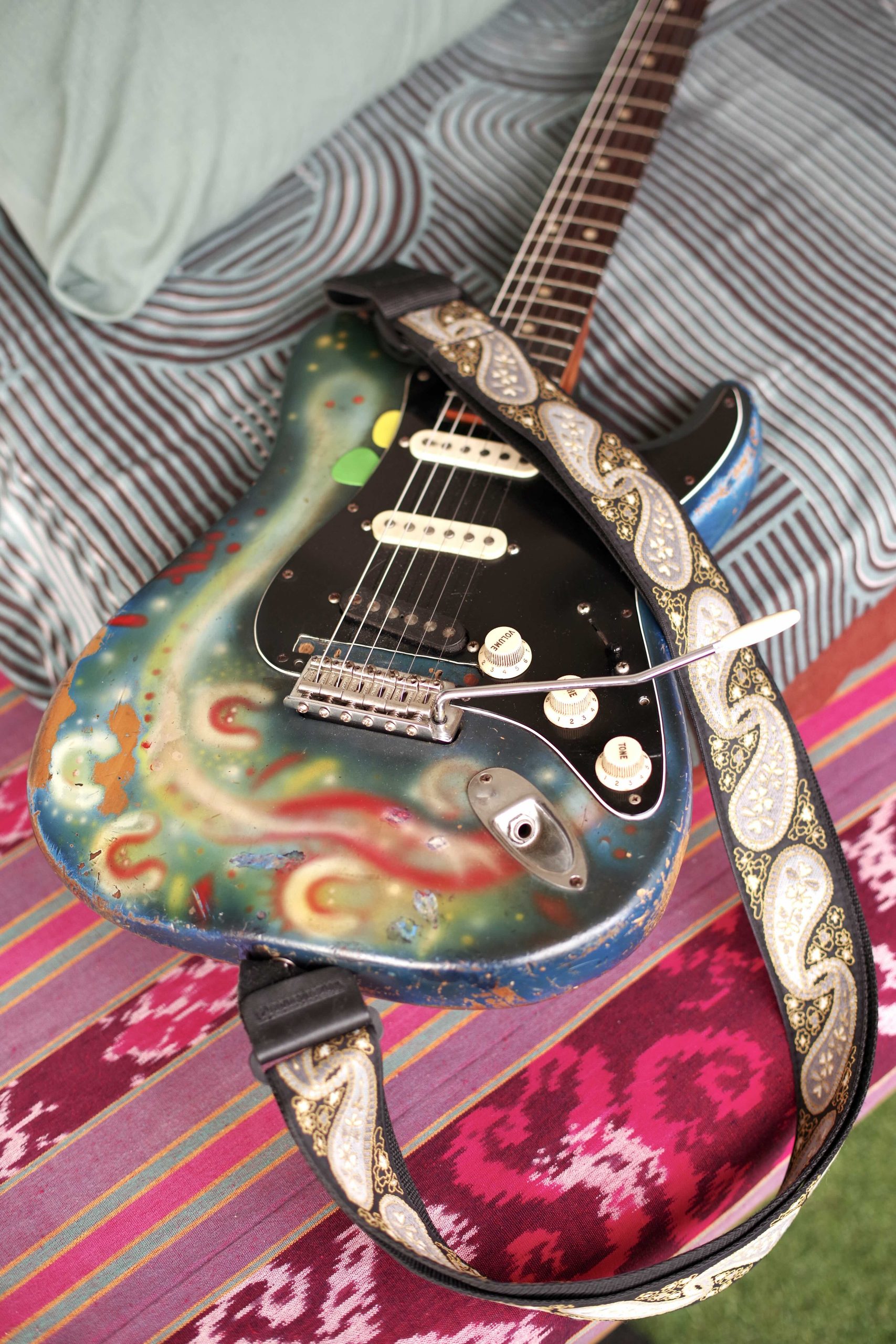
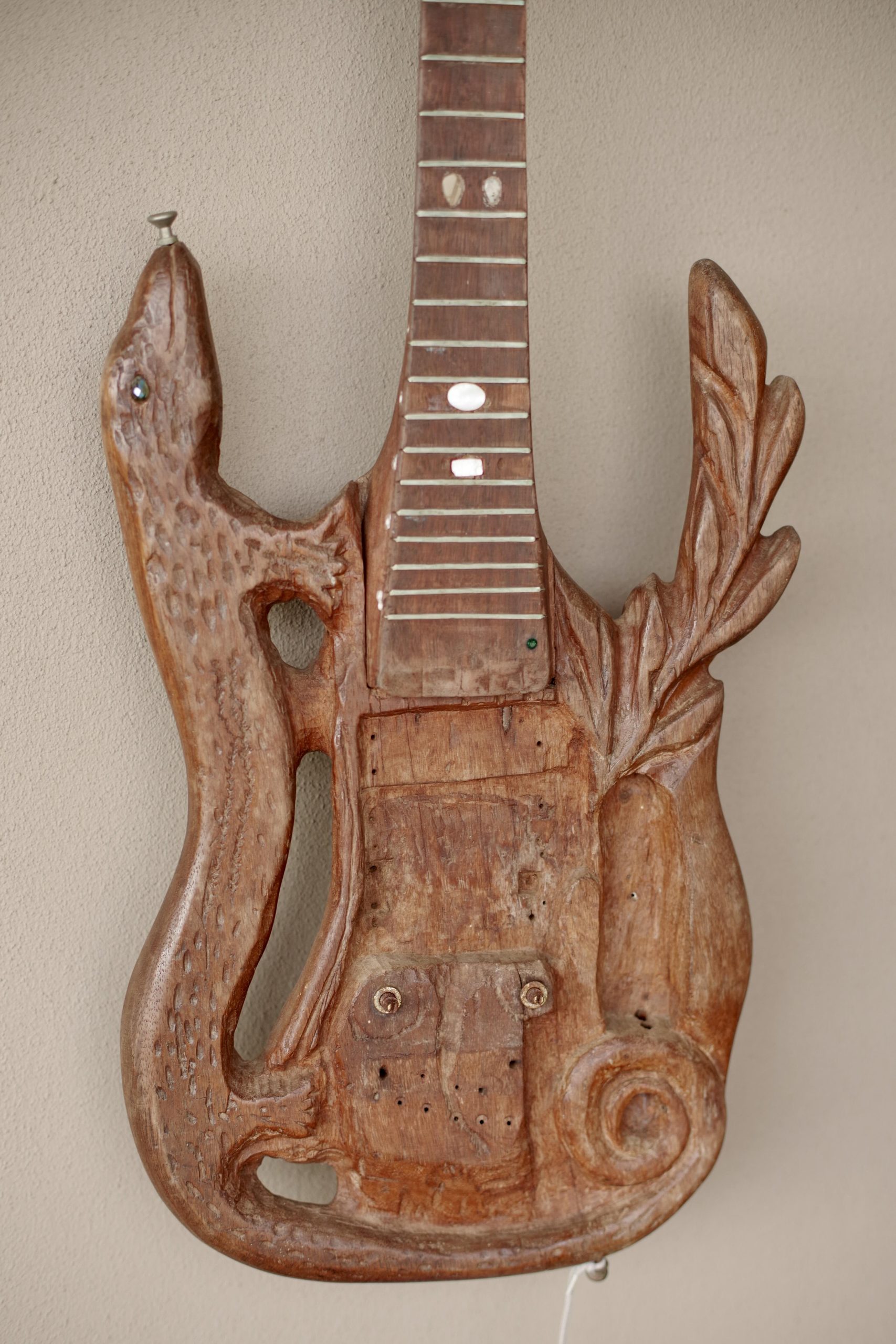
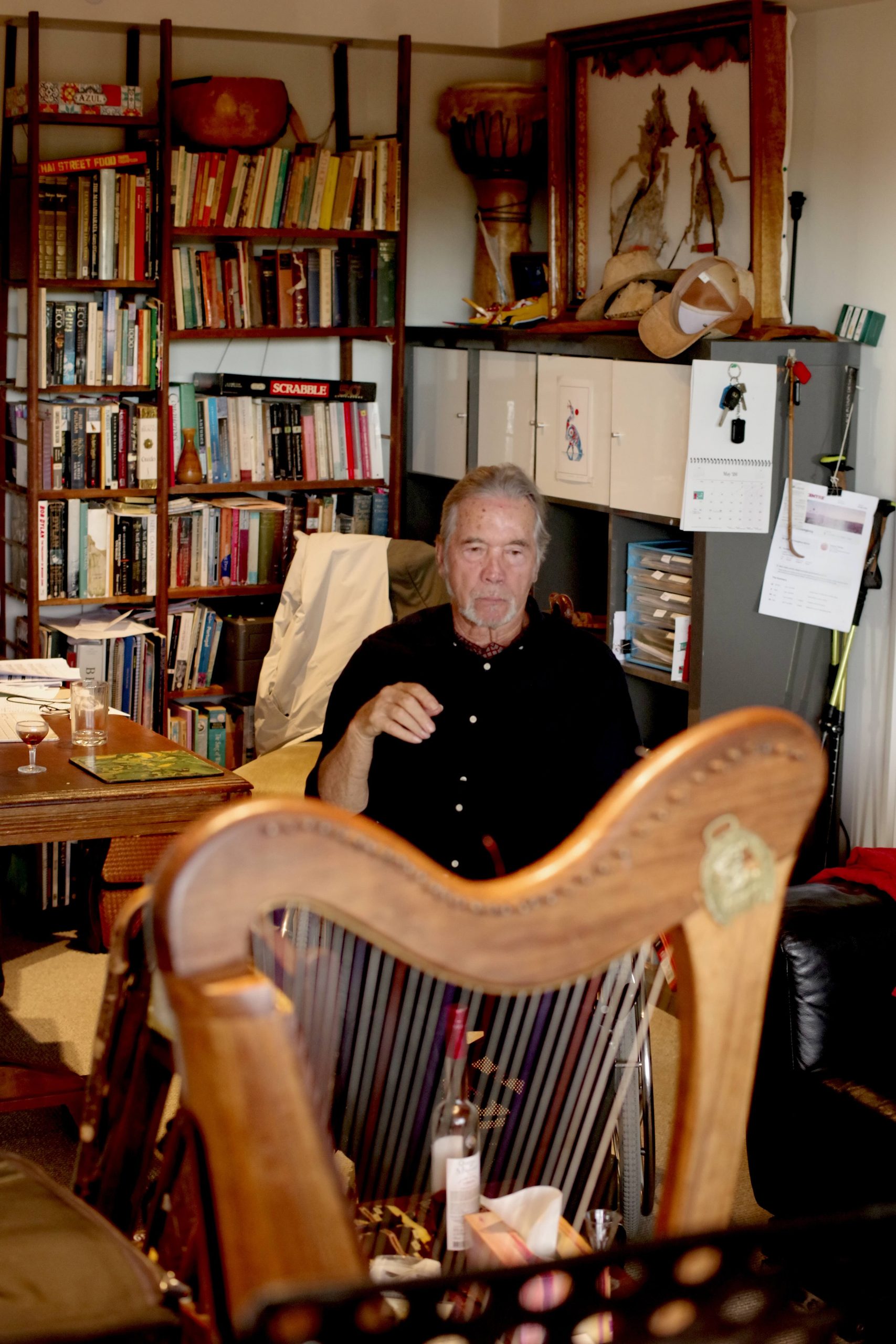
On the last element, there is a telling story. When a nefarious acquaintance stole Burns’ beloved cherry red Gibson 335 to pay off a drug debt, leaving him without a source of income, Burns built himself a replacement. This first construction led him into the realms of lutherie. He has since made two other solid-body electric guitars, thirteen Celtic harps, a Coimbra guitarra, various Medieval instruments and the replacement bars and stands for a set of gamelan instruments.
In 1975, Burns moved to WA to study ethnomusicology, graduating from UWA in 1979 with a bachelor’s degree in music. During this time he established his roots in the WA music scene, not only meeting many fellow travellers through the new music landscape but also performing in an array of overlapping bands, including Maya, Fools and Midget and the Farrellys. He also had electric guitar lessons from legendary Perth guitarist Lindsay Wells.
In the early eighties he moved around WA, living for a while in Nannup and Broome. After returning to Perth, he developed an interest in gamelan music and travelled to Java and Bali to study this unique and fascinating musical form. Between trips he formed the Gamelan Kevo Giro ensemble using instruments on loan from the UWA School of Music. He later acquired a larger set of gamelan instruments from his former high school, Scotch College. (Ironically, the men who signed these instruments were the three who spoke in Burns’ defence when Scotch College expelled him.)
Veering from one variety of indigenous music to another, Burns then spent three years in the Pilbara as the Community Music Coordinator. As well as supervising tours, coordinating festivals, workshops and other community initiatives, he compiled a substantial recording (15 to 20 hours worth) of traditional indigenous songs and narratives. These recordings are now held at the Institute of Aboriginal and Torres Strait Islander Studies in Canberra, with duplicates in UWA’s Berndt Museum of Anthropology and the State’s Battye Library.
Back in Perth Burns had a musical explosion: not only did he deepen his connection to Java, but he embarked on a series of significant collaborations. The first was with Perth’s pre-eminent new music group the Nova Ensemble and its Orchestra of the Global Nomads. This was followed by two full-length music theatre projects: My Spiritual Dreaming and Wayang Kelly.
The Global Nomads, an extraordinary collaboration between some dozen musicians, explored a hybrid percussion-based multicultural music. Rock meets gamelan meets Eastern music meets new music with a fair measure of funk and tango thrown in. This was the first time the multi-layered strands of Burn’s musicality really came together. The Global Nomads had a highly successful season at the 1992 Artrage Festival but sadly dissolved not long thereafter.
My Spiritual Dreaming was a two-act performance that depicted the creation of the sun (Kaarla) and moon (Moona Dunji) within an ‘ethno-composition’. Under the direction of Deckchair Theatre, to a libretto and story by Eddie Bennell and in close collaboration with arranger/producer Lee Buddle, Burns composed the score. Incorporating Indigenous and Western traditions, the show was performed by one of Nova Ensemble’s many quartets (David Pye, Lee Buddle, Phil Bailey and Burns) and presented by Deckchair at the 1993 Festival of Perth.
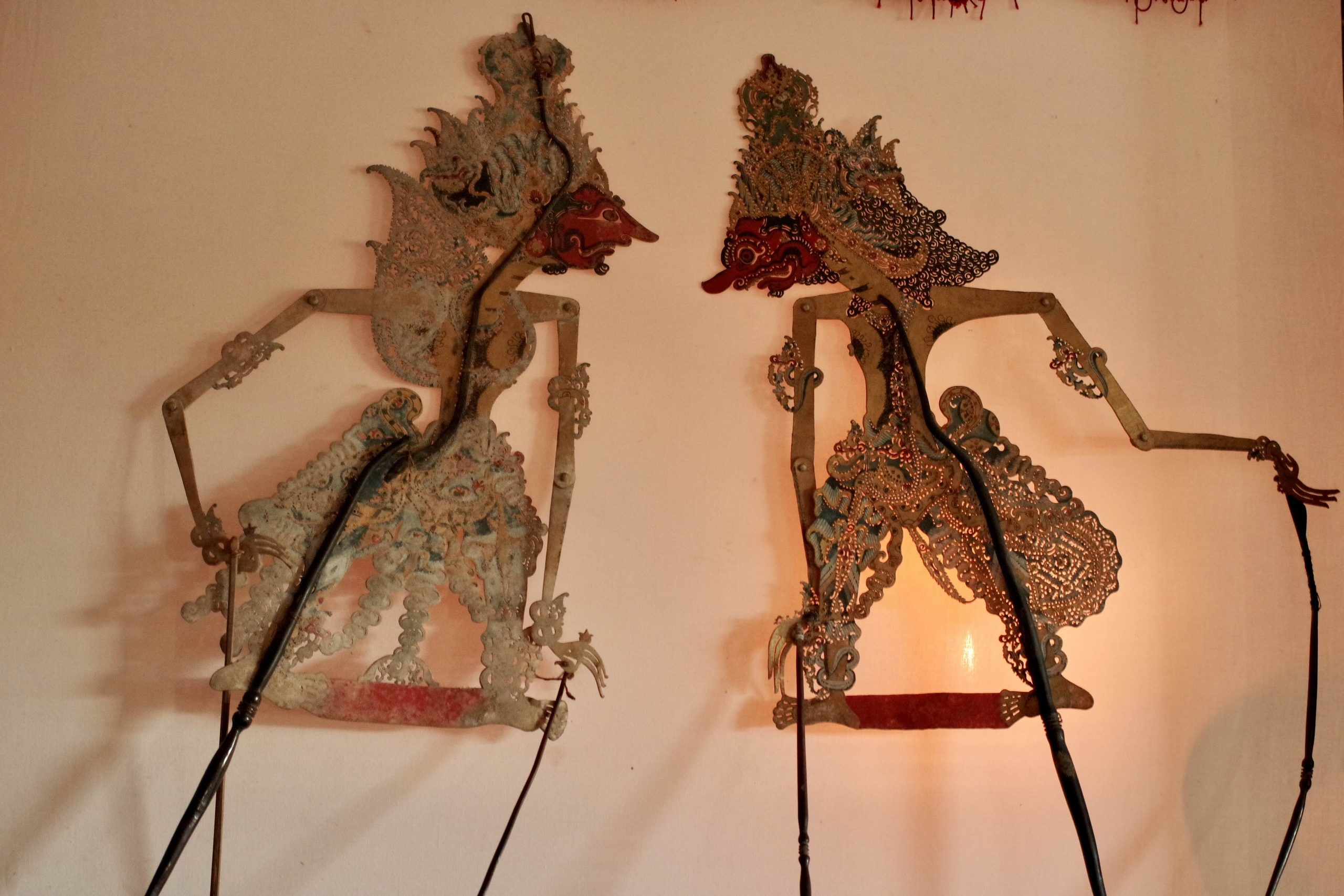
Wayang Kelly is a retelling of the Ned Kelly story utilising Javanese shadow puppets (wayang kulit), gamelan and bush band music. Burns had the idea in the early 1980s when, after seeing a wayang performance, his Javanese host asked him who the significant Australian gods and heroes were. Ned Kelly sprang to mind, and Burns began to wonder whether a wayang show could be made about him. It was a decade before the first full version was developed. Burns again composed the music but also devised the style for the puppets and, in collaboration with bush poet Roger Montgomery and wayang practitioner Agung Agusta, worked on the script.
Wayang Kelly has been performed at the New Zealand Beats Festival (1994), the Surabaya Festival (1996), where Burns was artist in residence, the Woodford Festival (2000 and 2005), the National Folk Festival in its Ned Kelly Year (2011), and at the National Festival of Wayang in Jakarta (2022).
After these pivotal works, Burns saw out the century researching and completing a master’s degree in Literature/Ethnomusicology with the University of New England. His thesis was on Regional Gambang Variation in Java and Bali.
As a tonic to his study and immersion in Javanese music, Burns veered back to his guitar roots. In 1999 he recorded and released Do Me the Kindness, an album of blues, soul and Americana. With his fine fretwork (guitars, Celtic harp and mandolin) and an evolving ensemble of horns, backing vocals and strings, this multi-layered set is subtly arranged. The more you listen to it, the deeper it becomes.
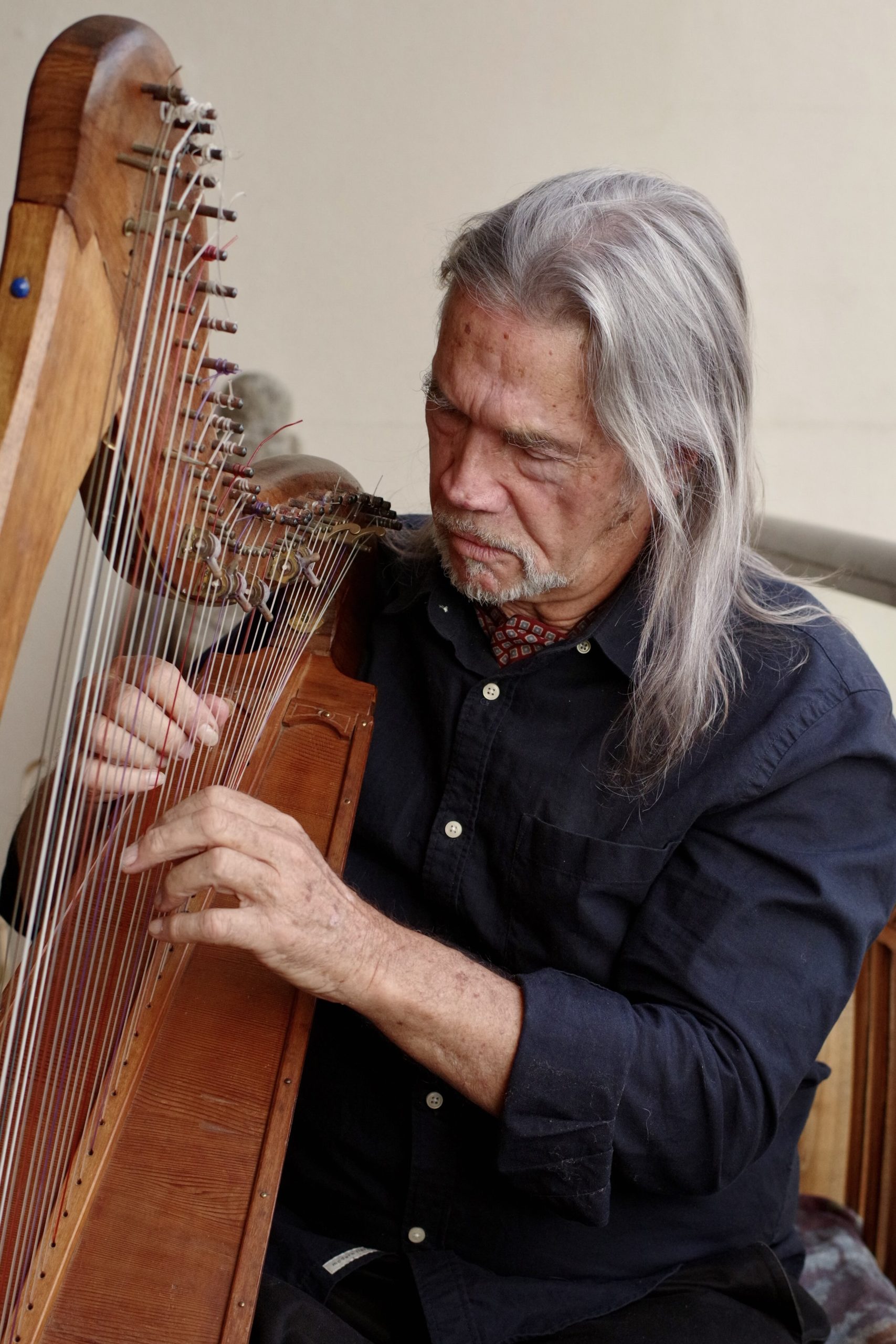
For family reasons, from 2000 to 2011 Burns relocated to Newcastle in New South Wales. As well as fatherly duties, during this time he taught in some twenty schools and played in another run of bands: Brothers of Mercy, Morpeth Jug Busters, Gamelan Novo Kasatria, as well as the Wish Hounds Harp Duo and a Sundanese duo, Atisa. He also recorded an album of solo Celtic harp, the exquisite and delicate Harp on Beaumont.
Towards the end of this sojourn, Burns developed an interest in Portuguese music. In 2009 and 2011 he travelled to Lisbon, Coimbra and Porto, where he took lessons from the fado masters Carlos Gonzales and Paulo Soarez. After the second trip he moved back to Perth.
On subsequent visits to Portugal he began to perform fado music and to develop a reputation as an afficionado of the form. In 2014, he recorded an album of contemporary fado compositions, Quasefados.
A major turning point in Burns’ life came in 2016 when he was involved in a devastating hit-and-run accident: his scooter versus an SUV. Left with life-transforming injuries, Burns spent three weeks in a coma and five months in hospital. Ever since he’s been reliant on a wheelchair, ultimately having his left leg amputated above the knee. As well as having to learn, as he puts it, ‘to get his mouth working again’, Burns also had a face reconstruction, including multiple teeth implants. Ironically, the best place to have this done was the Prelada Medico-Dental Hospital in Portugal.
Although this tragic episode changed the physical trajectory of Burn’s life, it has not daunted his musical spirit and creativity. In the last ten years he has continued to write, perform and record music. In his convalescence immediately following the accident, he began to write fiction with a focus on stories set in Java, Portugal, Fremantle and Margaret River.
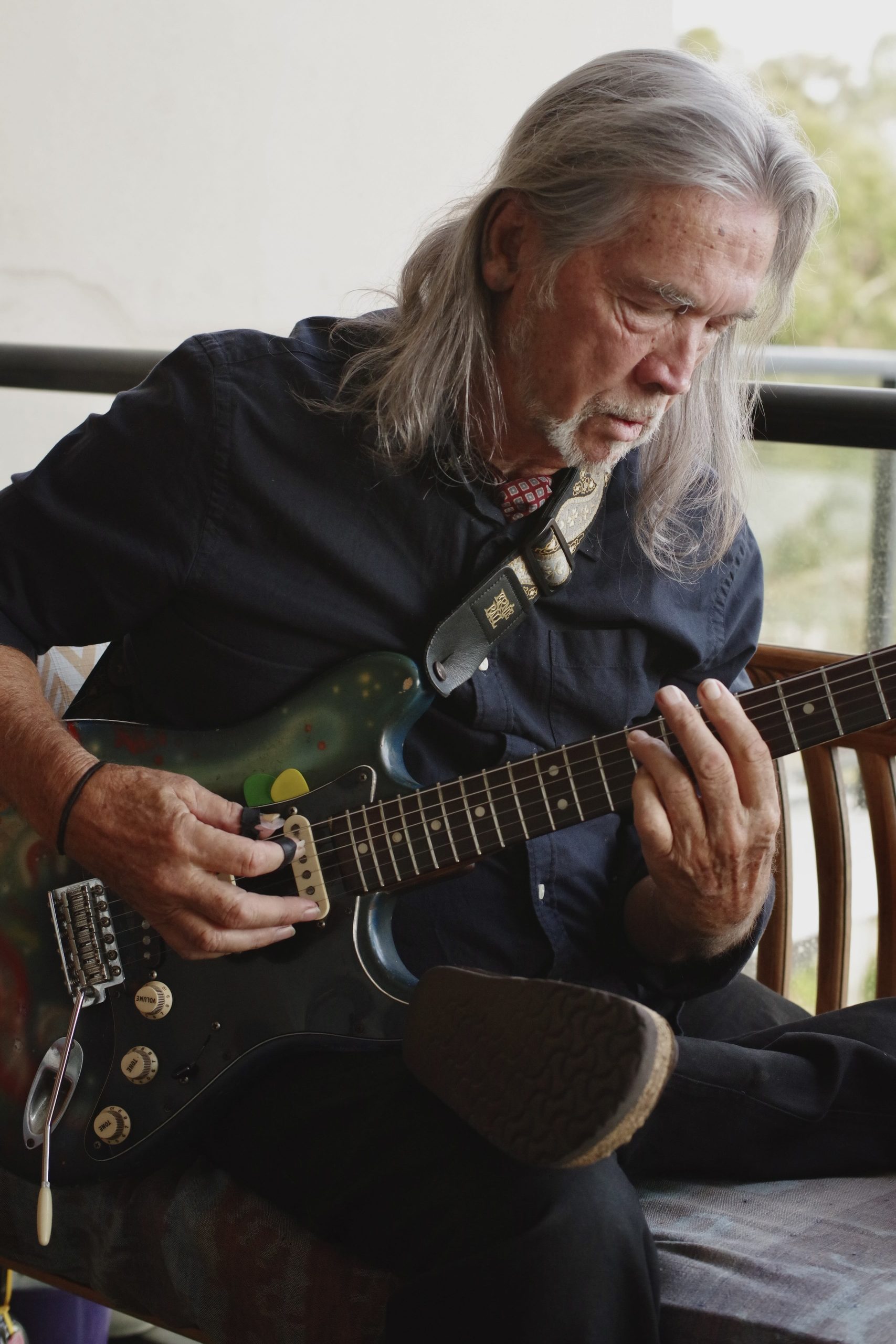
In 2016, to help him cope with the expense of his many operations, Lez Karski organised a benefit concert for Burns at the Victoria Hall in Fremantle. The show featured many prominent Fremantle musicians, including Bill Rogers, Paul Daly and Mark Cain. Burns himself played a few songs.
In 2017 he took to the stage again, firstly at the Gaslight Club at the Fly By Night and then in a series of fado nights within Perth’s Portuguese community. In 2018 he attended the International Gamelan Festival in Surakarta, apparently representing Australia. By 2024, he was back performing rock gigs and regaining stage confidence through open mic nights.
In 2024 he also recorded another album of American-influenced original music infused with fado rhythms and flourishes, the aptly named A New Smile. With superb horn arrangements by Burns and Paul Millard and featuring guitar legend Dave Brewer and vocalist/harmonica player Chelsea Gibson, this fine set was released in 2025.
Burns’ current musical projects include a fado and Indian fusion band (sarod player Praashekh, Brazilian guitarist Josh DeSilva and Sundanese-Dutch percussionist Freddie Poncin) and developing the launch band for the New Smile CD. He is also reworking into an audiobook a children’s fantasy trilogy he has written. In July this year, he is travelling to Wollongong and Newcastle for a series of performances, including the 25th anniversary of Newcastle’s Royal Exchange theatre.
An indefatigable musical explorer, Mike Burns has traversed a vast terrain in acquiring a formidable and practical understanding of both contemporary and traditional musical forms. His explorations have resulted in many memorable performances, the compilation of a significant ethnomusical catalogue and a suite of diverse and musically sophisticated recordings. It would be fascinating if he were to integrate all of the elements of his broad musicality into a single, unified project. A masterful melding of gamelan, fado, classical, indigi, heavy rock, soul, blues, Americana and Australiana would make a unique musical language, a fitting testament to Burns’ sixty years of meticulous music-making.
Mike Burns’ various CDs can be purchased from Mills Record Bar in Fremantle. Details of his forthcoming shows will be announced soon.
IAN LILBURNE
Photos by Alan Holbrook