Review: West Australian Ballet: Dracula at His Majesty’s Theatre
West Australian Ballet: Dracula at His Majesty’s Theatre
Saturday, May 16, 2026
First premiered on this very stage eight years ago, the West Australian Ballet resurrected its Gothic noir masterpiece, Dracula, for the 2026 audience tonight. Sweepingly cinematic in scope, this unmissable tour de force effortlessly seduced, both as a character and as a property, in nearly every facet of creation, production, and outcome.
Choreographer Krzysztof Pastor was sceptical about retelling the Dracula story yet again when first approached with the idea all those years ago, but Perth and the wider ballet world should be so glad that Pastor relented, helping to bring this stunning vision to the light of day.
The story began in the fifteenth century, with Count Vlad Dracula at war with the Ottomans somewhere in the Balkans. Although he emerged victorious, word was sent home that he had perished, and his beloved bride, Elizabeth, threw herself from the castle tower. Wracked with despair, Dracula cursed the clergy, God, and the very nature of reality itself as he magnificently, tragically transformed into the hungering undead.
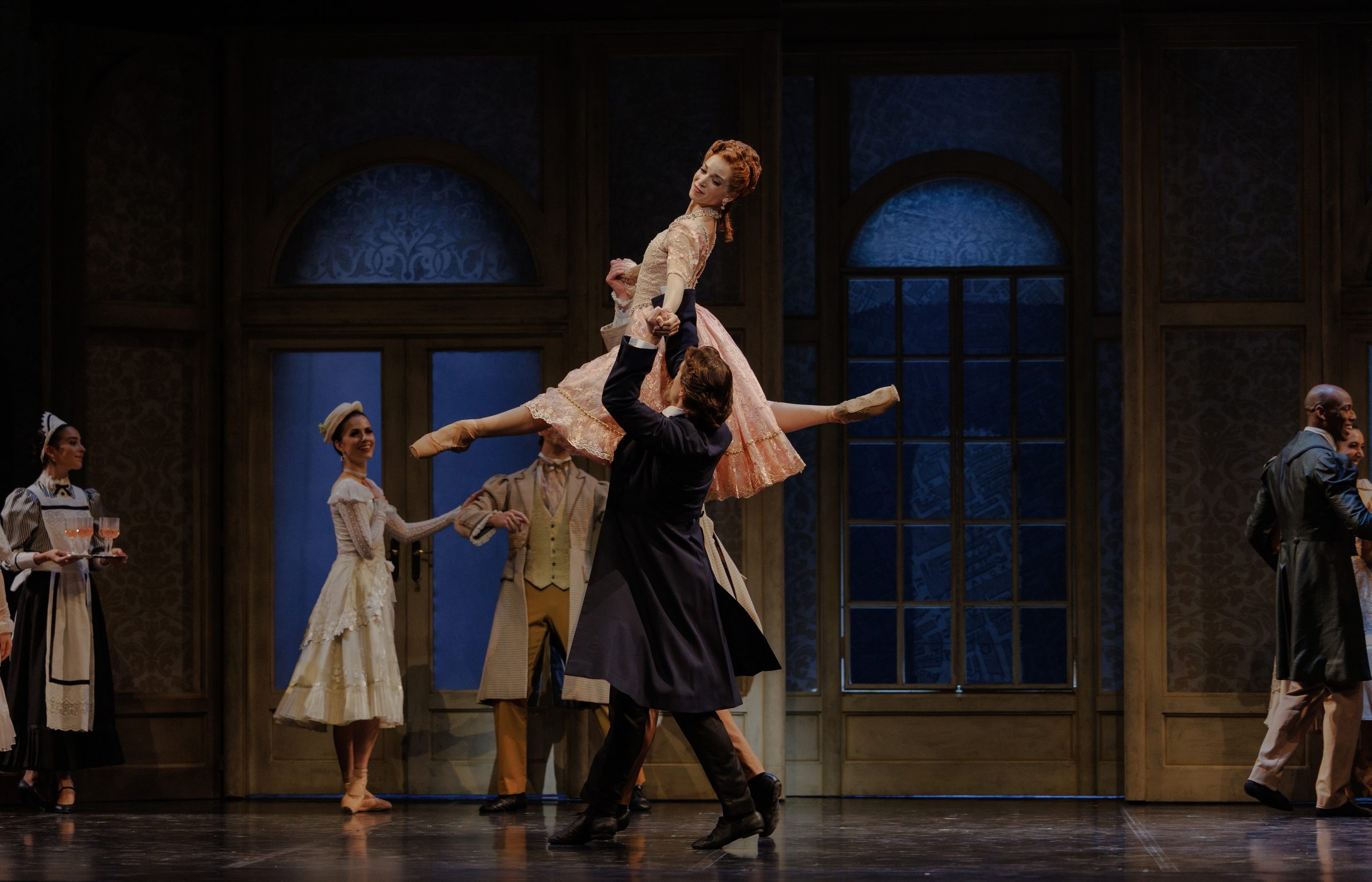
Fast forward four hundred years, to Victorian-era London, to lawyer Jonathan Harker and fiancée Mina Murray at their engagement party with friends, before Harker’s journey to Transylvania to facilitate another oligarch’s property purchase in the new imperial capital.
The West Australian Symphony Orchestra took pride of place in the pit, given a spectacular score to play. Multiple tracks were from Francis Ford Coppola’s iconic 1992 movie, including the first piece, The Beginning, which immediately immersed the audience in the medieval battlefields and personal tragedies of our protagonist. Taken from multiple movie scores and various symphonic movements, the music remained the strong underlying heartbeat of the performance, a pitch-perfect and almost indelible accompaniment to what was occurring visually.
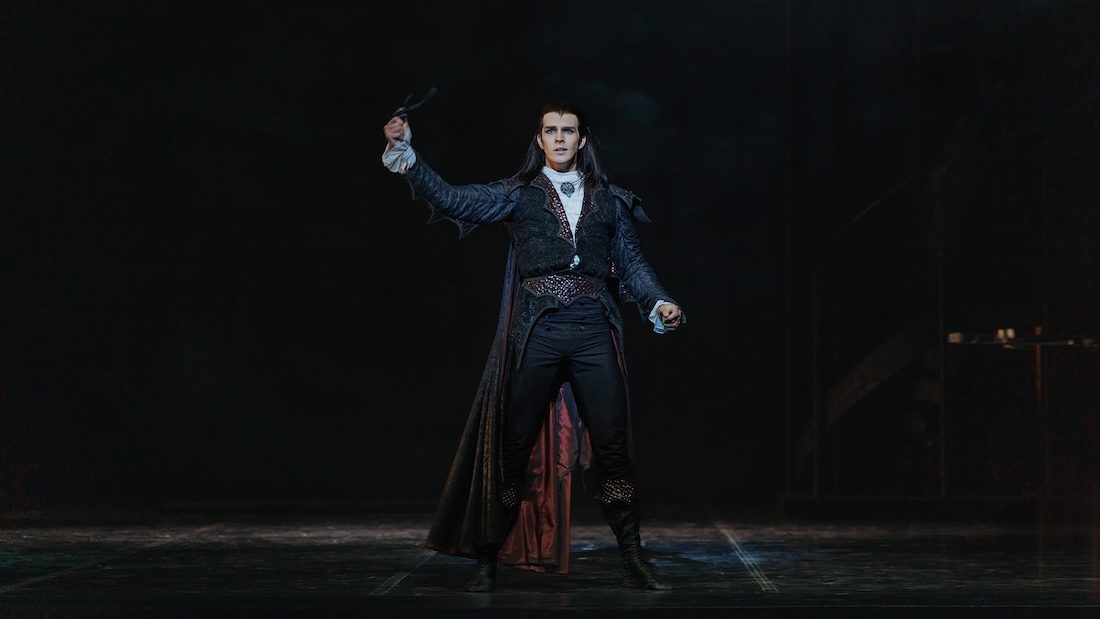
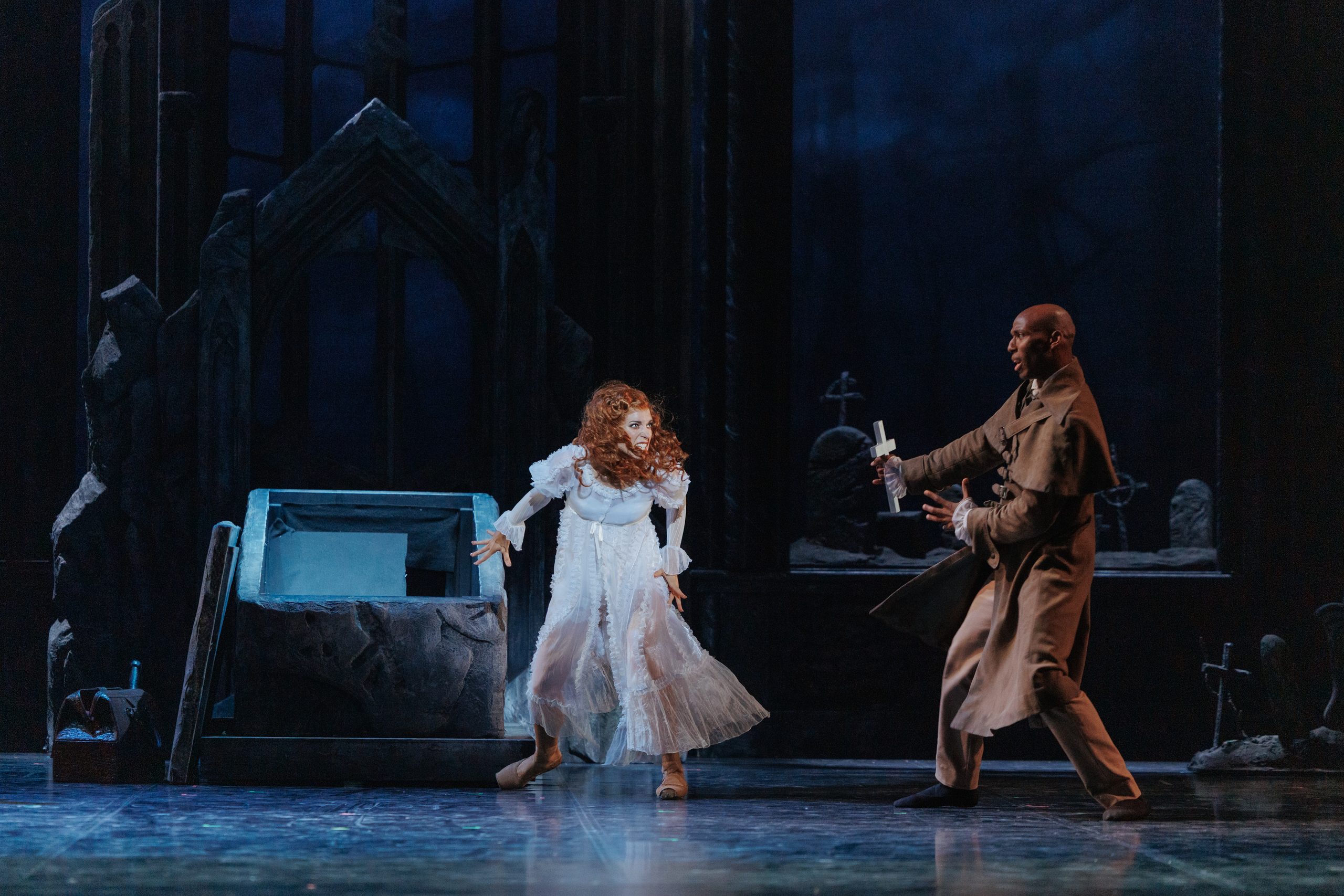
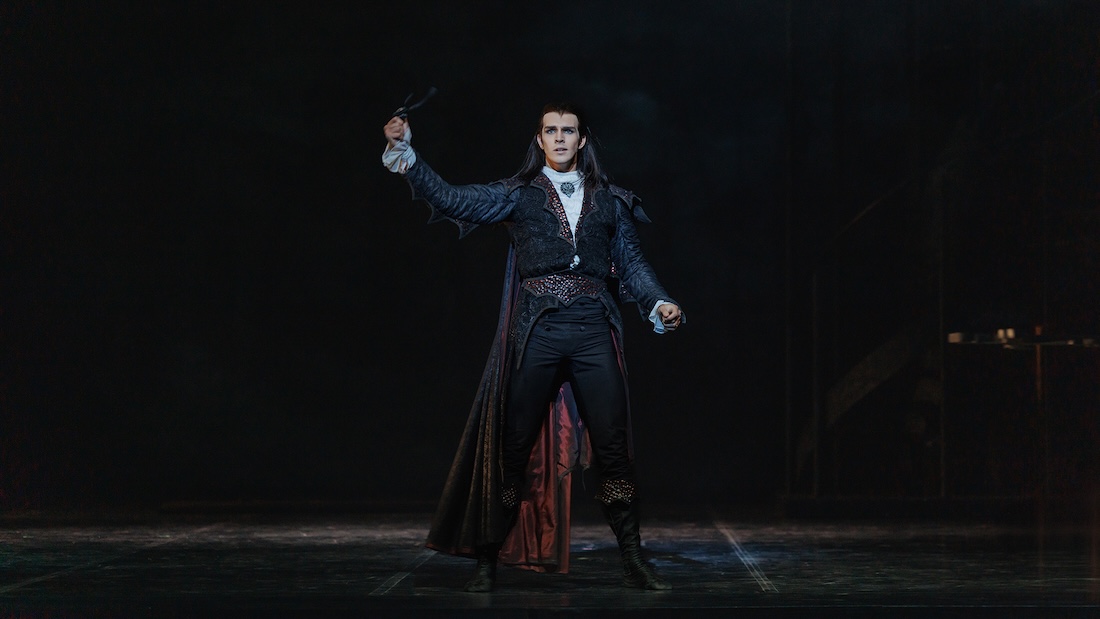
The second impression of the evening, after the music, was most definitely the costuming. The few minutes of the Transylvanian prologue set the highest bar for the remainder of the night, as Dracula, his bride, and the priest he slew all shimmered as if in a heat haze, their outfits’ innumerable rhinestones reflected under the stage lights.
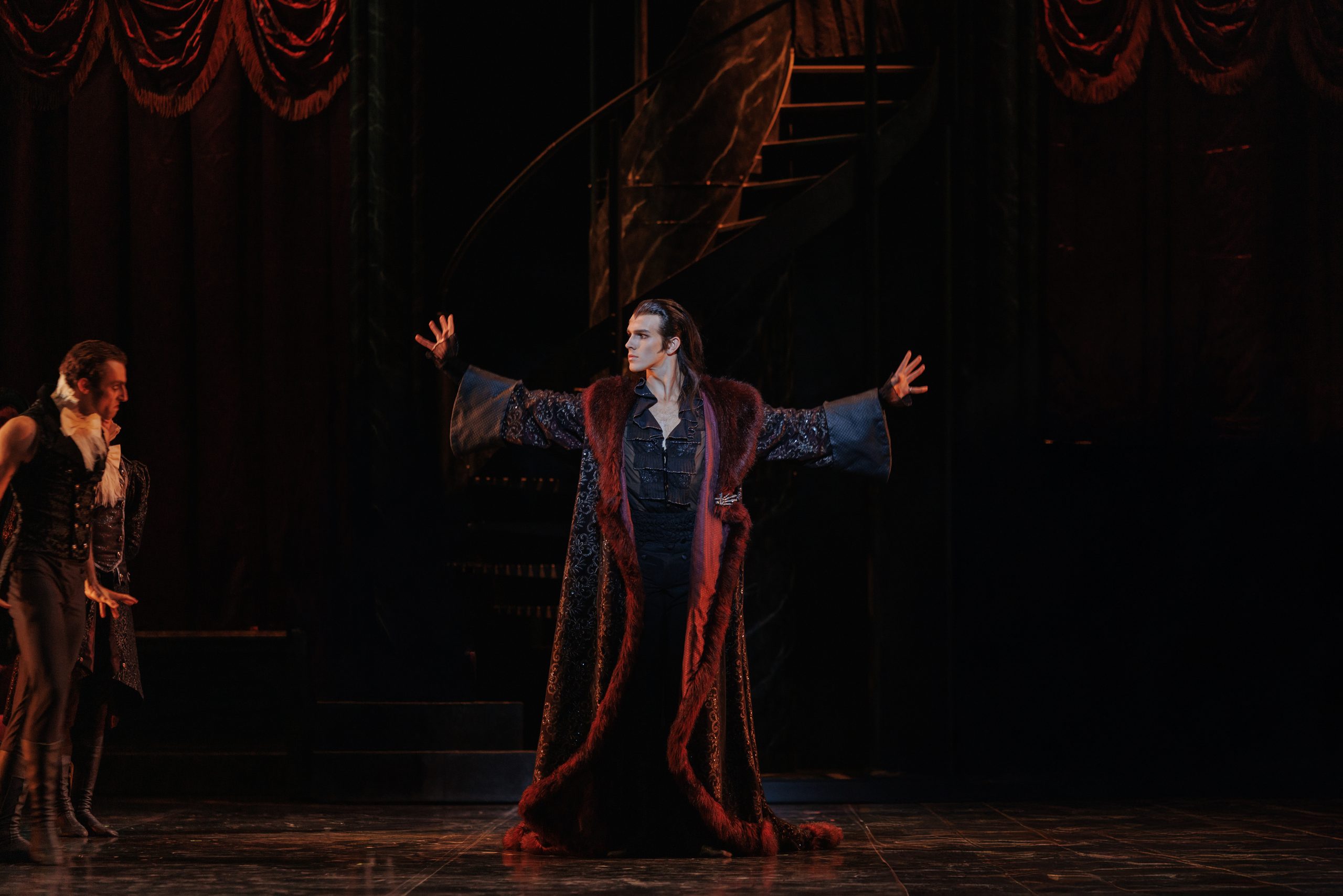
Beyond these opening minutes, nearly every piece throughout the evening looked haute couture, whether it was the peasant dresses or asylum uniforms, the overcoats or faux furs. At one point, the trio of male vampires appeared to have just come off shift from a Weimar-era Berlin cabaret, and all the praise that will flow to the costume department from this season will be absolutely deserved.
The set design, especially that of Transylvania, was epic in scope. With every piece of vampiric media available as inspiration, the team looked to have used aspects from them all, other than perhaps Twilight. Dracula’s castle looked either like an ancient horror in and of itself or landed from one of those fantasy realms with many angry dragons. For London and Act Two, the asylum staging was simply stunning, the massive cathedral-like windows that looked out to the world also letting far too much of its evil in.
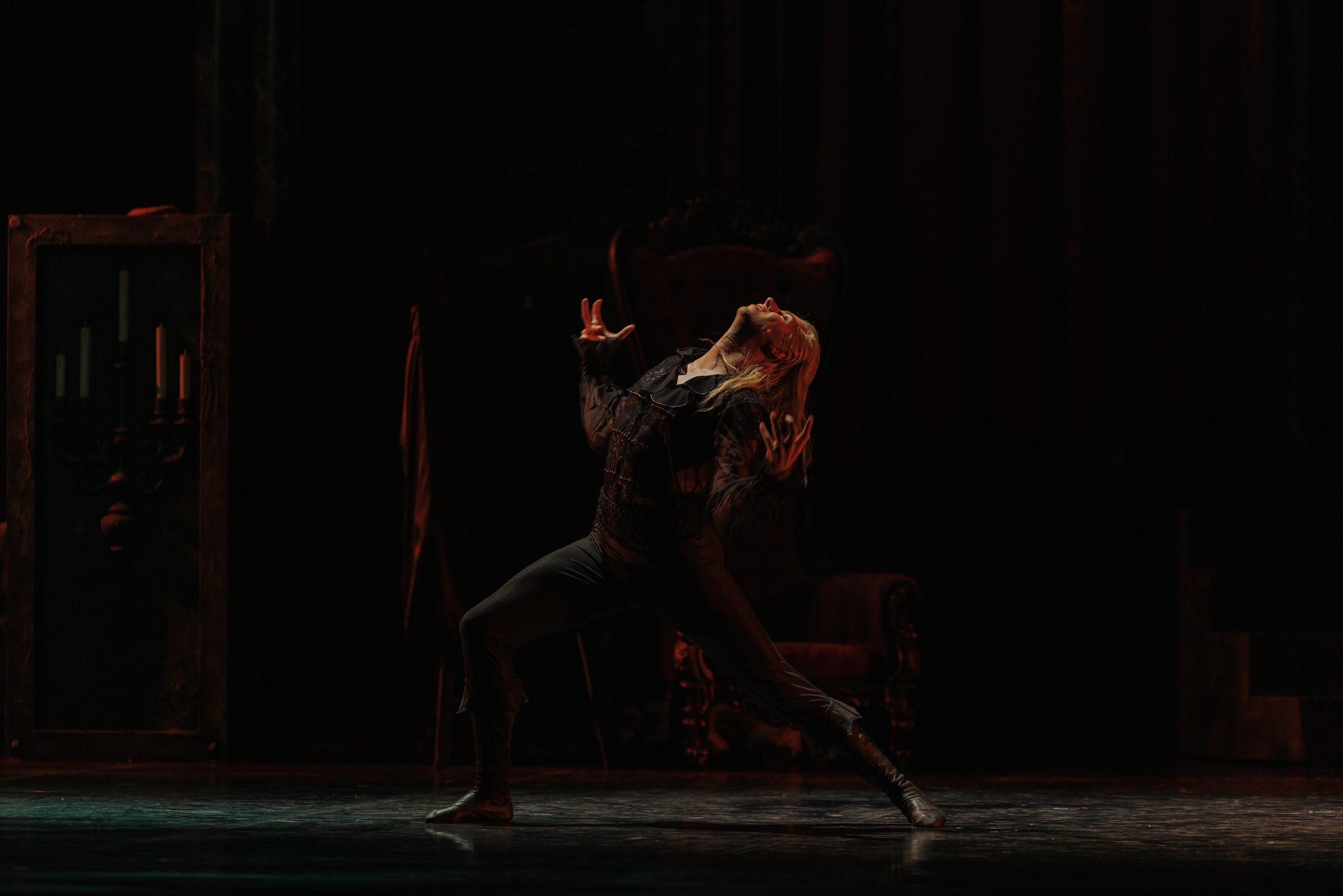
Dracula himself was envisioned as two roles: Charles Dashwood played as the younger version, with Jack Whiter the elder—through the course of the evening, as the character’s vigour waxed and waned, the two dancers transitioned time and again, at first seamlessly across Act One, then rather more jaggedly, swaying between pantomime and opera after intermission.
Harker was performed deliciously by Juan Carlos Osma, played somewhat naively to start, and matured rapidly whilst in the monster’s den before his return to London as a vampire hunter midway through Act Two. Harker’s fiancée, Mina, was danced by Polly Hilton, who exquisitely emoted the heart’s push and pull between her two betrothed, both modern and medieval.
Alexa Tuzil as Mina’s best friend, Lucy Westenra, and Ludovico Di Ubaldo as Renfield, a former colleague of Harker’s now in the asylum, also gave outstanding performances worthy of specific note. Tuzil, her character fallen to Dracula’s infiltration of Victorian high society, conducted a bourrée en pointe almost to marathon length, giving the appearance of floating in the air as she was manipulated this way and that.
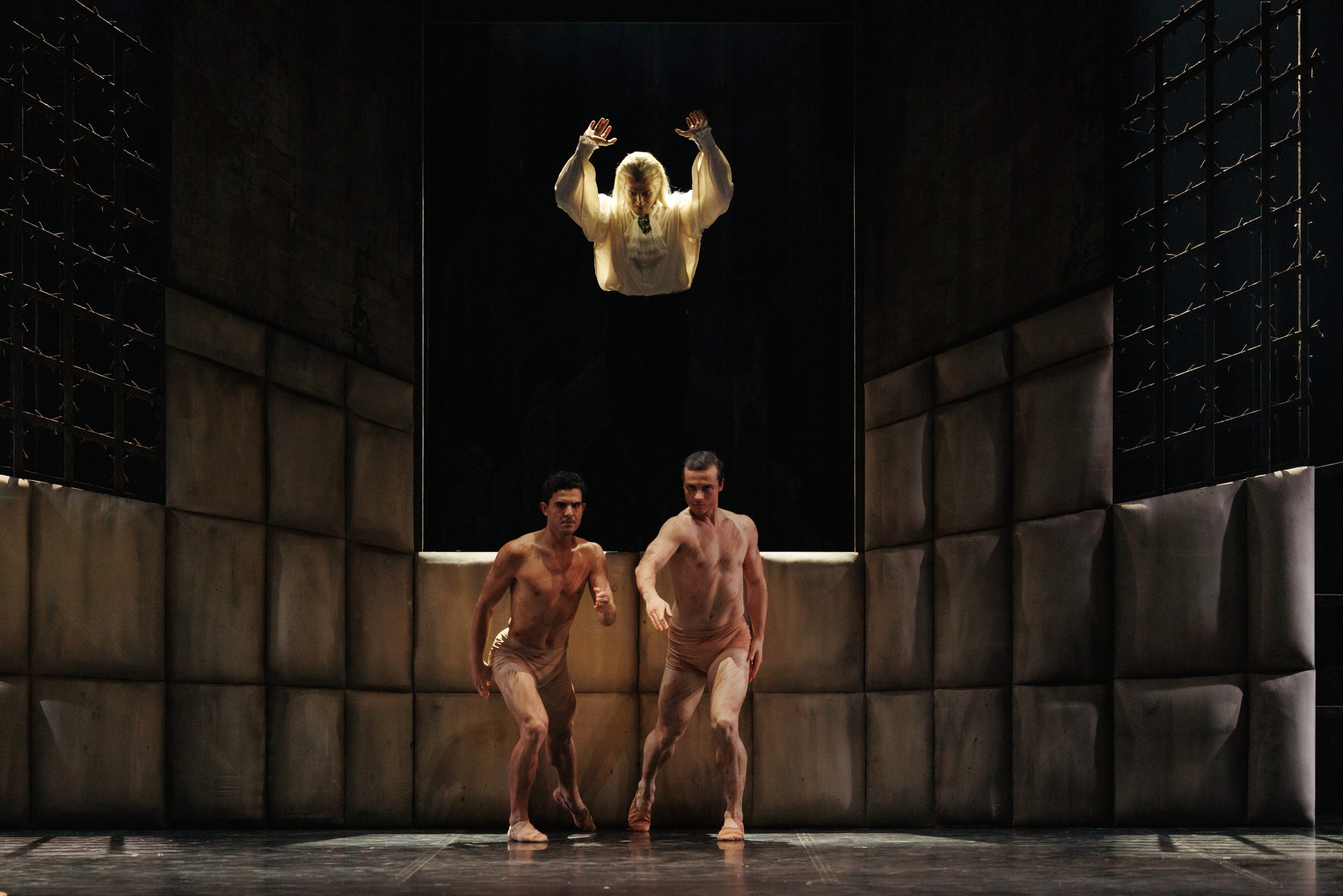
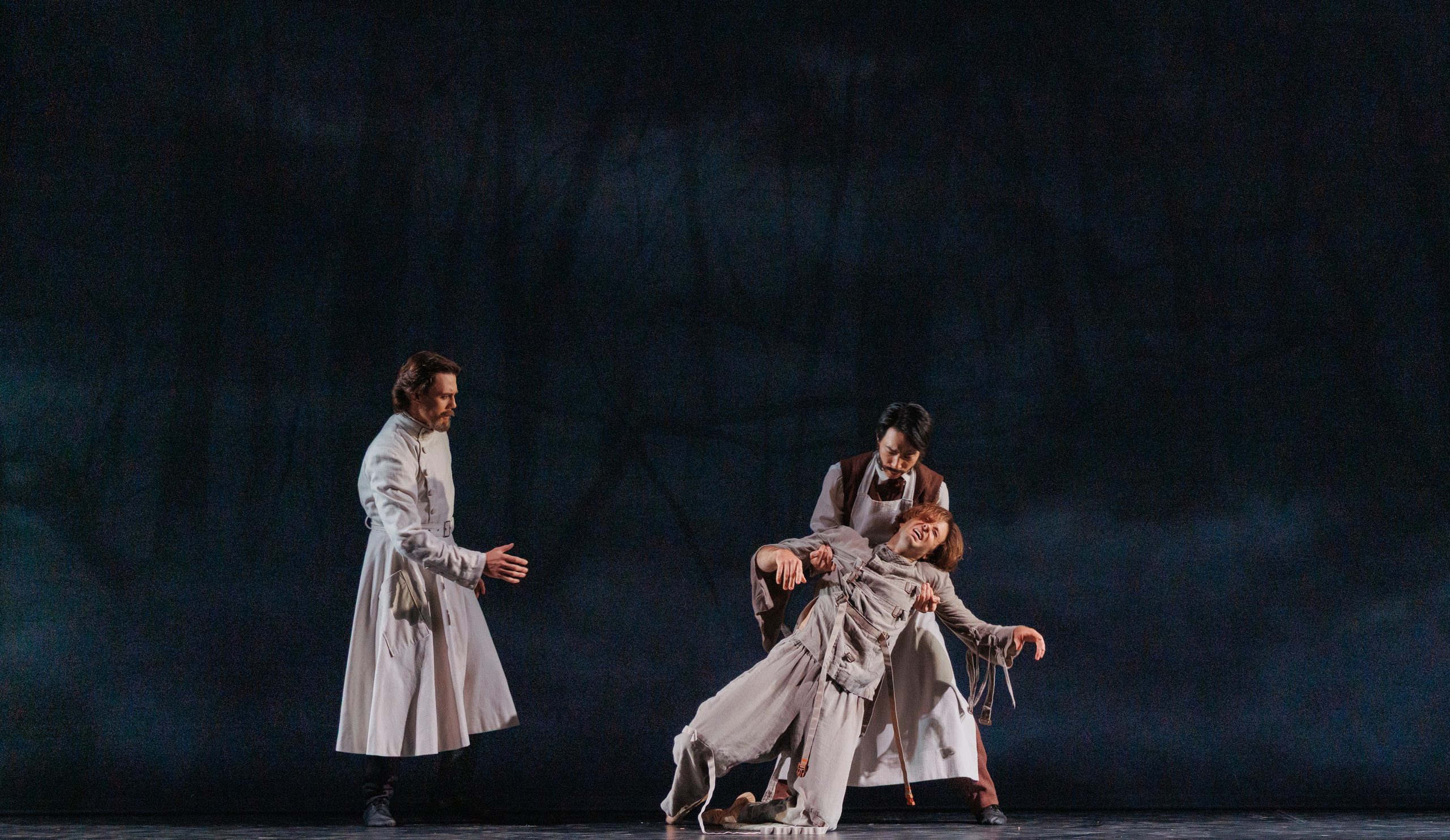
Di Ubaldo as Renfield at first drove his fellow asylum patients to near riot as his liege arrived nearby, a synchronised routine built from one through six performers in a most satisfying way. Further into the piece, Di Ubaldo fabulously danced the conflict within his character’s soul, still devoted to Dracula, yet at the very same time seemingly exhausted by him.
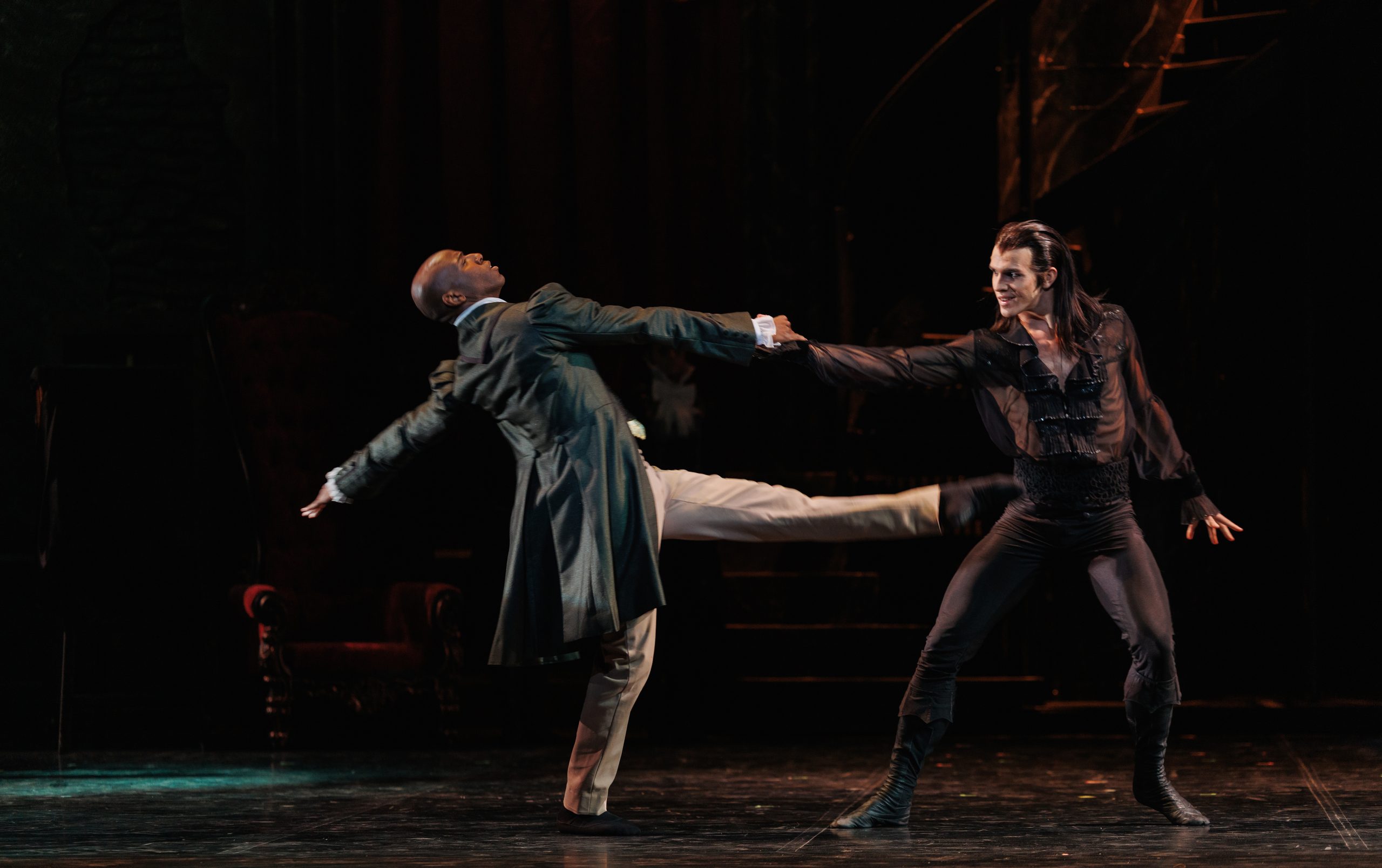
Earlier, as Dracula and Harker had conducted business over their first dinner, the dancers undertook a pas de deux tango, creating a scene full of unbridled eroticism and simmering passion. A few moments later, the female vampires attempted to seduce Harker; this set piece was near enough the epitome of pure lust as interpreted in dance. The evening overflowed with sensuality and heightened emotion in the audience, perhaps as much as on stage.
With too many highlights to simply continue to list, West Australian Ballet’s Dracula was a visceral, interactive, whole-of-body experience rather than something standalone, cut and dried, and slightly inert in front of the eyes. With the music just as important as the visuals, those who watched and listened tonight were, at multiple times, taken deeply into their very souls.
Part horror, part romance, a towering monument to the possibilities of modern ballet, and an outstanding local achievement not to be missed, Dracula sated every appetite that could be brought forward by tonight’s delighted and ravenous audience.
PAUL MEEK
Photos by Jonathan VDK