Review: WASO’s Mozart & Medelssohn at Heath Ledger Theatre
WASO perform Mozart & Medellsohn at Heath Ledger Theatre
WASO’s Matinee Symphony Series
Thursday, June 5, 2025
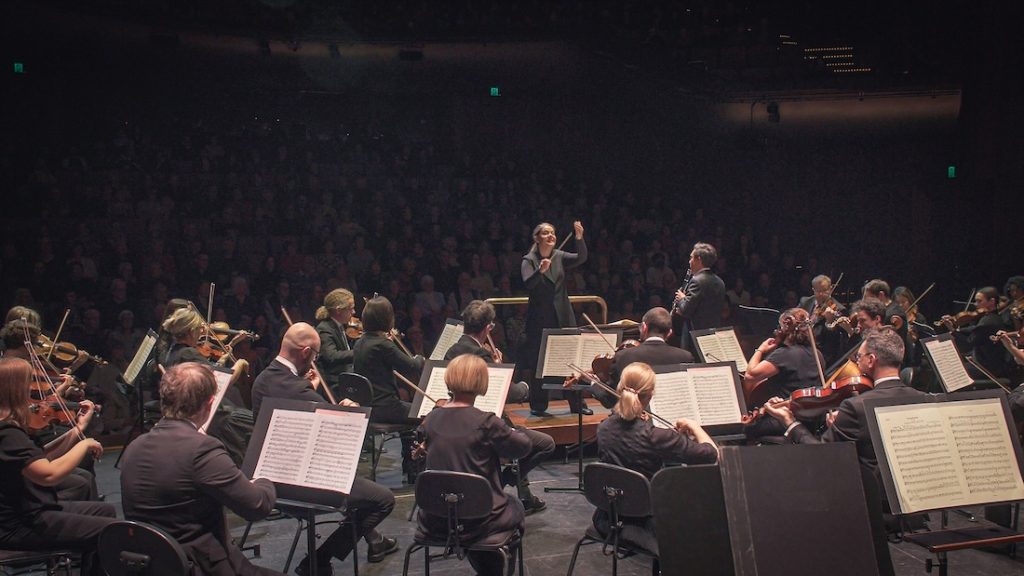
The latest venue in WASO’s year on the move is the Heath Ledger Theatre at the WA Theatre Centre. This is the fifth stop in the orchestra’s 2025 mainhouse peregrinations. With 575 seats in a raked configuration, it is ideal for the matinee symphony series—the right capacity, and everyone can see. A walkway away from Perth Central Station, it is also convenient for the retirees who make up the core matinee audience.
But on arrival there was a major question mark hanging over the room—how would it sound? The Heath Ledger is notorious for its tricky acoustics—too often the clarity disappears up the fly tower. Mindful of this and ever diligent in their quest for a clean sound, the team at WASO suspended a set of baffle boards above the stage to deflect the music out into the auditorium. Smart move. As with His Majesty’s Theatre a month or so ago, where the same problem can occur and the same device was deployed, the sound was brilliant. Clear and crisp with just the right resonance.
In keeping with the matinee format, the concert was shorter, just an hour without an interval, and comprised only two works: Mozart’s Clarinet Concerto and Felix Mendelssohn’s Symphony No. 4.
The clarinet is unique among the woodwind instruments for its broad range of sound. In its three registers, it has a strong affinity with the human voice: a dark, resonant low range; a warm, melodious middle tone; and a clear, bright top end.
As musicologist Robert Gibson puts it, “The clarinet has a chest voice, a head voice and a break in between. It is powered by air passing through the lips. It sings not with words but with pure open sounds. And the pure carriage from one sound to another—as smooth as a singer gliding from one note to the next—is one of the instrument’s specialties.”
But the midtones are particularly tricky to master. Mozart messes with this in his clarinet concerto.
In the first, fast movement, he ranges across the full reach of the instrument, balancing the bright principal theme in ‘the head voice’ with incursions into a darker, slower bass register, then mushes them melodiously together. There are dramatic runs, low to high, with a flourish at the top and then a quick, contrapuntal jump back down. A wonderful tension is created between the solo instrument and the orchestra, the latter providing a jolly momentum that the soloist colours by swinging between bright harmony and dark counterpoint.
During the second, slower movement, the clarinet provides a further introspective edge to the orchestra’s already reflective tone. Again, there are some amazing leaps, from a low note straight up to a high melodic flourish, and a plethora of dramatic ascents through the mid-range. It’s as though the composer, through the soul of the music, is determined not to succumb to the darkness but merely dips his toe in.
On the final, fast movement, the low-high leaps are even more spectacular, as too are the wonderful melodic trills that glide sinuously across the clarinet’s three registers. The soloist and the orchestra work in close unison from the opening notes, while, at dramatic moments, the strings skip in to give this essentially joyous movement added momentum and verve. Ultimately the strings carry the concerto into its resolution.
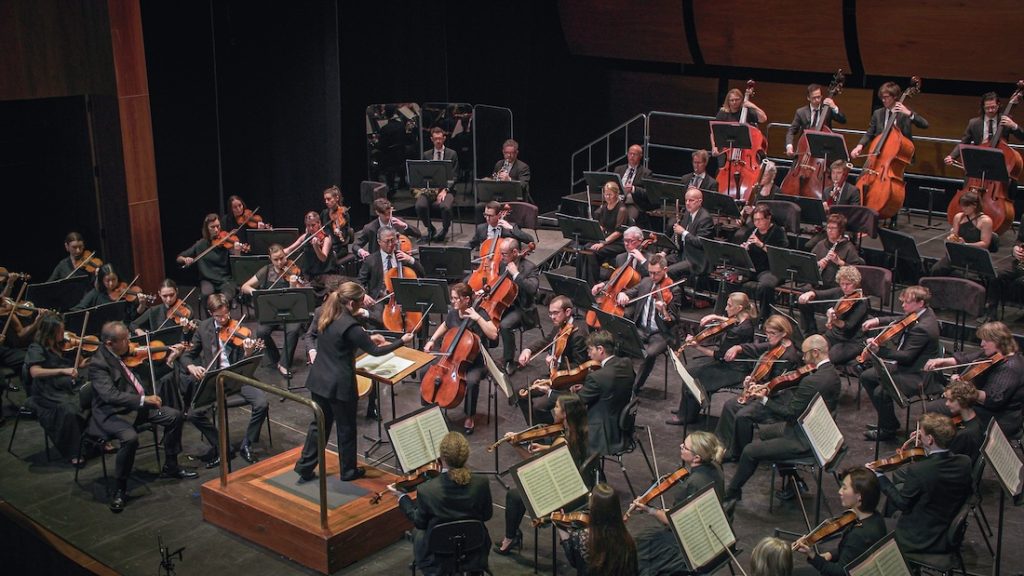
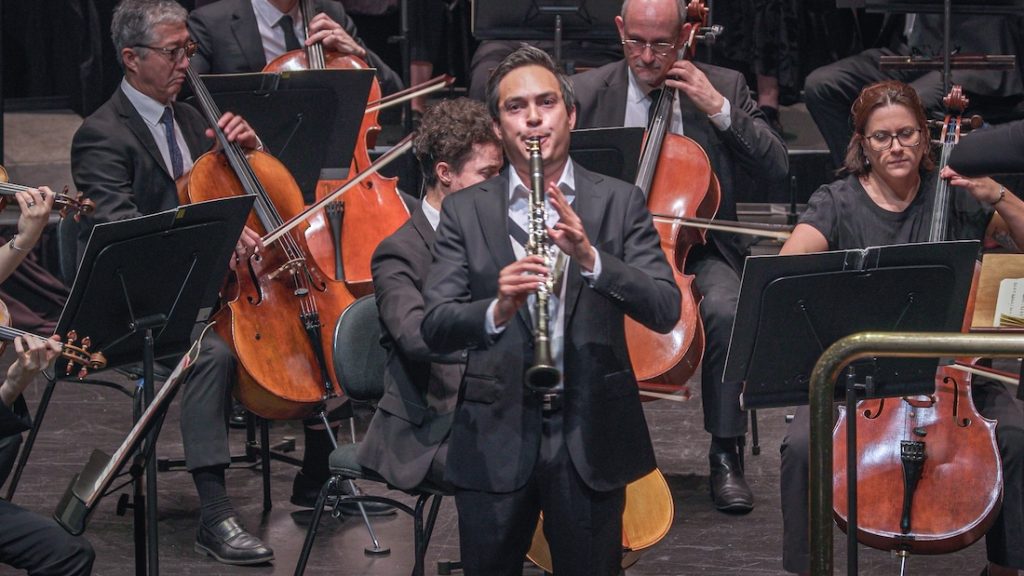
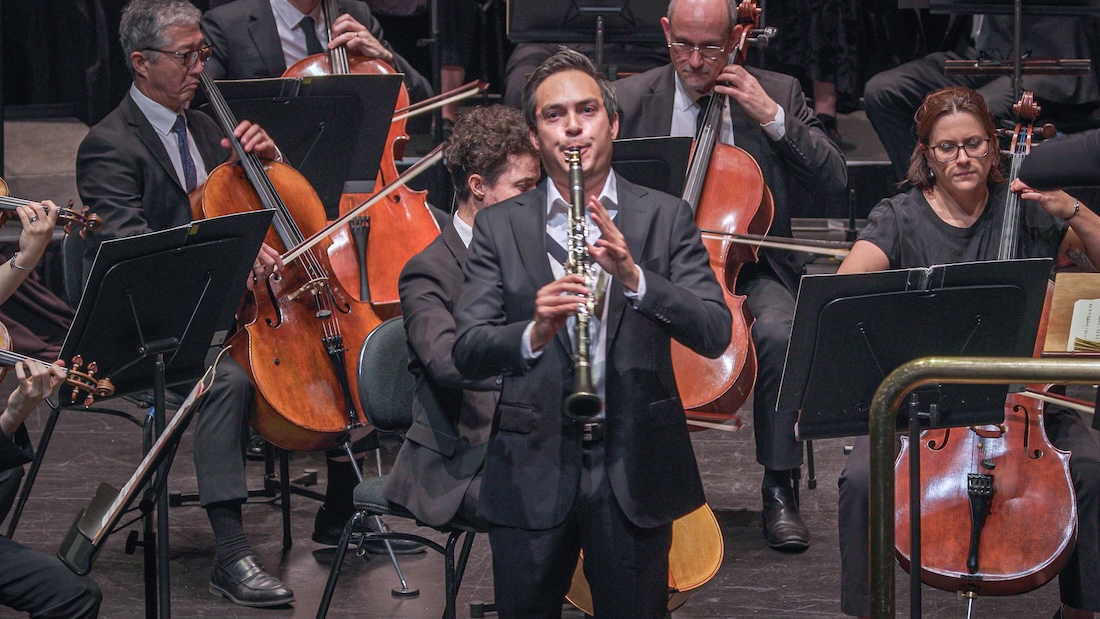
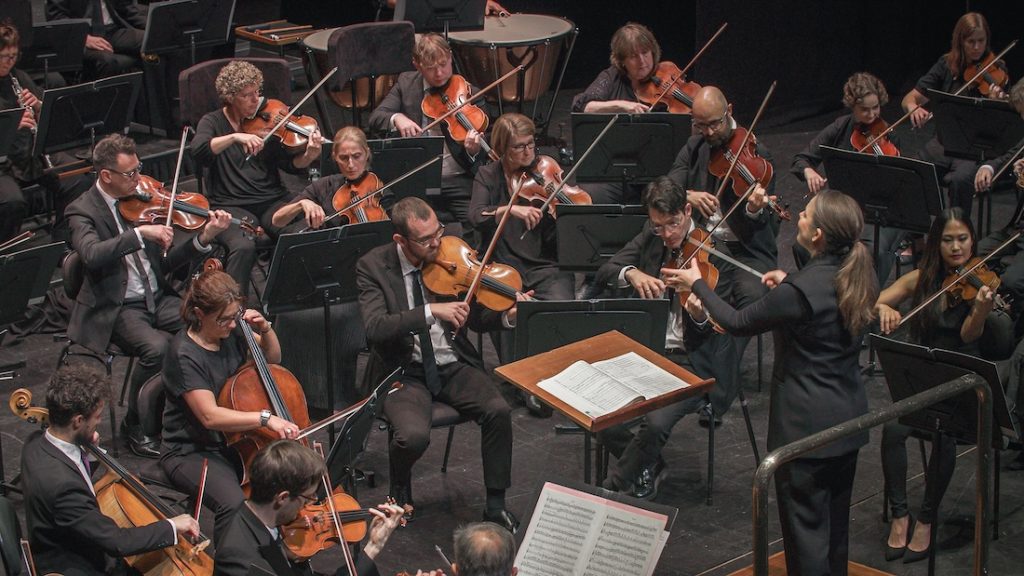
WASO’s execution of this exemplary composition was effortless in its complexity. Under the baton of Associate Conductor Jen Winley, with Associate Principal Clarinet Som Howie as soloist, the performance was a virtuoso treat—delightful, joyous and uplifting. The only strange beat was Howie’s extended attention to his instrument during the breaks. Winley held the orchestra in check as Howie took his clarinet apart to clean or adjust it. There was no noticeable defect as far as the audience could hear, but clearly for him something was not quite right.
A story the violinist/conductor/teacher Paul Wright tells about Mozart’s first encounter with the music of Johann Sebastian Bach throws further light on this concerto.
As a younger man, Mozart was mainly familiar with the work of his contemporaries. By examining their scores and comparing them to his own, he drew the justified conclusion that he was the superior musician, effectively the greatest living composer of his era. Reassured, this allowed him to relax into a comfortable compositional style. But then he was shown some of Bach’s manuscripts—straightaway, he realised there was another level. This inspired him to lift his game and write ever more complex music.
Wright implied that as a result there is a dividing line in Mozart’s oeuvre: the music he composed before he knew Bach and the music he composed after. The change occurred in 1783/84. Although melodious, mellifluous and eminently listenable, the Clarinet Concerto (1791), often referred to as Mozart’s swansong, the last work he completed before his death, falls decidedly into the latter category.
Mendelssohn’s Italian Symphony (No. 4 in A) is another masterpiece. Ironically, though, it is a work that Mendelssohn himself was never really happy with. Like many nineteenth-century composers, working in Beethoven’s shadow was daunting. Rather than take inspiration from his predecessor, he became hypervigilant to his own inadequacies—in this case without justification.
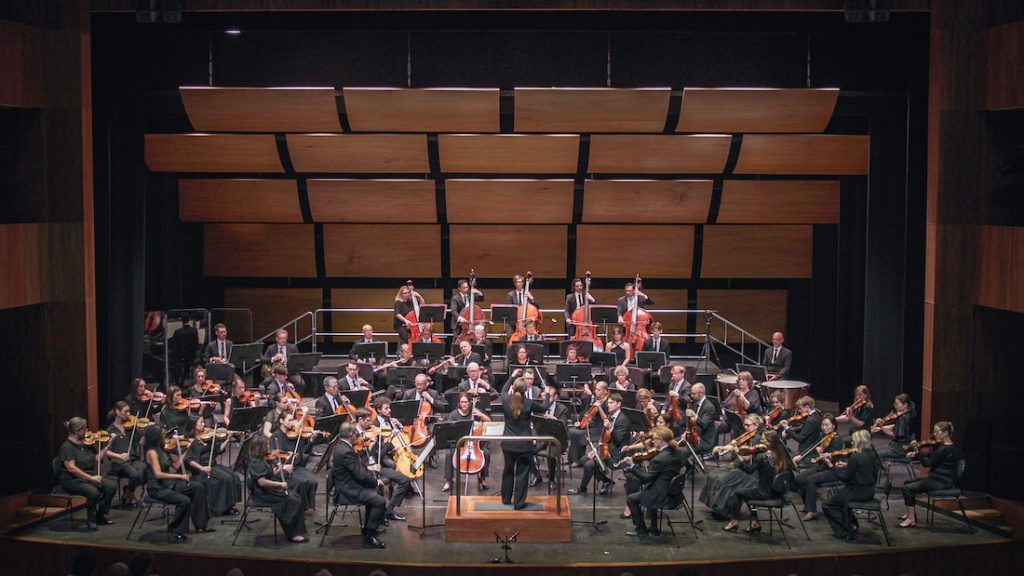
The Italian Symphony is a sheer delight. Conceived in 1831, towards the end of Mendelssohn’s grand European tour, and completed two years later, it is filled with youthful vigour (he was but 22) while still, in form and content, being a mature work. Despite his reservations, Mendelssohn regarded it as his first mature work, and in it displays his mastery of orchestration.
The first movement is lively and brimming with the excitement of discovering a new and exotic country. The second slow movement, inspired by a Neapolitan religious procession, has a reflective walking bass embellished by celli. Mendelssohn’s confidence shines through with a grand swelling of horns and timpani in the third movement, which is capped by a flourish of strings, horns, flutes, and bassoons in the fourth. A late thunderstorm (or maybe a chase sequence) morphs into a bee-like quivering of violins, the first and second bank jousting with each other, before the whole orchestra explodes into a grand climax. Tremendous stuff for a Thursday afternoon.
The orchestra and audience alike were clearly excited by this uplifting program. WASO again proved its diversity by reaching out and satisfying yet another demographic within Perth’s broad musical audience.
The orchestra will be back at the State Theatre Centre later this month in the Studio Underground for both the Composition Project and Danceworks program. In the meantime, they can be seen this weekend in the Riverside Theatre of the Perth Convention Centre for the Music of John Williams and next weekend at Winthrop Hall for Glorious Nights (Schultz, Debussy and Poulenc). This band never stops and certainly gets around.
IAN LILBURNE
Photos by Artshoot Media