Review: WASO – Edward Gardner conducts Brahms at Winthrop Hall
WASO – Edward Gardner conducts Brahms at Winthrop Hall
Saturday, July 12, 2025
Edward Gardner is a big deal in orchestral music. The principal conductor of the London Philharmonic, he is also Music Director of the Norwegian Opera and honorary conductor of the Bergen Philharmonic. Educated at Cambridge and the Royal Academy of Music, his many awards include the Royal Philharmonic Society Conductor of the Year (2008) and an Olivier for Outstanding Achievement in Opera (2009). In 2012 he was honoured with an OBE.
Gardner was in Perth last weekend to direct a powerful program of Schubert, Britten and Brahms. It was a pleasure to not only see him perform with the WA Symphony in Winthrop Hall but also for the orchestra itself to tackle such a demanding and powerful program. In this regard it was the heaviest concert WASO has presented since this year’s debut in Winthrop Hall, when it performed Beethoven’s Fifth and Rachmaninov’s Rhapsody on a Theme of Paganini.
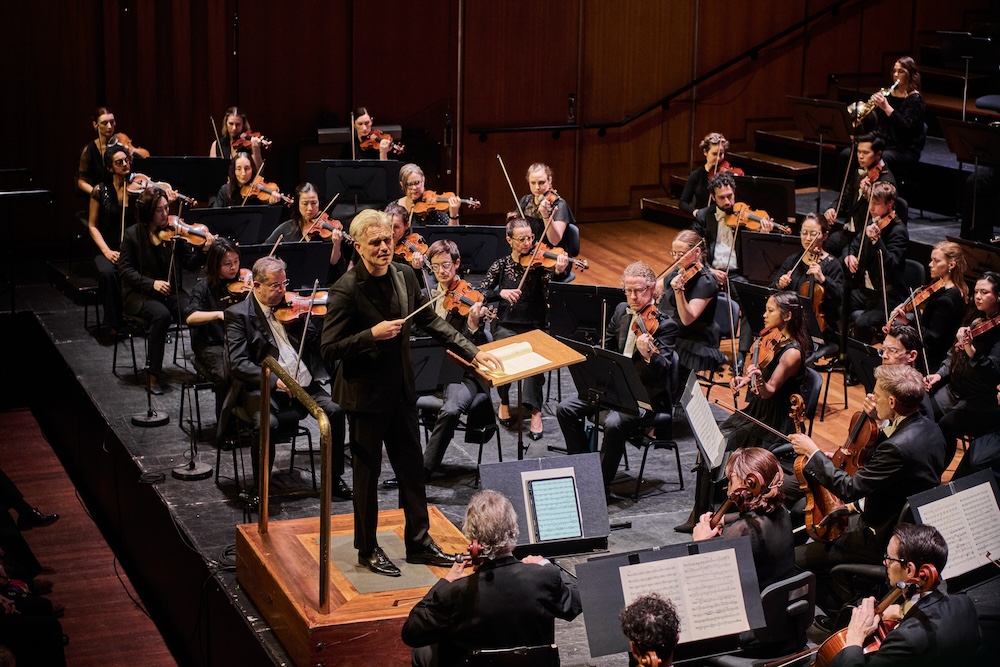
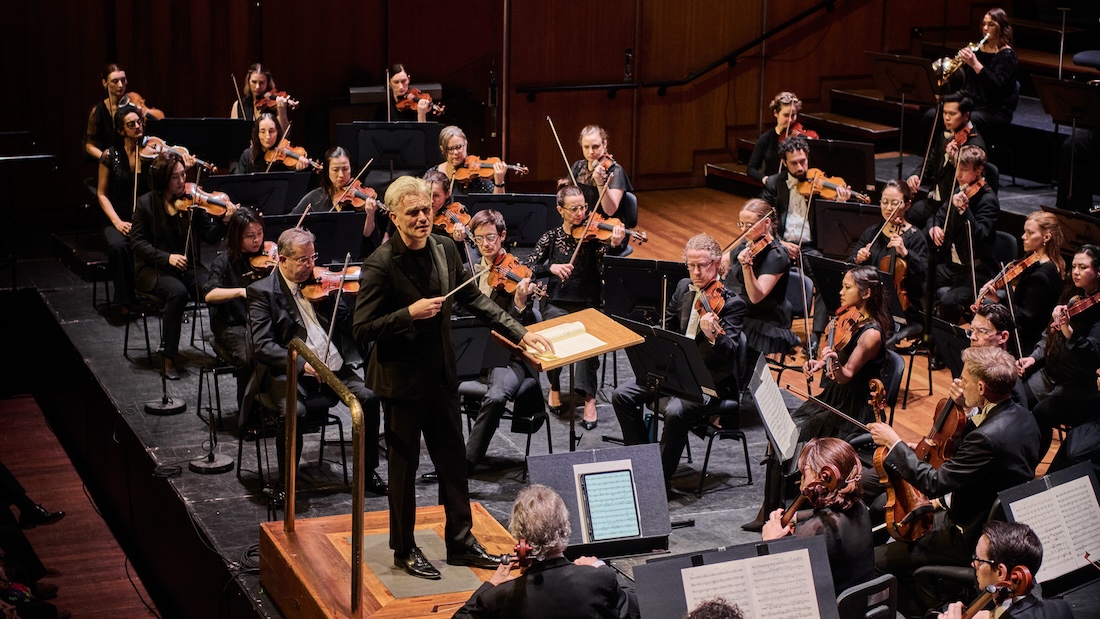
After bounding onto the stage, Gardner briskly launched the orchestra into Schubert’s Unfinished Symphony No. 8.
Franz Schubert had a passion for composing symphonies but wasn’t all that good at finishing them. Of the thirteen he started, he only completed seven, sketched in but didn’t fully score one other (the Seventh), while the ‘Unfinished’ Eighth is just two exquisite movements. In recent years, four of the incomplete works, including the Seventh and Eighth, have been realised in full for performance by other composers.
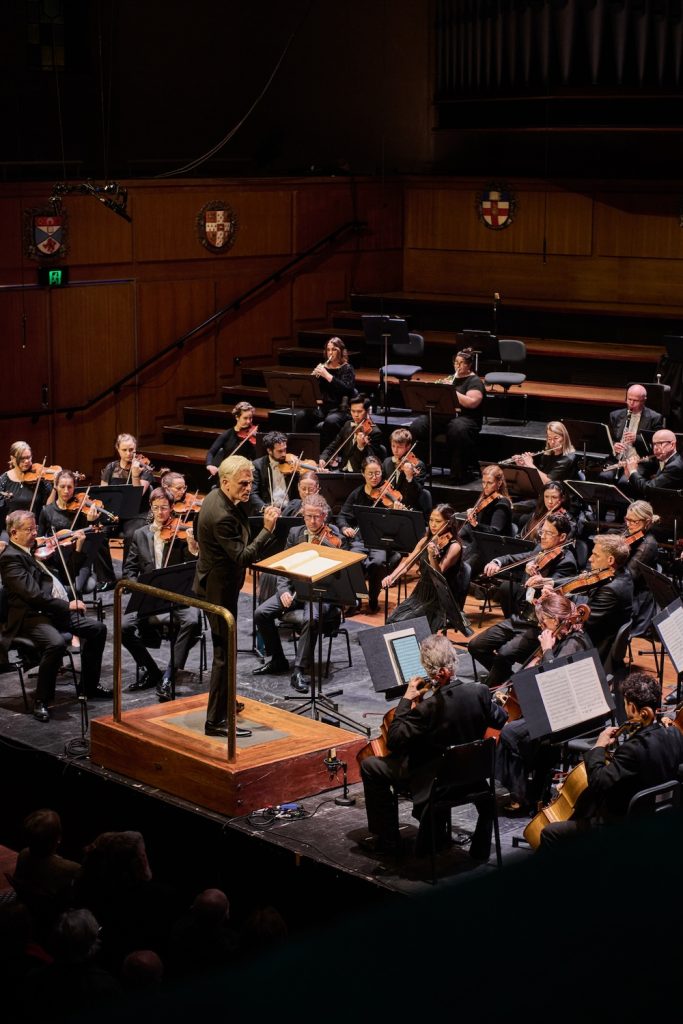
Like Mozart, Schubert started composing symphonies at an early age. His first completed one dates from 1813, when he was but sixteen. In terms of the symphonic tradition, he was heavily influenced by the Classical composers—his great hero, Beethoven, as well as Haydn and Mozart. In turn, he was championed by and influenced the Romantic composers—including Brahms. The incorporation of folk songs into his symphonic works also prefigured the modernist Mahler.
The Unfinished Symphony was abandoned in 1822 after Schubert was unable to resolve the third, Scherzo movement. But the first two movements, as their masterly realisation by Gardner and WASO proved, are truly magnificent. A delicate interplay of light and shade, its haunting melodies are shaken by ‘sturm und drang’ crescendos. The softest strings and woodwinds are intercut by blasts from the brass section and heavy movement through the bank of double basses. The contrast is arresting. Just when you think it has settled, it shifts and rolls through another sublime sequence. Truly stunning when so sensitively delivered, it’s a shame that Schubert didn’t finish the work. But then how lucky that he did manage to complete what he did.
But then again, it very nearly didn’t survive at all. Tragically, the manuscript was left forgotten in a drawer until 1860 and only had its first performance in 1865, some 37 years after the composer’s death. The development of symphonic music in the nineteenth century may well have taken a different turn had the influence of this groundbreaking work been felt earlier.
In contrast, Johannes Brahms, whose first symphony occupied the entire second half of Saturday’s concert, completed all four symphonies that he began. Moreover, like Beethoven, he was already pushing thirty and a mature composer before he took on the form. Even so, his first symphony took a staggering fifteen years to complete—the first sketch of 1862 was not finalised until 1876.
Like many nineteenth-century composers, Brahms was intimidated by Beethoven’s achievement. As he put it, ‘You don’t know what it is like to hear that giant marching along behind me.’ In the end, though, he rose to the challenge and overcame this anxiety of influence.
Brahms’ first symphony is a mighty work. From its grand opening to its protracted ending forty-five minutes later, its intensity rivets you to your seat. Beethovian in scale and scope, dramatic in its theme and texture, it seems to build directly on Beethoven’s Third, Fifth and Ninth Symphonies and, as a result, has sometimes been cheekily referred to as Beethoven’s Tenth.
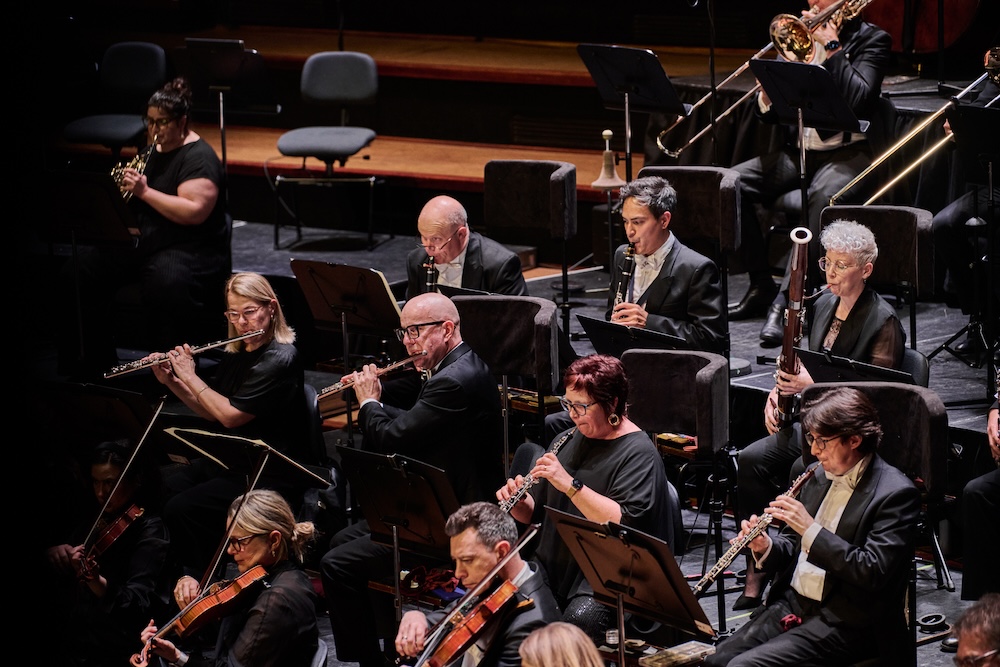
Two long and imposing outer movements enclose two shorter, lyrical and folk-inspired ones. It moves from moments of darkness and despair, characterised by Brahms’ apparently ‘inexhaustible contrapuntal skills,’ to passages of great subtlety and imagination carried through sublime melodies on the strings, oboe and clarinet. Gardner teased out these moments superbly, capturing in full both the delicacy and power of this monumental work.
The final movement climaxes in a melody that is too often and too obviously compared to Beethoven’s Ode to Joy from the finale of his Ninth Symphony. Brahms was somewhat sensitive to, and frustrated by, this continual comparison. ‘Any jackass could see that,’ he was wont to retort.
These two magnificent symphonies were separated by a deeply modernist, twentieth-century work: Benjamin Britten’s Les Illuminations for high voice and string orchestra. At the end of the Schubert, the brass, woodwinds, percussion, and three of the six double basses quietly exited the tiers at the back of the stage while the string sections reconfigured onto the one level at the front.
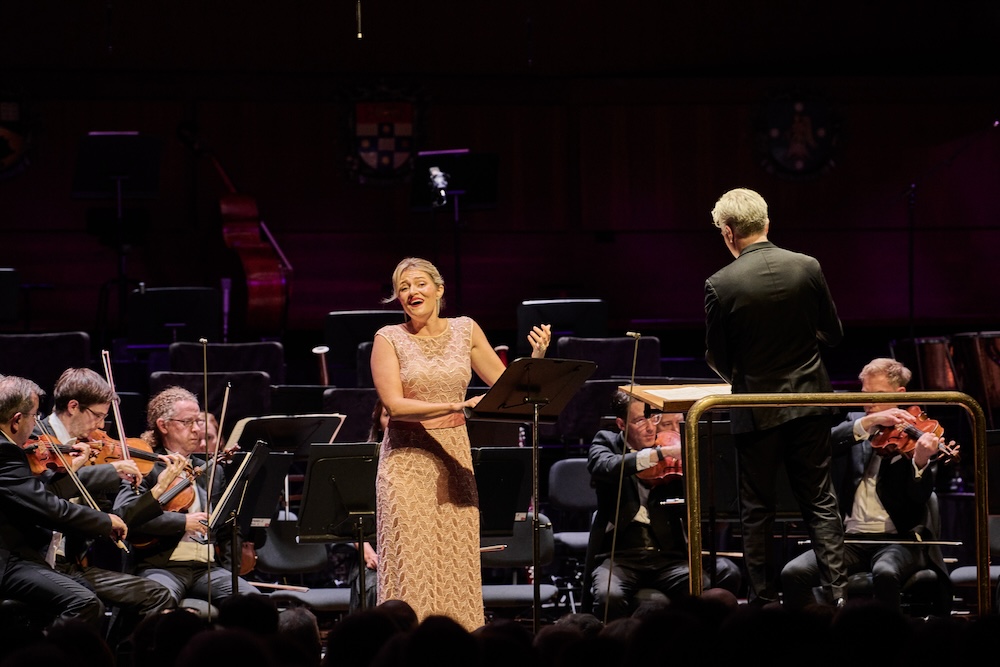
Composed in 1939, Illuminations is a serious piece of music for the serious era immediately prior to the outbreak of World War II. Britten was inspired to compose this ten-part cycle by the dark and tormented poetry of Arthur Rimbaud (1854-1891). Rimbaud gave up literature at age 21, having written all his influential work while scandalising French society through his tumultuous and drug-fuelled affair with the poet Paul Verlaine, ten years his senior.
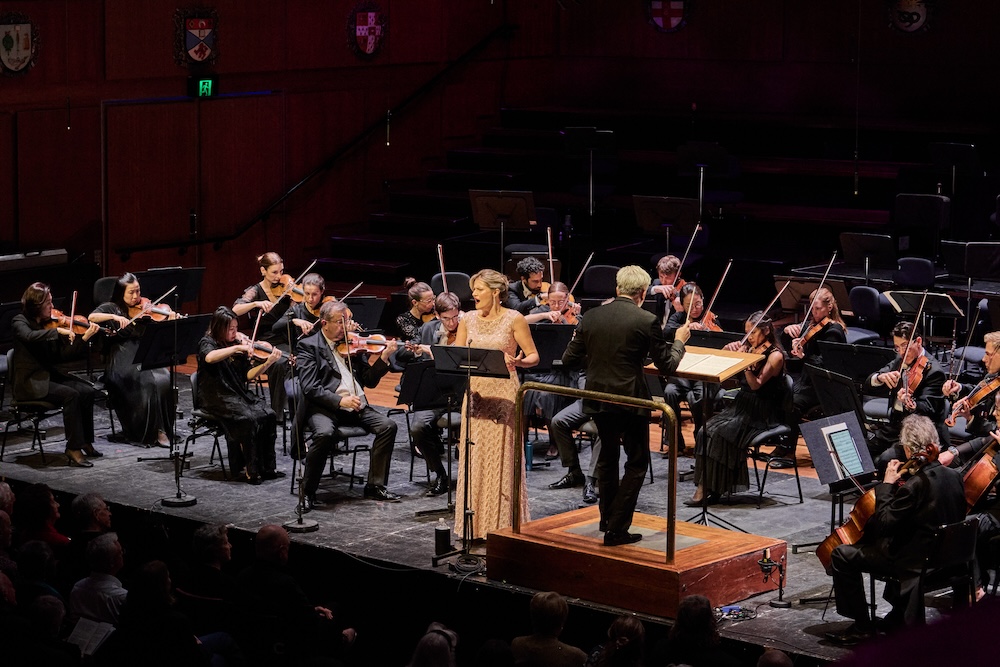
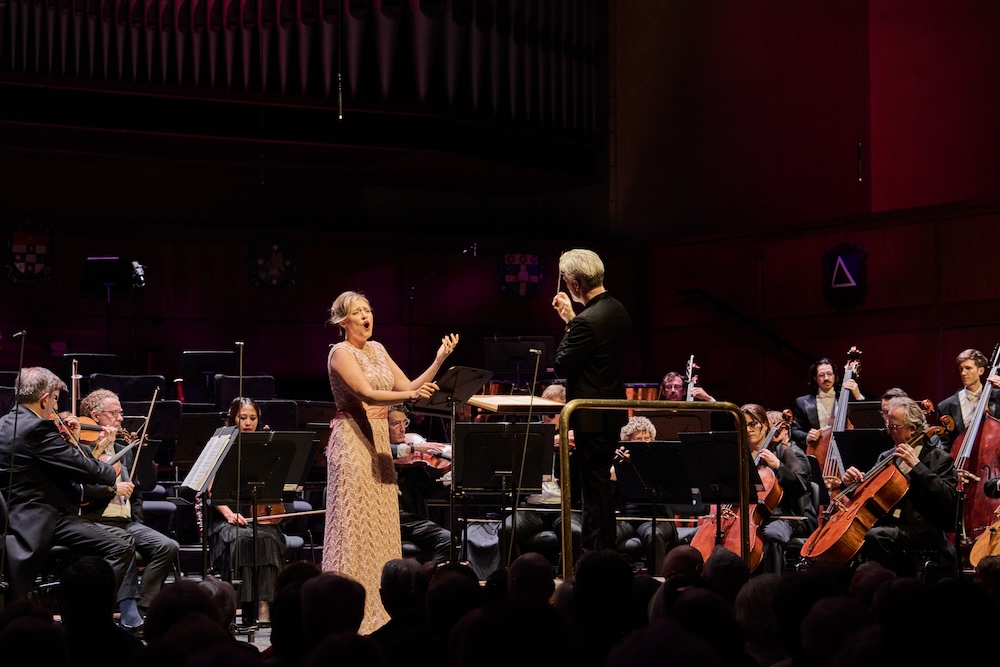
Britten used Rimbaud’s poetry to further explore his obsession with the corruption of innocence and his ambivalent attitude towards sexuality. The original ‘high voice’ was a soprano, but Britten came to prefer it with a male singer. It is generally agreed now that the work better fits a female rendition. This is how Gardner presented it—with Australian/British soprano Samantha Clarke taking on the role.
Another heavy work, Britten’s writing for strings is lighter, more melodious, and brilliant than the cycle’s overall dark and tormented feel. The darkness really comes in through the voice, and Clarke was powerful in her delivery. Her animated face—flashing eyes and rising eyebrows—were almost conspiratorial in their cozening of the audience, but the overall effect was still deep, bleak and tormented—brilliantly so.
Building on the ‘sturm und drang’ inherent in both the Schubert and Brahms, the Britten broke the concert’s symphonic dominance with its straightforward ten-part cycle. The vision from a more complex and tumultuous world provided an appropriate contrast to the romantic darkness inherent in the older works while introducing a sensational and soaring human voice. Cleverly chosen, it made for a well-rounded concert.
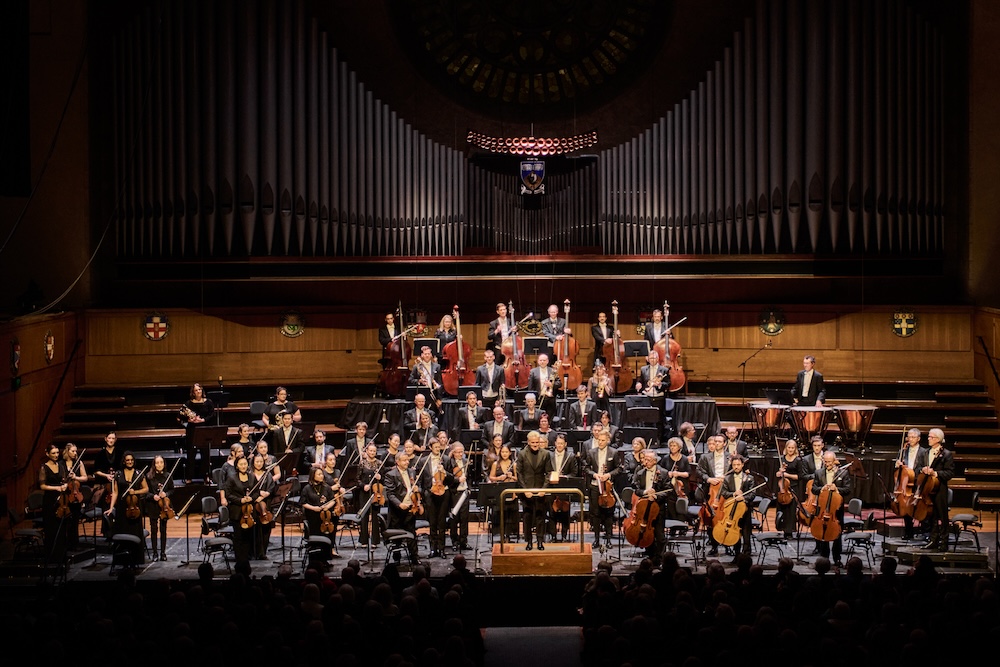
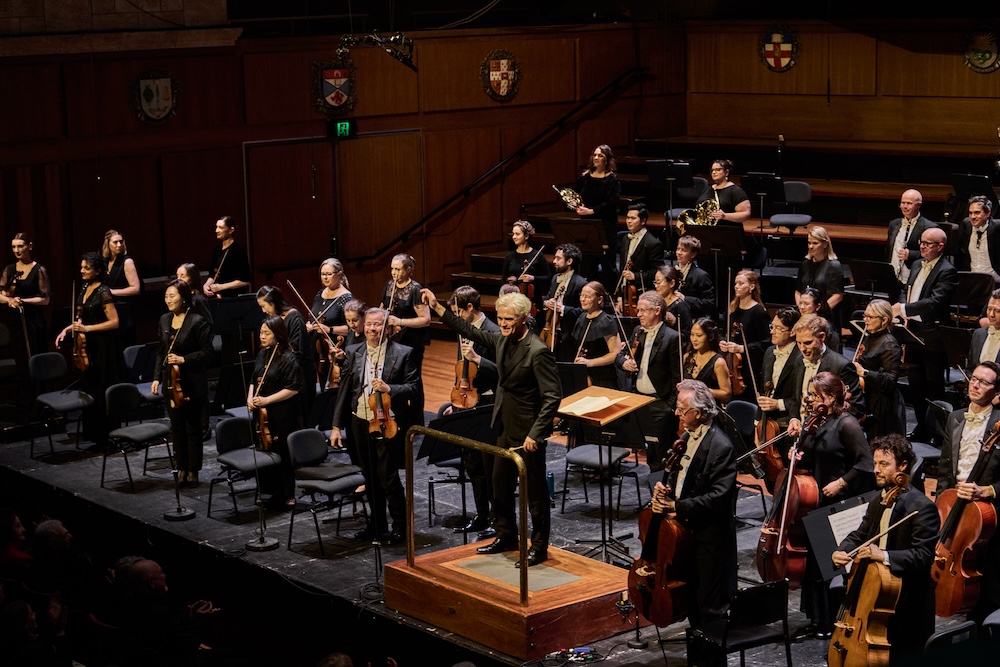
At the end of the night, both the audience and orchestra were deeply appreciative of Edward Gardner’s performance and direction. When he came back on stage for a second (or was it a third?) curtain call, the orchestra ignored his invitation to stand with him and instead clapped along with the audience. It was a moving way to show their respect. Humbled by the gesture, Gardner stood there alone and felt the room’s gratitude. But the ensemble quickly accepted his second invitation and took their rightful place beside him for the final bow.
IAN LILBURNE
Photos by Rebecca Mansell