
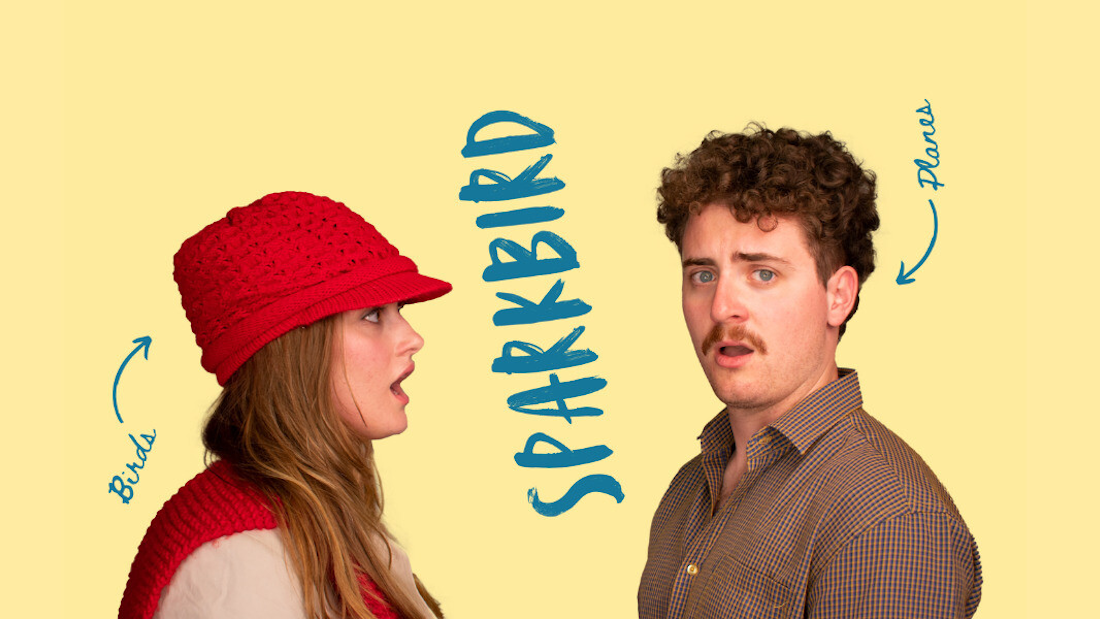
Review: SPARKBIRD at DADAA Fremantle
SPARKBIRD at DADAA Fremantle
Saturday, February 7, 2026
Fringe is too often reduced to the Pleasure Garden—circus, smut, and spectacle—so it was quietly heartening to see a near-full theatre at DADAA in Fremantle on a balmy night. SPARKBIRD is the kind of indie work that reminds you Fringe still has room for intimacy, experimentation, and narrative ambition beyond the big-ticket precincts. One only wishes more of this kind of programming made its way south of the river during festival season.
The show began as what appeared to be a solo comedy set. Chelsea opened with observational, nerdy overthinking—statistics about planes striking turtles, anxious tangents, and deliberately awkward pacing. The material skirted the line between dry and amateurish, reading almost like a warm-up act. That illusion shattered when a voice called out from the back of the theatre: “You’re not funny. Don’t use your set to tear us apart.”
The heckler was Melvin—her now ex-partner—and the disruption landed viscerally. Chelsea was visibly caught off guard, as was the audience. From there, SPARKBIRD unfolded as a series of vignettes tracing the relationship through memory, misremembering, and competing perspectives. Their first meeting was replayed twice: once through Melvin’s rain-soaked, romanticised recollection (he literally fell for her) and then through Chelsea’s silent-film parody, casting him as a Chaplin-esque figure—bumbling, earnest, and endearing.
A literal scoreboard was wheeled onstage to keep tally, turning intimacy into competition: who remembered better, who hurt whom more, and who was winning now. Arguments, meet-cutes, and minor ruptures were replayed as point-scoring exercises, recalling the dual-POV structure of The Affair, where no single version of events was granted authority. Memory functioned less as truth than as a narrative tool—subjective, self-serving, and unstable.
Gender politics hummed underneath much of this. Melvin was presented as emotionally open, affable, and eager to please—and, notably, he drew some of the night’s biggest laughs, despite Chelsea being “the comedian.” She named him “the comic in the mirror”: a figure who only exists through reflection. The framing invited questions without resolving them. Was he also granted interiority, or did his goofball charm flatten him into function? Was this a male manic pixie archetype, orbiting a woman in the process of becoming?
To the work’s credit, Melvin’s naivety was never rendered as stupidity. His misunderstandings were linguistic rather than intellectual, and his optimism rarely curdled into caricature. When he bought Chelsea a sandwich, and she thanked him like he’d ticked a box, his frustration cut through: why couldn’t a kindness simply be a kindness, rather than part of a transactional economy of modern dating?
As the night progressed, the vignettes multiplied: lockdown drills bathed in red light, baseball-style “who’s on first” banter, sitcom sketches, presidential debates, and professors debating the meaning of life as the world collapses. Individually, many of these moments were inventive and funny, betraying a clear affection for film, genre, and theatrical play. Collectively, they began to feel overabundant. Clearer lighting cues or firmer editorial restraint may have helped distinguish memory from real time, and a culling of ideas might have sharpened the work’s throughline.
The emotional centre held, though. Promotions, long distance, unsaid expectations. A Casablanca send-off with a bit of role-reversal—planes, birds, freedom—followed by the quiet erosion of text messages that apologise for missed calls without ever making them. The final break-up was polite, almost bureaucratic: a handshake between equals, an ending without catharsis.
As a whole, SPARKBIRD felt stronger as an exercise in process than as a rhetorical sum. It may have felt young in its writing—occasionally underdeveloped—but it was also generous, imaginative, and unafraid to ask uncomfortable questions about love, gender, and who gets to be seen clearly in a relationship.
As an indie Fringe work, it may have frustrated audiences seeking closure, but it also felt honest: not all relationships end with clarity or growth. Some simply drift, unresolved—and SPARKBIRD was willing to sit in that discomfort.
CAT LANDRO