Review: Sleaford Mods at Fremantle Arts Centre
Sleaford Mods at Fremantle Arts Centre
w/ Parclo
Friday, April 10, 2026
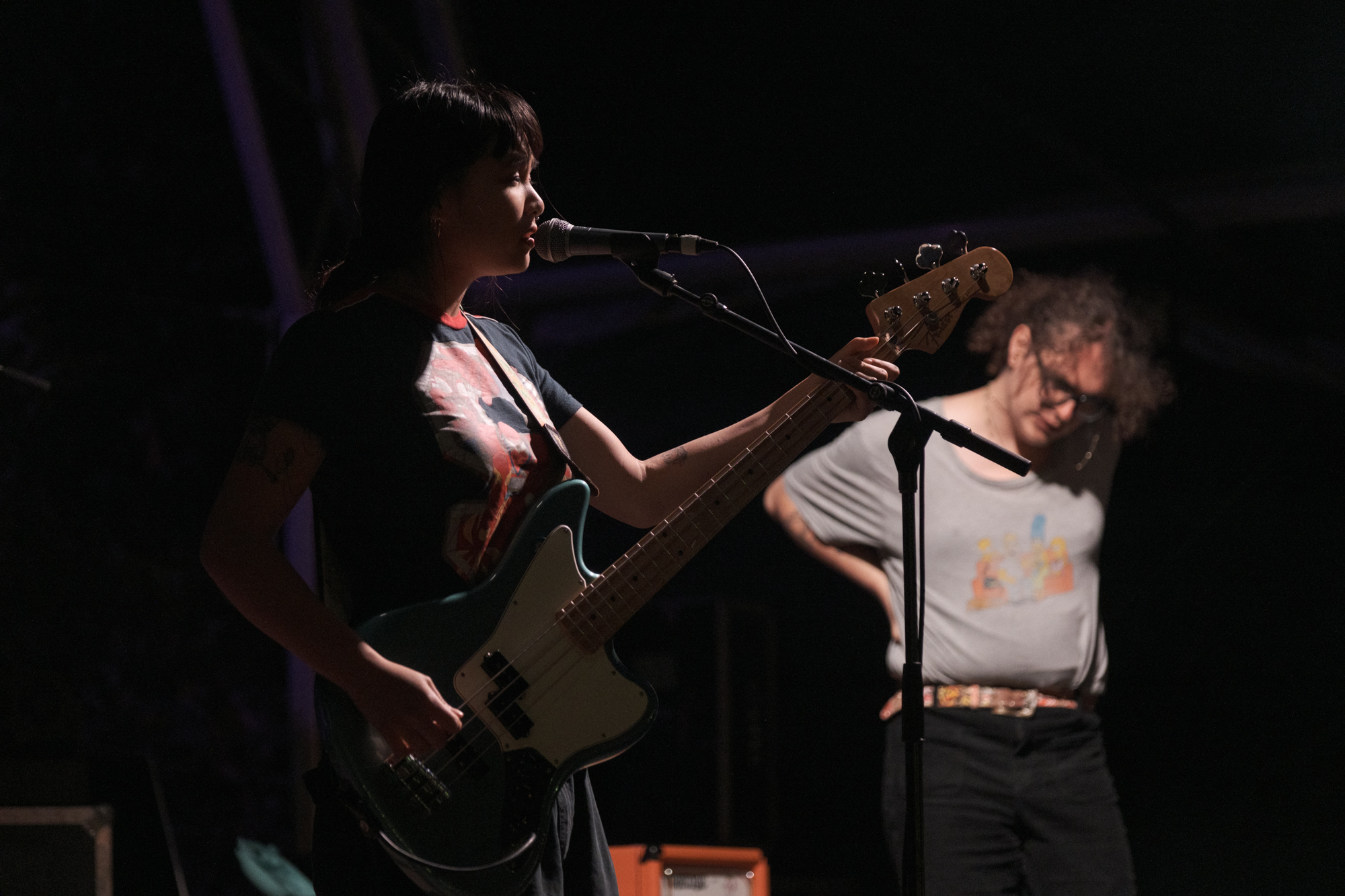
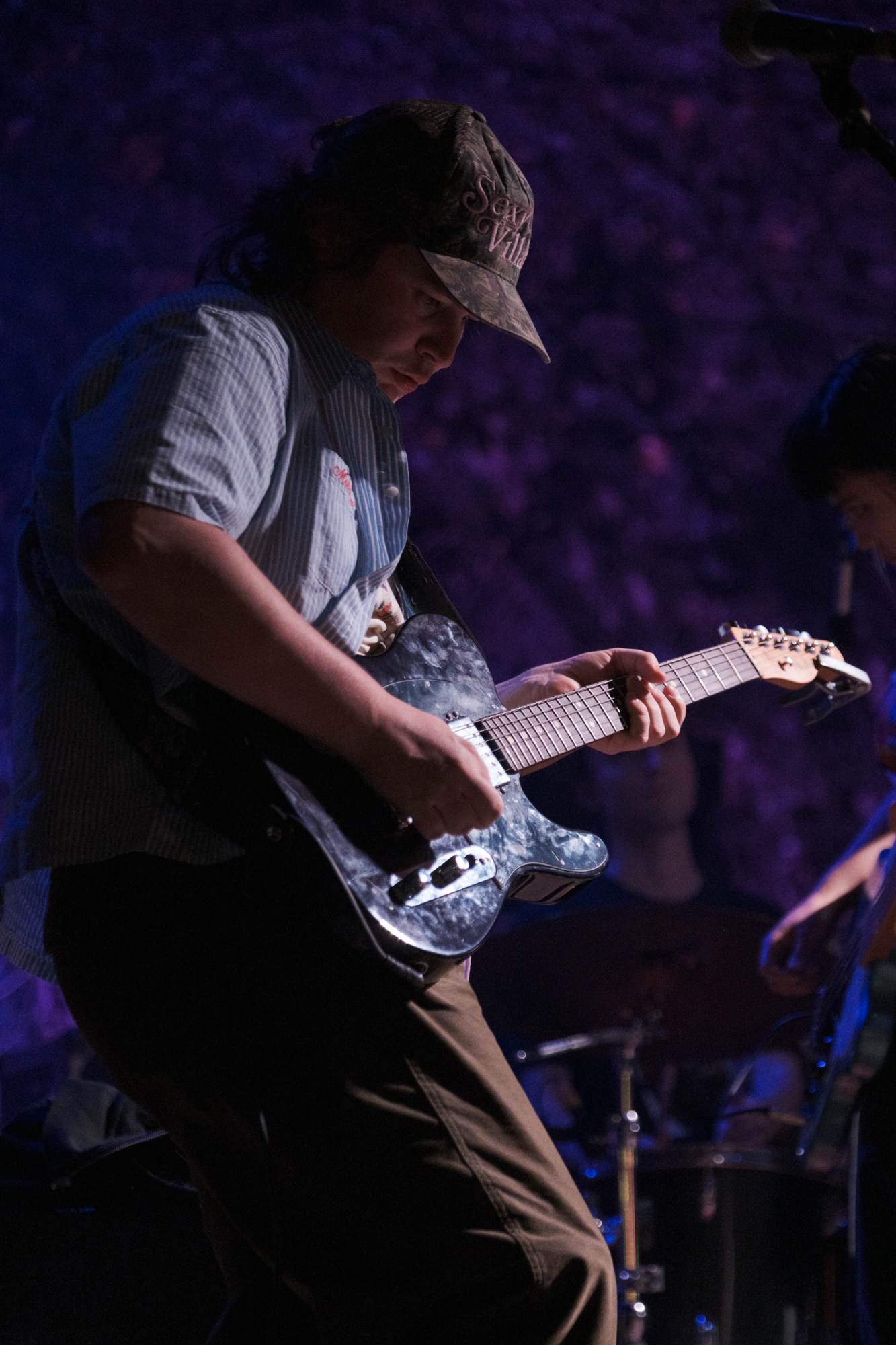
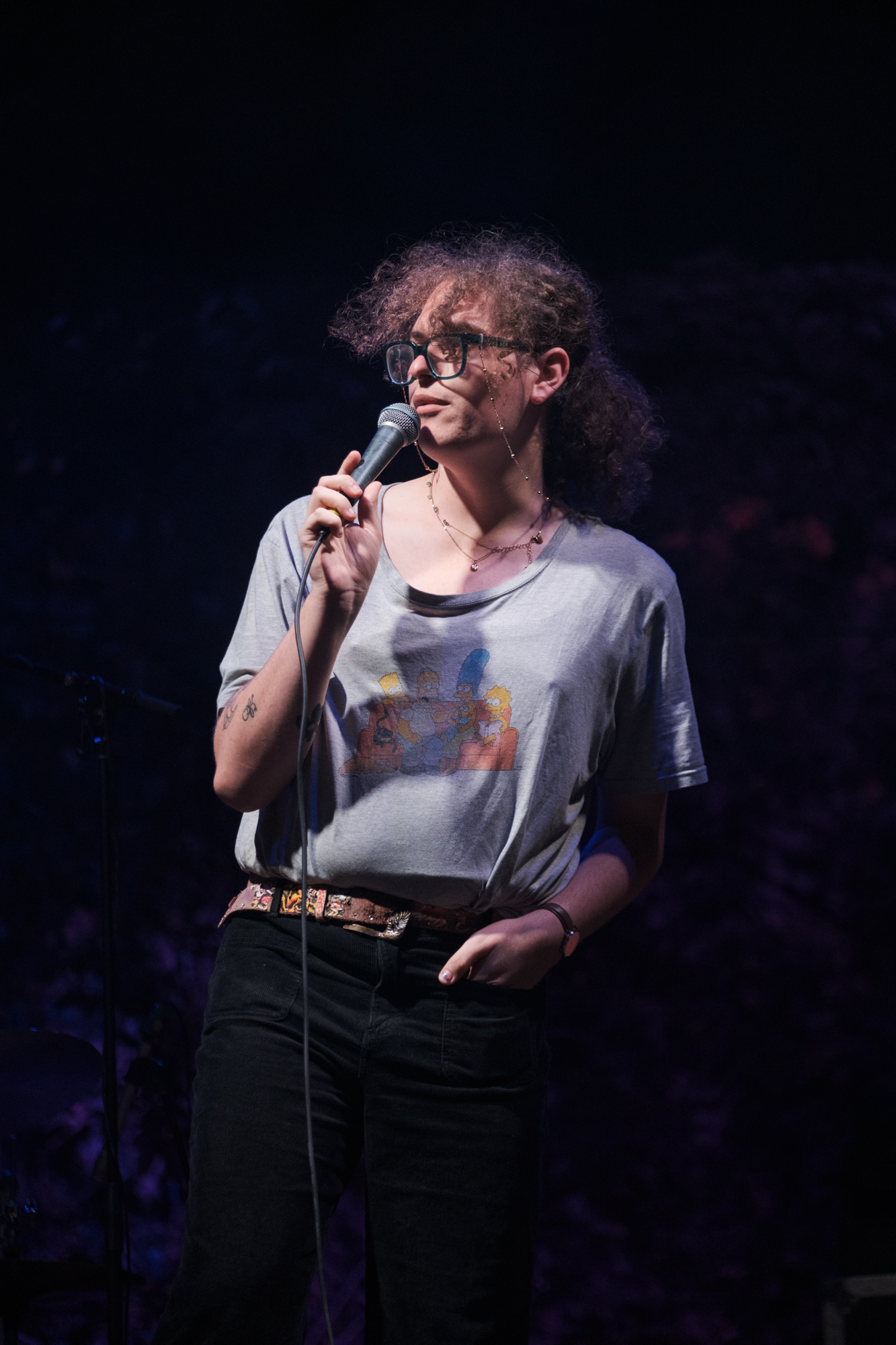
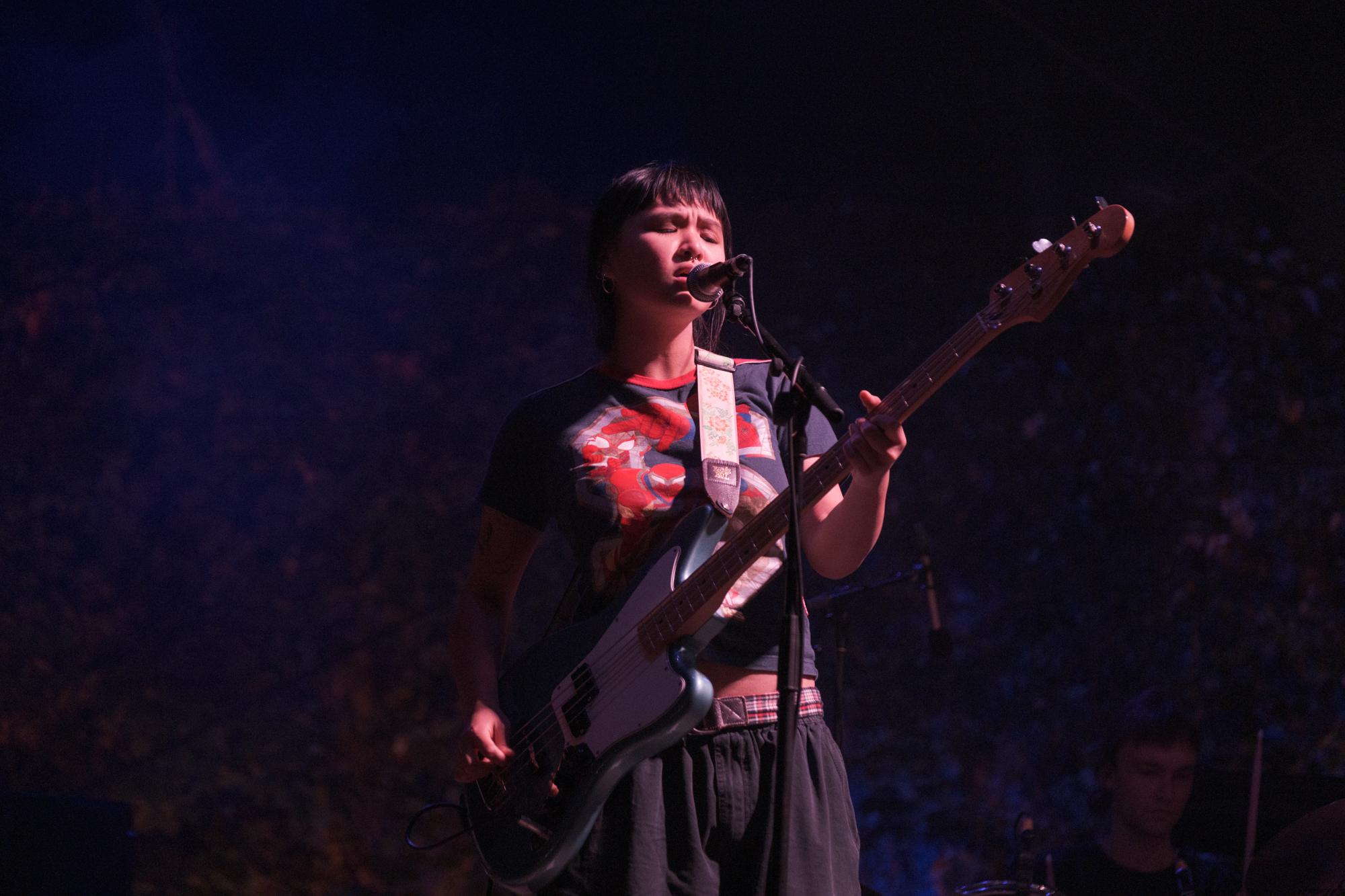
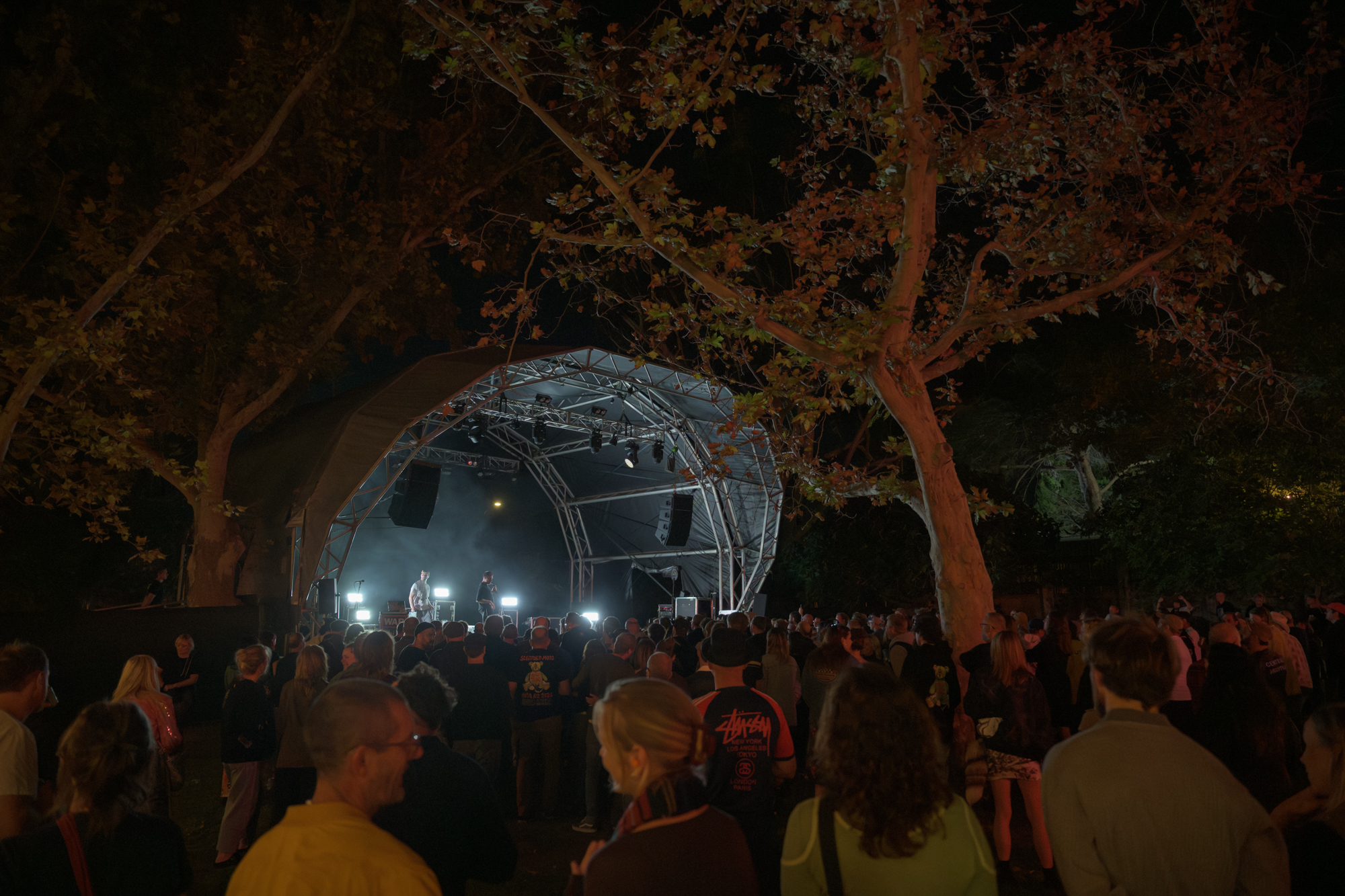
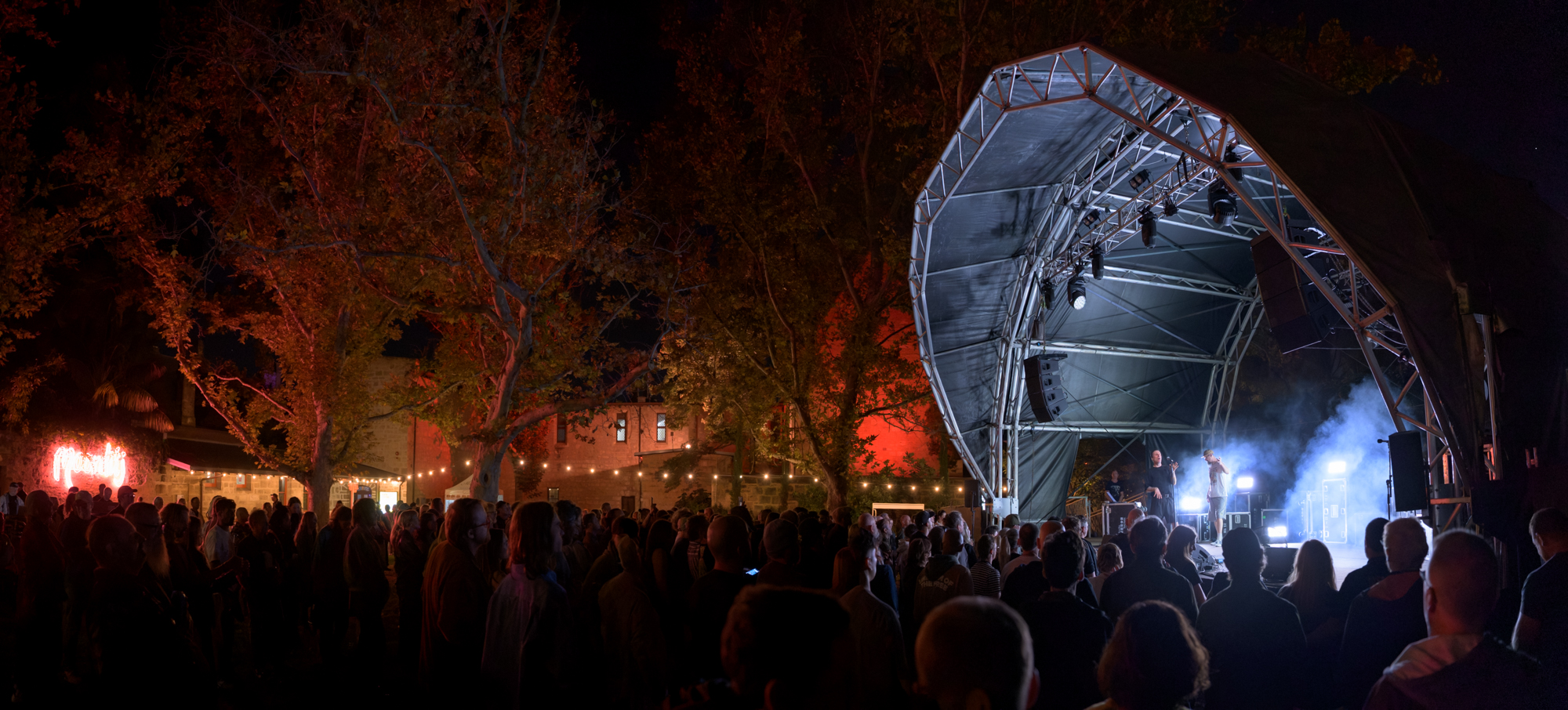
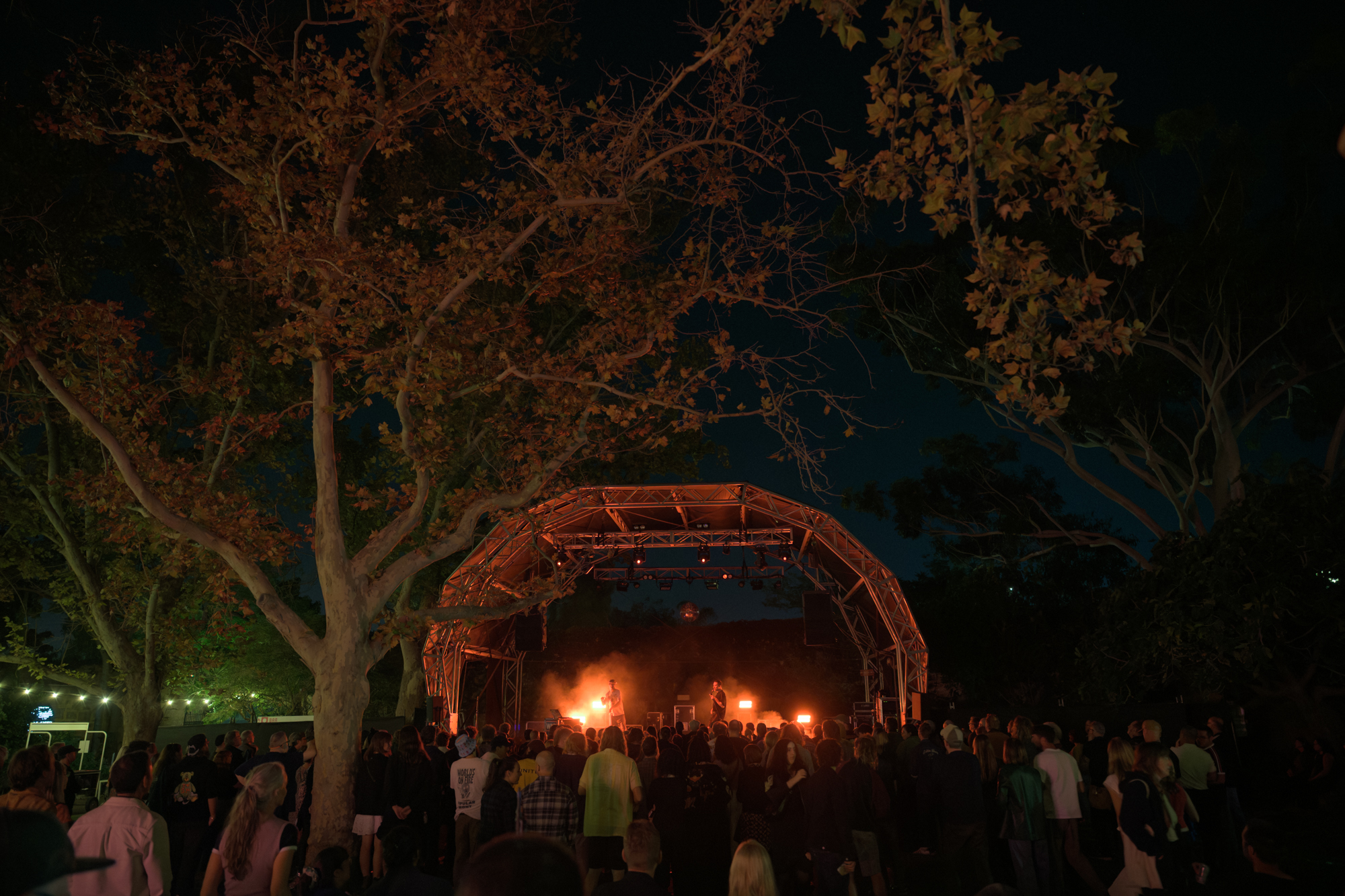
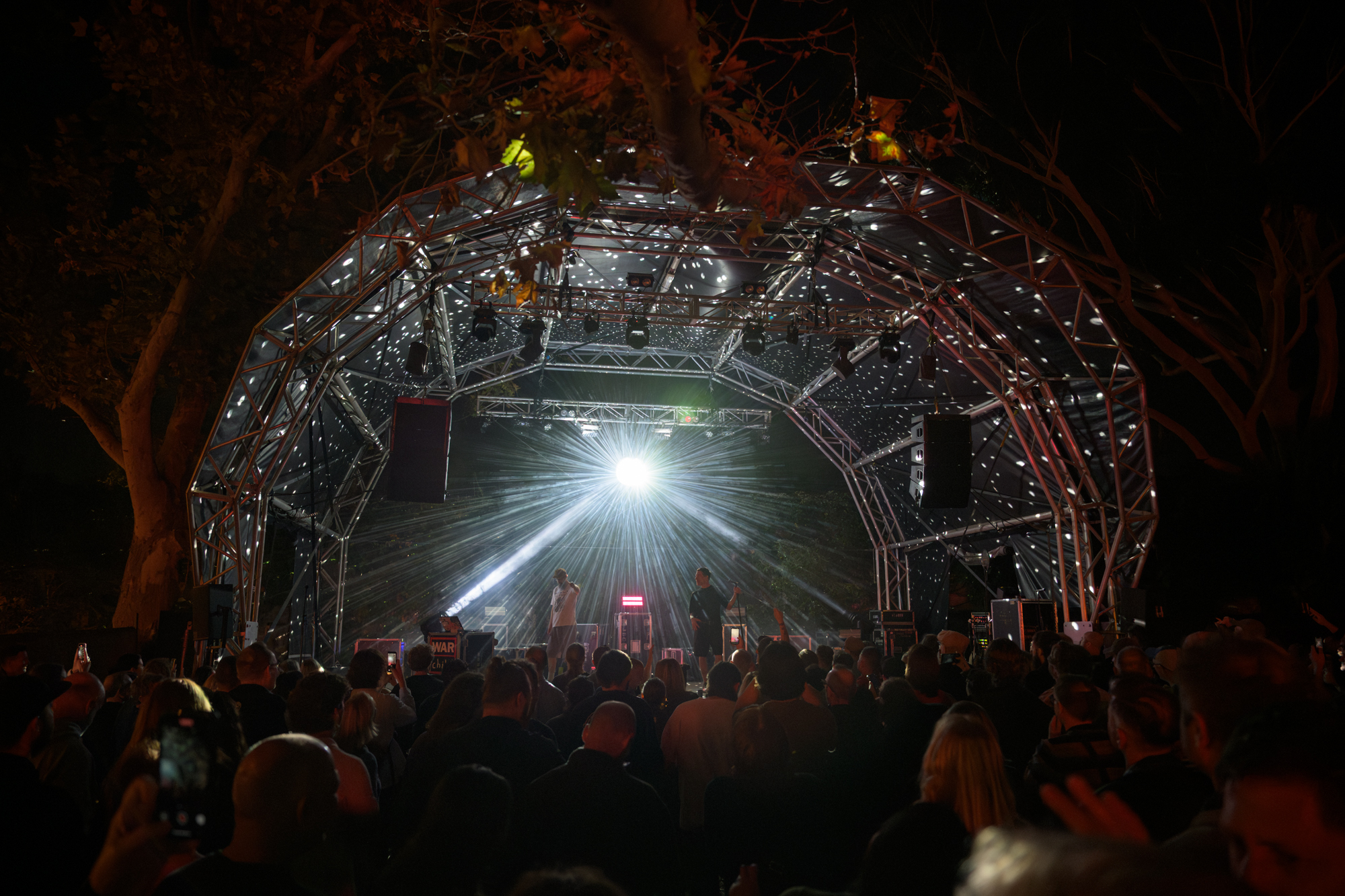
UK duo Sleaford Mods returned to Perth with a set drawn heavily from The Demise of Planet X, the first of two shows in the WFAC courtyard heralding a timely tour across the country. Minus their main tour support, Sex Mask, in their place, local five-piece Parclo appeared to have been drafted in as a PG alternative—an opportunity that showed both promise and growing pains in equal measure.
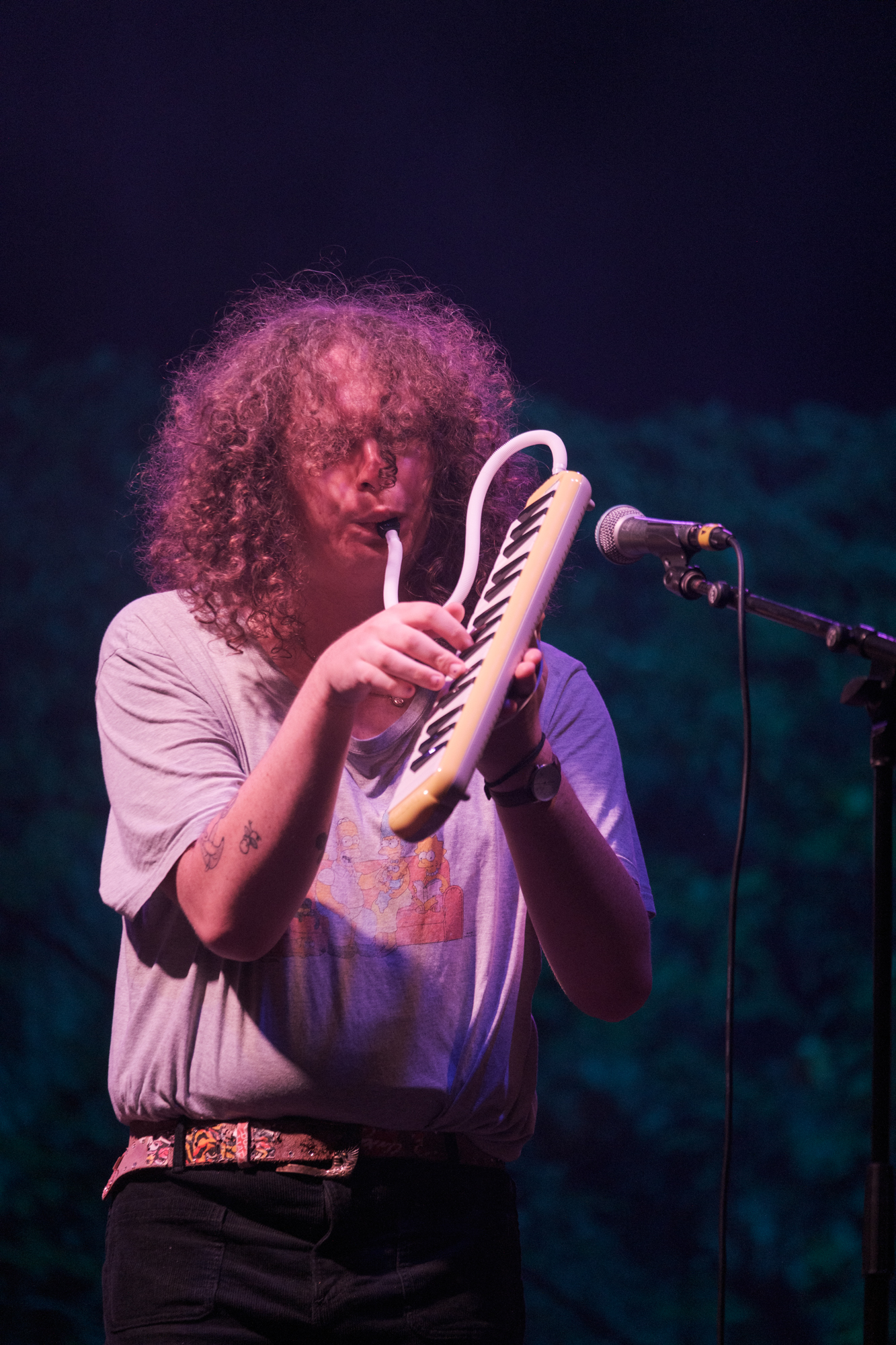
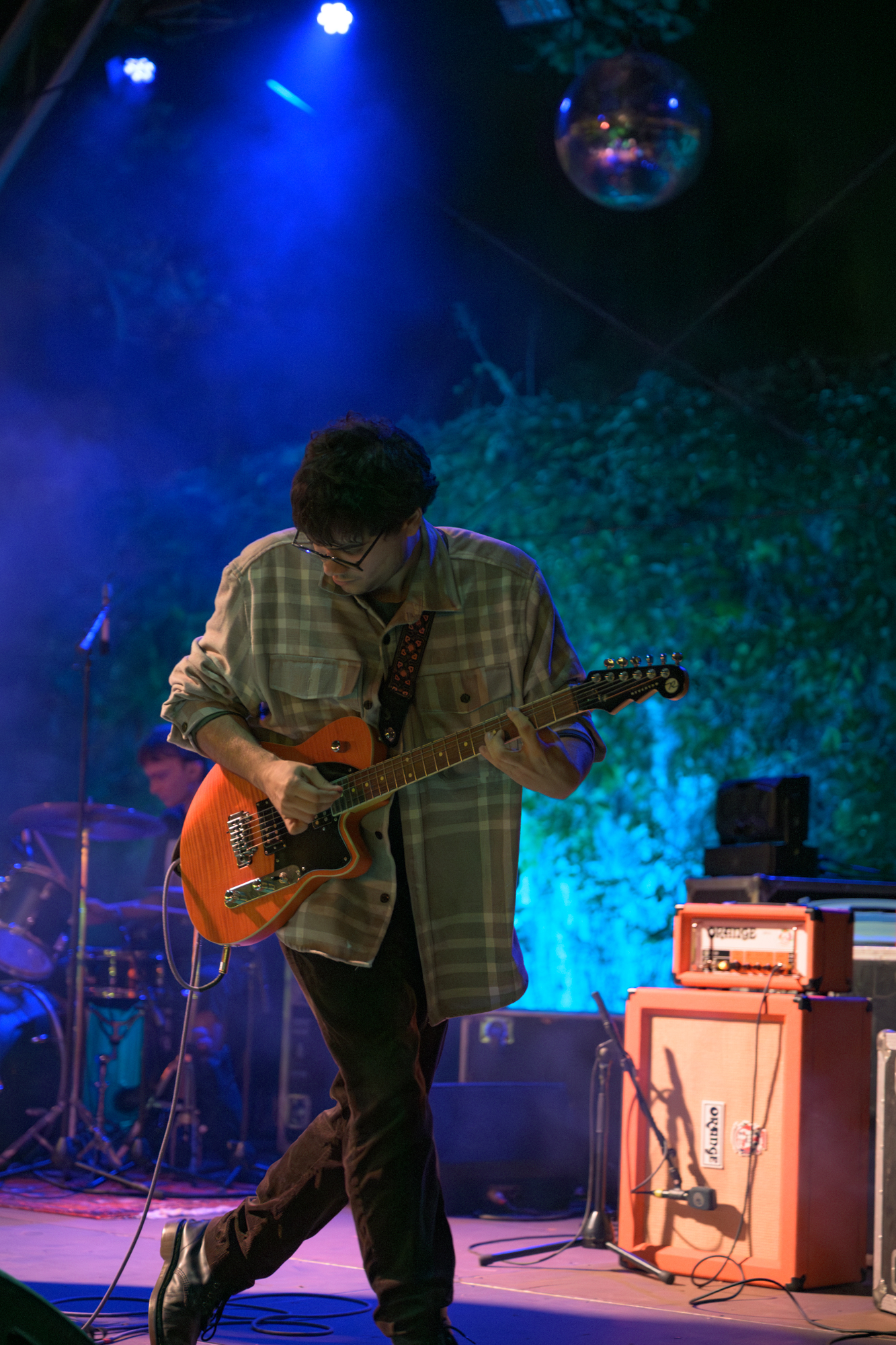
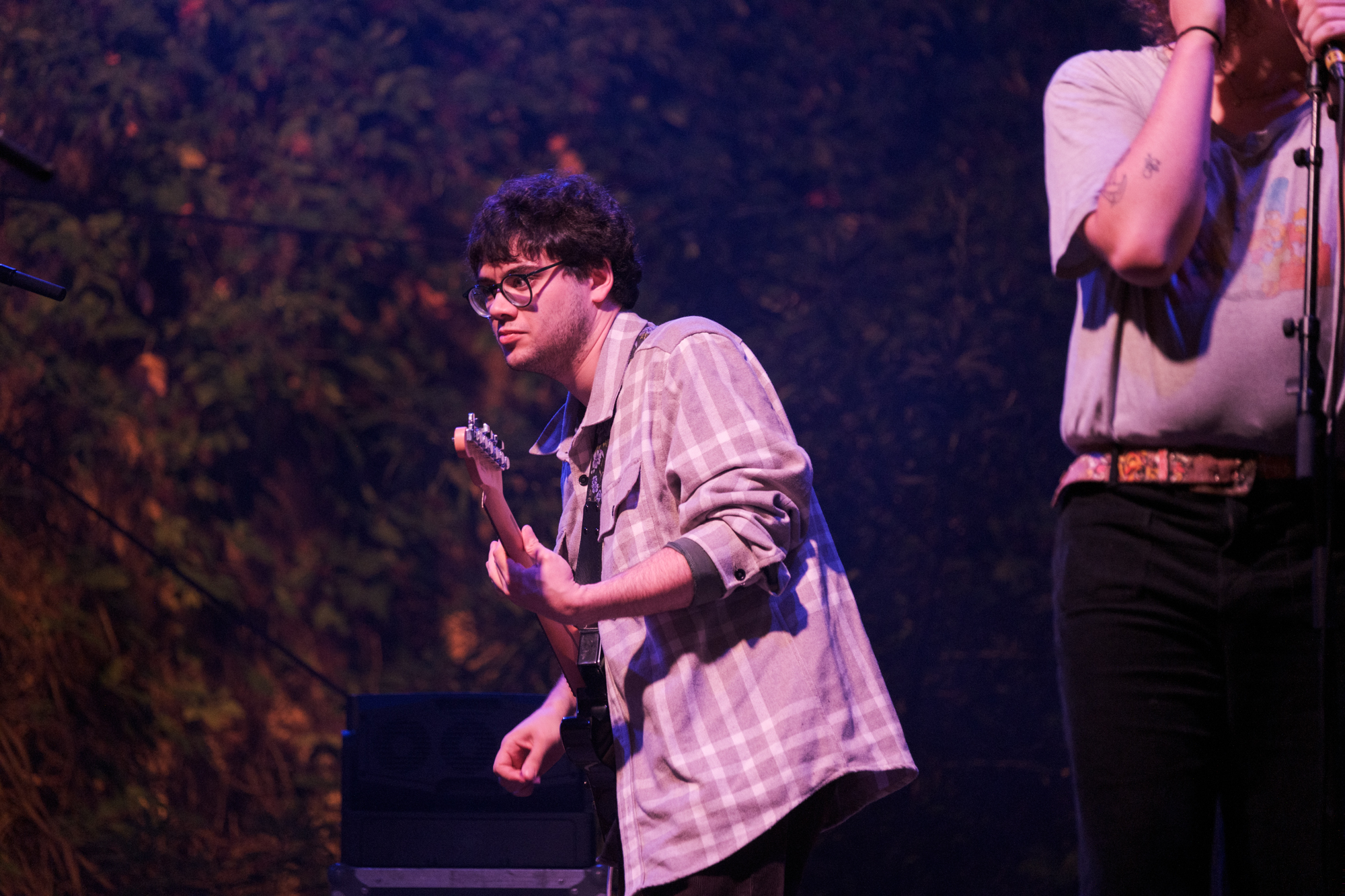
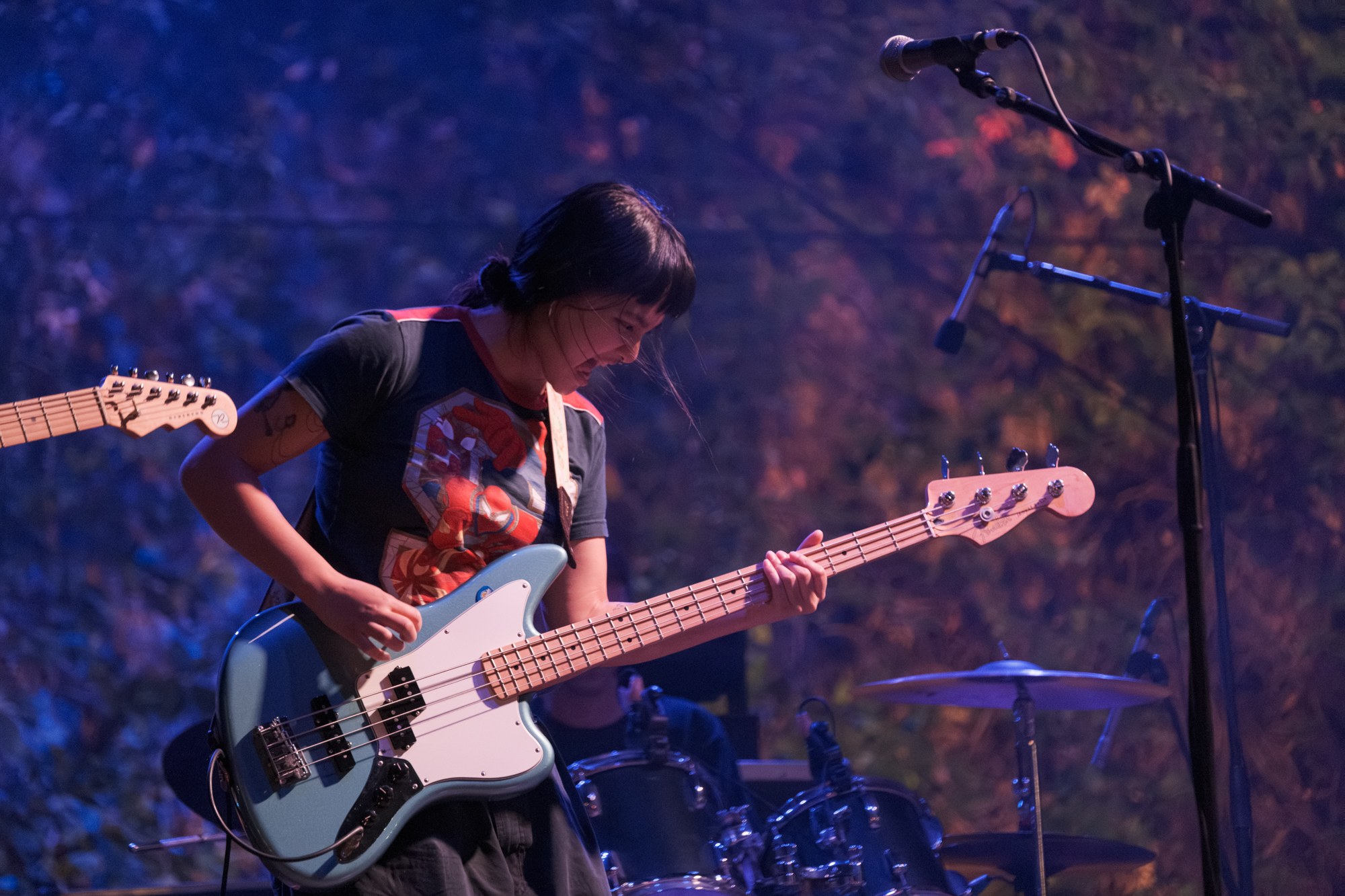
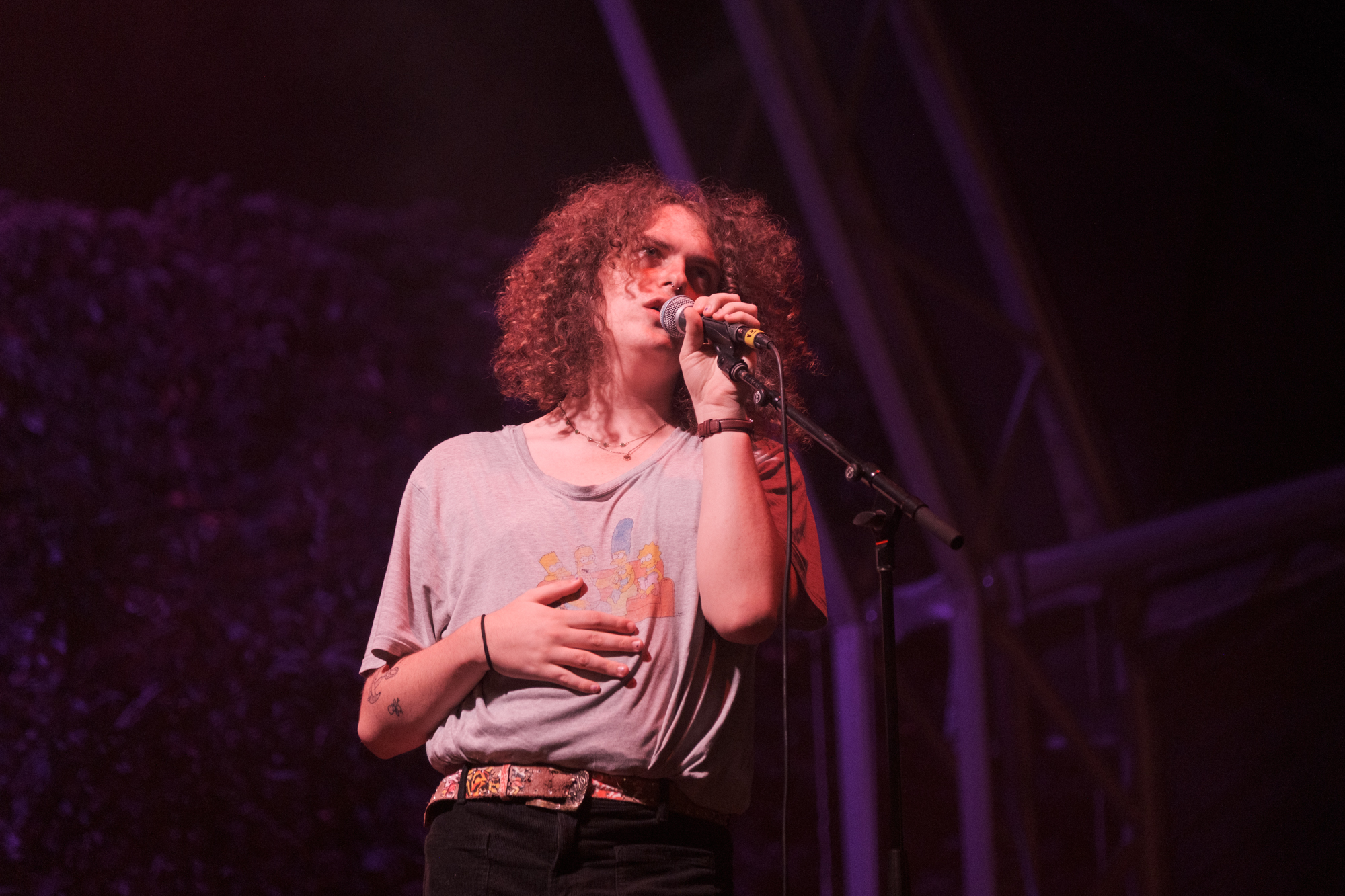
Their set carried a loose Gen Z slackerdom—fuzzy distortion, Midwest emo guitar lines, and an embrace of awkwardness that didn’t always resolve. Frankenstein, introduced with a clunky “Shout out if you’re gay?” that landed to silence, leant into narrative ambition: spoken exposition over a slowly building band that threatened to engulf the vocal. It didn’t quite cohere, but the intent was there. Elsewhere, the melodica cut through cleanly—less twee embellishment, more tonal lift. Closing on Loyal Dog, they found a stronger footing: “Why are you still here?”—a direct, emo-leaning hook that landed with more confidence than the set’s earlier gestures. A little parcooked but promising.
A pre-set run of Wire, The Fall and Gang of Four did the quiet work of recalibration before Sleaford Mods began—signalled not by entrance, but by a bird-like squawk and the immediate drop into The Unwrap.
Opening with the closing track of The Demise of Planet X was a pointed move. The song’s fixation on the act of unwrapping—consumerist impulse, the hollow thrill of acquisition, and the compulsion to display—set a tone that should have cut sharply. Instead, it unfolded with an off-kilter bounce, infectious rather than confronting. That tension lingered.
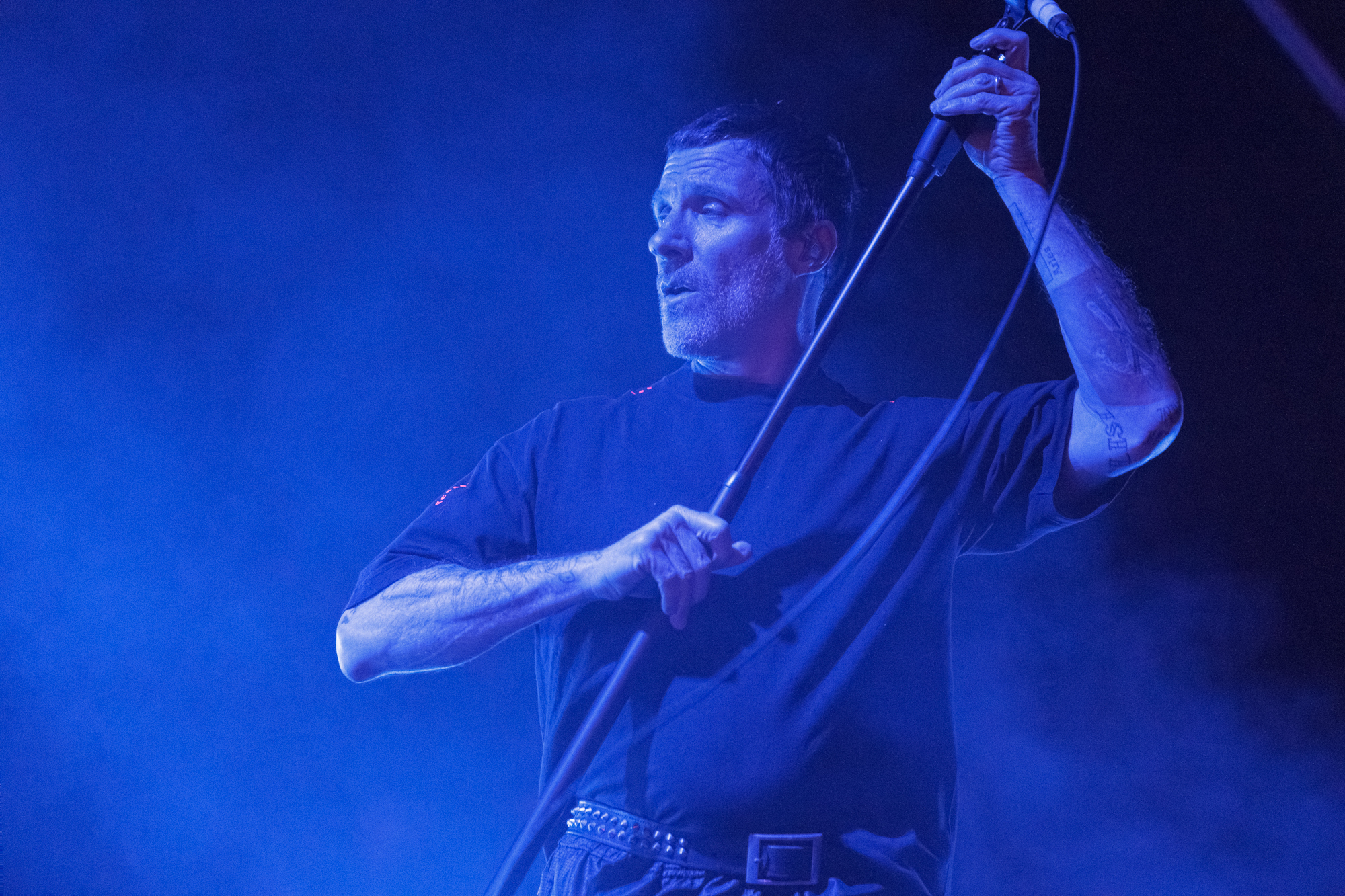
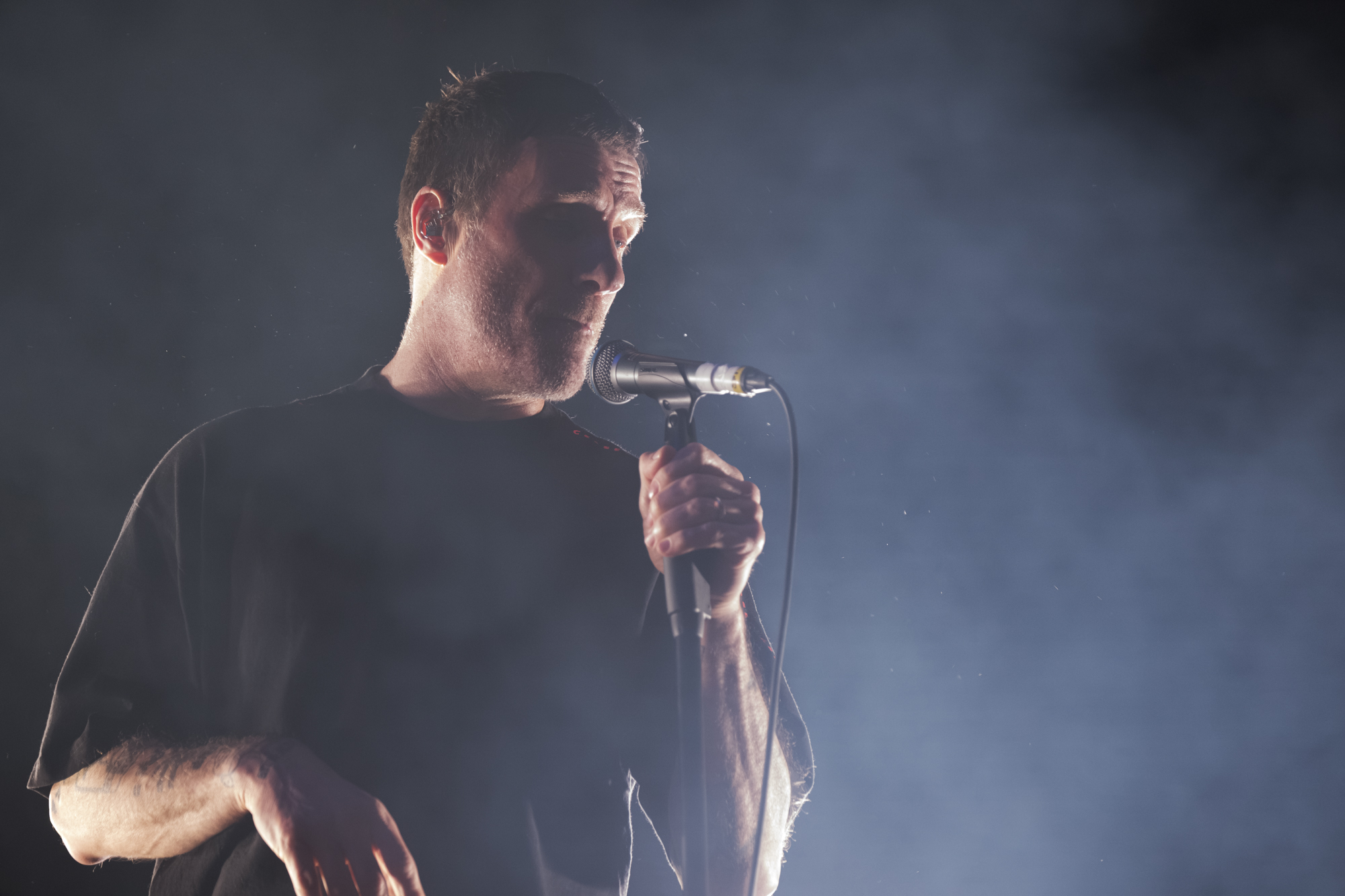
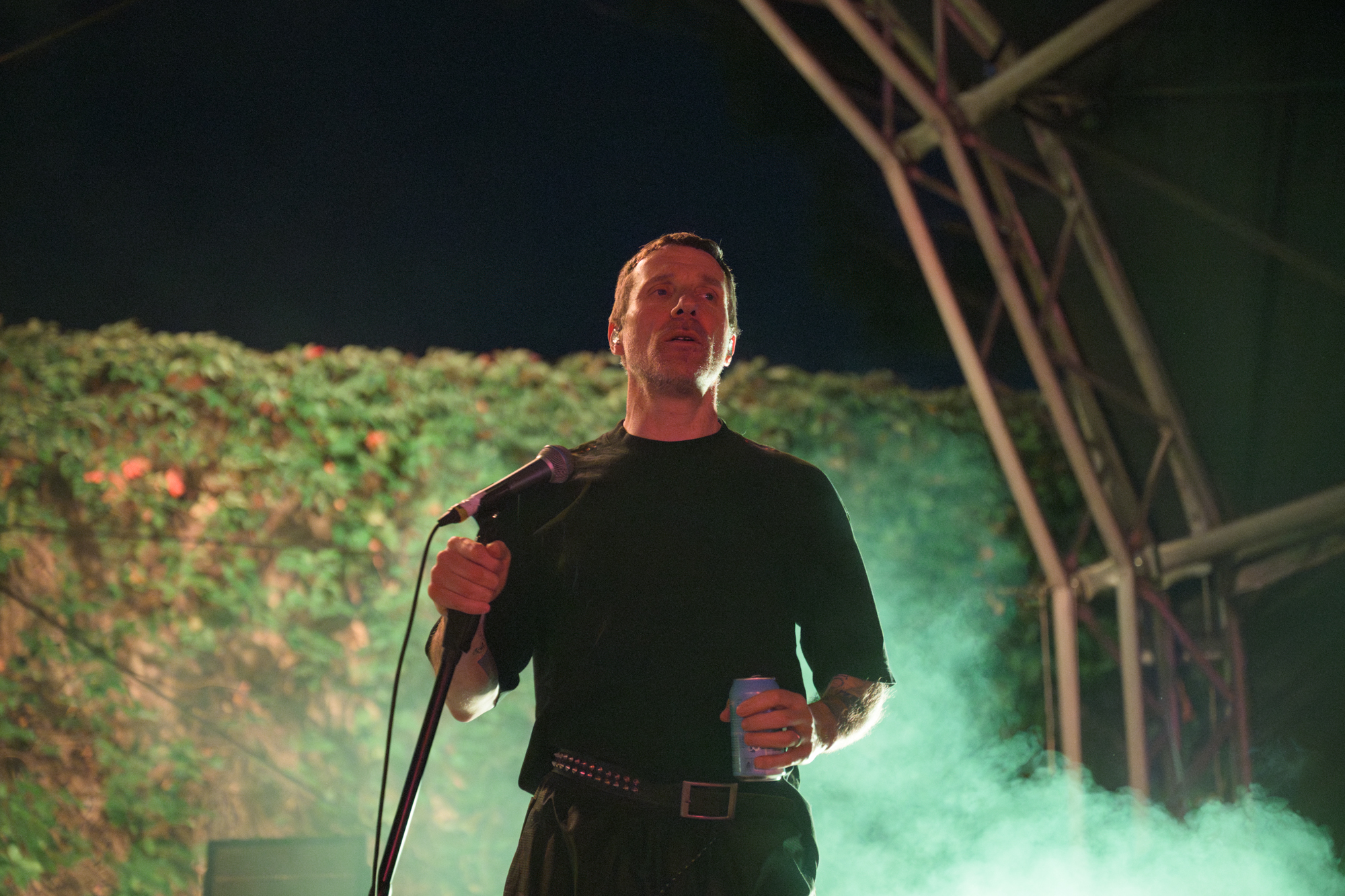
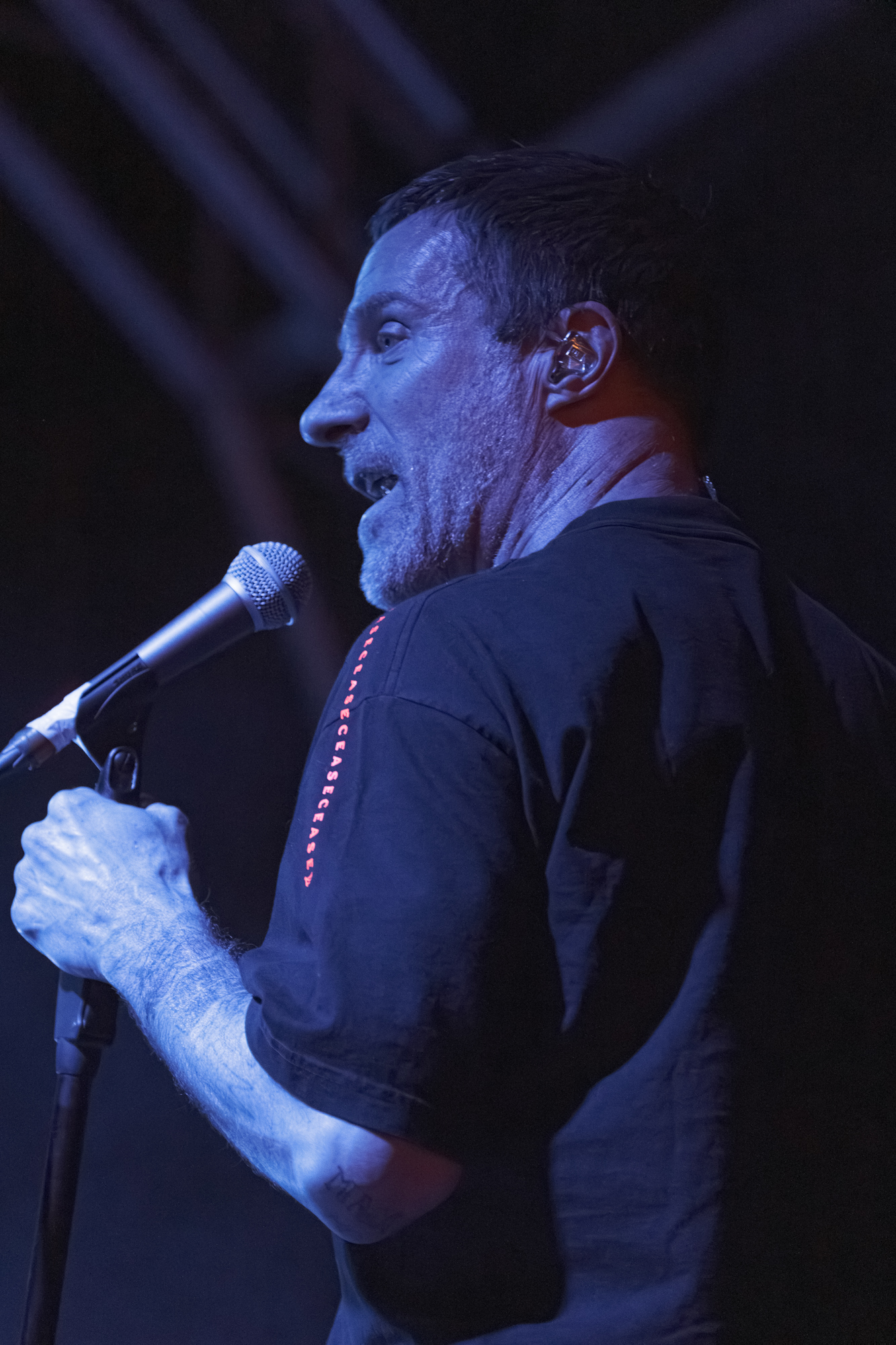
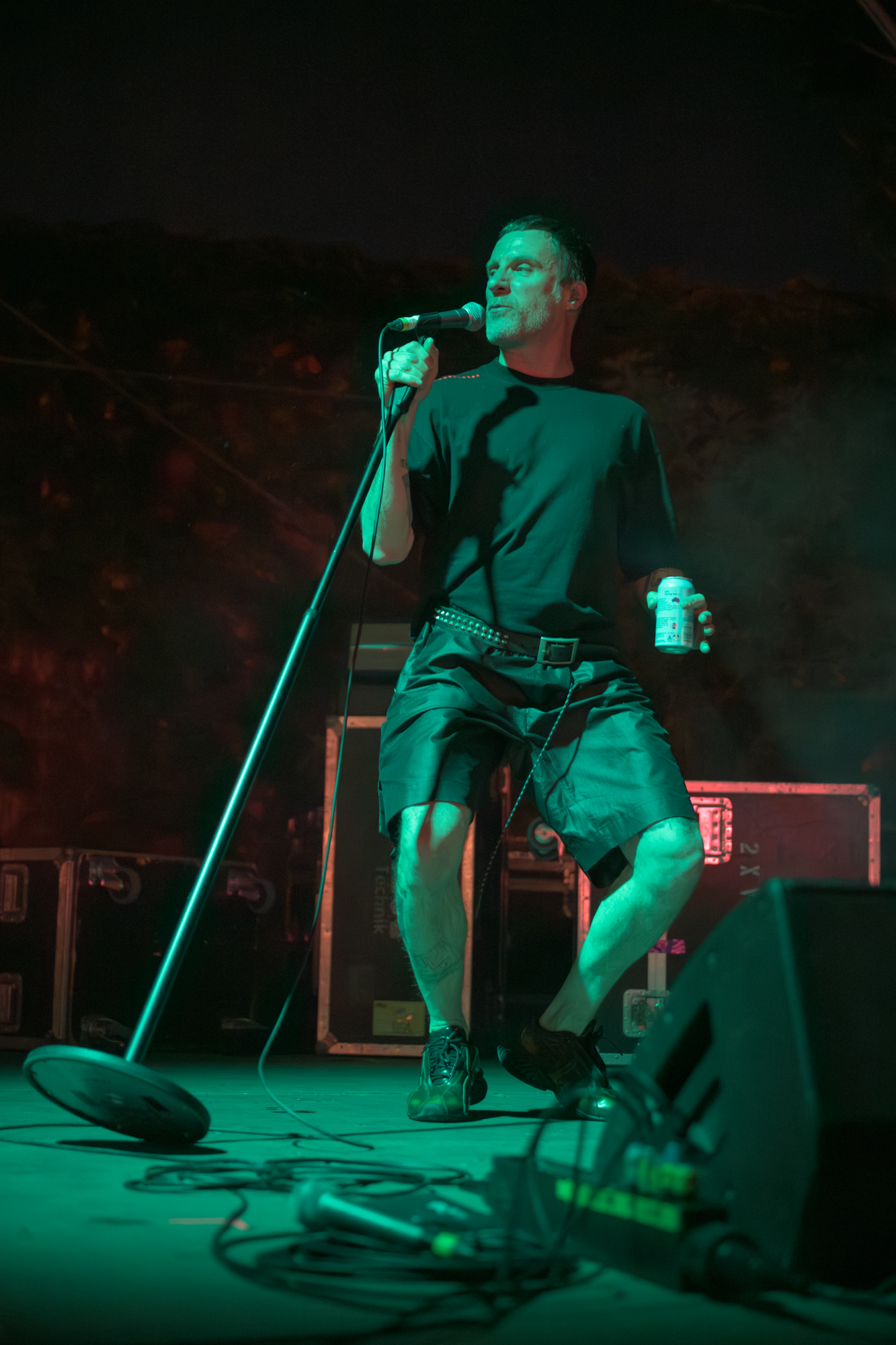
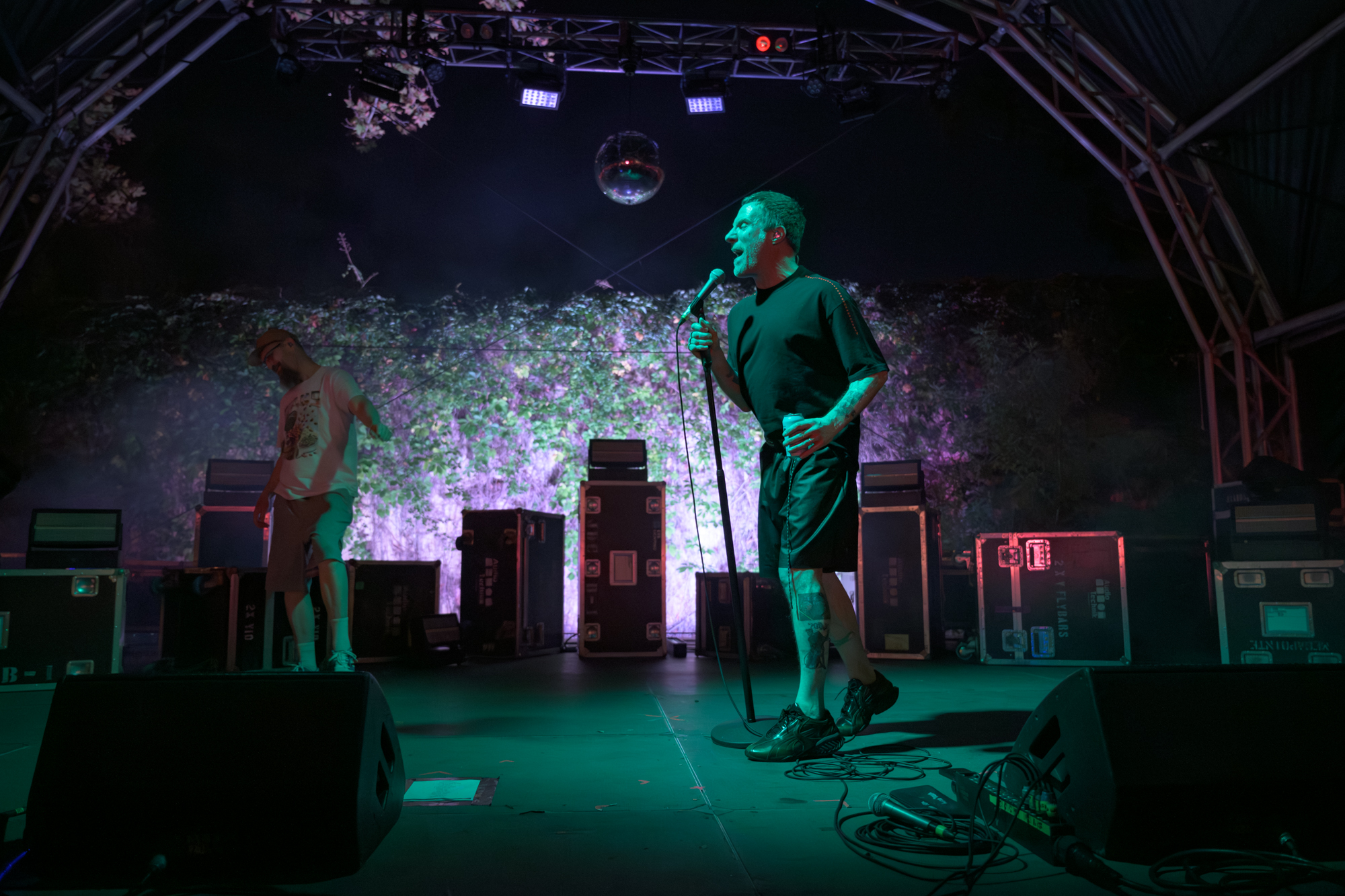
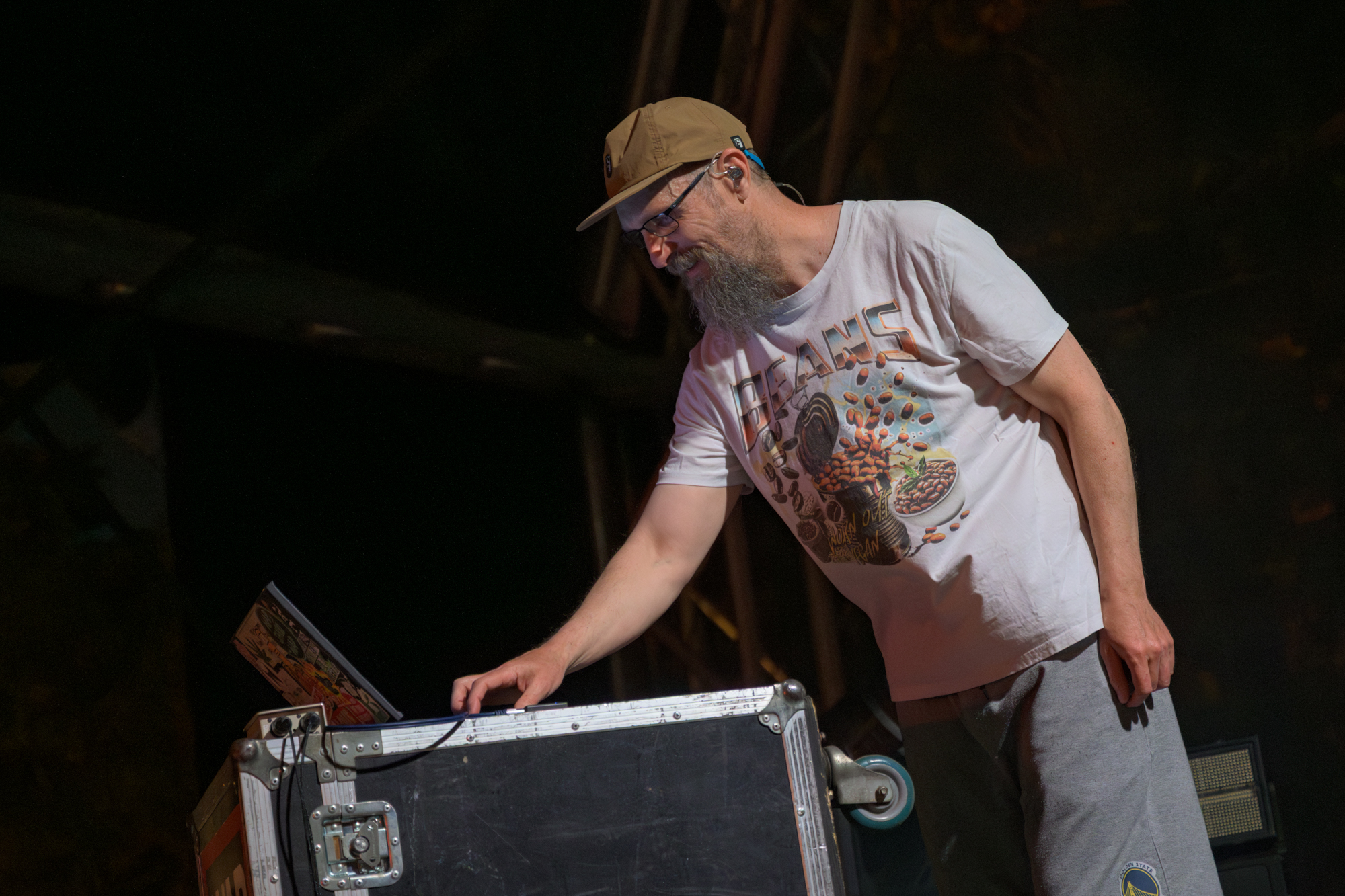
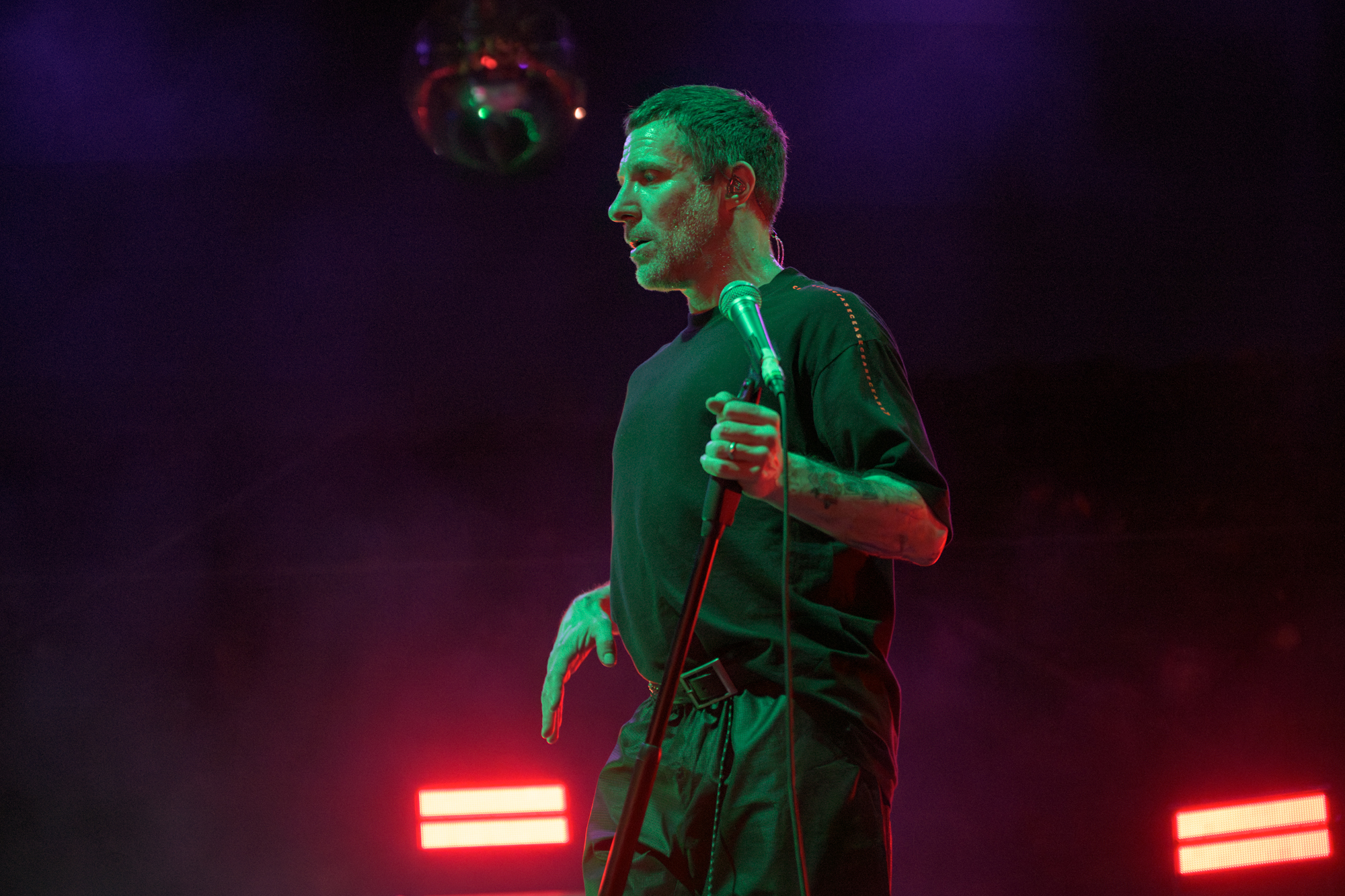
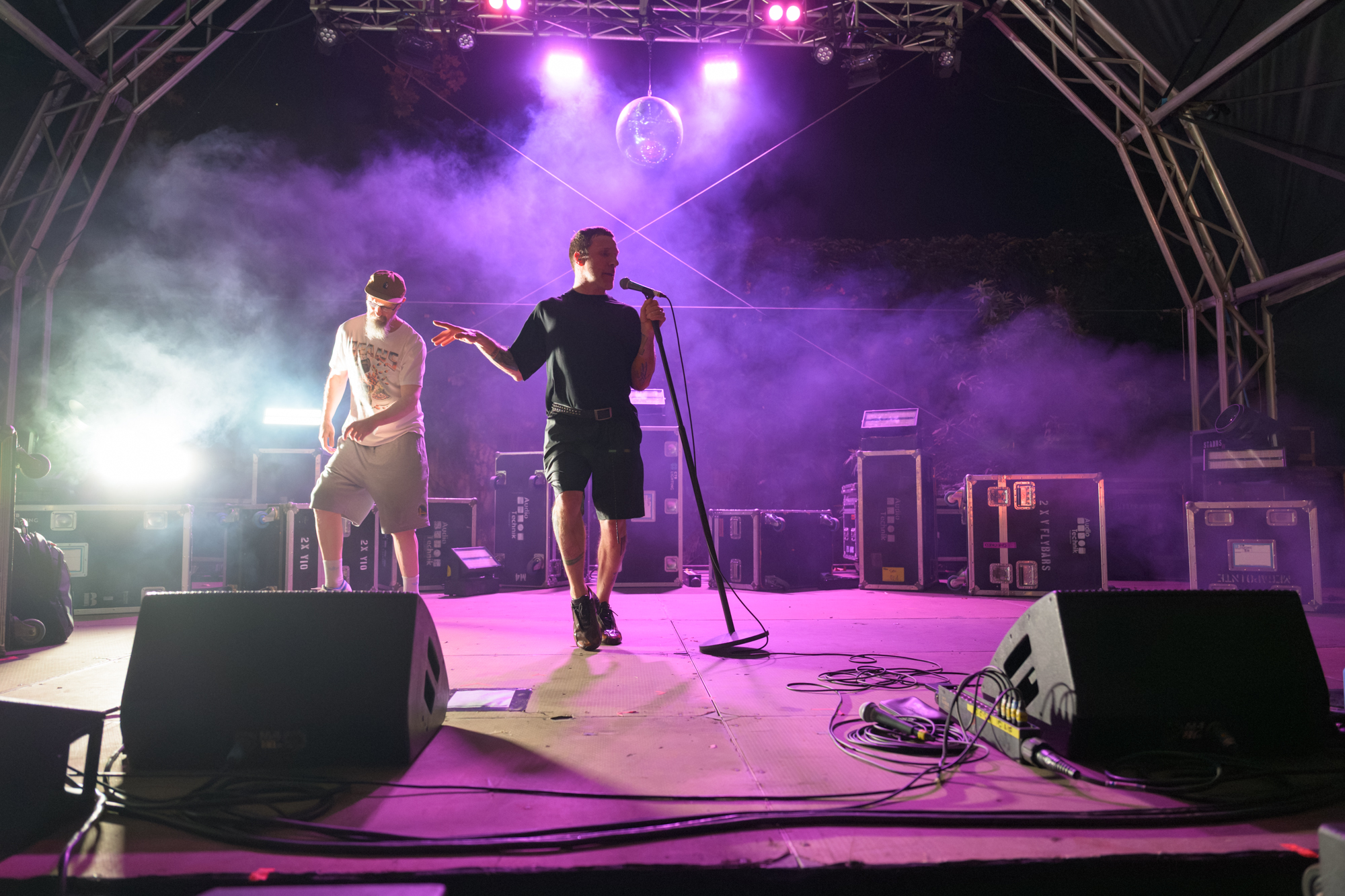
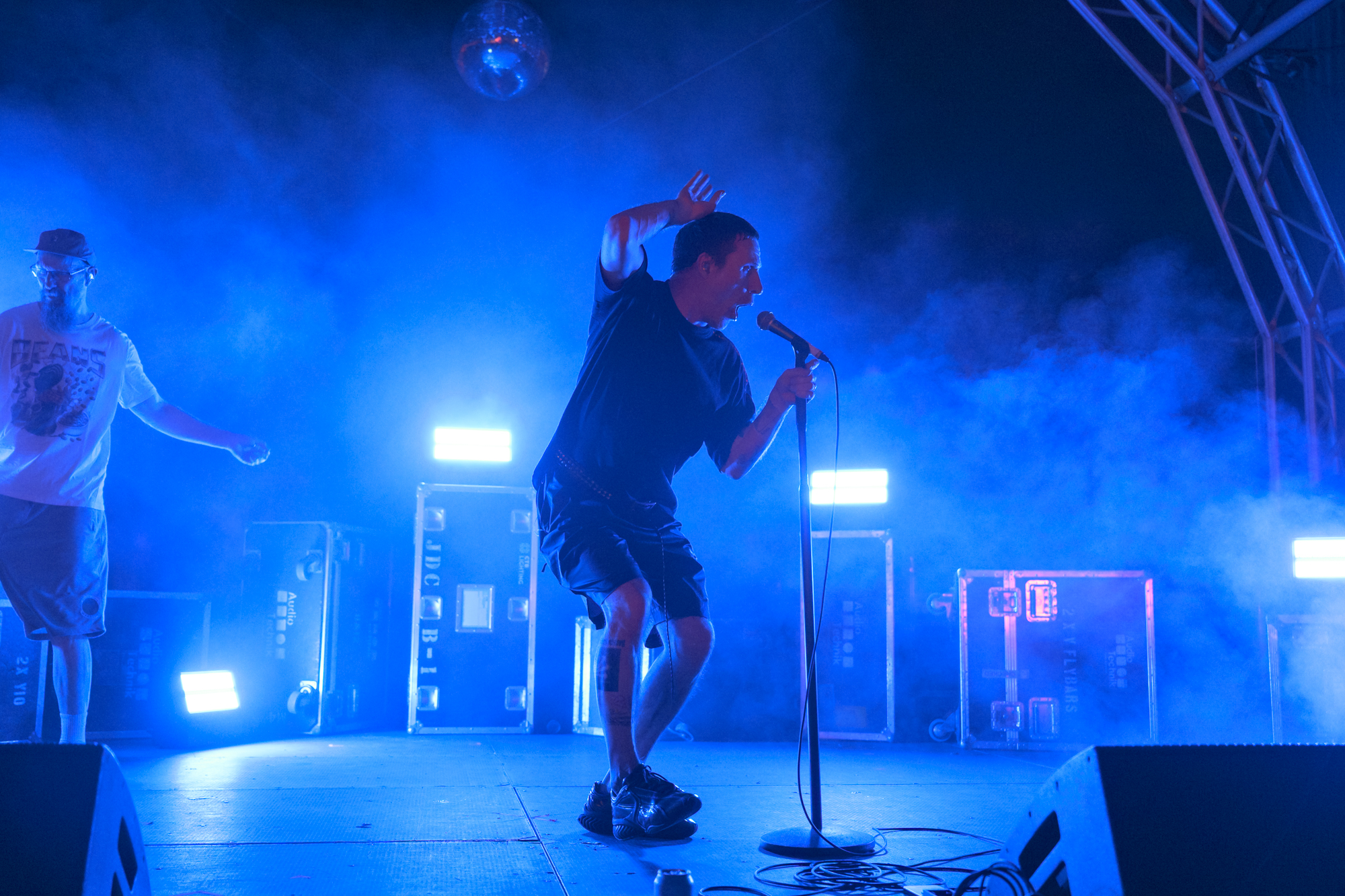
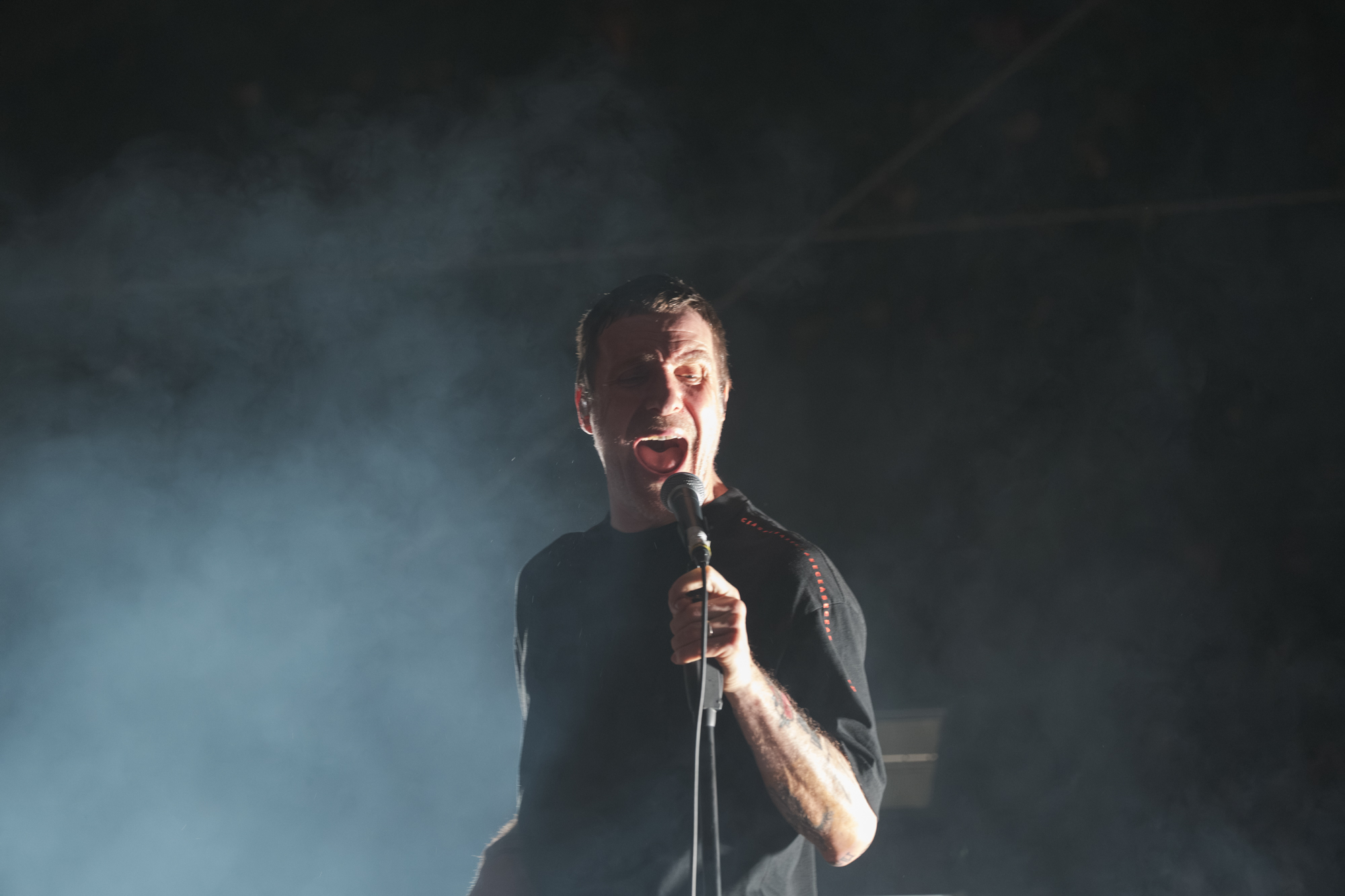
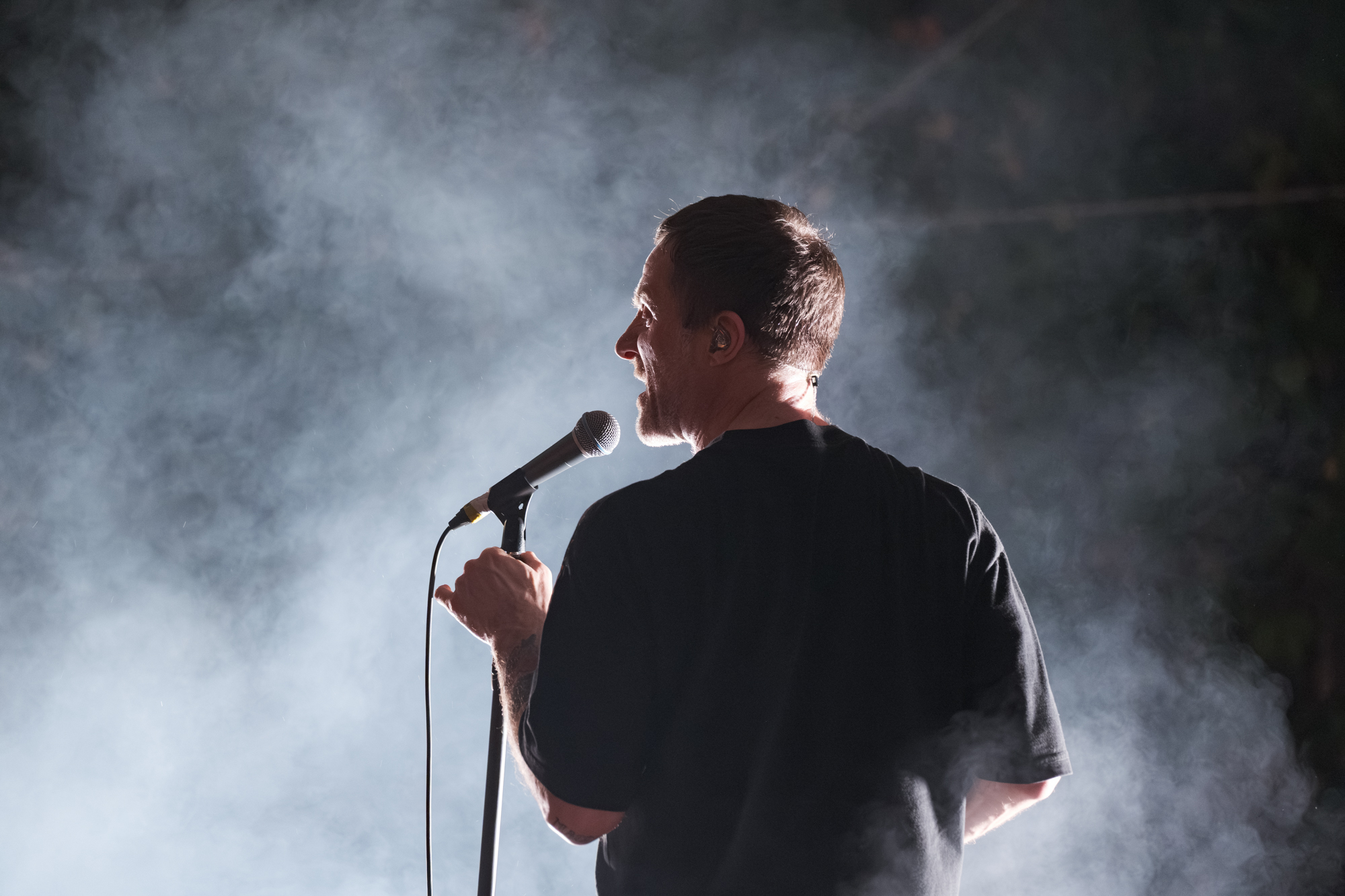
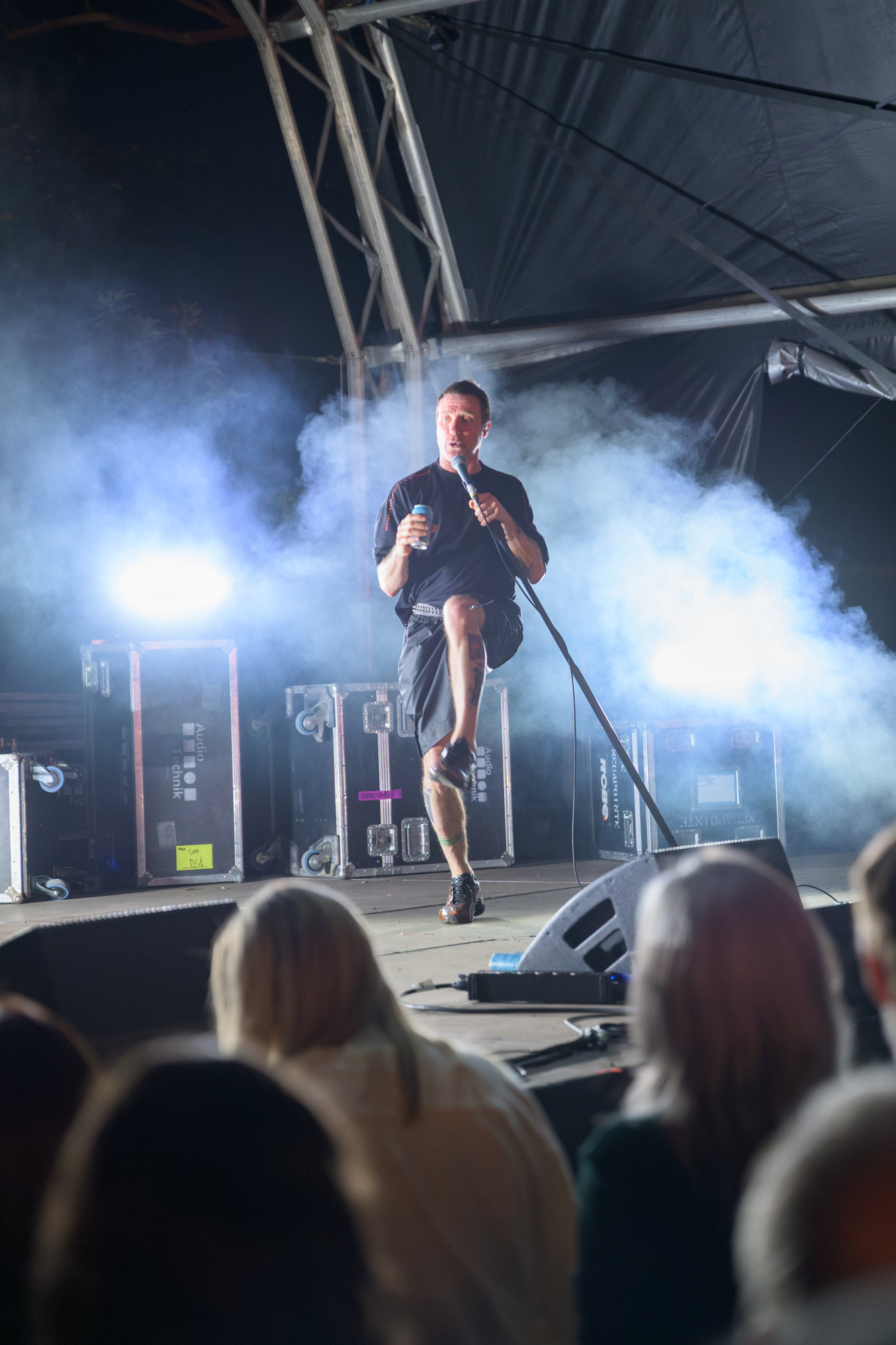
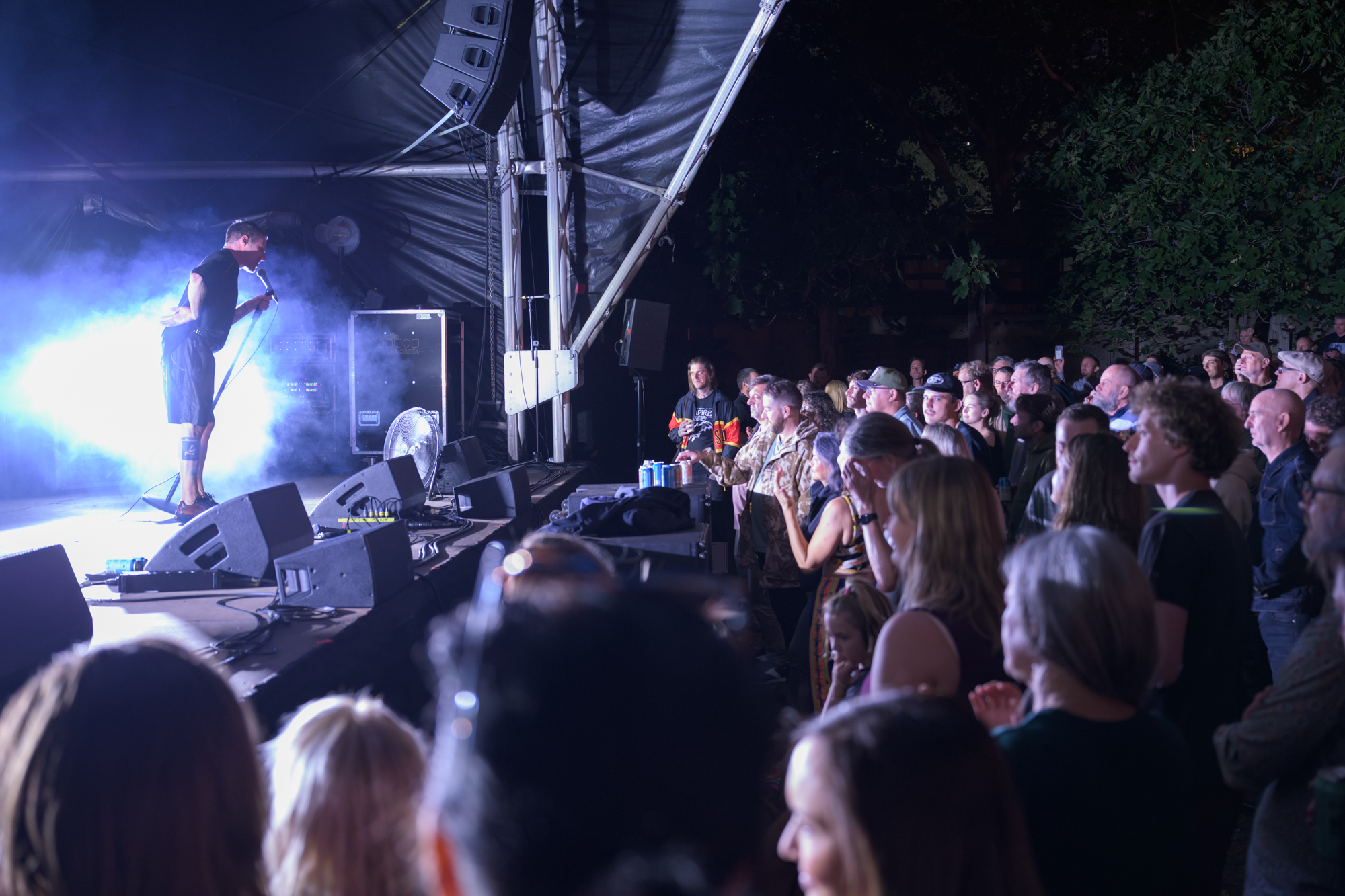
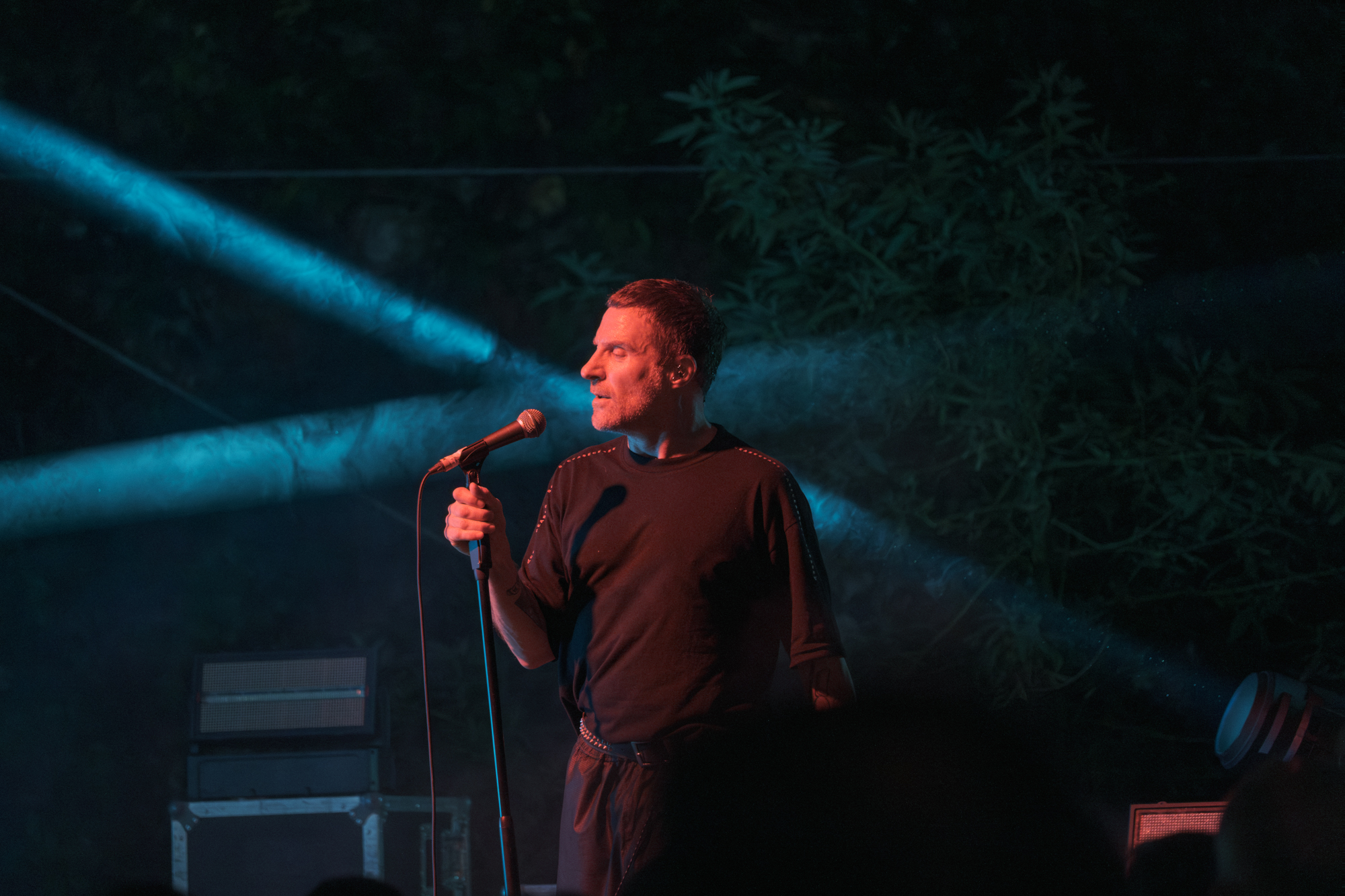
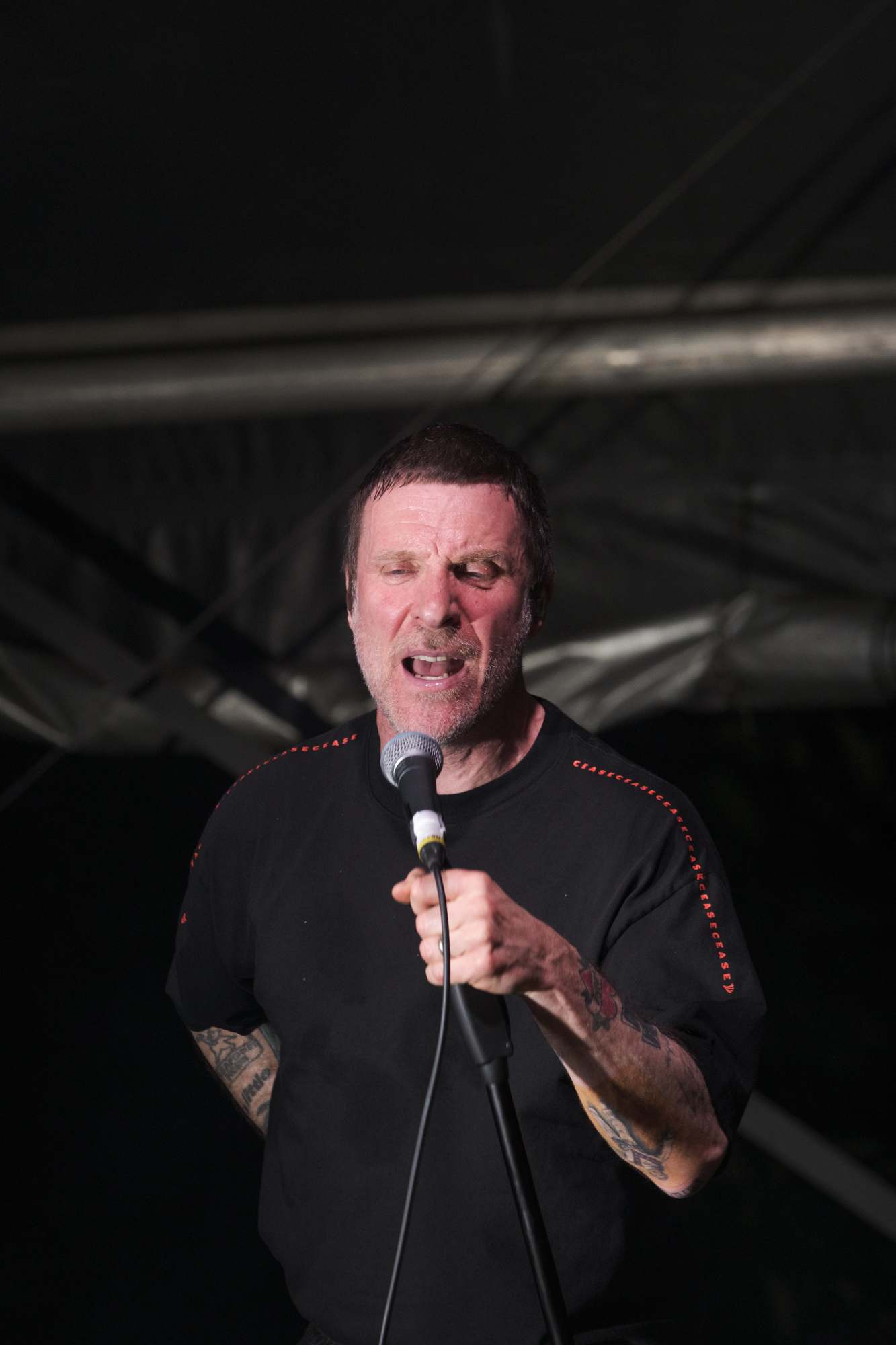
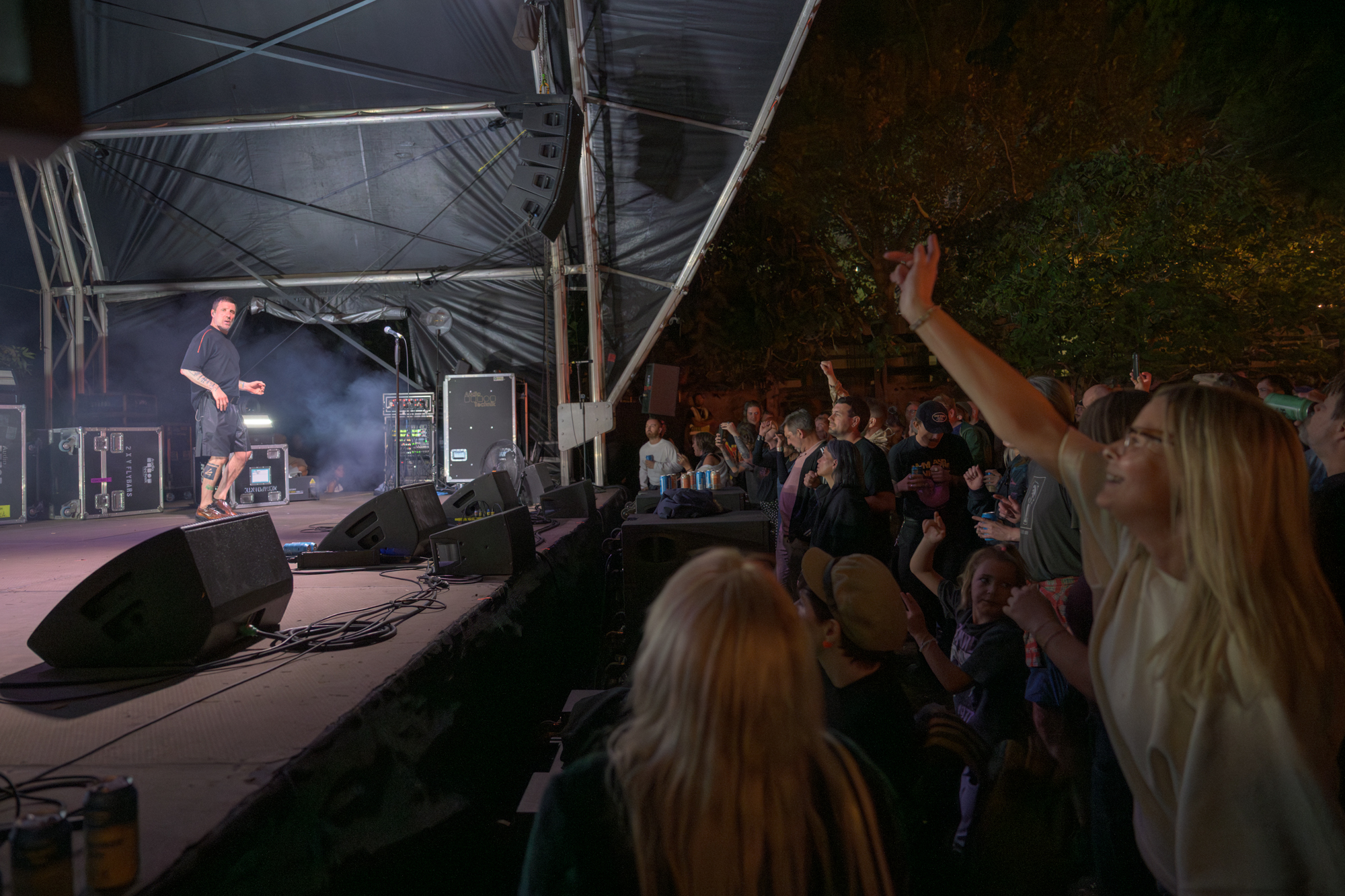
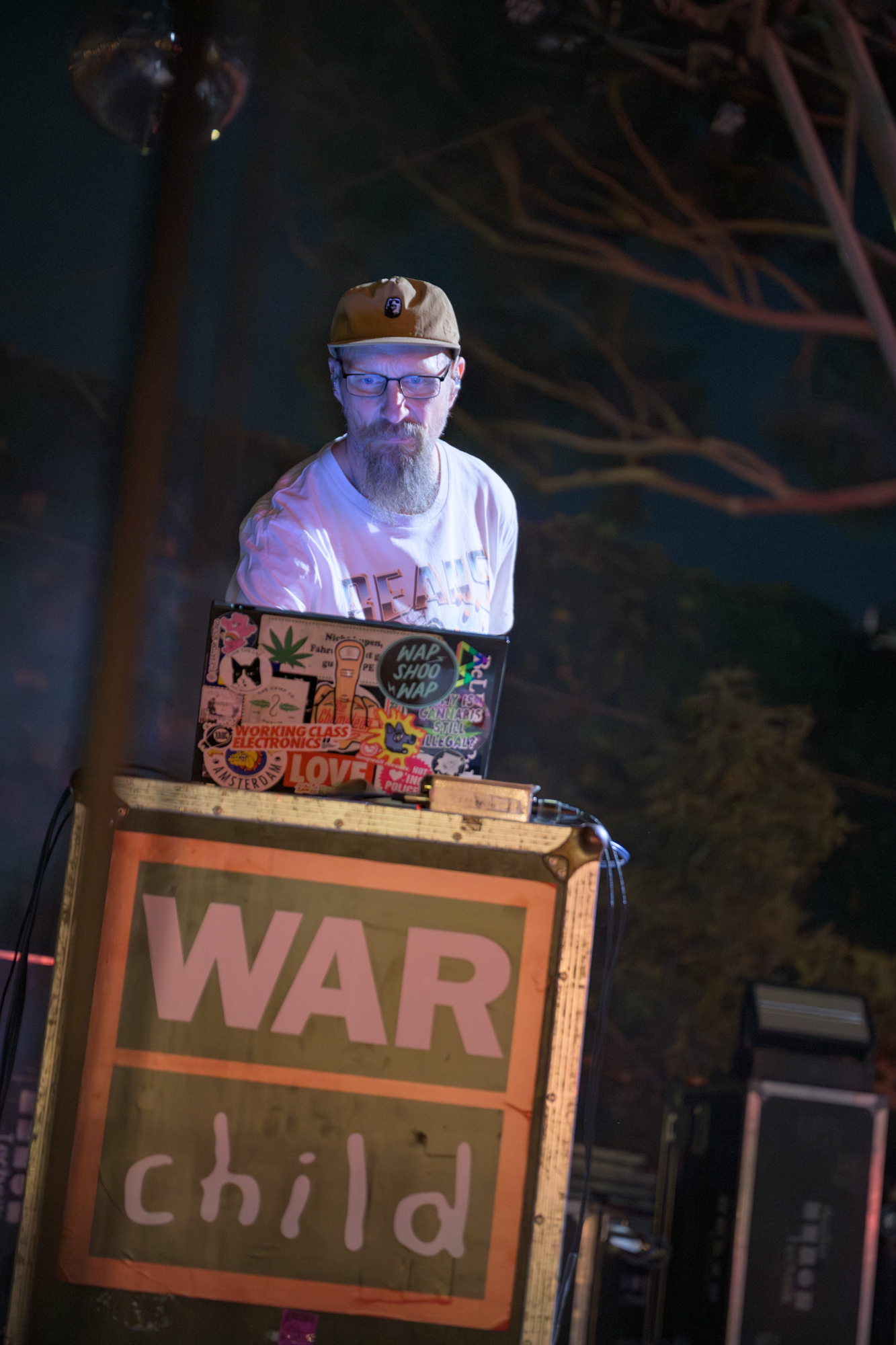
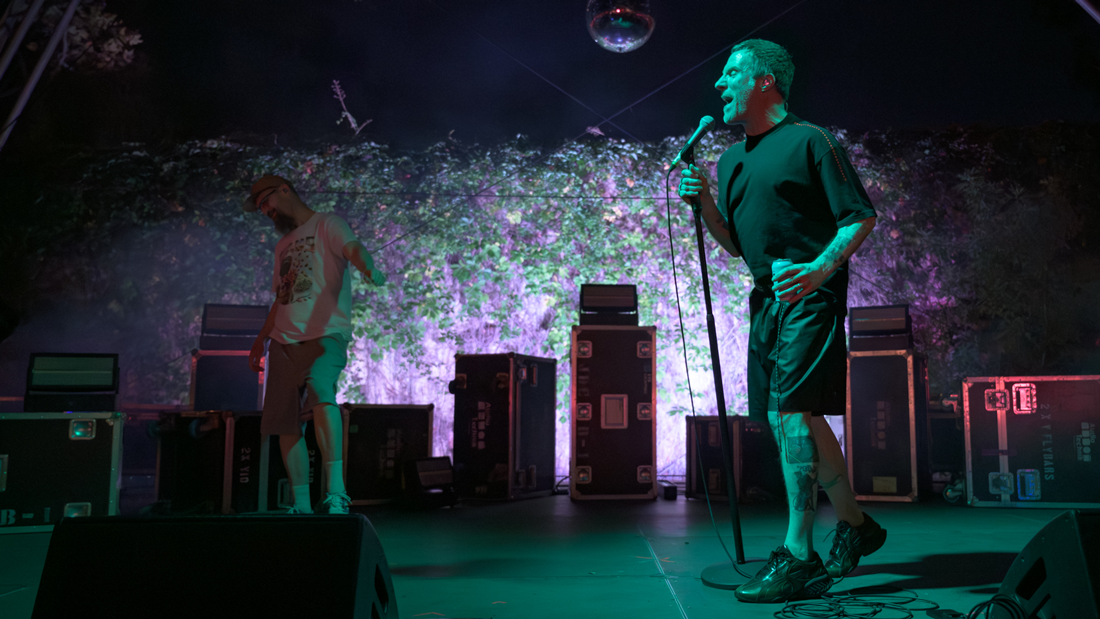
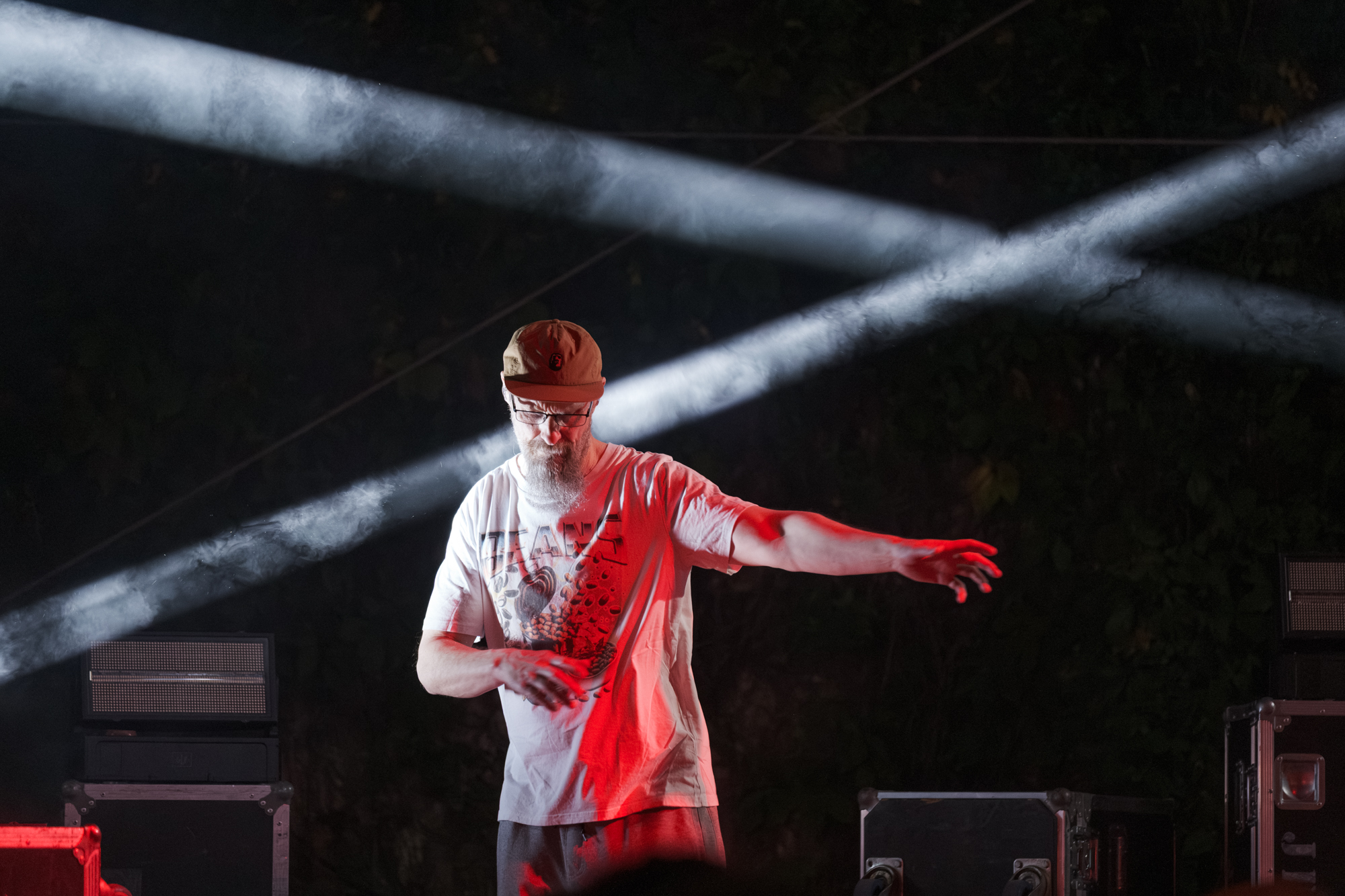
The duo—Andrew Fearn on programmed beats and Jason Williamson on vocals—operated with their usual split dynamic. Fearn hovered at the laptop, triggering tracks with a studied nonchalance, dancing somewhere between hype man and anti-performer. Williamson, by contrast, worked the space—clutching the mic stand, pacing, and delivering lines in that distinct sprechgesang-adjacent style: clipped, percussive, somewhere between punk bark and UK rap cadence.

The set ran with near-total rigidity. Pre-programmed, fixed, unvaried. No illusion of spontaneity, no band interplay—just sequence. It reinforced the project’s austerity logic: minimal means, no excess, the essence of the thing laid bare. Not inauthentic—if anything, the opposite. A refusal of artifice.
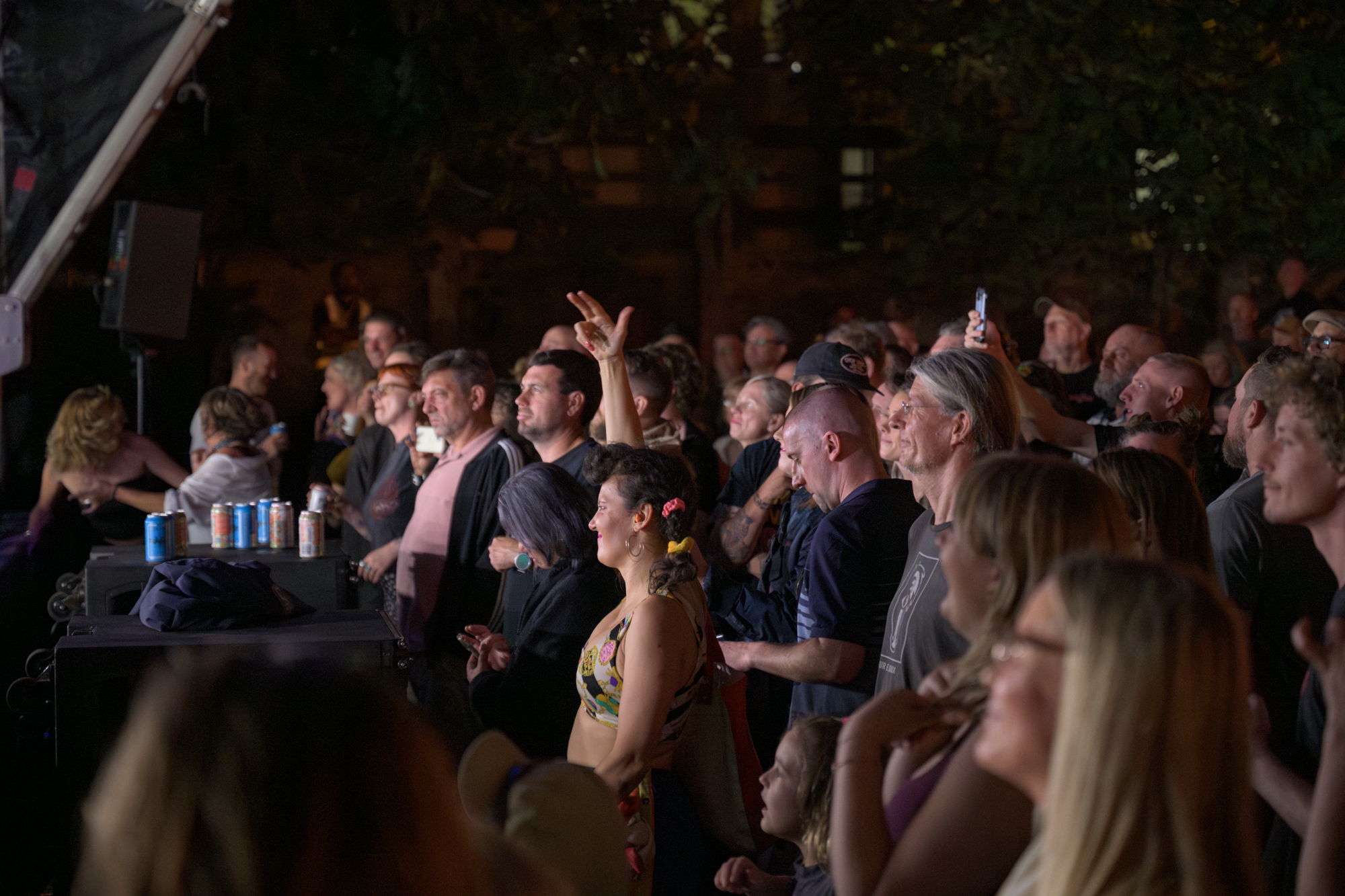
Still, that refusal didn’t always translate to bite. Megaton pulsed under red light, skewering influencer culture and the glut of unfiltered opinion, while Flood the Zone drifted into a loose calypso/reggae lilt, its Steve Bannon sample and references to tightrope walking and pied pipers cushioned by groove. The crowd—mixed in age and allegiance, a distinctly “Sleaford moderate” cohort—met these moments with easy engagement rather than friction.
There were sharper moments. I Don’t Rate You hit hard—its rave-adjacent rhythm underpinning one of Williamson’s most effective barbs: “You want to sound cool / when you don’t.” Brutal in its simplicity, landing like a playground insult elevated to shiv. Jobseeker followed later with relentless pace, its mechanical clang and rapid-fire delivery capturing the grind of labour and the psychic toll of survival—punctuated by that insistent refrain.
Detail carried much of the set’s intrigue, such as the popping, almost castanet-like click running through Shoving the Images—the coconut-clopping absurdity of it somewhere between Spamalot and sci-fi glitch. No Touch brought in the idiosyncratic vocal sample of Sue Tompkins, its childlike cadence offsetting Williamson’s grit. And Gina Was—opening as a spoken monologue before the beat dropped sweetly beneath it—couldn’t help but echo Perth’s own Rinehart fixation, a localised resonance that felt oddly fitting.
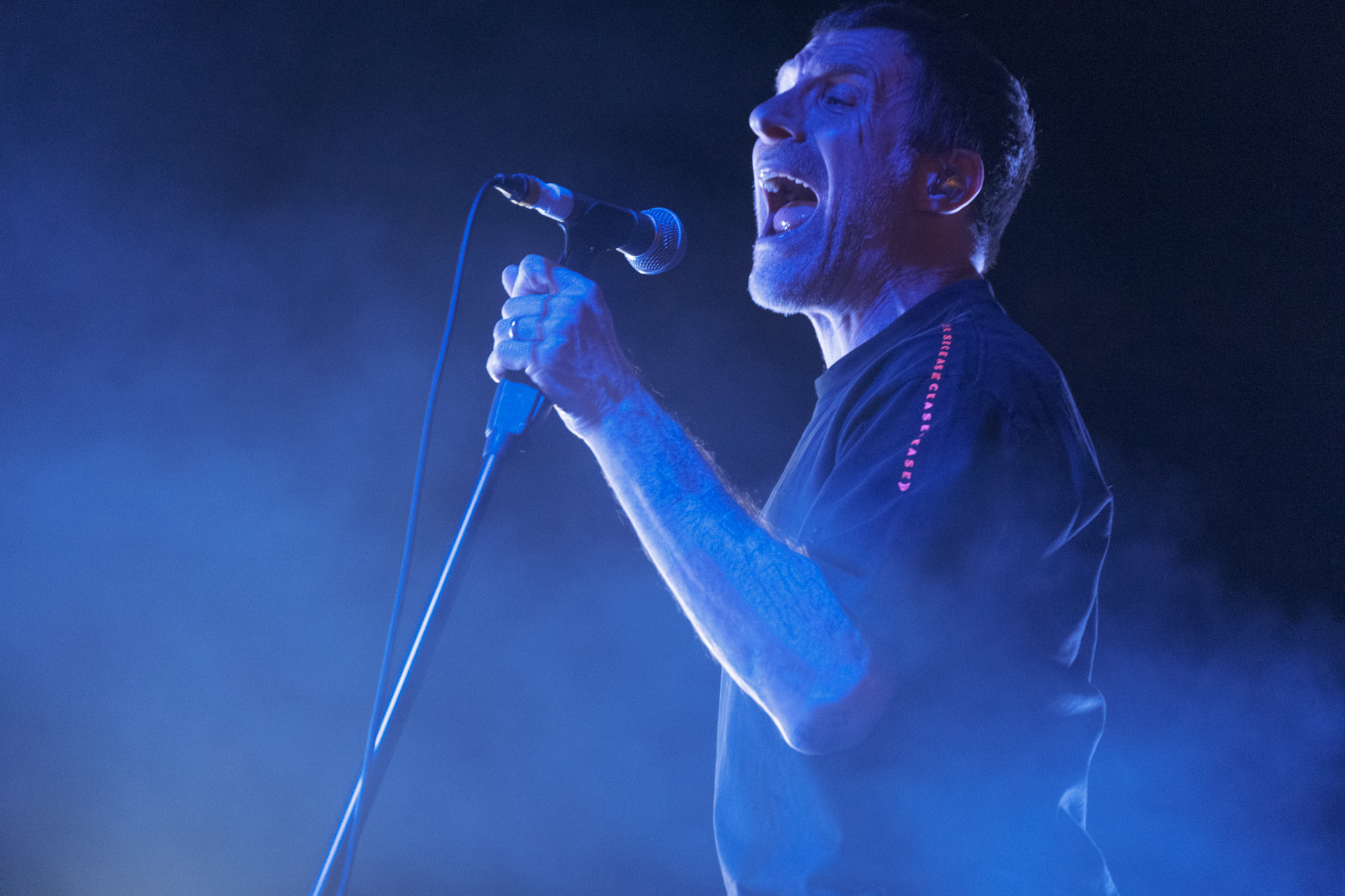
Throughout, Williamson leant fully into vocal ugliness—warbles, squawks, and exaggerated inflections—rejecting polish in favour of something more brittle and human. Meanwhile, Fearn’s “dad-lite” dancing—loose, casual, almost indifferent—became its own visual counterpoint: anti-labour as performance.

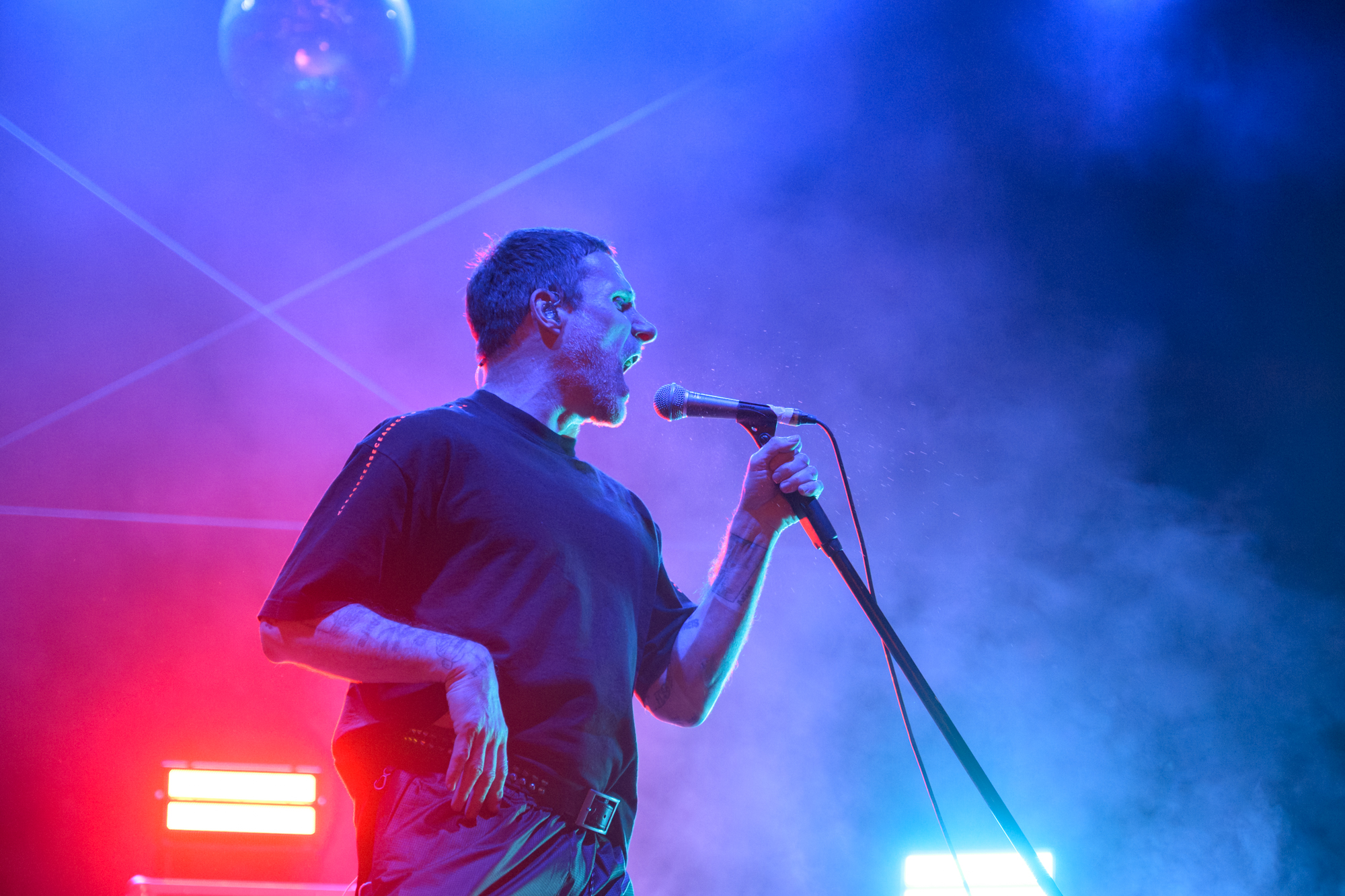
Then came West End Girls. Under a suddenly illuminated disco ball, the Pet Shop Boys classic was reworked with a knowing wink—semi-camp, distinctly British, folding synth-pop nostalgia into the set’s broader palette. It didn’t feel like a departure so much as an extension of a tone that had been present all along: playful, irreverent, never entirely as severe as the politics might suggest.
That contradiction held. For all the band’s disdain for passive consumption and for the packaging of dissent into product, the set was—above all—enjoyable. The beats carried, the cadence locked in, and the crowd engaged not through confrontation but through rhythm.
By the closing stretch—Tied Up in Nottz, Jobseeker, and finally Tweet Tweet Tweet, with its choral undercurrent lending a faintly religious air—the energy resolved into something communal. Not inert, not disengaged—but not especially challenged either.
Sleaford Mods didn’t dilute their message. But here, it landed as something to move with rather than push against.
CAT LANDRO
Photos by Adrian Thomson