
Review: Red Flag Cabaret at Belgian Beer Café
Red Flag Cabaret at Belgian Beer Café
Friday, February 13, 2026
The Le Roi back room felt appropriately illicit for Red Flag Cabaret—fringe in both purpose and makeshift charm. Packed shoulder to shoulder, we arrived to find small red flags perched on the pews. A simple, clever device: instant audience participation, a live moral barometer, and the temptation to judge in real time.
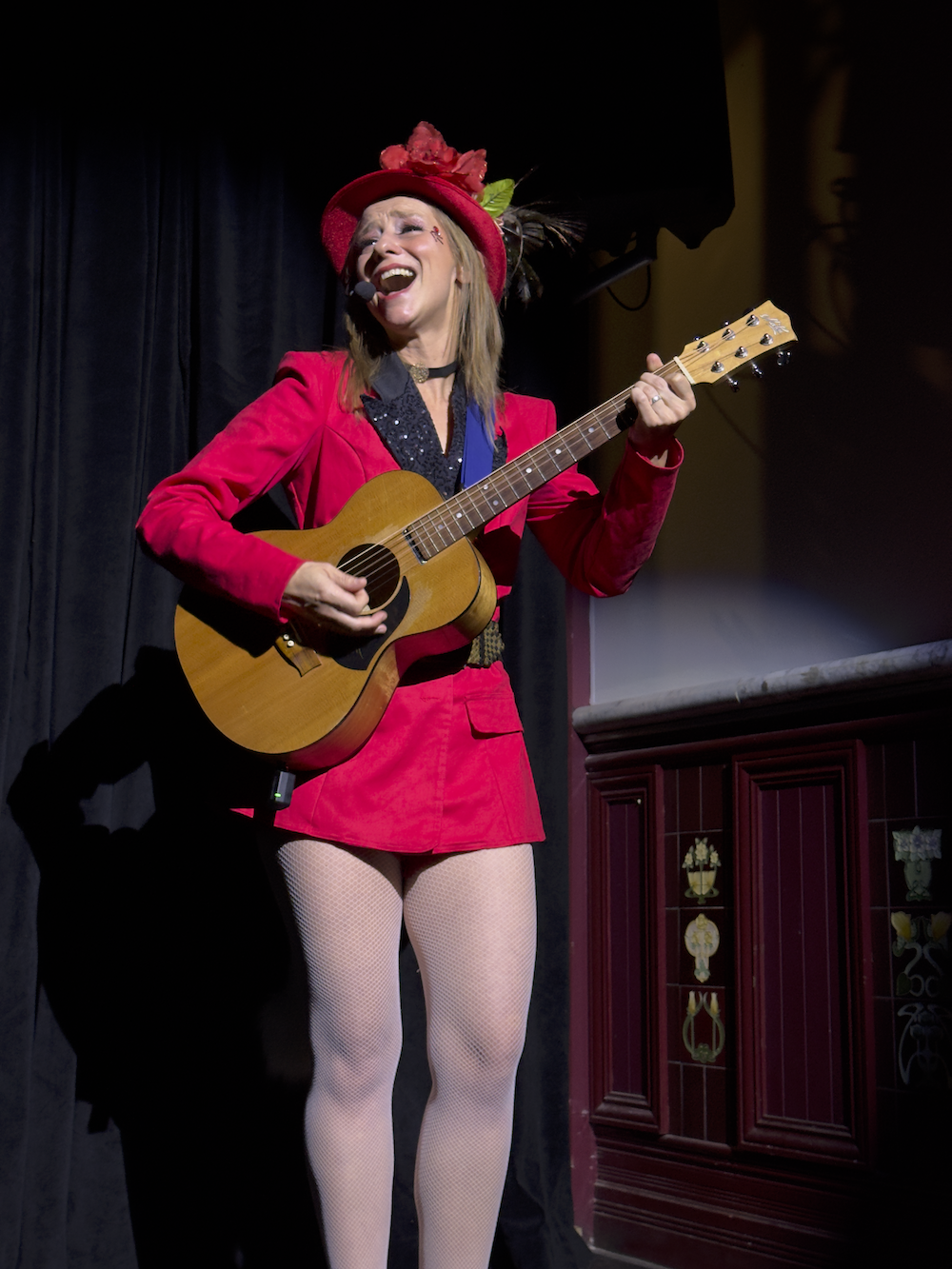
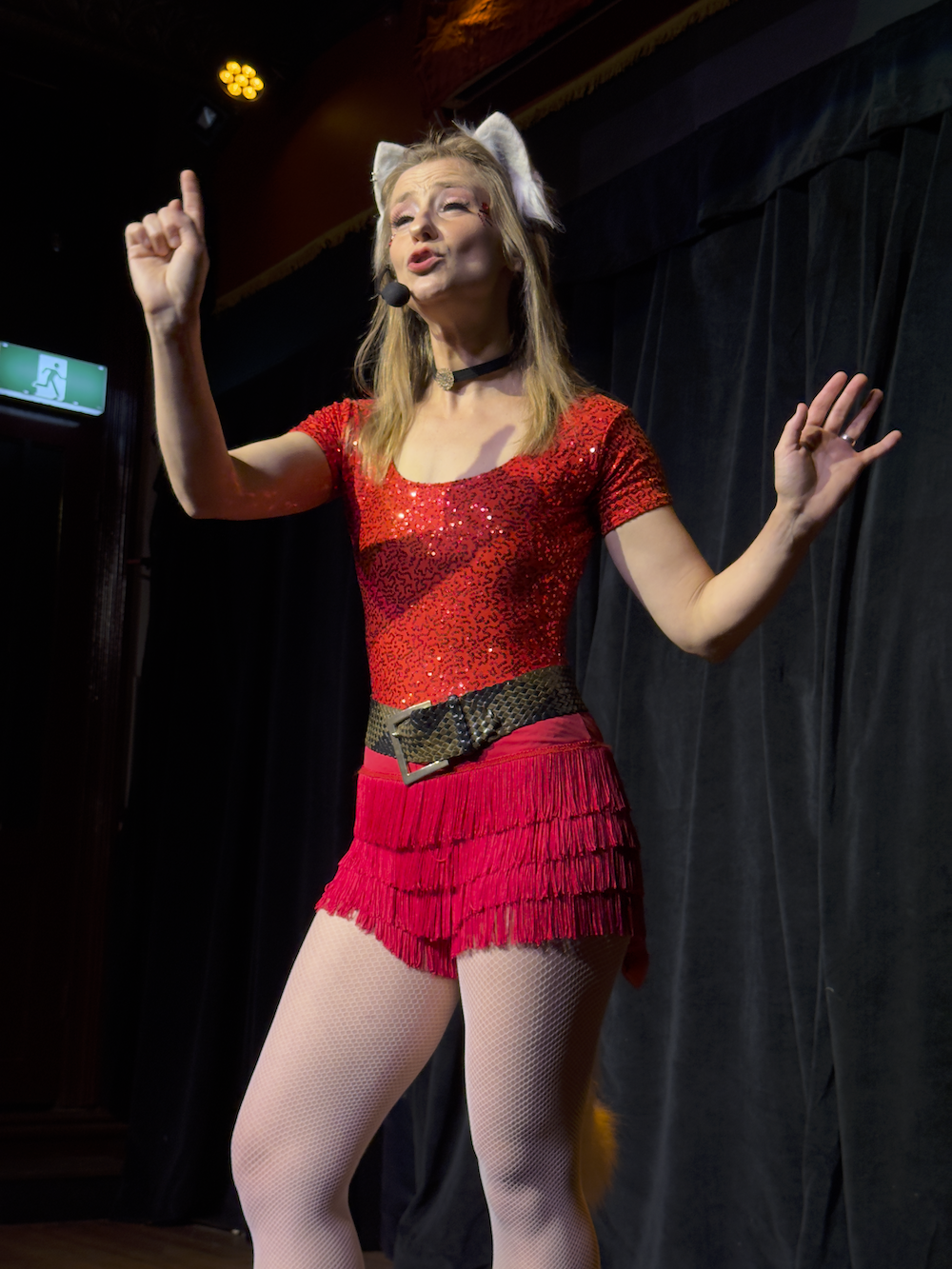
The opening number—an accordion-and-vocal duet between Lil’ Miss Squeezebox (Nikki Dagostino) and Trash Barbi (Kate Page)—repurposed Cabaret with ample Liza energy: “What good is sitting alone in your room, scrolling away?” Life is a cabaret. So, apparently, is dating.
As MC, Lil’ Miss Squeezebox worked the room with warm frankness rather than jaded cynicism, surveying lovers, loners, situationships, the textually frustrated and those texting someone they absolutely shouldn’t. The energy was conspiratorial: we were all implicated. Reflecting on cabaret’s wine-soaked French origins—flirtation, mischief, intimacy—she cast the form as a proto-dating app: no filters, no fishing photos, all red flags visible in candlelight.
Threading together familiar love-song fragments and her own failed-romance anecdotes, she lightly exposed how much of our emotional literacy is outsourced to pop music. Do we feel heartbreak—or recognise it because a song taught us how? Dagostino’s banter carried some of the show’s sharper undercurrents, even when delivered with playful self-deprecation and the occasional oxycodone/oxytocin mix-up.
The evening’s most overtly thematic segment arrived via Mariah Oh Dear’s PowerPoint game, Put Yourself Out There. Dating-app logos appeared with Jaws-like foreboding; Tinder, Bumble, Hinge and Feeld became punchlines before profiles were dissected for red flags. The crowd were quick to wave their miniature warnings. The segment was undeniably funny and recognisable—Perth’s brand of banal bios and reluctant self-description got a ribbing.
Yet here the concept sharpened. The profiles presented skewed heavily towards cis male heterosexual norms, positioning a particular demographic as the primary site of “flag-worthy” behaviour. While the jokes landed, mild awkwardness, therapy-speak, kink disclosure and poor grammar were occasionally collapsed into the same visual shorthand of danger. Red flags, in contemporary culture, function as efficient moral sorting—protective, yes, but flattening. When every irritation becomes a hazard sign, nuance is the first casualty.
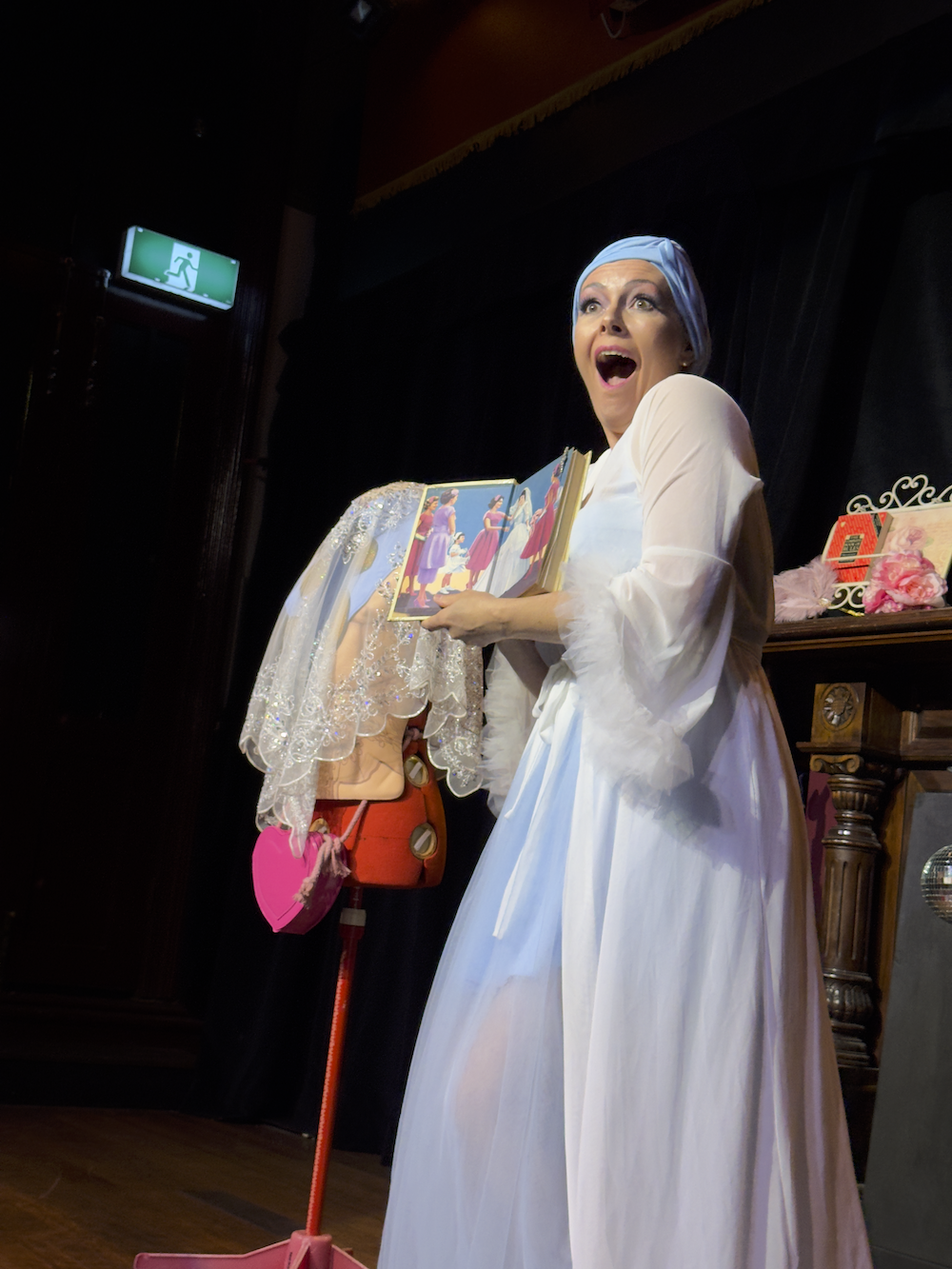
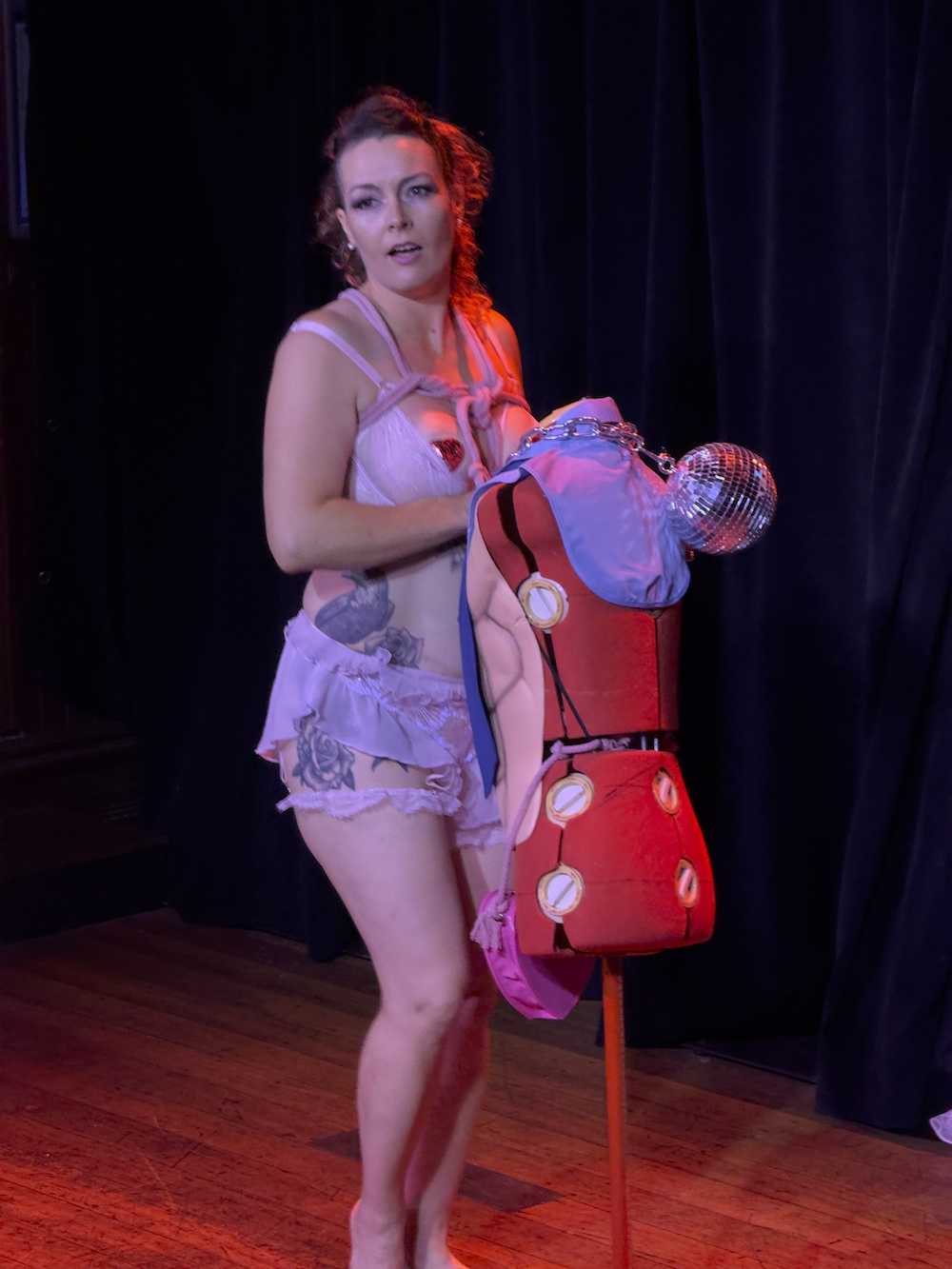
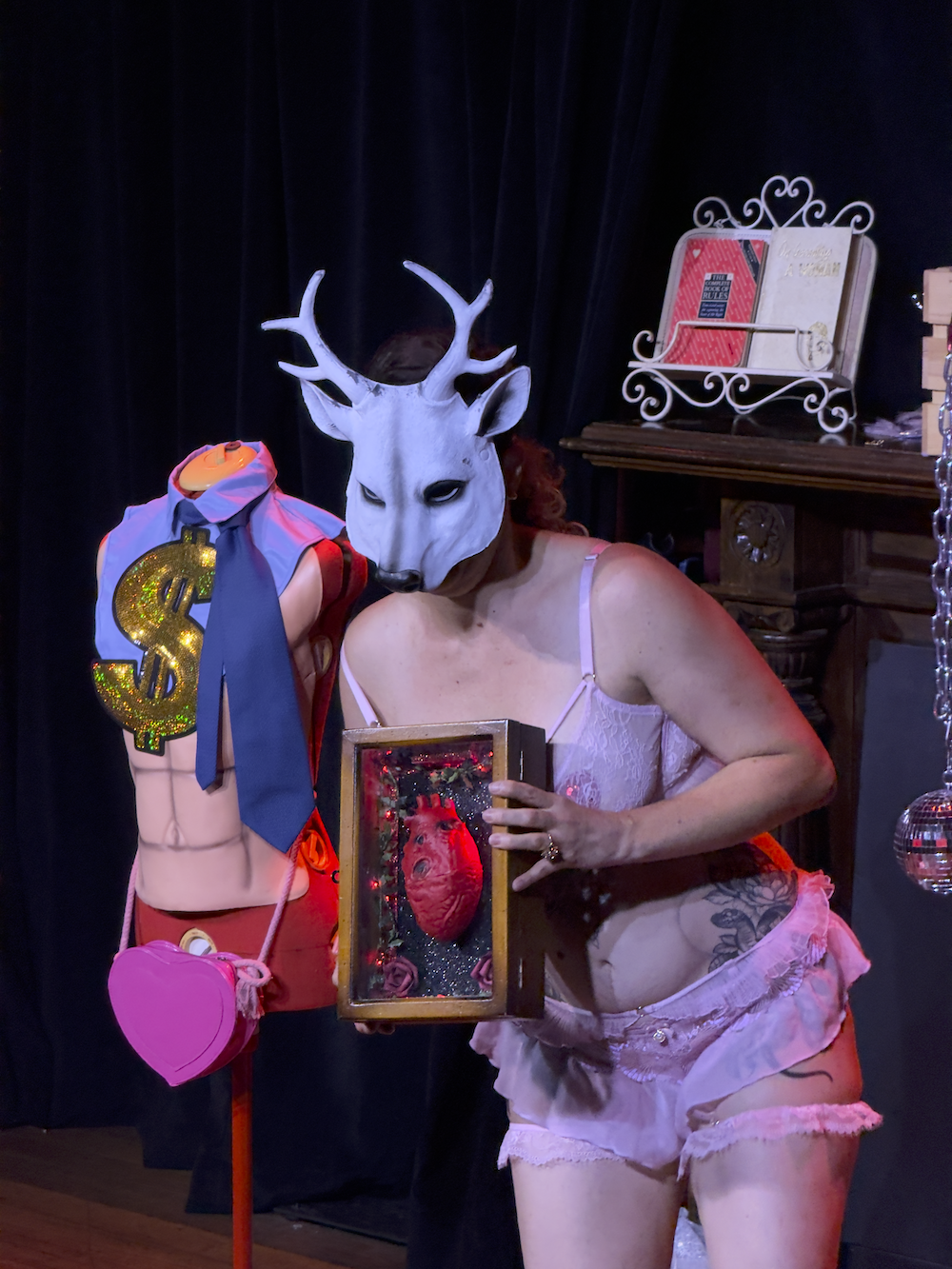
Where Red Flag Cabaret cut deeper was in shifting its aim from individuals to systems. Trash Barbi’s transformation into a pining 1940s bachelorette—clutching manuals On Becoming a Woman and The Complete Book of Rules (a frighteningly authentic 1995 handbook for “keeping a man”)—skewered the heteronormative script with absurd precision. The real red flag was not the awkward date but the inherited narrative that insists partnership equals worth and solitude equals failure. That satire bit harder.
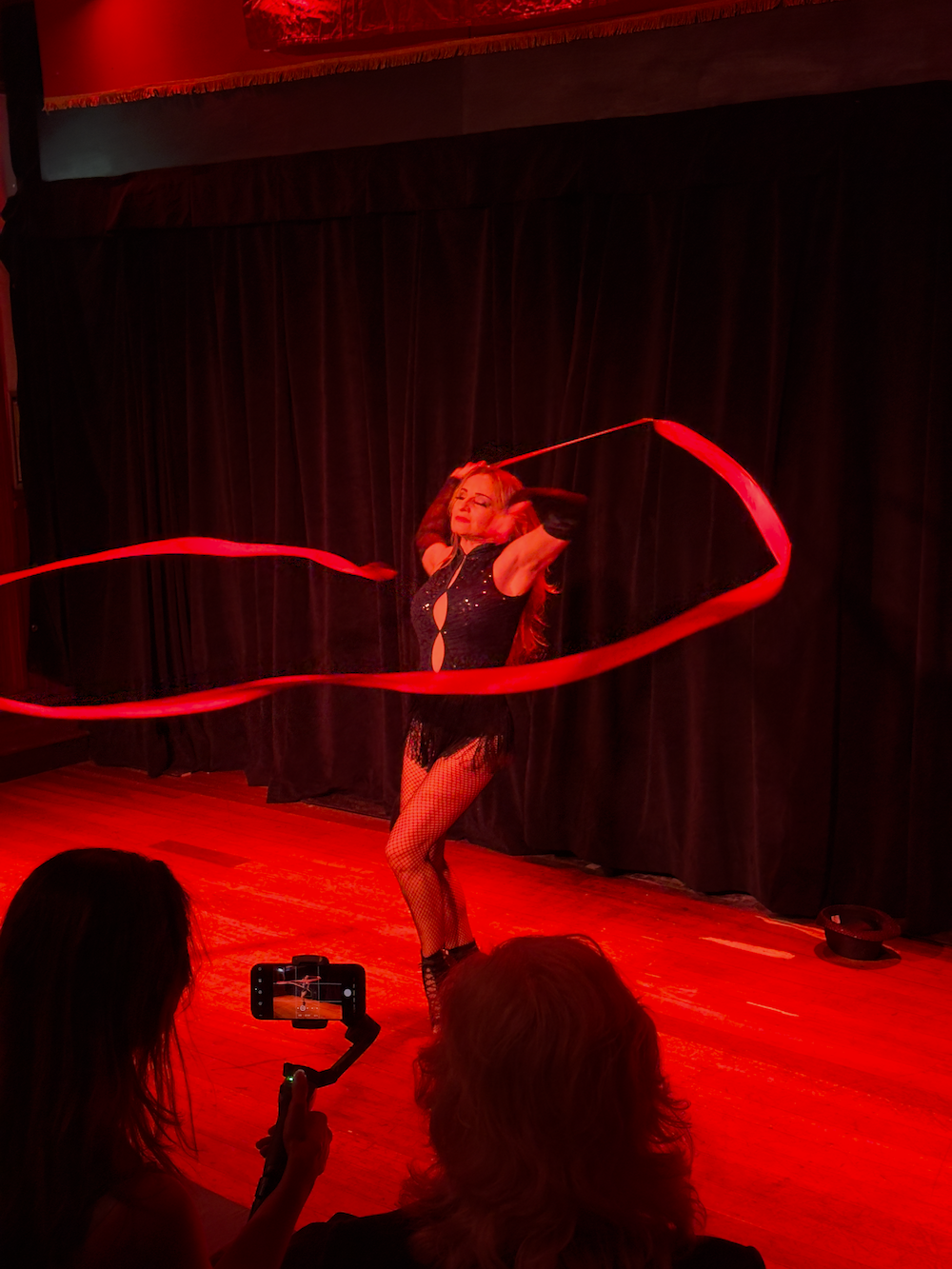
Burlesque dancer Glamazon (Danka O’Mara) delivered a standout red ribbon dance followed by illuminated twin-flame silks. Sensuous without stripping, the performance emphasised mastery and labour rather than coy titillation. In the cramped room, proximity heightened both spectacle and humanity—breath, strain and effort were visible. Connection, unlike a swipe, was embodied.
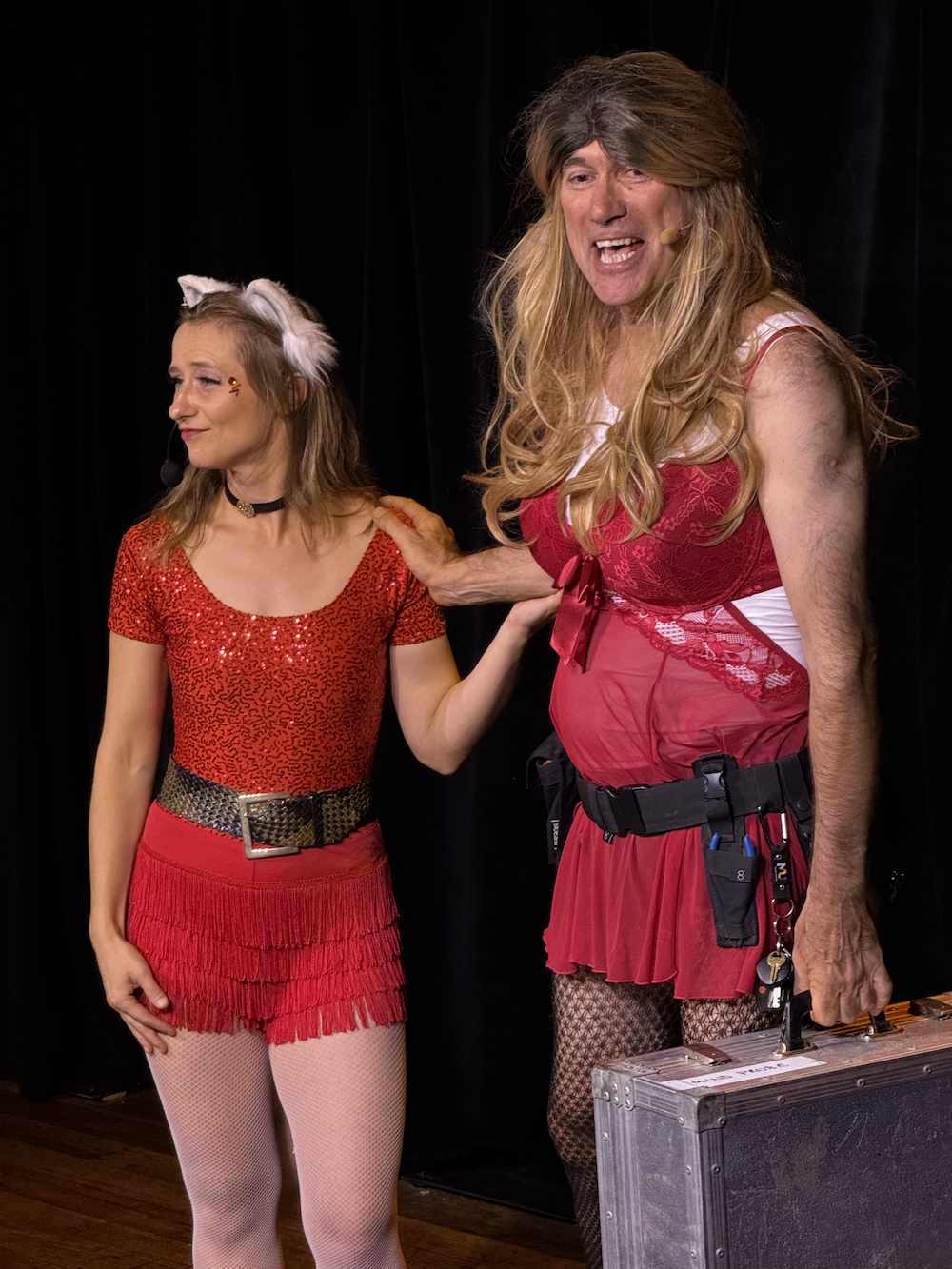
Later, engineer-by-day Nikki Minnow (Nick Mortimer) unveiled a silver “Mind Probe” contraption in a delightfully eccentric mind-reading routine. The drag sat somewhere between cross-dressing and femme identification—less illusion, more playful self-exposure—and the crowd adored it. It was messy in the best cabaret sense.
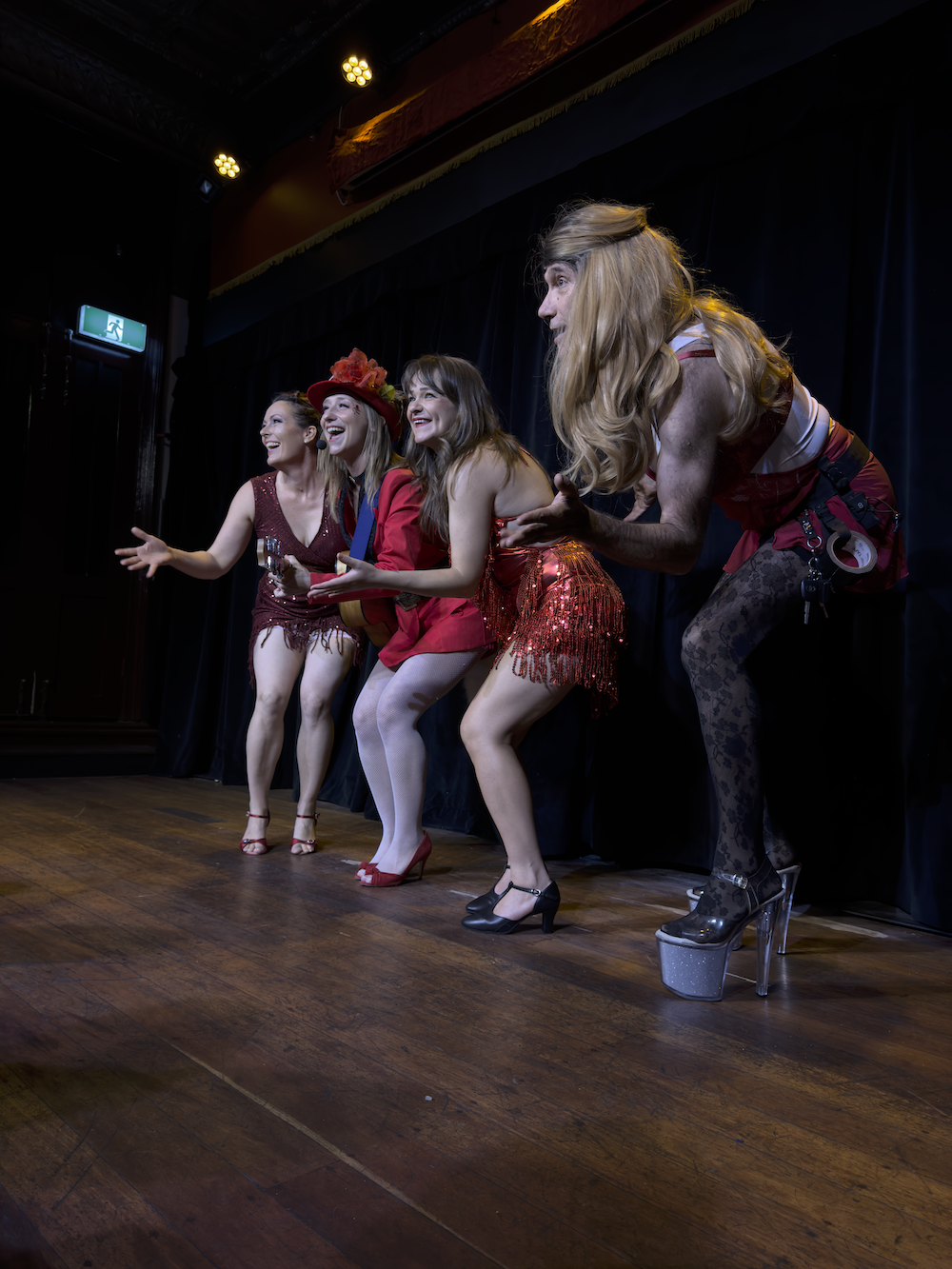
As a whole, Red Flag Cabaret played more as a variety hour than a scalpel-sharp interrogation. There were moments of incisive commentary—particularly when the red flag was pinned to cultural scripts rather than individual quirks—but the show often stopped at recognition. Rupture was easily named; repair was less explored.
Still, in a culture quick to categorise and discard, there was something sly in placing the flags in our hands and asking us to notice how eagerly we waved them. Perhaps the lingering question was not who we flag but how readily we do it.
CAT LANDRO