Review: Little Shop of Horrors at Planet Royale
Little Shop of Horrors at Planet Royale
Wednesday, September 10, 2025
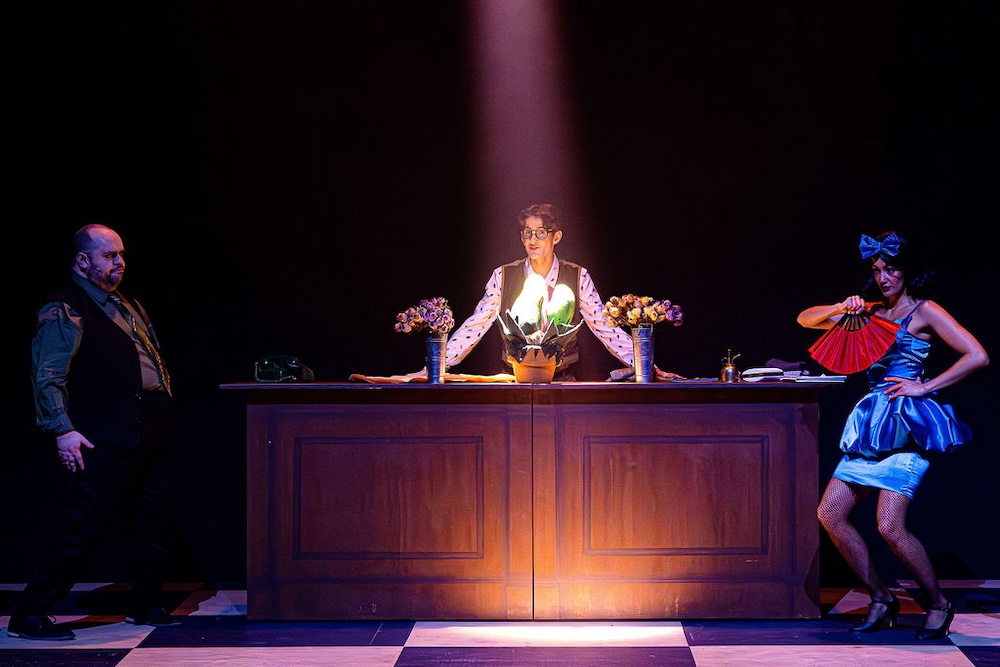
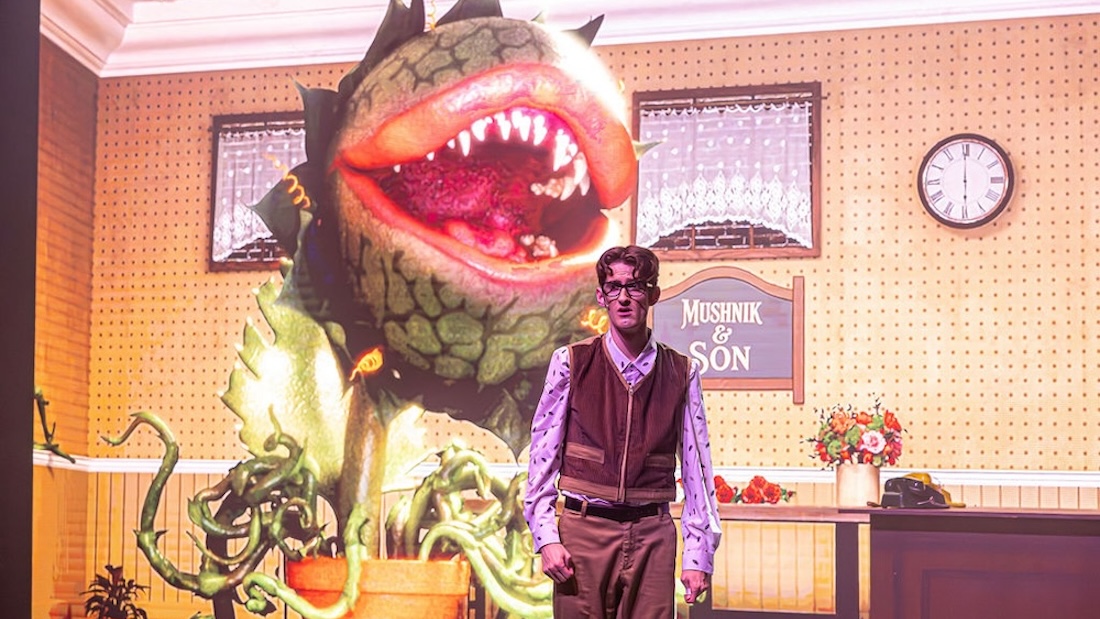
A cult musical about a bloodthirsty plant might not have seemed an obvious sell-out, but Little Shop of Horrors at Planet Royale proved irresistible to Perth audiences. The three-week run was snapped up in a flash, and it was easy to see why. Drew Anthony’s production was camp, darkly comic, and tightly staged, reimagining the off-Broadway favourite with a digital twist: Audrey II appeared on screen, voiced and performed live each night, giving the monster both an uncanny glow and real-time charisma.
The pre-show set the mood with a reel of classic horror trailers—Plan 9 from Outer Space, The Cabinet of Dr Caligari, Vincent Price’s The Haunted Palace, and the schlock lizard-fest, Reptilicus. The teasers primed us for the show to come: a camp-horror sugar rush, as darkly comedic as it would be monstrous. A clever touch, reminding the audience that this show sits in the lineage of B-grade horror cinema as much as Broadway.
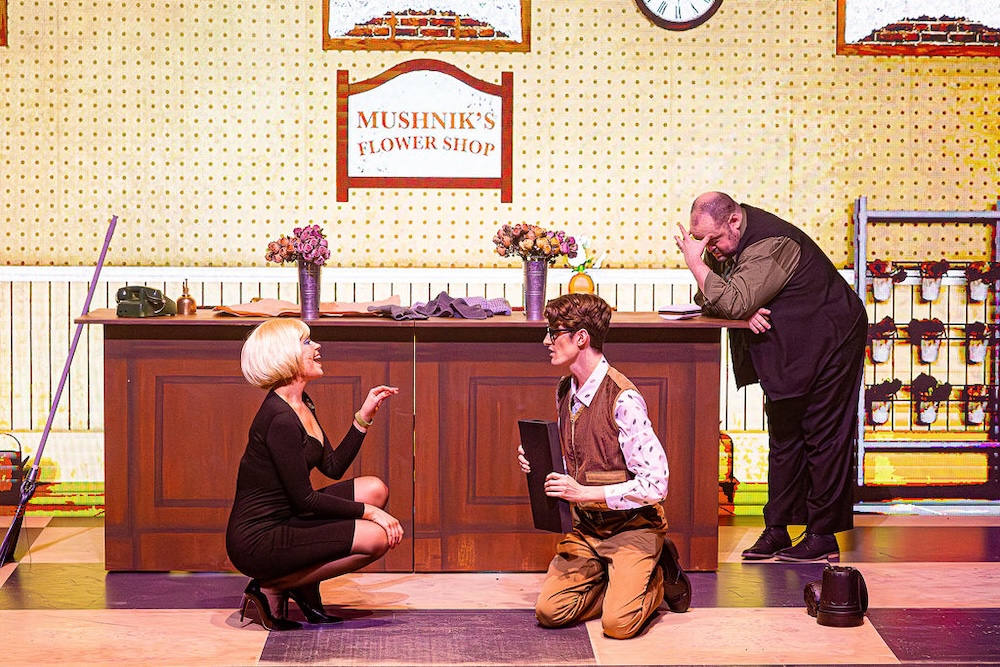
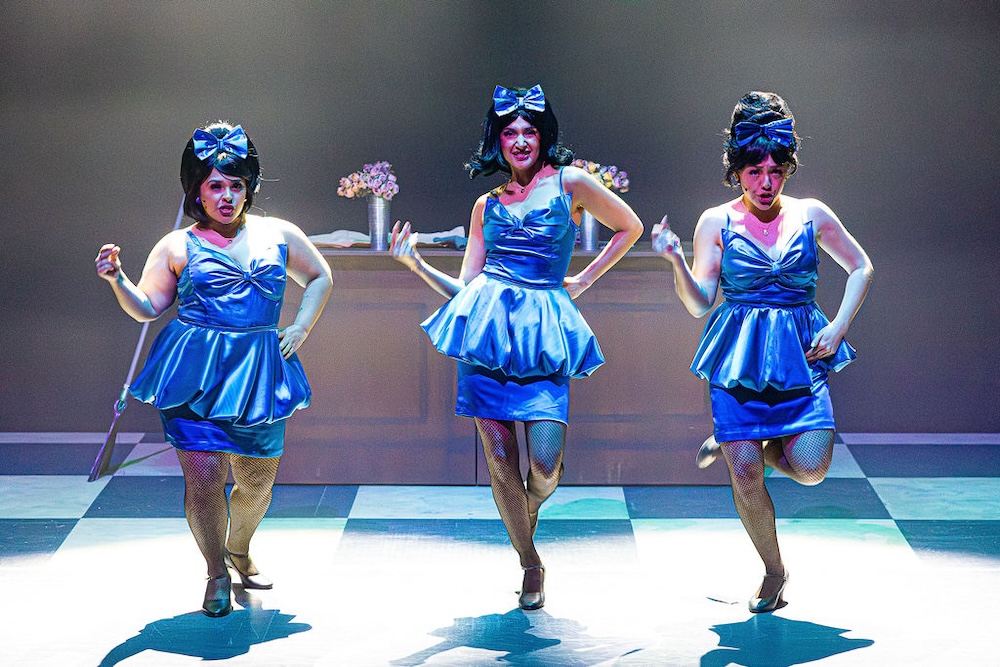
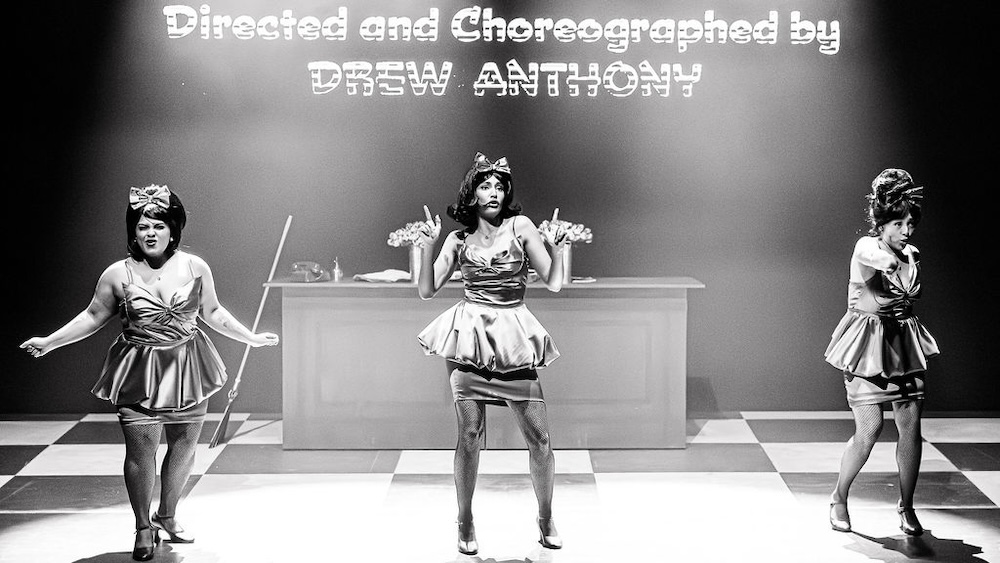
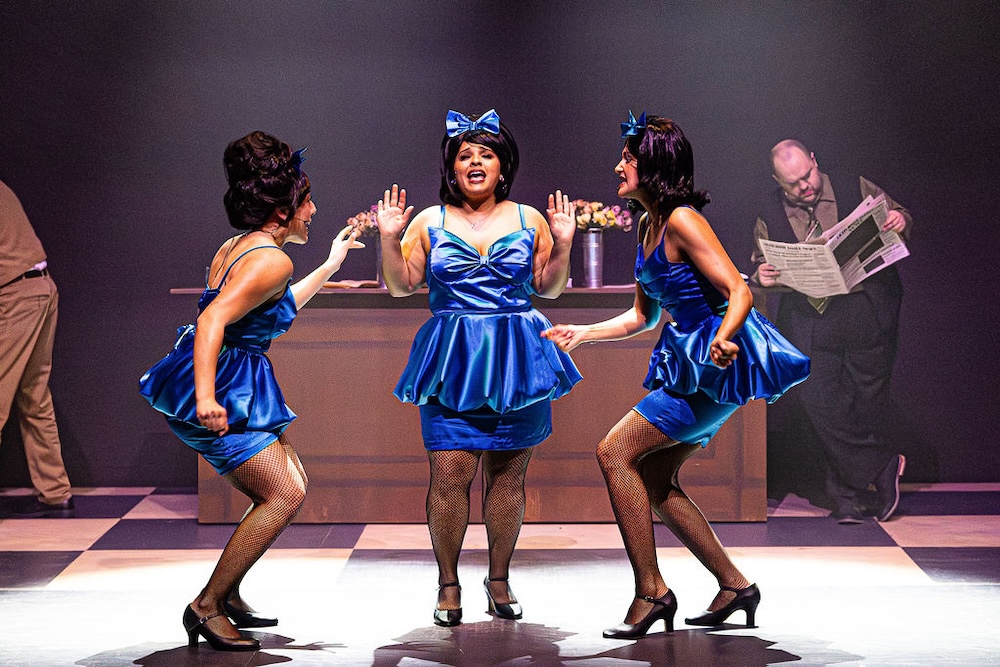
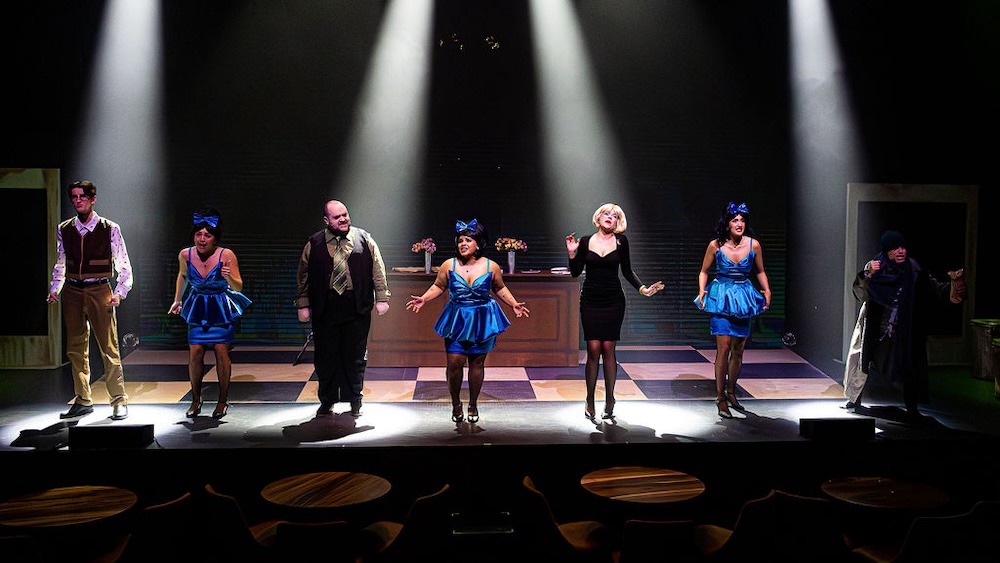
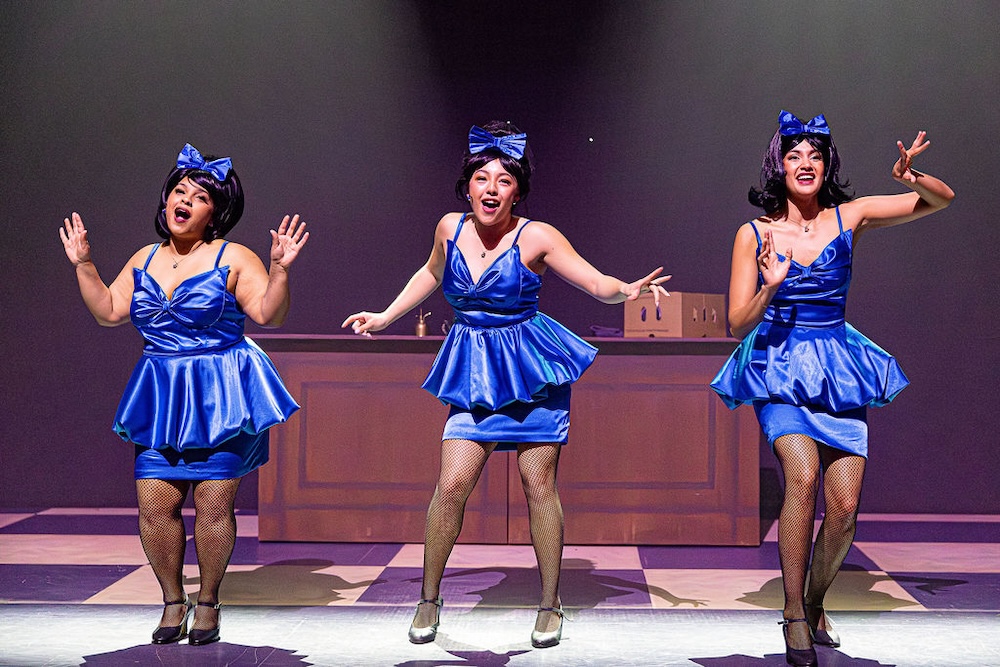
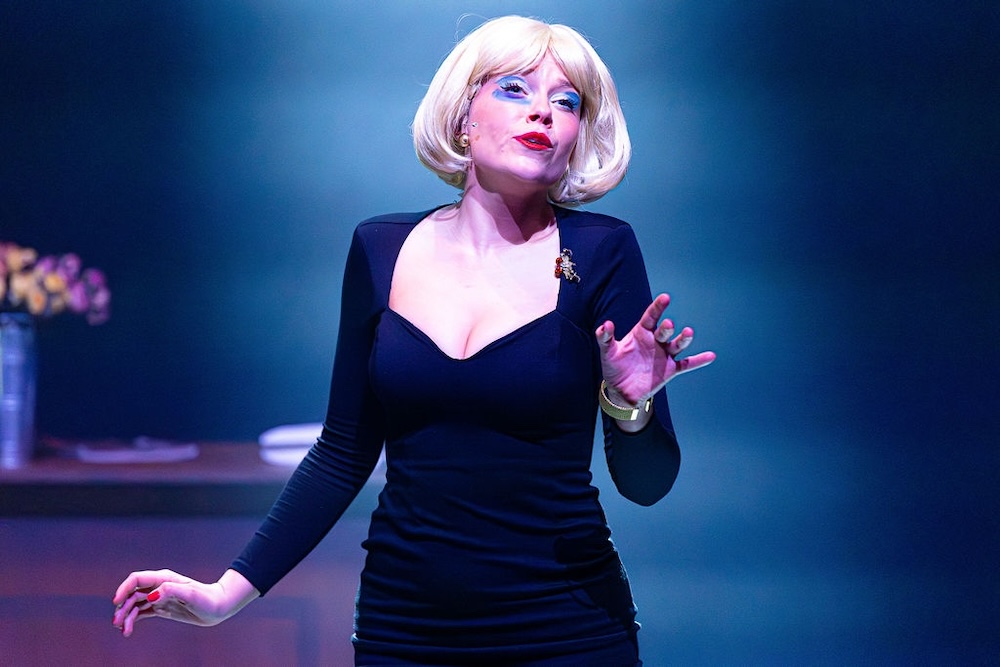
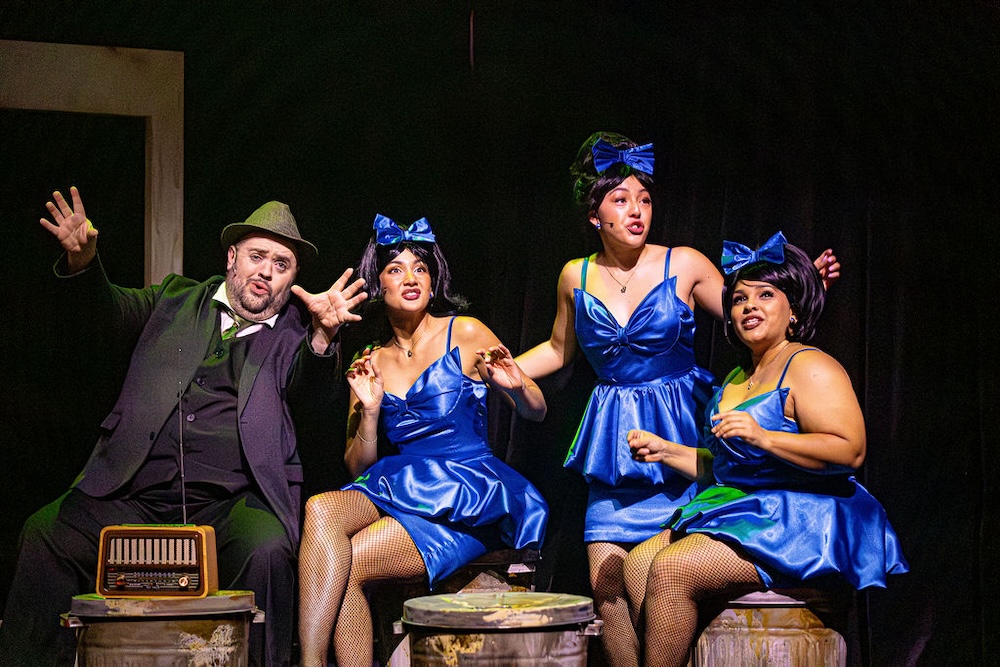
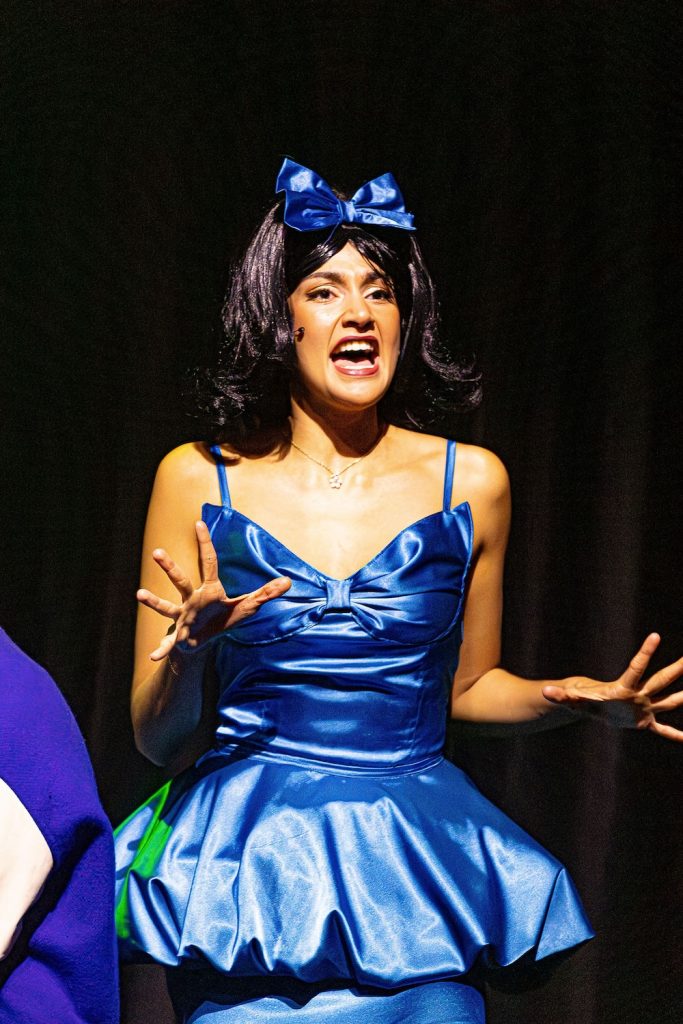
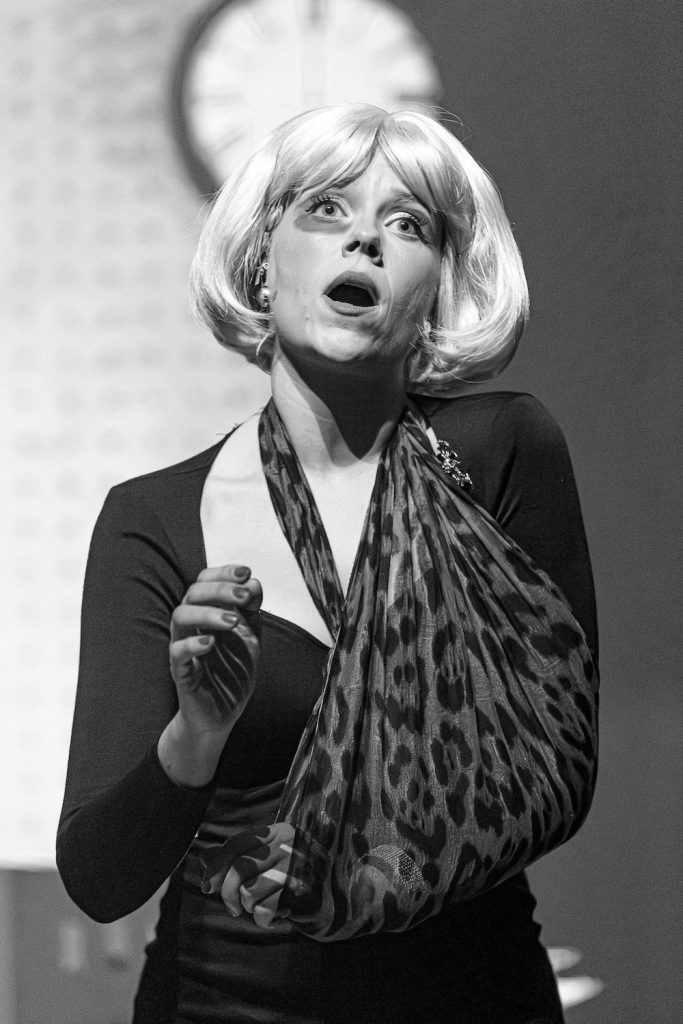
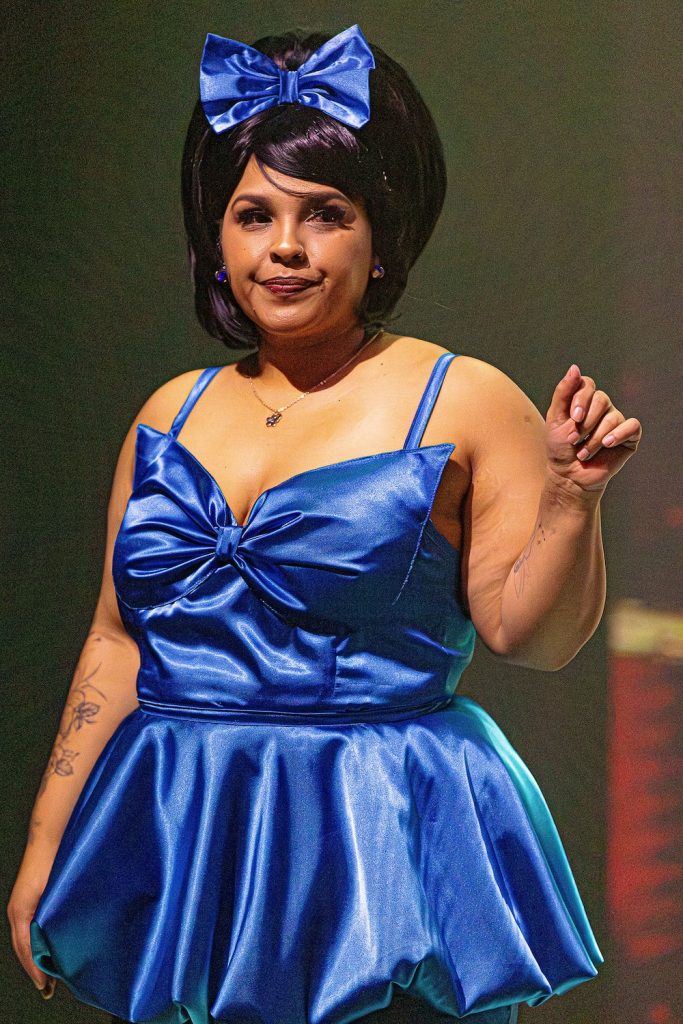
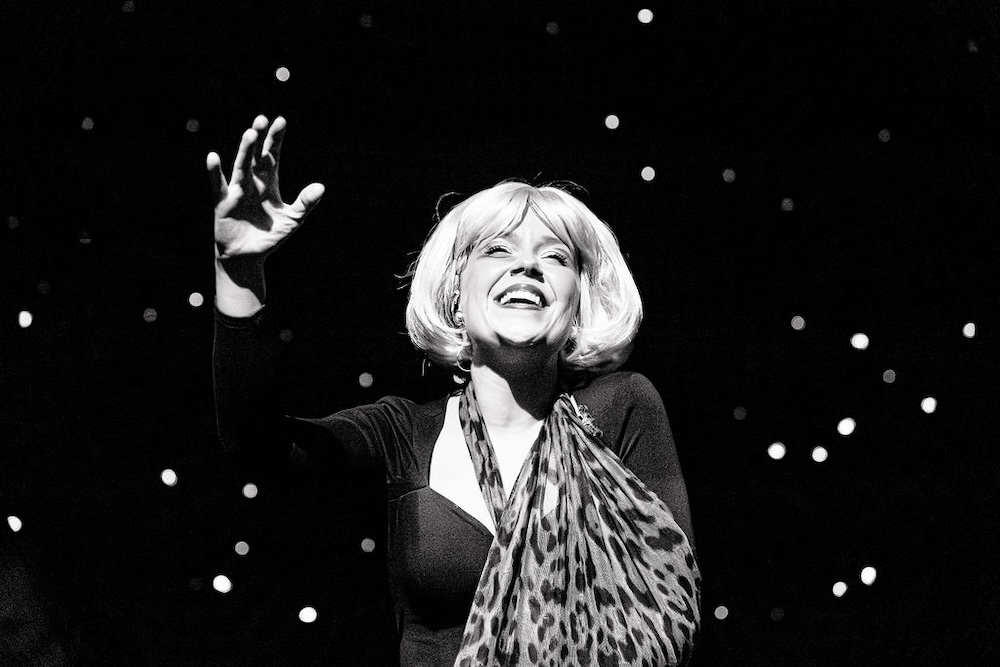
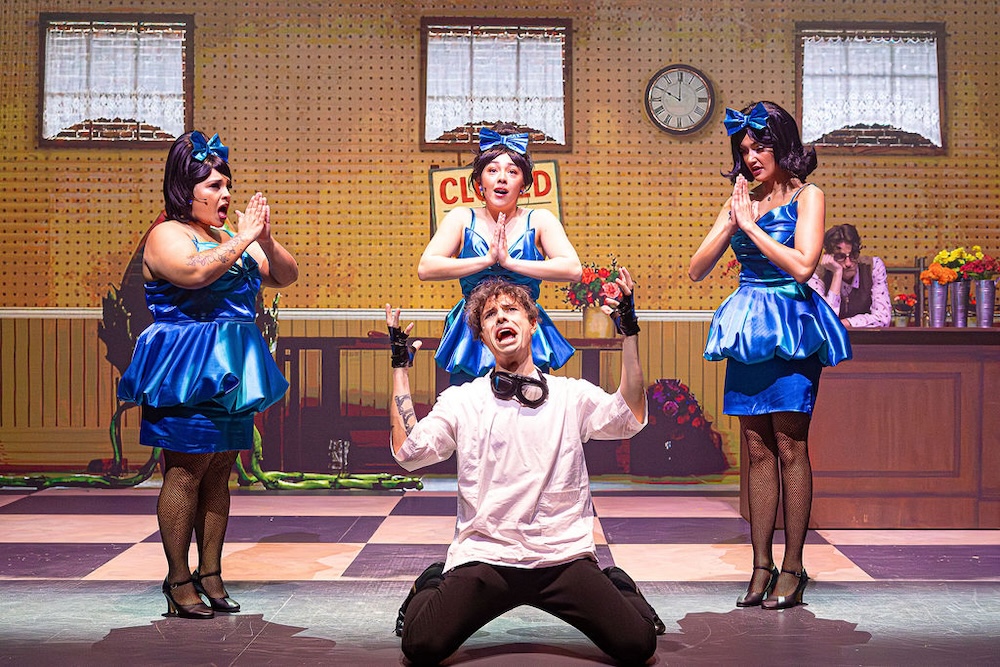
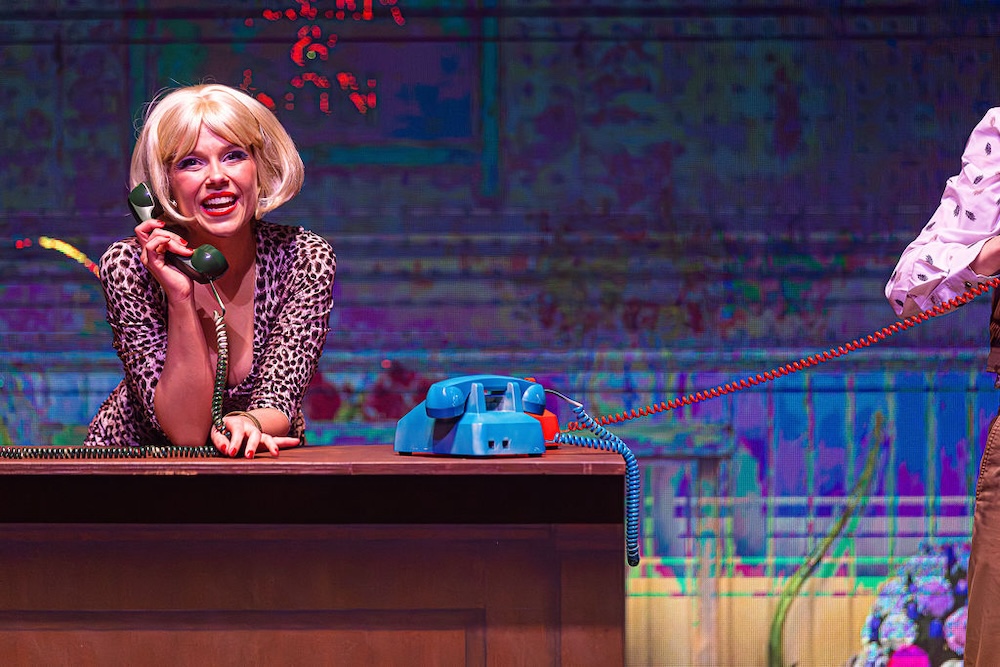
Act One burst open with the familiar trio of “street urchins,” styled here as a Motown Greek chorus in matching blue 80s-does-doo-wop dresses. As fans of the 1986 cult film, we beamed as their harmonies popped and Skid Row came alive. The immersive staging kicked in early with Emily Lambert’s Audrey entering through the crowd—heels tottering, wiggle exaggerated—setting the tone: caricature worn proudly.
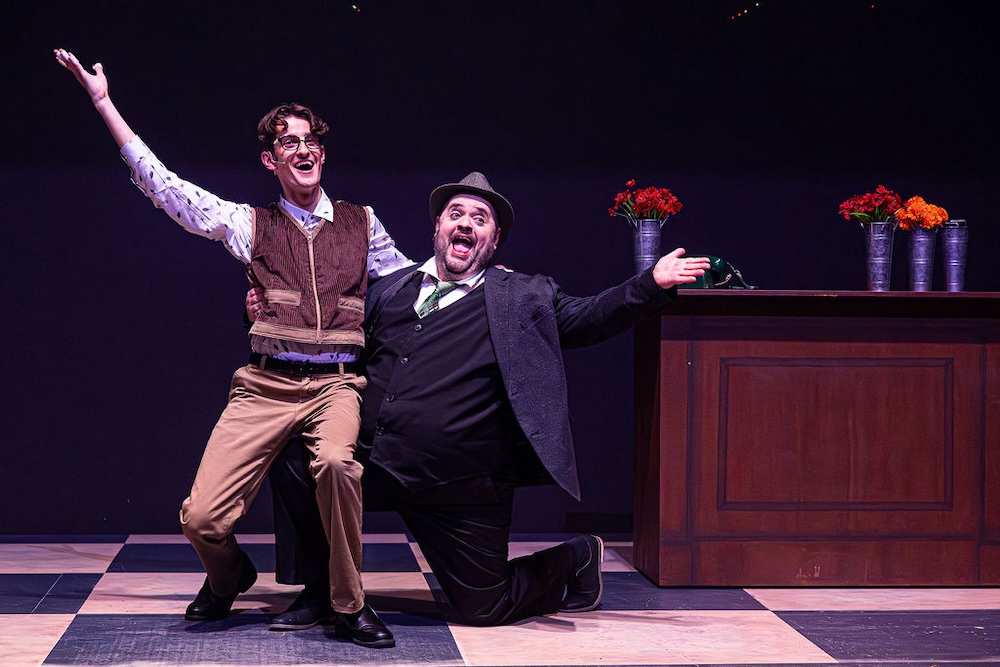
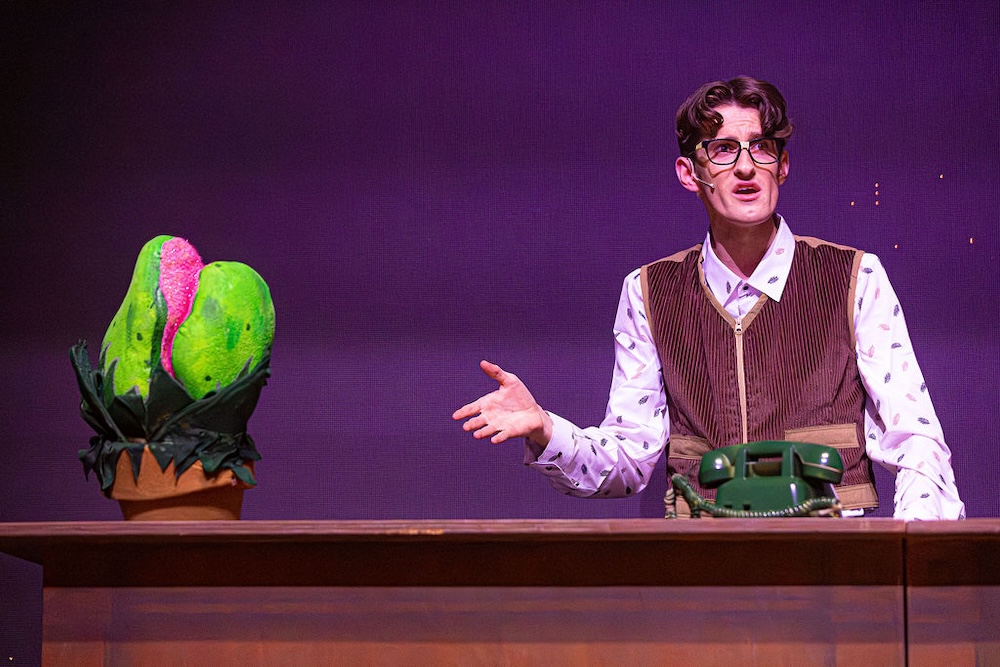
By contrast, Blake Jenkins’ Seymour was awfully dweeby, his posture practically apologising for him (what a belter though, an auditory delight from the lean actor). The early puppet versions of Audrey II were deliberately felt-like and fuzzy, more plush toy than predator, which made the plant’s later evolution all the more striking.
Some moments landed with a different resonance in 2025 than they might have decades ago. Audrey’s relationship with her sadistic dentist boyfriend Orin Scrivello (Noah Skape) was almost painful to watch in the #MeToo era; her obedience and shrivelling trepidation played for laughs but were underscored with discomfort. The desire for her to “make good” was palpable, though one has to wonder what younger audiences might make of this kind of abusive Stockholm Syndrome narrative today.
Her dream sequence, Somewhere That’s Green, was sung with tongue firmly in cheek: a chain-link fence, plastic-covered furniture, and a “huge” twelve-inch TV screen. The laughs landed, but they also underlined the bleakness of Audrey’s low-bar expectations, a skid-row fantasy that felt both dated and eerily current.
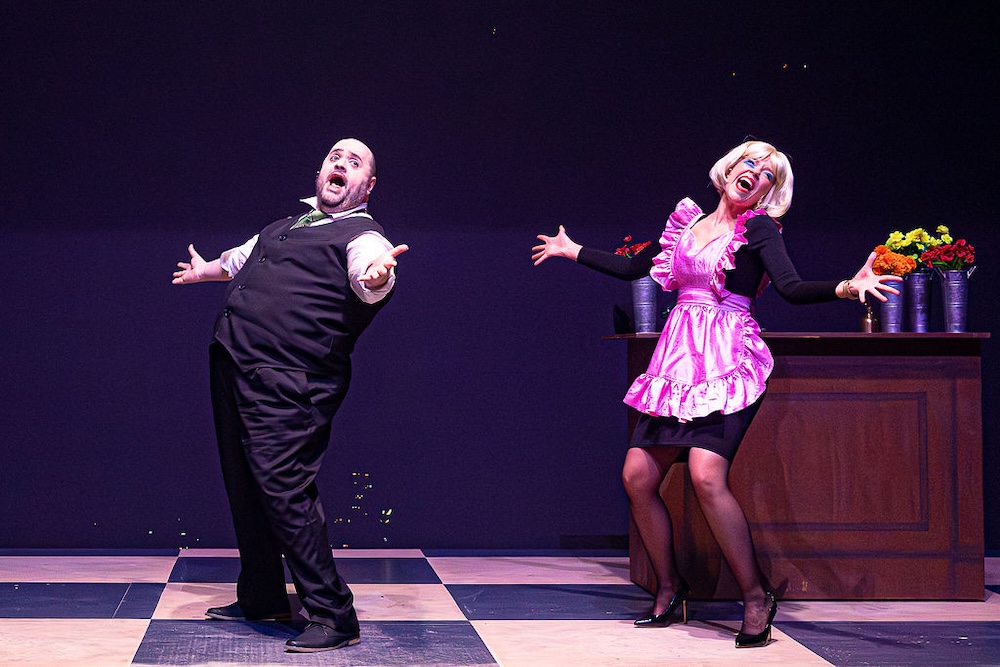
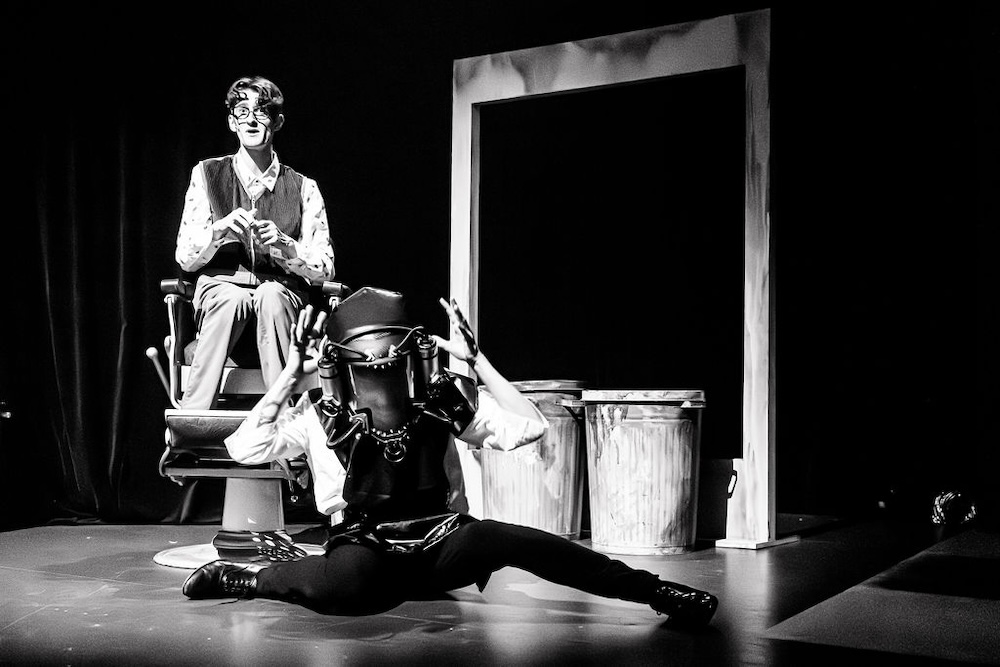
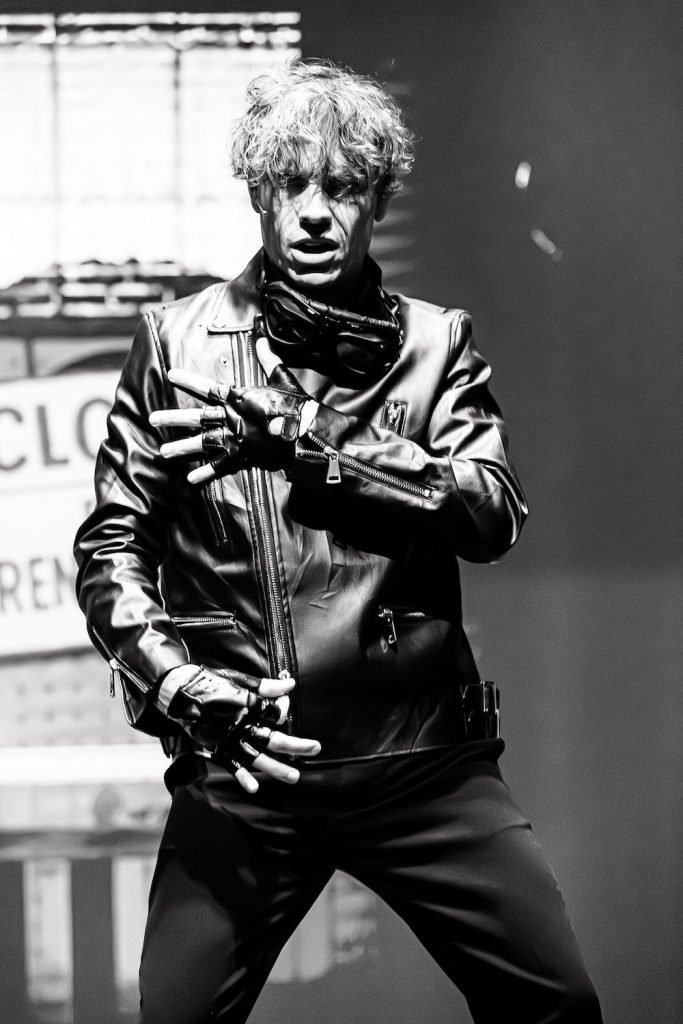
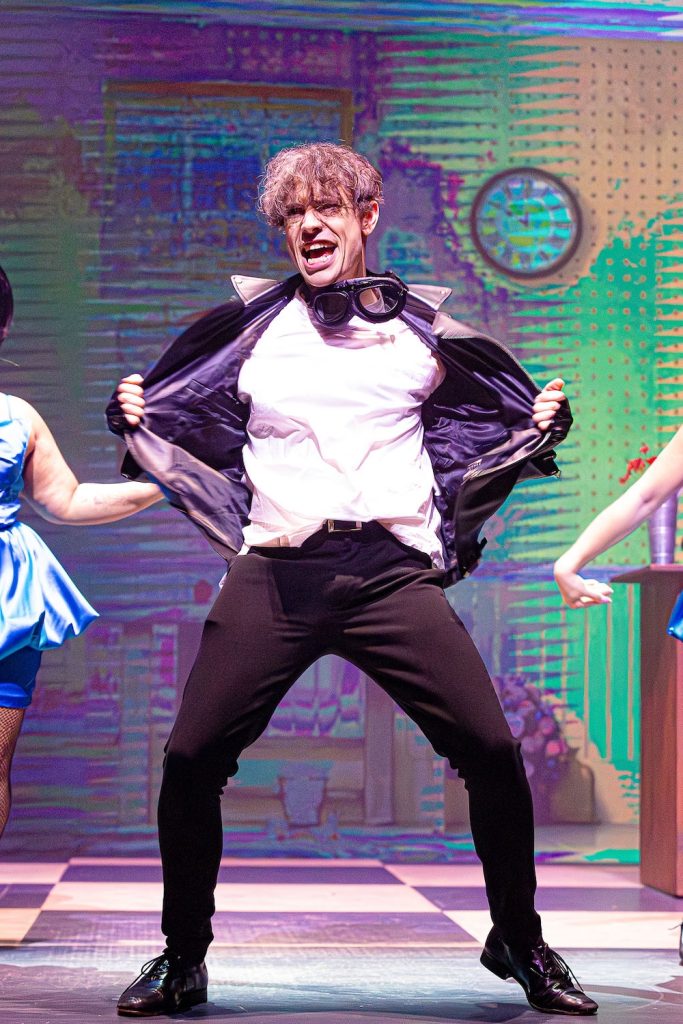
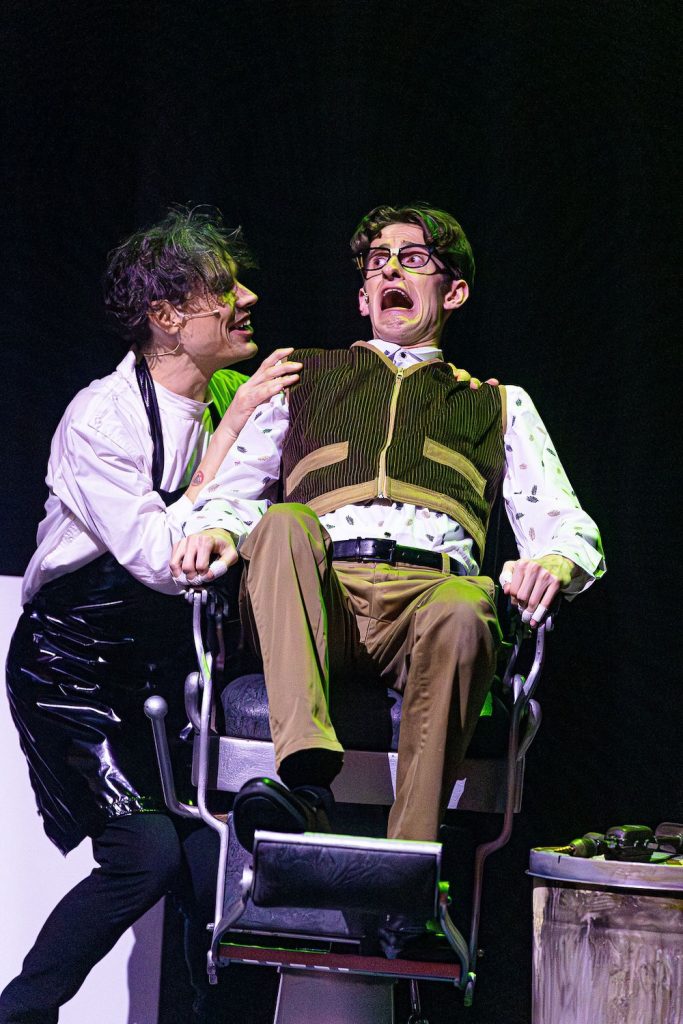
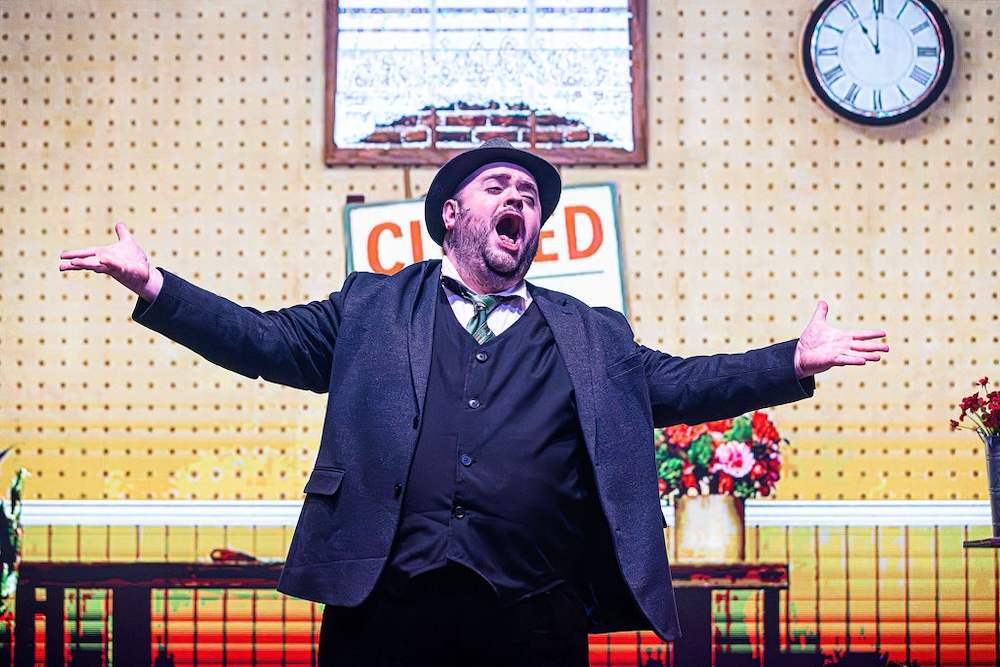
The dentist himself was played for grotesque camp rather than menace—an Elvis-limbed, nitrous-oxide-addled sadist who brought the audience into the act, urging them to “say ahhh” and “spit.” His writhing in a black latex apron, steamed-up gas mask, and kink-coded getup pushed the taboo to the edge, a death trap of a dentist chair and rusty drill sealing the deal.
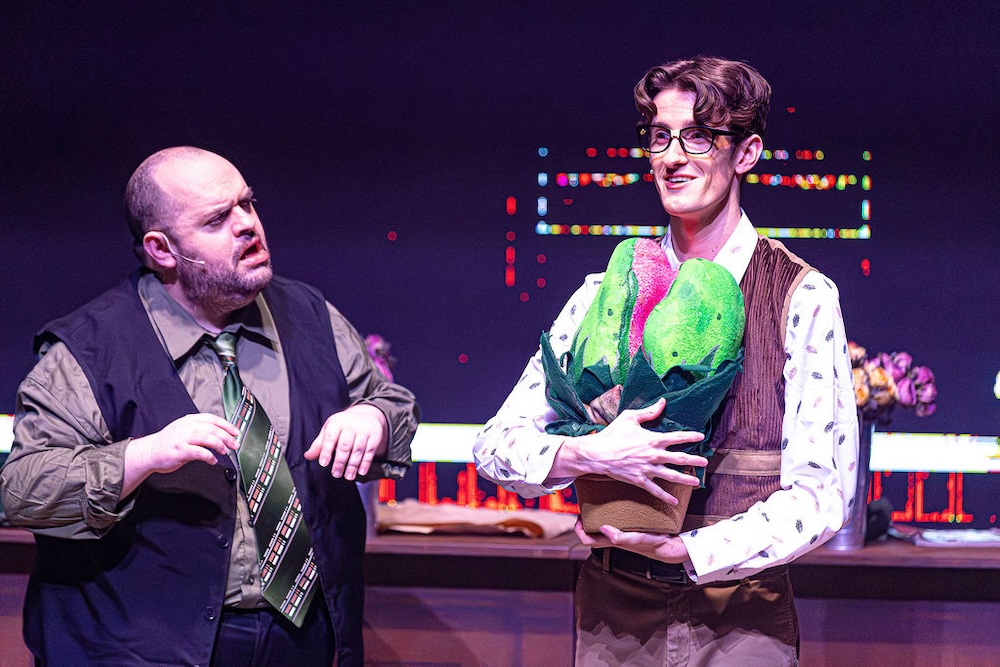
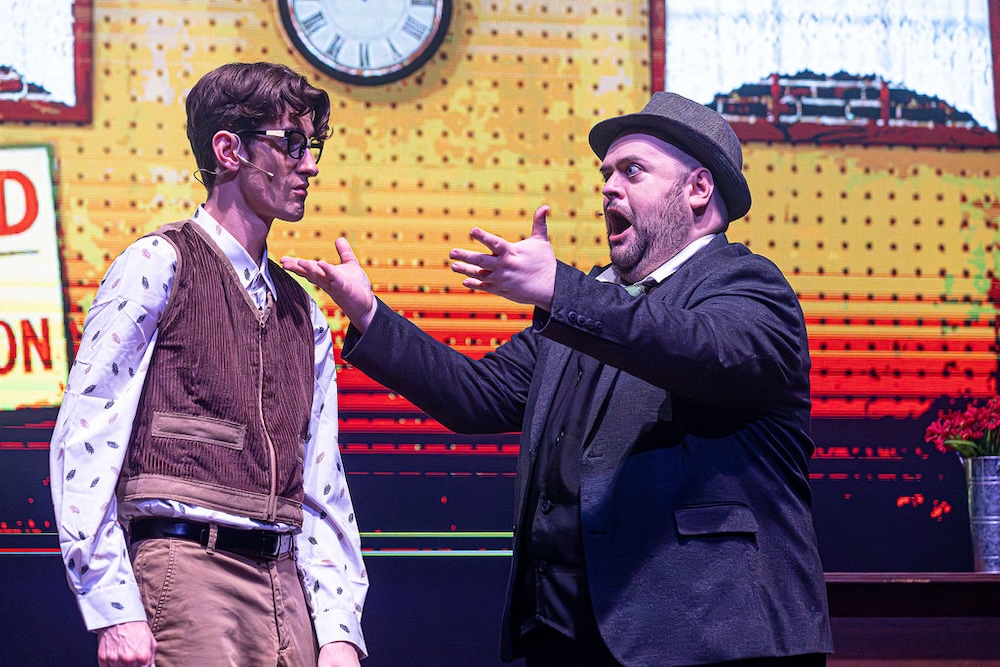
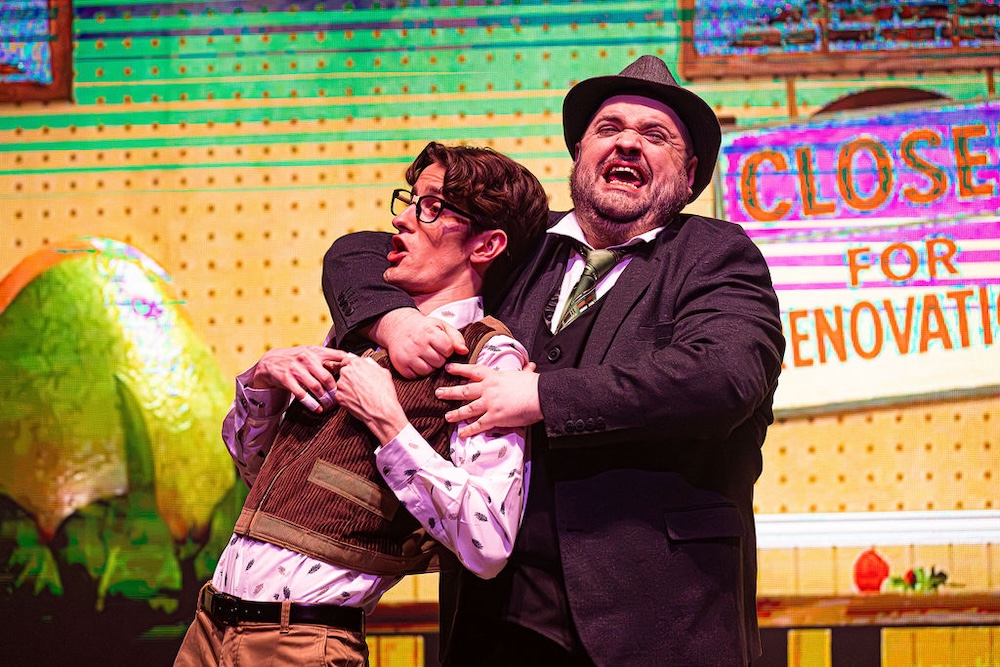
Meanwhile, Tim How’s Mushnik was given room to shine. His plea for Seymour to become his “boychik” spiralled into wiggling hips and a cheeky Yentl nod. Fleshed out beyond mere support, Mushnik became a comic highlight.
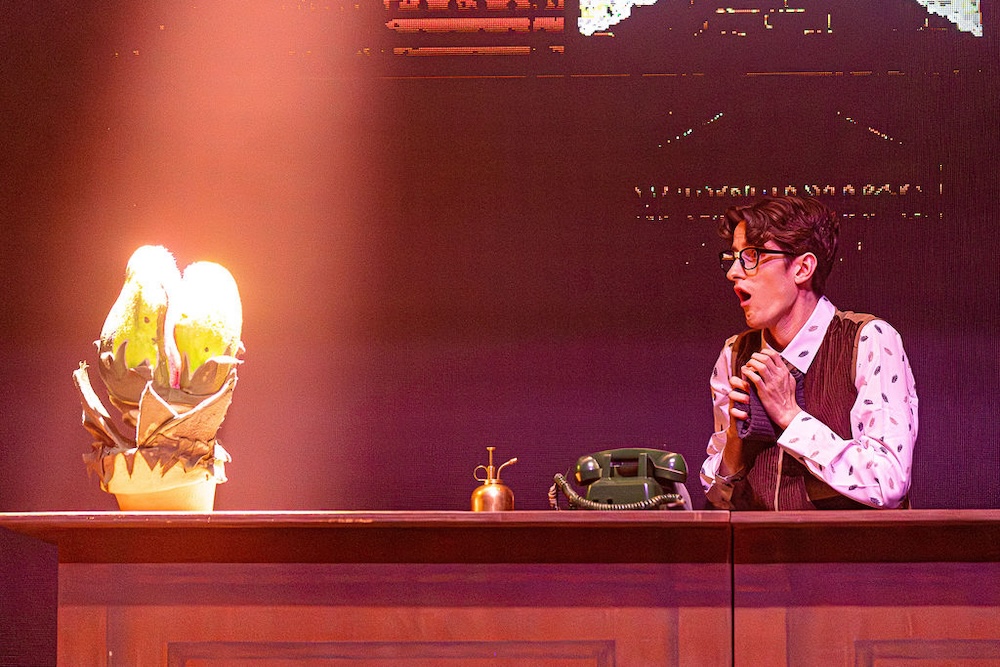
Midway through Act One, Audrey II finally came alive. When the booming voice bellowed, “Feed me!”, it was a thrilling moment—the charisma was almost enough to justify Seymour’s descent. There was subtext here, too: the plant as a metaphor for gentrification and capitalist exploitation, commodifying the Other until it devours you whole. Fleshed out later in the piece, offers of fame and fortune are delivered through Scrivello’s carousel of no-goodniks (we counted up to eight?!), each more absurd than the last.
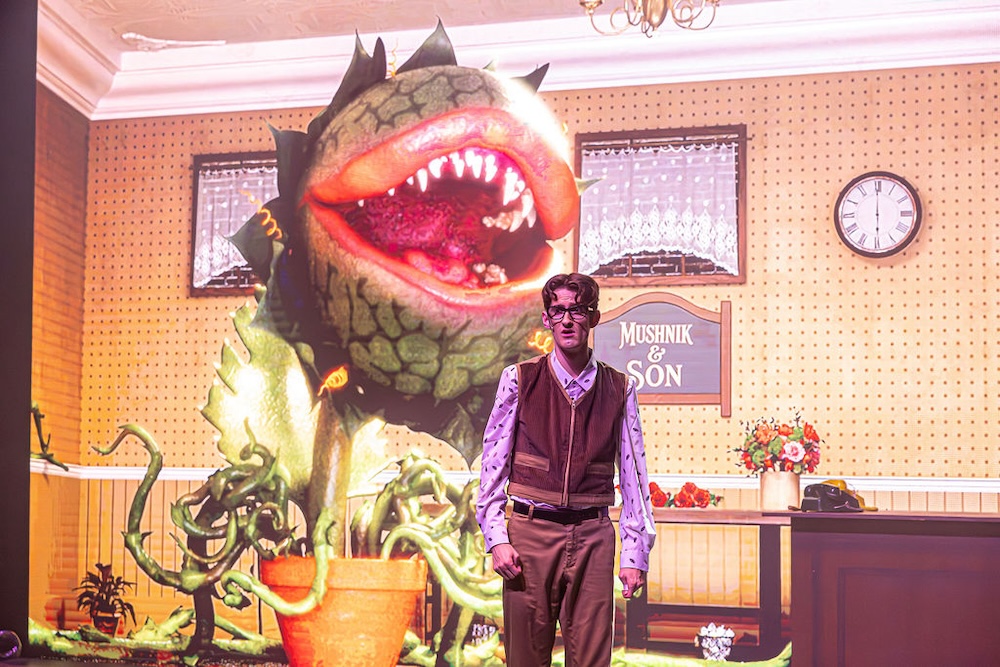
Act Two ramped up the spectacle. Now, in “Mushnik & Son”, Audrey II loomed across the store, ballooning to the ceiling with lecherous tentacles splayed. To the audience’s delight, the murders turned visceral—blood splashing, bodies and limbs swallowed into the screen as characters were gobbled with gleeful theatricality. Suddenly, Seymour soared as a cheesy but heart-swelling highlight, while the show-stealer was undoubtedly Mean Green Mother from Outer Space—an explosive bop with baby bulbs chiming in as a chorus to Clay Darius’s rich, soulful growl.
The Motown trio kept the energy sharp and sassy throughout, anchoring the chaos from their corner. And as Audrey II’s watermelon-pink lips smacked against muted digital wallpaper, the grotesque contrast shone: the “big green goldmine” was both comic and monstrous, a larger-than-life screen presence that somehow still felt menacingly real.
The finale offered a coy resolution. Seymour and Audrey seem poised to reach their American dream, only for the audience to be left with a hint that the menace was not extinguished but waiting to sprout again.
At around two hours, this Little Shop of Horrors didn’t reinvent the wheel, but it did cleverly fuse traditional staging with digital flair. If the dentist was more skin-crawling than terrifying, and if Audrey II’s digital form lost some tactile puppetry charm, the trade-off was a sleek, immersive, and wickedly funny production. No wonder the run sold out so quickly—this one was a killer.
CAT LANDRO
Photos provided by Drew Anthony Creative