
Review: Keanu Nelson at Fremantle Buffalo Club
Keanu Nelson at Fremantle Buffalo Club
w/ Business Partner, DJ Sliding Doors
Thursday, August 13, 2026
For a Thursday night, the Buffalo Club felt conspicuously like a Friday. The room was packed, with conversation accumulating into a thick layer of its own—less a reverential listening crowd than a word-of-mouth social happening where, perhaps, being seen carried almost as much currency as hearing what was onstage. Yet this looseness proved strangely fitting for Keanu Nelson’s much-anticipated WA headline debut: when he finally began to sing, his voice cut through without needing to compete. It made a noisy room lean closer.
Presented by local promoters Wishful Thinking with Nelson’s label Efficient Space, the night offered a thoughtful through-line between left-field electronics, dub, homespun R&B and intimate songcraft.
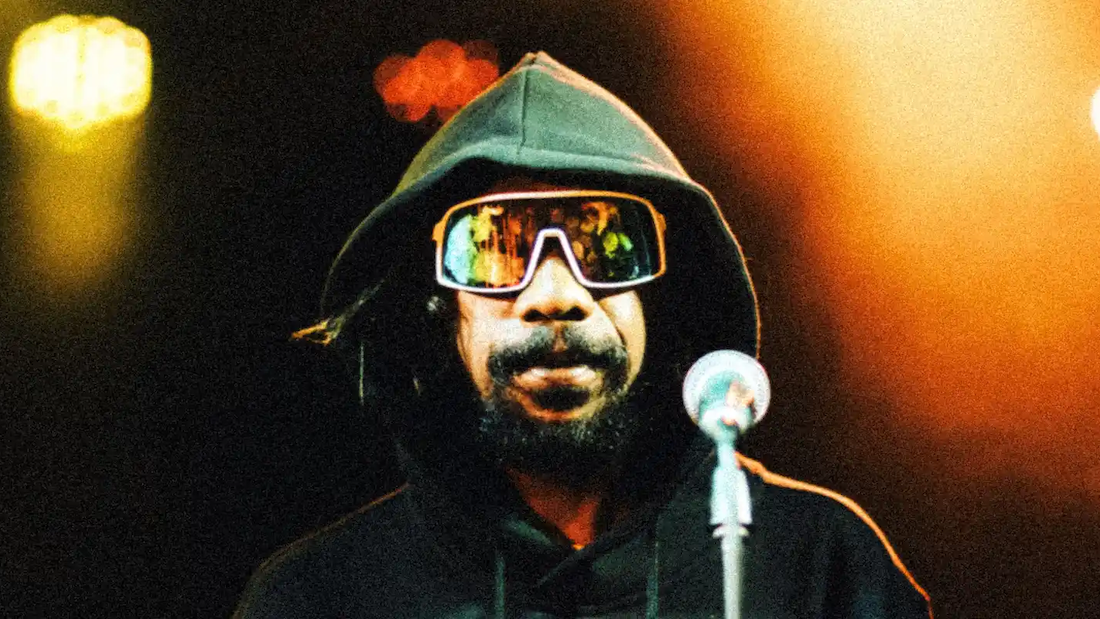
Following opening selections from DJ Sliding Doors, Business Partner—the solo project of Warsame Hassan—appeared almost as though donning a role: close-fitting cap, slim metal-framed sunglasses and a physical bearing transported from a grainy 1990s R&B video.
Performing alone with only a microphone and small mixer, Hassan built from pre-programmed material without the insulating presence of a laptop. The resulting bedroom lo-fi carried R&B more in spirit and physicality than polished aesthetic. One arm crossed the waist while the other folded inward; feet pulsed and stepped lightly as Hassan felt through the grooves without slipping into studied posturing.
Their light, androgynous voice multiplied into overlapping parts, as though Hassan were performing every member of a vocal group at once. Repeated refrains and simple structures became intoxicating through their lack of cleanliness: vocals distorted, smudged and sat slightly askew from the beat. There were echoes of How to Dress Well and early Burial in the way nostalgic R&B gestures were half-recalled, then buried beneath reverb and degraded texture. Nothing fit quite where convention dictated it should; voice and rhythm rubbed loosely against each other until the seams became the point.
After a delay, Keanu Nelson emerged alongside producer Yuta Matsumura, whose guitar, melodica, mixer and electronic backing replaced the Casio presence one might have anticipated from debut album Wilurarrakutu. Hood raised over his head and hands buried deep in his pockets, Nelson seemed to brace himself against the room, taking quiet measure of the sizeable crowd.
Then came that voice.
Light but penetrating, Nelson’s higher register carried none of the forceful projection one might expect to silence a crowded venue. Its effect came instead through emotional directness: sustained notes held just long enough to expose their ache, plainspoken phrases gathering weight through repetition. The songs began as private poems in Nelson’s notebooks—about family, home and loss—and retained that intimacy before a full room. Listening could feel almost intrusive, as though thoughts never intended for outsiders had been made audible.
The opening number, Kapi Tinna, stopped us in our tracks. Nelson sang in Papunya Luritja while Matsumura drew emphatic, shoegaze-like pulls from his guitar. Pitchy tones fluttered around the vocals like birds, but Nelson remained the fixed point: relatively still, hood sheltering his face, his voice making the gesture his body withheld.
Family followed with a cowbell bop from the drum machine, Nelson still looking downward. Fleeting glances into the audience suggested a performer gradually acclimatising rather than seeking to command it. His vocal complemented the Casio-like palette without disappearing into it, the repeated invocation of family making its subject unmistakable.
Nelson moved between Papunya Luritja and English throughout the set. For listeners unable to understand the former, occasional English phrases became footholds, though the songs’ feeling did not depend upon translation. Meaning also travelled through cadence: the tender stretch of a syllable, strain at the crest of a line, or a phrase repeated until it felt less like a lyric than an attempt to hold onto something.
The relationship between Nelson and Matsumura proved gently revealing. Matsumura initially carried the introductions, explaining Nelson’s connection to Papunya and invoking Warumpi Band, the trailblazing group from the same community. When he protested, “I don’t want to do all the talking,” he coaxed a smile from Nelson—and, finally, the hood came down.
Songs from a forthcoming second album expanded beyond the debut’s skeletal lo-fi framework. Layers swelled into atmospheric soundscapes bearing traces of field recordings and Country, but Nelson’s voice remained their emotional anchor, rising through the denser production rather than being crowded out by it.
Returning to Wilurarrakutu with Kutjupa Tjuta, a sustained choral tone gathered beneath glistening electronics. Matsumura joined Nelson in language, the two alternating lines before singing together. The shift from Nelson’s solitary voice to the two voices united carried more power than an instrumental crescendo. Their solidarity felt warm and inviting, opening the song outward without disturbing its private centre.
Matsumura explained that distance meant they did not see each other often enough to practise regularly, prompting another shy smile from Nelson. That separation seemed embedded within the music: their playing was sparse but attentive, leaving Nelson’s words air even as reggae and dub moved through the drumbeats and restrained sci-fi sounds flickered from Matsumura’s guitar.
Introducing an older song, Matsumura stepped towards the rear of the stage while Nelson remained alone at its front. Then came Lonely Man. “Thinking about my home far away,” Nelson sang, watching a sunset in his mind while standing thousands of kilometres from Papunya. The language could scarcely have been simpler, yet it landed with devastating clarity.
From what we insist upon calling the world’s most isolated capital city, the song made distance feel relative. Isolation is not merely geographical: one can feel it surrounded by people or entirely connected while alone on Country. Nelson’s lyrics held both states together—the loneliness of being far from home and its enduring presence within memory, voice and language.
By the closing stretch, smiles passed more readily between the two performers, and Nelson’s voice had quietly reorganised the room around it. He offered little conventional showmanship, but the songs needed none. In a room full of chatter and bodies, he created his own form of proximity: singing across distance, language and separation until far away did not feel so far at all.
CAT LANDRO