Review: Fremantle Biennale at P&O Hotel — Part Three
Fremantle Biennale Sanctuary 2025 at P&O Hotel — Part Three
Saturday November 30, to Sunday November 31, 2025
As the closing capstone of Fremantle Biennale’s Sanctuary, Room Service promised immersion: a ticketed, time-bound encounter unfolding room by room inside a former lodging house in Freo’s West End. What it delivered was not sanctuary in any gentle sense, but something far more abrasive—a pressure chamber where refuge, access, labour, intimacy and power were repeatedly tested under constraint.
Housed in the former P&O Hotel, this was never a neutral container. Port-city residue clings to the site: transience and diaspora, temporary beds, transactional intimacies, sailors passing through, and illicit economies humming quietly behind closed doors. Later housing the University of Notre Dame, the building now sits vacant, privately owned and briefly repurposed for culture. It is not a gallery cube, nor a functioning hotel. For the Biennale, it was a borrowed interior, owned, managed and momentarily “gifted” for art—an arrangement that raised its own questions about power, access and benevolence that Room Service never fully resolved, particularly in a city where vacancy is normalised while shelter is not.
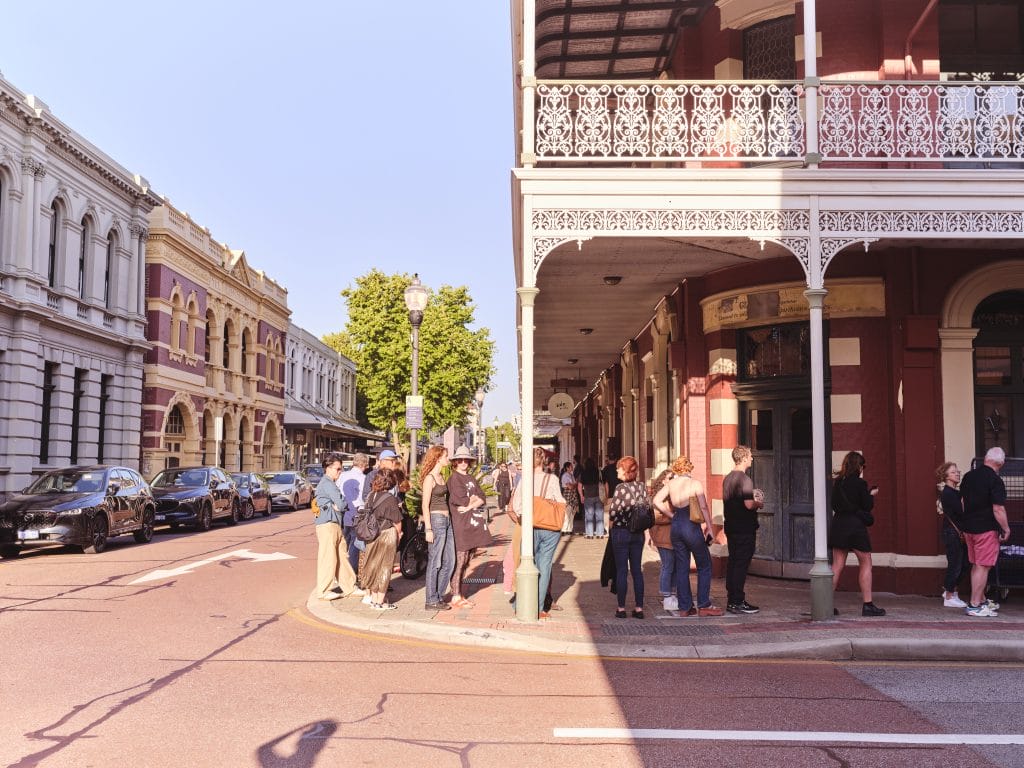
Those contradictions surfaced before entry. Despite strict capacity limits, audiences were instructed to gather early in a cramped, unventilated lobby on a hot Fremantle day, bodies packed together for fifteen minutes before being admitted upstairs. For an event concerned with care and safety, this bottleneck felt poorly considered. Sanctuary did not begin with welcome; it began with discomfort.

Access issues were impossible to ignore. The exhibition unfolded entirely upstairs, reinforcing a hierarchy of who could physically participate. While an assisted access tour was observed—guide dog in tow—this felt less like meaningful inclusion than an exception carved out within an experience otherwise structured around stairs, speed and crowding.
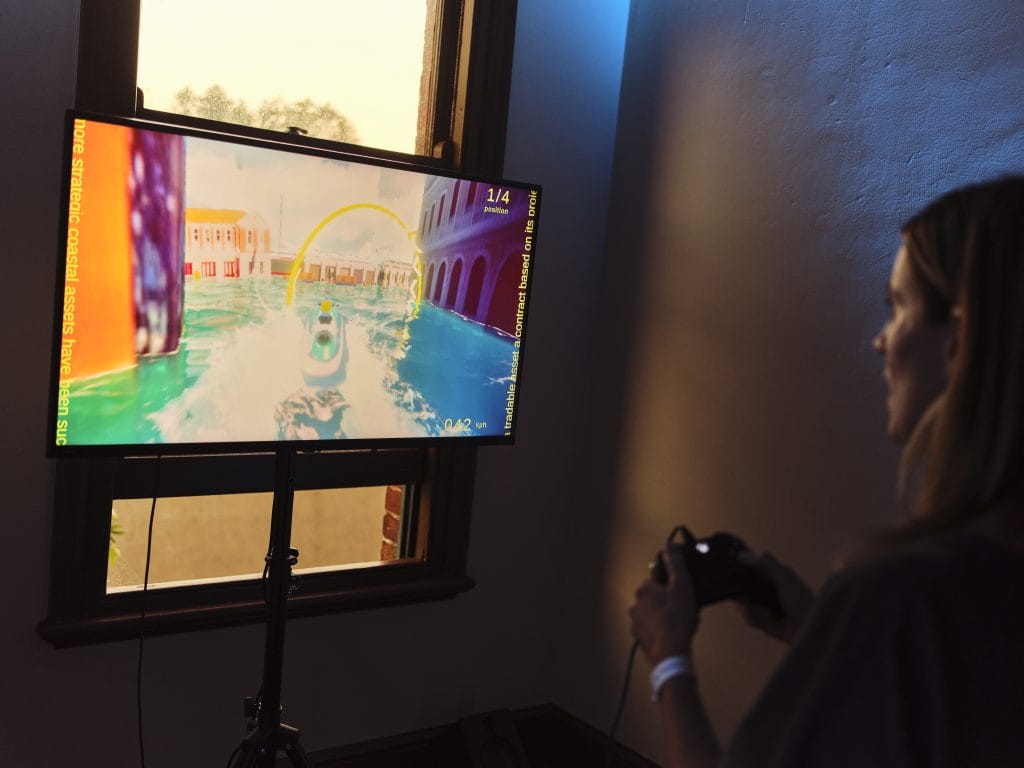
Once released upstairs by the ringing of a bell, the experience accelerated rapidly. Visitors were given one hour to navigate 30-odd rooms. The effect was immediate: a frantic economy of attention. The first ten minutes felt like triage—quick judgements, snap decisions about where to linger, where to skim, and what to abandon. This wasn’t the languid drift encouraged by the Biennale’s outdoor works or contemplative installations elsewhere across the city. It felt closer to a live-action video game: narrow corridors, branching paths, bodies colliding, sound bleeding through walls and a constant sense of being behind.
The building intensified the pressure. Long, tight hallways funnelled people past one another. Rooms were small, often dark or humid, and acoustically porous. Voices stacked. Performances overlapped. Gallery hush was replaced by chatter, laughter and negotiation. If this was a hotel, it was one in crisis—overbooked, overstimulated, running hot.
And yet, within that chaos, moments of extraordinary clarity emerged.
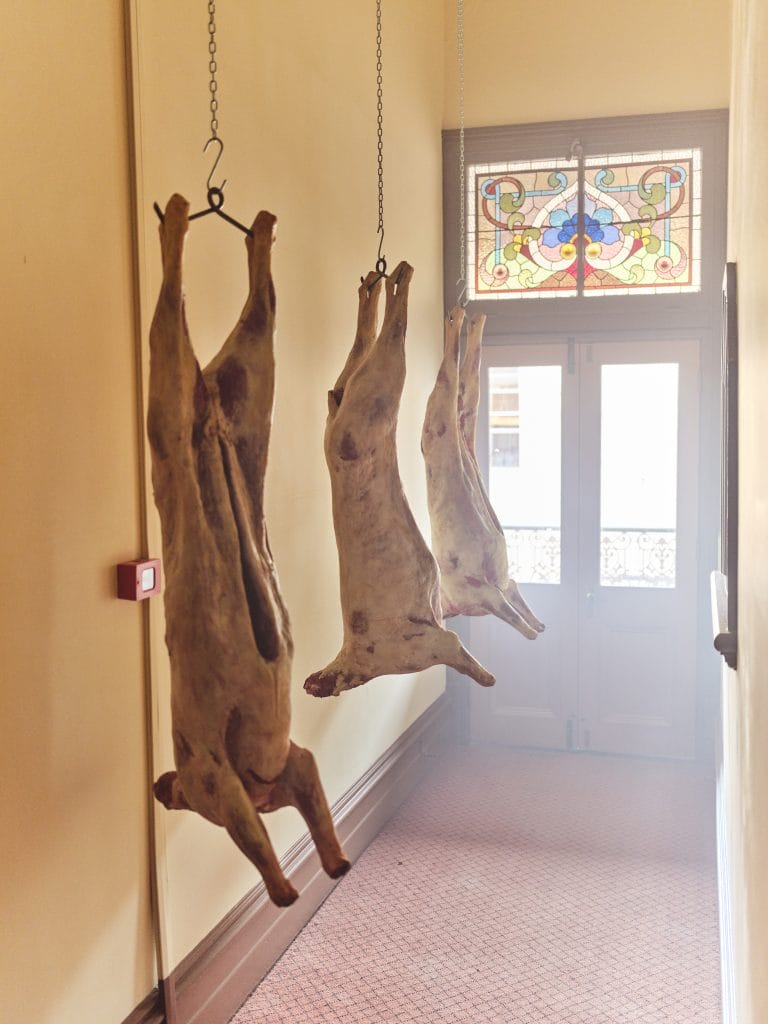
At the top of the stairs, visitors were greeted warmly by staff in Room Service uniforms—standing besides lamb carcasses hanging from the ceiling. Hospitality and menace collided immediately. Discovery, play, threat and absurdity were introduced in a single gesture. To the right, the Common Room was occupied by Henge Queens, performing a looping 15-minute ritual. The space offered seating and absorption, though this felt more like occupation than retreat. Sanctuary here was collective, embodied and temporary.
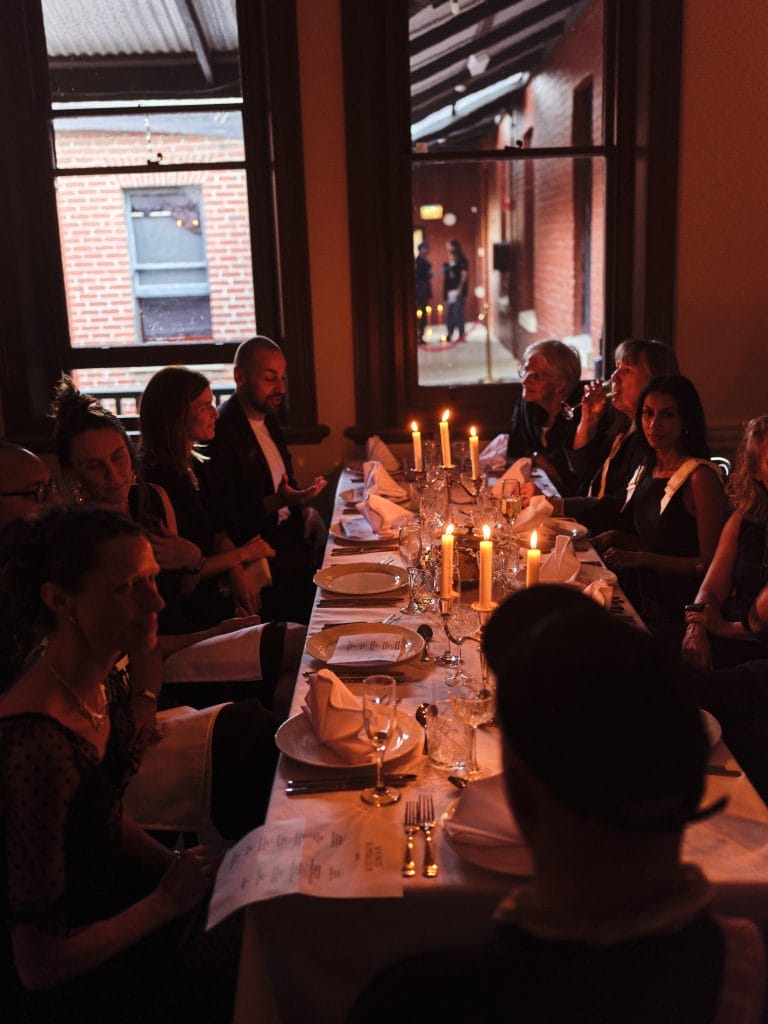
Further along, rooms oscillated between voyeurism and invitation—or its denial. Tom Muller’s staged dinner party—thirteen diners born on the 13th in Room 13—unfolded behind a threshold you could not cross. Life as performance art continued regardless of audience, reducing the viewer to a passer-by. The work quietly resisted the demand for access, suggesting that not all refuge is consumable.
Questions of access and exclusivity were foregrounded in Max Barton’s closed-door room. Names were scrawled into time slots on the door, many incompatible with visitors’ allocated hour. Whether intentional or not, the effect was telling: desire sharpened by denial. I like to think the door itself became the work, staging scarcity as both lure and control.
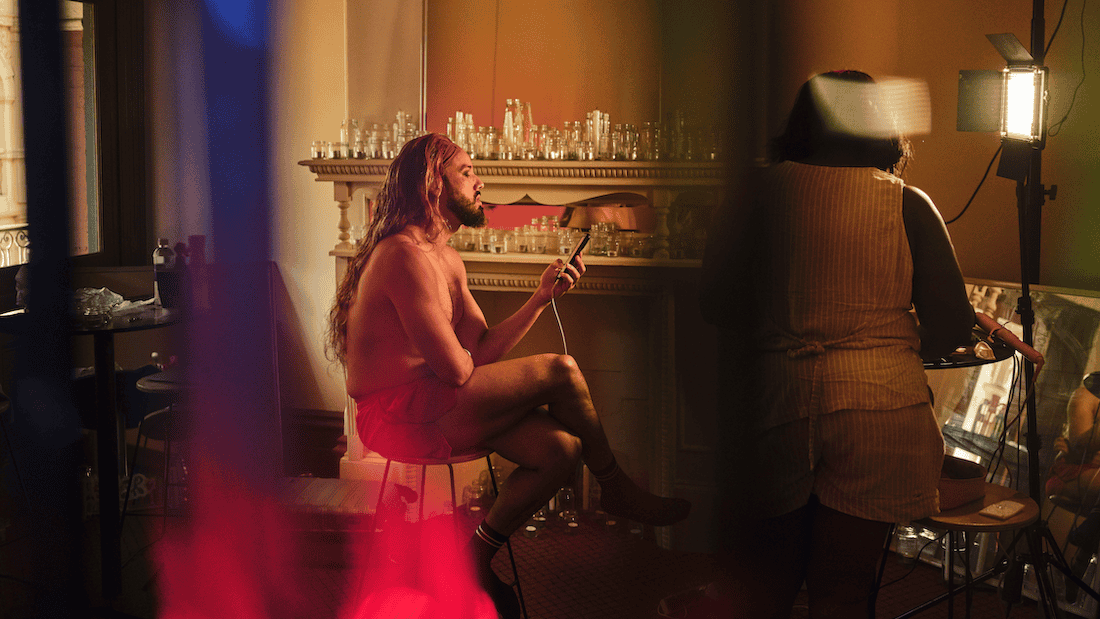
Some of the strongest works centred displaced or marginalised bodies seeking—or offering—sanctuary. Mossy Jade’s durational performance rewarded return visits. First encountered empty—CCTV camera, wet sheet, tiled plinth, dead fish, smashed porcelain—the room later became inhabited, transformed by their unclothed bodily presence, gendered surveillance and decay. In an exhibition governed by speed, this insistence on duration felt quietly defiant.
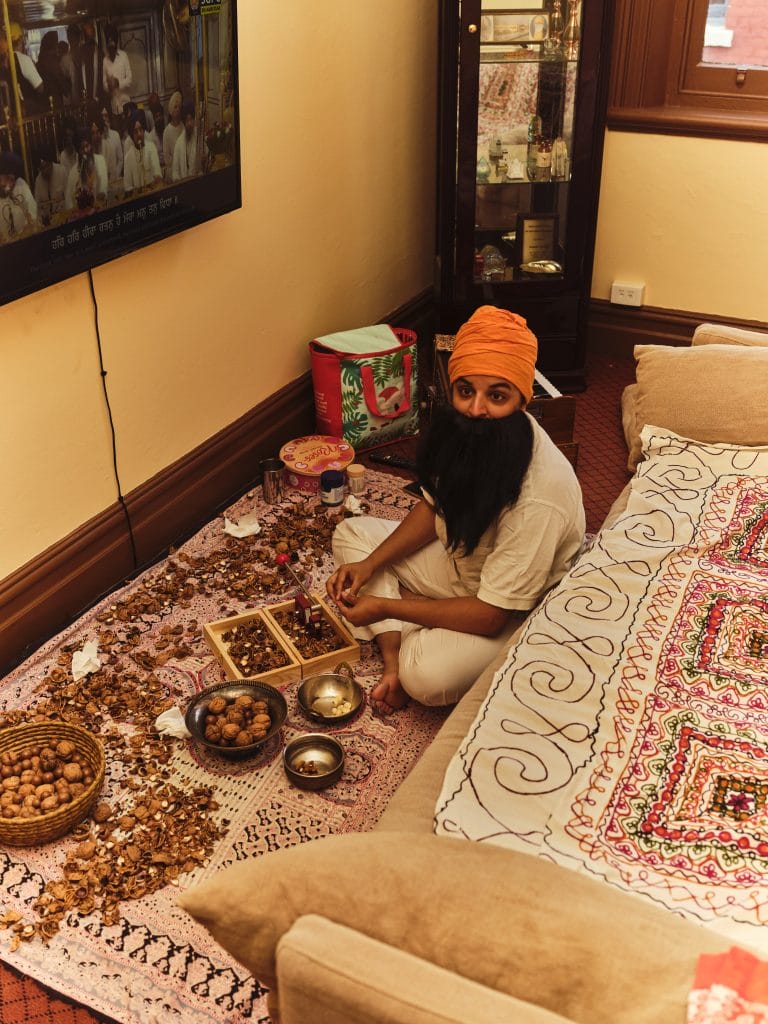
Sukhjit Kaur Khalsa, dressed as an elderly Indian man, welcomed visitors into a room layered with humour, hospitality and observation. Offering freshly cracked walnuts while commenting on our visible heat and sweat, the work inverted any assumed dynamics: the “foreigner” extending care, warmth and blunt truths. Sanctuary here was relational, not institutional.
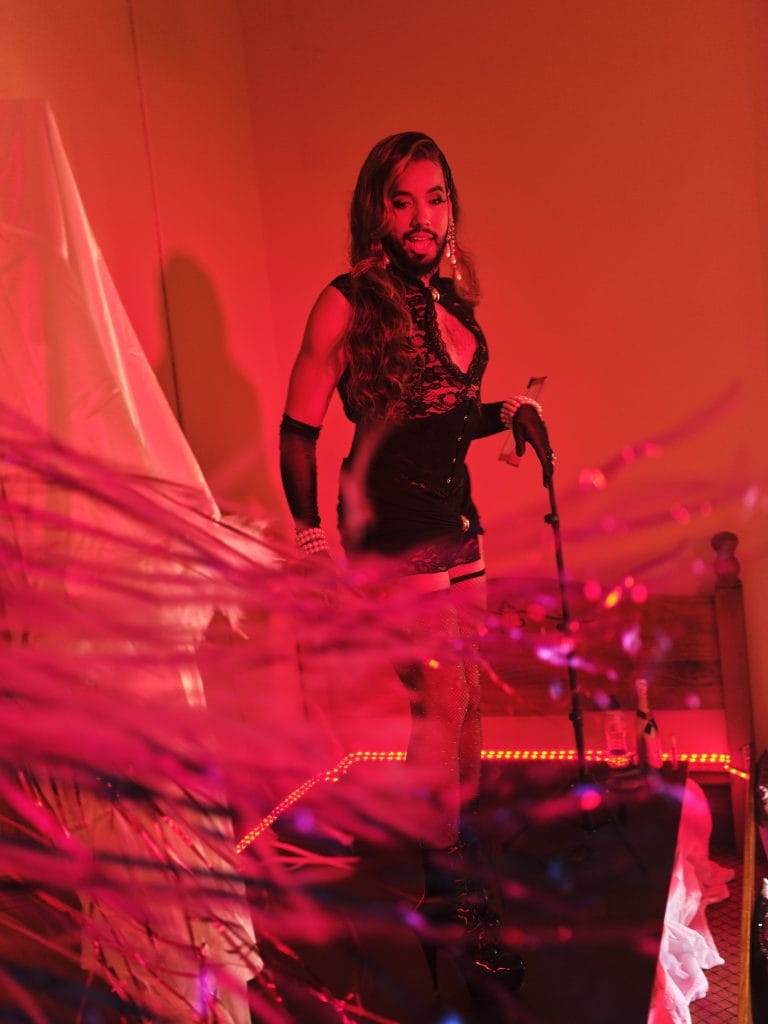
Queency, a French drag artist, claimed their bed as a stage—collapsing performance, rest, labour and visibility into one. The bed functioned as a platform, echoing histories of sex work and queer survival, positioning sanctuary not as a gift but as something actively seized.
Other rooms rejected comfort. Kate Moss’s talc-and-naphthalene-filled installation was ghostly and abrasive: windows blocked by projections of fire, footprints accumulating like palimpsests, and claw-like scratches marking walls and doors. The soundscape denied any sense of safety. Shelter here was unstable, haunted and provisional.

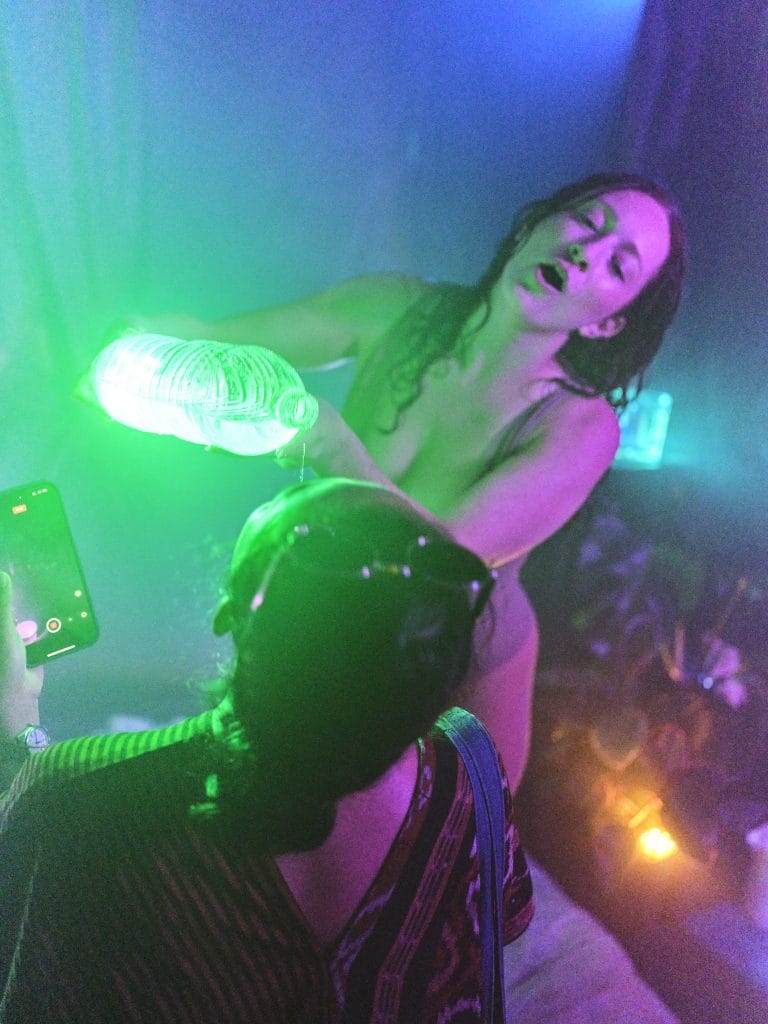
One of the exhibition’s strongest works was Rose Kingdom-Barron’s humid, steam-filled wellness parody. Water dripped, the air thickened, and Kingdom-Barron adopted a faux wellness-host persona, her soothing tone slipping between care and coercion. The work skewered the commodification of respite—how “self-care” was packaged, sold and subtly policed. Of all the rooms, this came closest to critically engaging sanctuary as desire and illusion.
Labour surfaced repeatedly. The laundry room (Kimberley Parkin and Anna Louise Richardson), complete with towel swans, transformed domestic work into performance and participation, reframing sanctuary as something maintained through repetition rather than escape. Sam Bloor’s tattoo parlour, by contrast, felt more tokenistic—gesturing towards Fremantle’s port history and tattoo tourism without fully interrogating the politics of the practice.
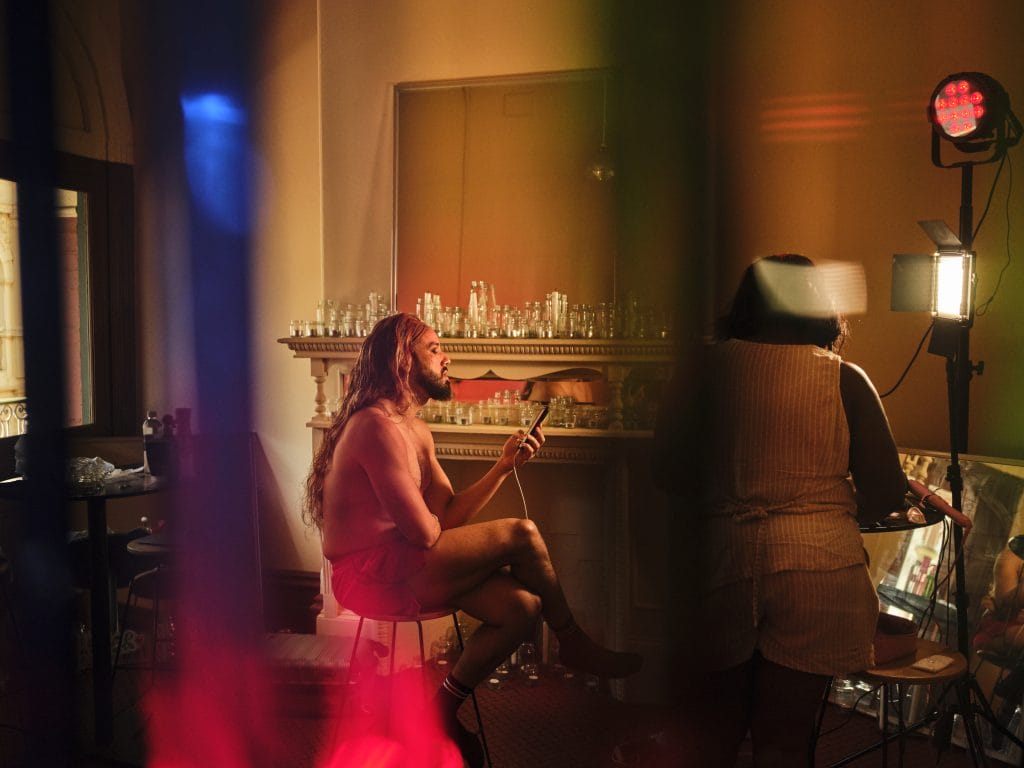
Fleshing out the art/life dynamic further, Finn Pearson’s live music studio and Kate Hullet’s acrid, burnt-rubber installation framed art as legitimate work. Pearson’s room treated the process itself as a performance: a sketched process map of characters, lyrics and ideas legible on the wall. Hullet’s work, with its intoxicating smell and political charge, evoked protest, policing and the exhaustion of resistance. Together, they suggested sanctuary not as a retreat, but as something forged through ongoing work—creative, political, bodily.
Several rooms offered rare pauses. Adrian Kingwell’s Born Sandy Devotional presented a WA-specific shrine of sand, towels and humble Australian mantras. Irene Schneider’s clay meditation room accumulated small gestures from visitors—playful, thoughtful, sometimes silly—melding into a collective, beige-toned landscape that quietly harmonised. These spaces did not resolve tension so much as momentarily suspend it.
Abdul Rahman Abdullah’s room, centred around a Buddha beneath a chandelier, was quietly powerful when viewed from the doorway. The installation occupied the space so fully it felt almost intrusive to enter, raising questions about cultural exchange, diaspora and who is permitted to claim refuge—and under what conditions.

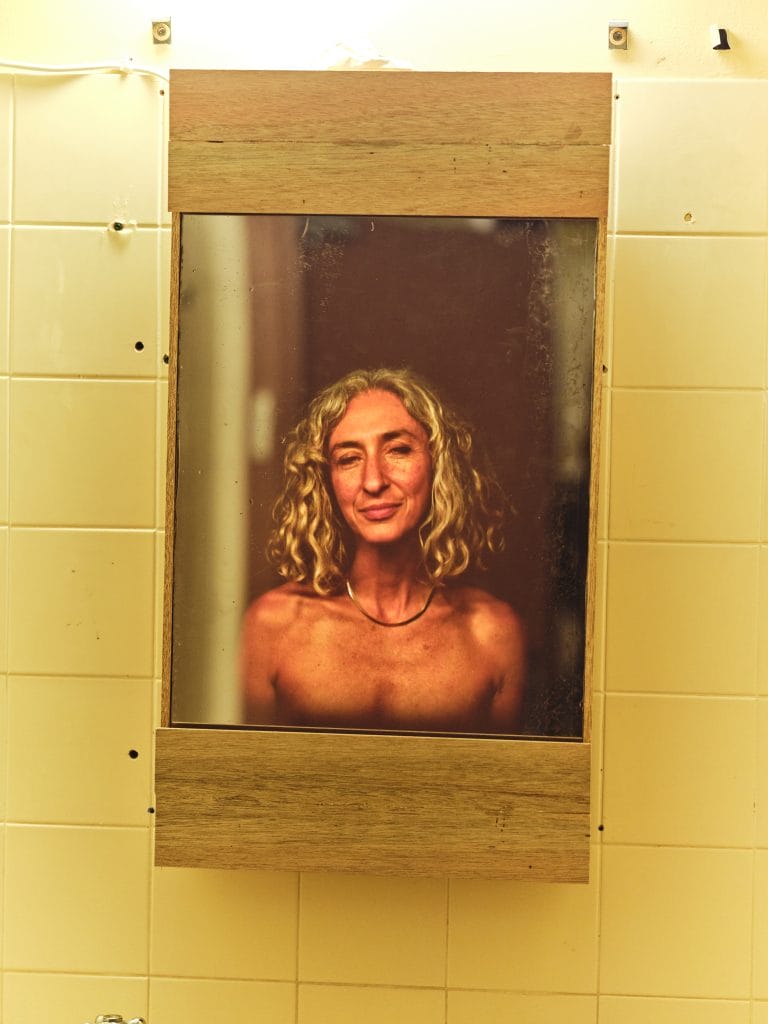
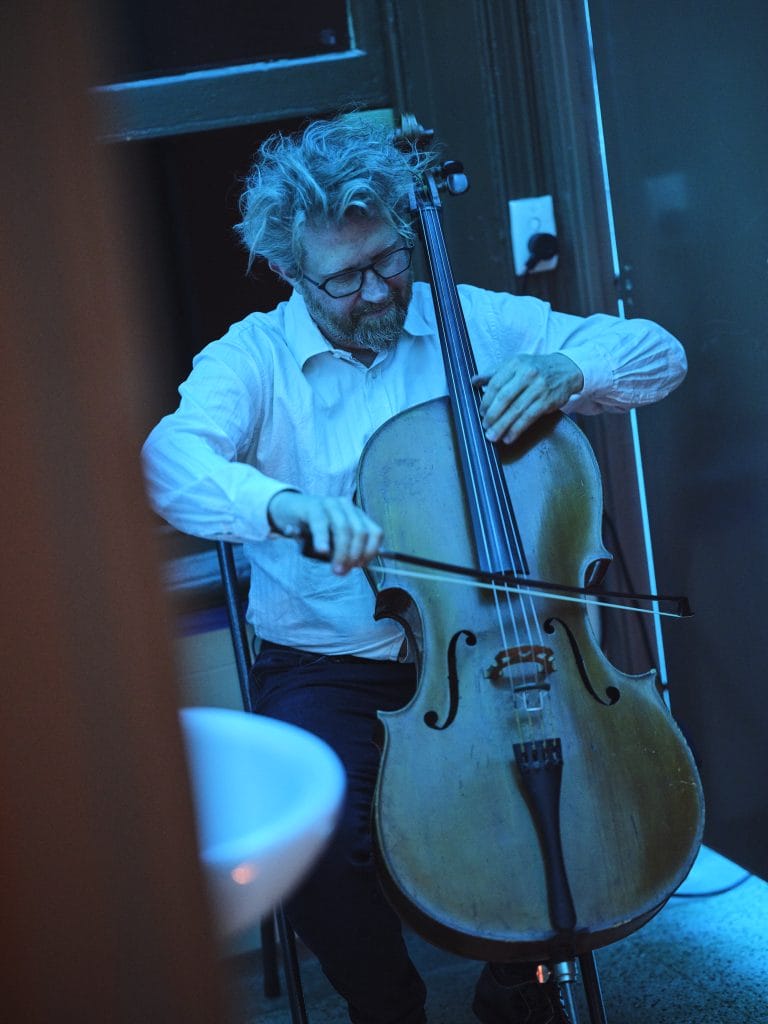
Bathrooms and liminal spaces proved unexpectedly potent. A woman showering in quiet reverie (Danielle Caruana and Luna Laure) forced viewers into voyeurism that felt less theatrical than many staged performances—a private moment rendered public by proximity. Elsewhere, cellists Iain Grandage and Mel Robinson, performing from toilet cubicles, offered fleeting moments of grace, heard rather than entered.
Not all rooms landed evenly. Some installations lacked context entirely—no wall texts, no artist blurbs, no guidance beyond a map—while others read as half-baked gap-fillers. Under tight time pressure, quieter works were easily bypassed, an unevenness at odds with the Biennale’s broader curatorial strength.
Which brought us to the core tension of Room Service: was the concept richer than its execution? Across Sanctuary, Fremantle Biennale excelled at slowness and care. Here, density tipped into overload. Sanctuary was not so much challenged as compromised—not deliberately, but through logistical intensity.
And yet, perhaps that friction was revealing. Room Service exposed sanctuary as conditional access to controlled space—a familiar logic in a city where buildings remained empty while people slept rough nearby. By the time visitors spilled back onto Mouat Street—flushed, overstimulated and relieved—the question lingered less as metaphor than material reality: who gets shelter, who gets access, and who decides when it ends.
CAT LANDRO
Photos by Adam Kenna