
Review: Crossing – At the crossroads
Directed by Levan Akin
Starring Mzia Arabuli, Lucas Kankava, Deniz Dumanli
8/10
Award-winning Swedish director, Levan Akin explores the intersection of cultures and communities in a compelling visual piece that pays tribute to his own Georgian heritage.
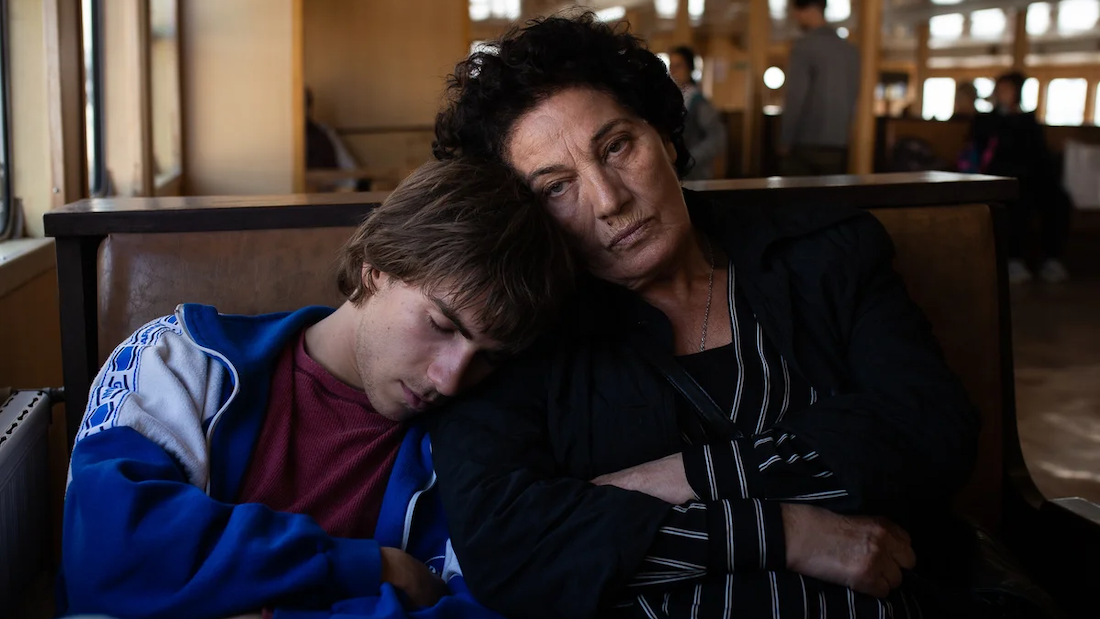
Crossing tells the story of Lia (Mzia Arabuli), a retired history teacher from Georgia who, after the death of her sister, travels to Istanbul to find her niece, Tekla. In her search to find Tekla, Lia crosses paths with Achi (Lucas Kankava), the brother of an ex-student, and Evrim (Deniz Dumanli), a lawyer and trans rights advocate. Through her interaction with Evrim and the wider trans community, Lia gains more of an insight and understanding of life as a trans person, shifting her perspective and biases and in turn helping her to forge more acceptance towards her own niece’s identity.
The character-driven plot and the actors’ performances, set against the backdrop of Istanbul, are the highlights of this film. The cinematography used takes the viewer along too, which helps to create a deeper connection between the audience and the on-screen characters, leaving the film with a somewhat immersive feel. The writing of each role is superb, and Arabuli, Kankava, and Dumanli’s acting does their roles justice. Each character has a part to play, and the intertwining of the character narratives, or ‘paths crossed,’ feels natural and not forced.
The plot has flow, with the story lines of Lia, Achi, and Evrim unfolding at just the right pace. Arabuli gives a strong performance, and her talent shines when delivering Lia’s character arc. Kankava does well in his portrayal of Achi’s growth and shows his acting breadth in both humorous and touching scenes. As Evrim, her first role in a feature film, Dumanli brings to life an authentic and three-dimensional character.
The cinematography and sound editing are creative and clever. The utilisation of extreme long shots and high-angle shots really emphasise the importance that the setting of Istanbul plays in the film. The use of tracking shots in multiple scenes helps to transport you there, with the background noise and atmospheric music furthering the immersive effect.
Helping to determine the theme early on, the film begins with a brief epigraph mentioning how both Turkish and Georgian are genderless languages. This theme of the coming together of different communities and cultures through a lens of seeking understanding and finding common ground, is further explored throughout the film. Istanbul is, in a sense, personified and throughout the film the audience not only builds a connection with the characters, but also the city in which the characters stories are now tied to. The film perfectly executes its intended theme, all the while keeping the audience engaged.
After watching the film, you realise there are so many ways that the title can be interpreted. Crossing could mean crossing borders, crossing paths, crossing perspectives, and so on. The film’s thought-provoking nature and its emphasis on the importance of growth, acceptance, and making up for lost time definitely make it well worth a watch.
JAMES THORN