Review: Bill Frisell Trio at Regal Theatre
Bill Frisell Trio at Regal Theatre
Friday, October 31, 2025
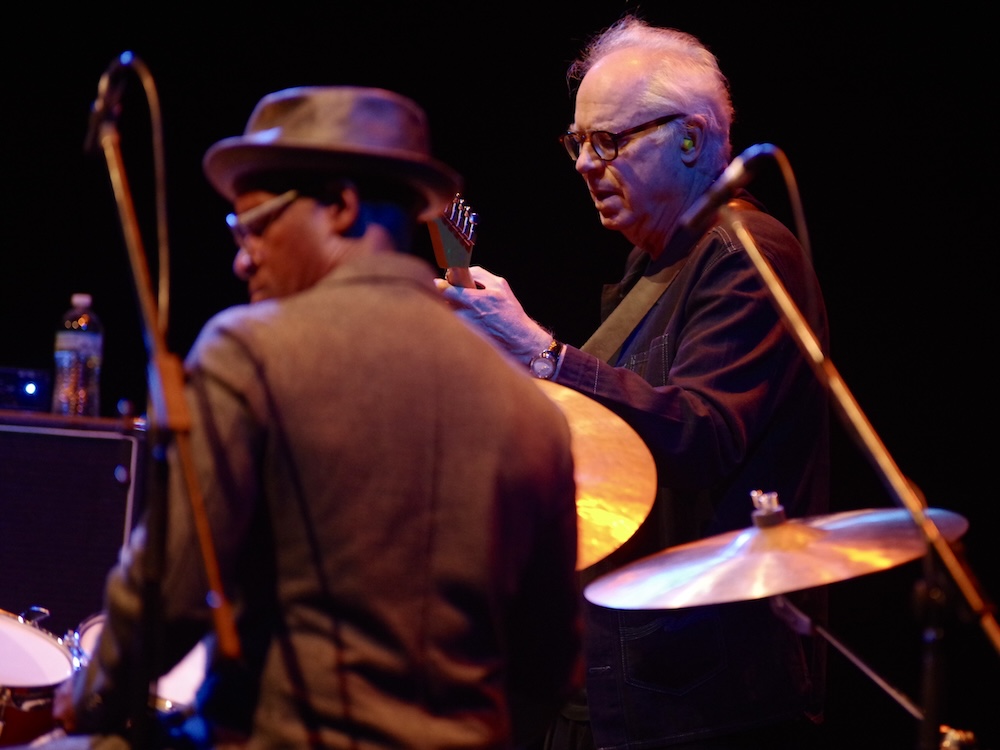
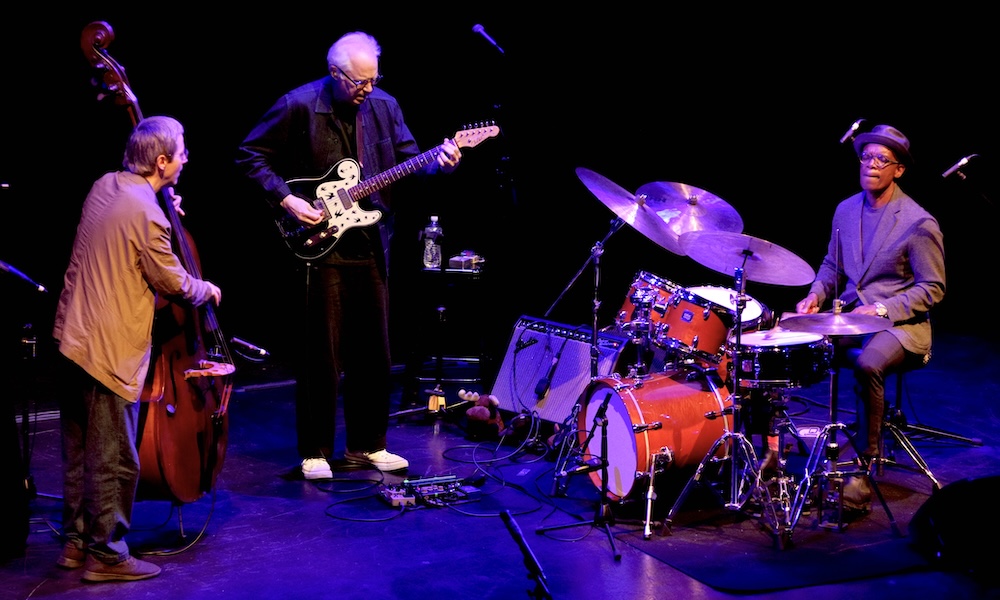
If you’d been at the Regal the night prior, where Samara Joy’s drummer was hidden behind the bulk of the septet, then seeing Bill Frisell’s drummer sideways-on in front of the stage—visible and breathing in the spotlight—was already a shift. More than a stage tweak, it signalled what Frisell’s trio offers best: mutual visibility, humility, and a kind of three-way telepathy that doesn’t need to announce itself to be heard.
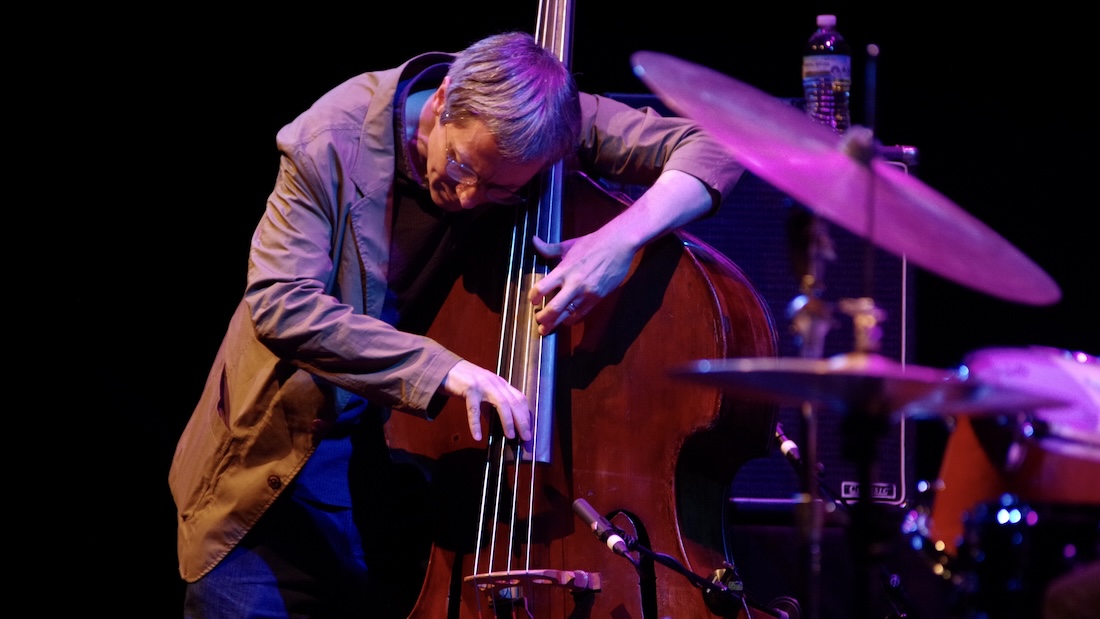
They played inward-facing; Frisell set a touch behind the other two, as though deferential to his longtime collaborators, Rudy Royston on drums and Thomas Morgan on bass. That stage layout mirrored the night’s ethos: interplay over ego, synergy over stardom.
What followed was a continuous improvisational journey generously exceeding an hour, stitched loosely together by melodic fragments—some familiar, some fleeting. It was genre-blurring, unmistakably jazz and yet sidestepping its boundaries from the first phrase. Frisell’s guitar took tentative steps into bluesy Americana terrain, the texture delicate, exploratory, almost ambient. His tone was both earthy and strange, coaxing out notes you might not expect to hear in a jazz hall—subtle distortions, fuzzy echoes, and tones that shimmered like feedback through a canyon.
Not far in, the trio had begun to settle into a warmer quasi-Western lilt. Their playing not emotional so much as contemplative. Curious, even. Royston and Morgan wove in and around Frisell’s lines, each instrument threading its way into the collective fabric. There were no solos in the classic sense, only conversational turns. At moments, it was as if they were embroidering the air.
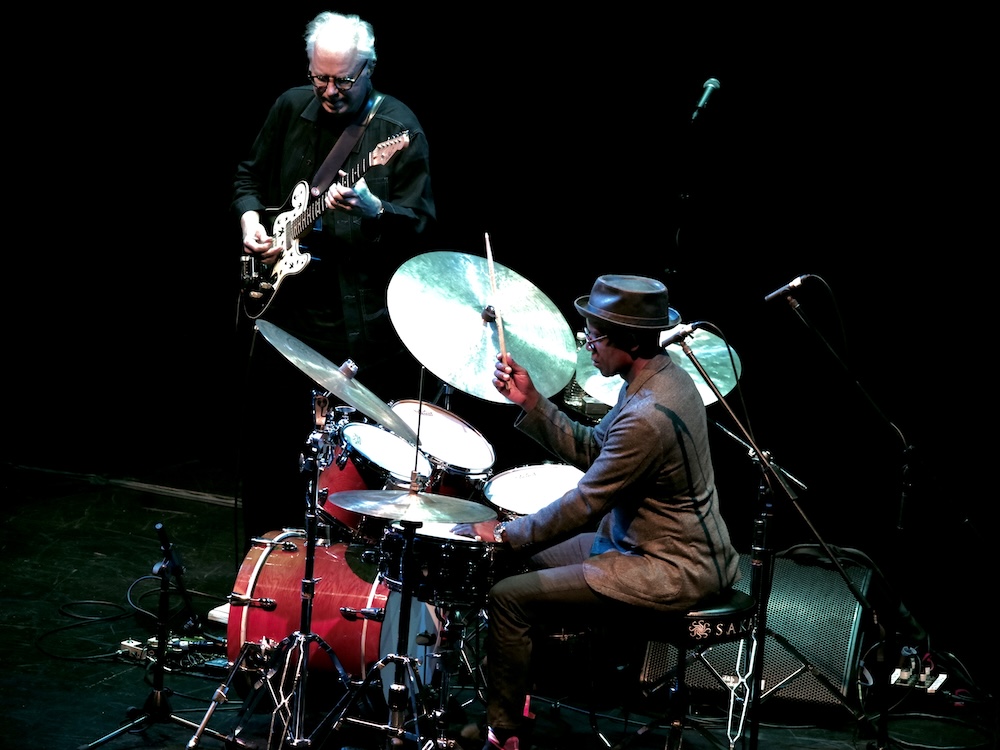
Dissonances crept in at around 20 minutes—but they were as playful and palatable as the melodies that preceded them. Royston’s drumming increased in pace and urgency but never shed its delicacy. It was like the lightest thunder rolling across a plain, never quite touching down.
Shortly after, things took on a post-rock swell: volume rising, tensions dislocating. Each player seemed to be walking their own trail, diverging, yet never losing line of sight. And just when it seemed we’d drifted too far from jazz, Frisell dropped into a syncopated phrase that gently tugged the trio back into the fold.
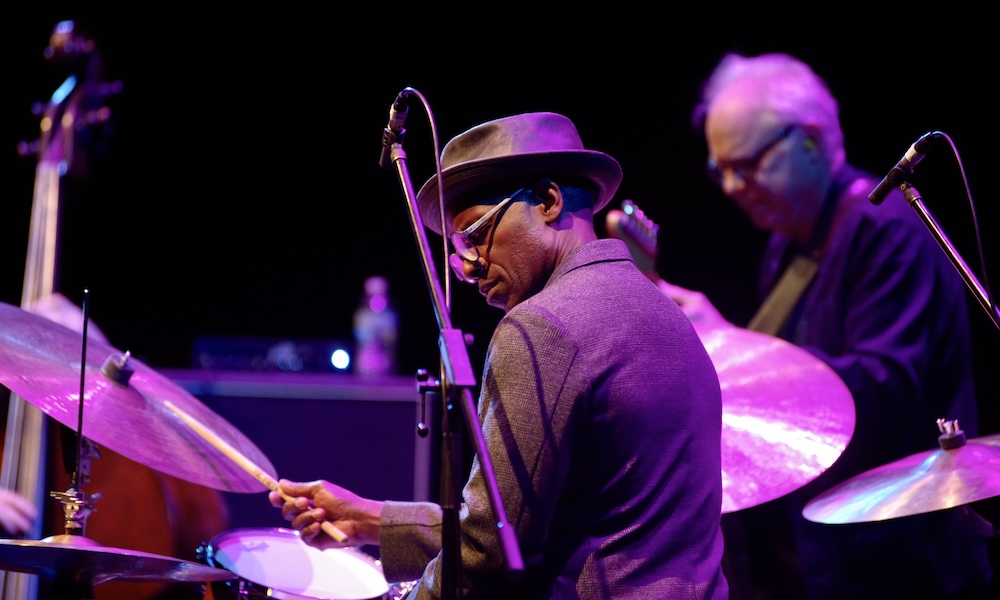
Following Morgan’s second bass solo of the night—fluid, lyrical, wholly unflashy—Frisell responded not with a takeover, but with a bluesy conversational inflection, like nodding from across the table. Royston’s ensuing solo was almost imperceptible at first. Whisper-light taps built gradually into snappy rhythms. At the peak, he pulled back so delicately that the audience thought he’d stopped. Early claps broke the spell. Royston grinned and continued, cheekily answering the room with a few quiet staccato taps that said, ‘Not done yet.’
Royston then shifted to textured percussion courtesy of some deft bundle sticks flicking across cymbals in dynamic twig-like raps. Frisell pulsed beneath him, his tone atonal and reverberant, the gravitational anchor to the untethered drums.
Then, at the 50-minute mark, a familiar Beatles ghost: In My Life. Frisell carried the vocal line on his guitar with warmth, his tone rich and near-human. It was the most accessible moment of the night, melodically. But simple it was not. Underneath, Morgan and Royston built an intricate lattice, their contributions subtle but essential.
There’s something painterly about the trio’s approach. They render sonic landscapes with a lyrical, almost cinematic hand. There are no theatrics, no declarations of genre allegiance. This is music that asks you to listen, not label.
Frisell has long cited Miles Davis’s view of jazz not as a style but as a way of thinking. That credo was on full display here. Eschewing over-zealous solos, Frisell instead offered gestures that whispered. It’s in the restraint—the breath between notes, the glance between players—that the magic lives.
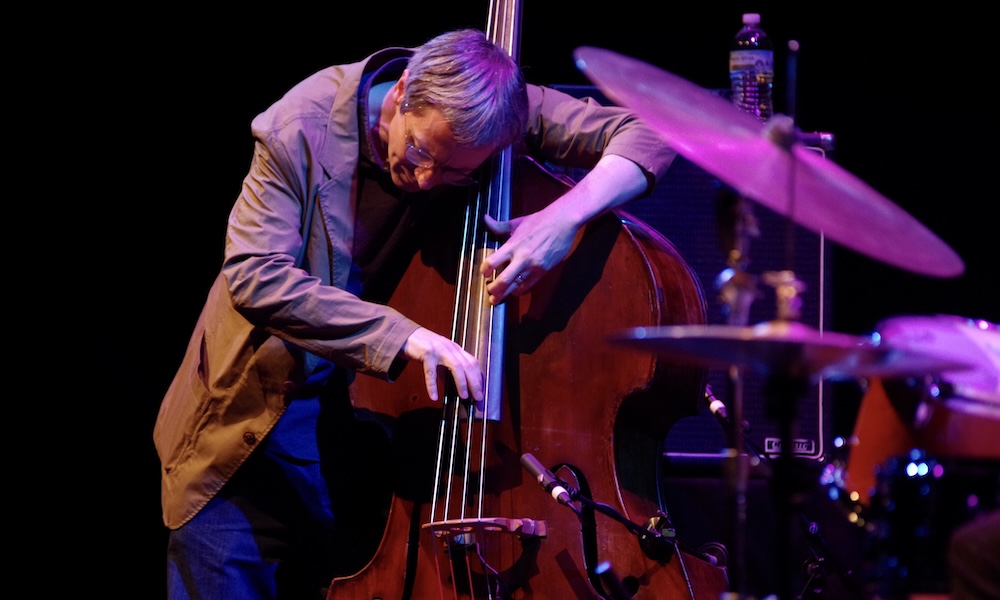
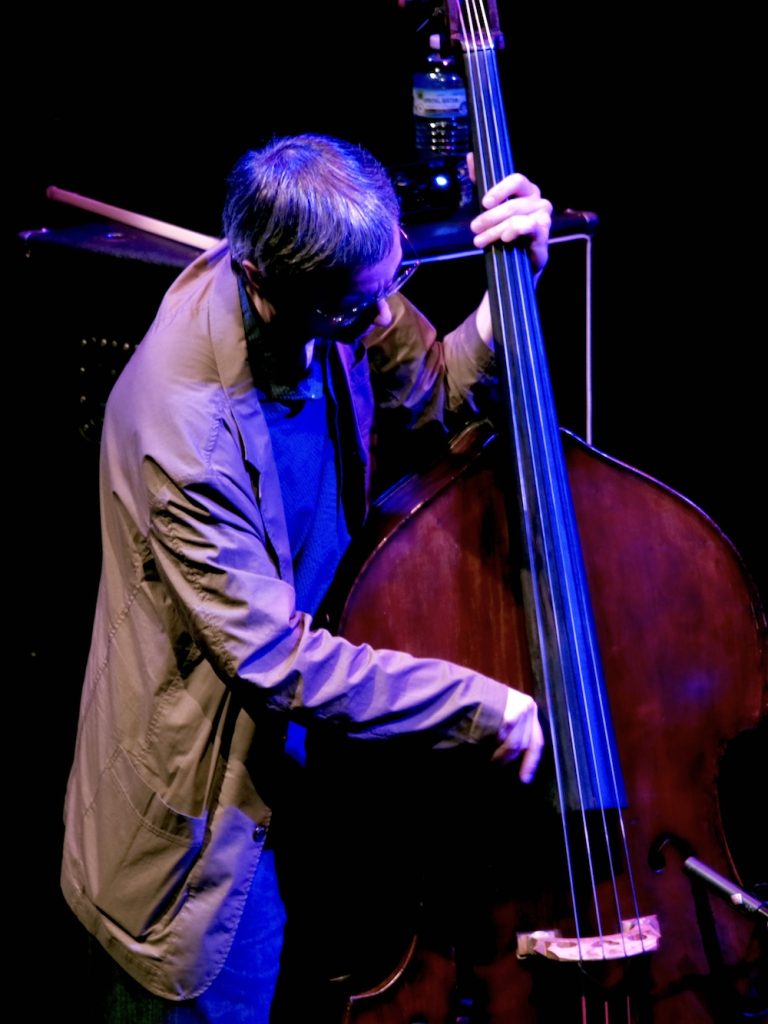
Throughout, their synergy was uncanny. Morgan, an understated but reliable bassist, provided the quiet anchor, his playing so attuned it was almost telepathic. Royston, by contrast, brought colour and motion. Their attentiveness to each other and to Frisell made their marathon improvisation feel like a single thought spoken in three voices.
By the end, Frisell looked up, sheepishly grinning as if surprised by where they’d arrived. The audience—spellbound, then roused—rose not with a roar but with the slow build of awe.
In a festival packed with bold jazz artistry, this was the quietest revolution. A trio turned inward, yet playing straight to the heart.
CAT LANDRO
Photos by Alan Holbrook