
Review: Amy Gadiaga at Fremantle Arts Centre
Amy Gadiaga at Fremantle Arts Centre
w/ GunFu
Wednesday, November 26, 2025
There are support slots, and then there’s the kind of opening set that quietly recalibrates the bar for the visiting act. Local outfit GunFu—here in true jazz-lineup improvisation mode—did exactly that. With guitarist Jeremy Thompson standing in for bandleader Ben Witt and drummer Bronton Ainsworth drafted in that very afternoon, the band leaned into its “ever-growing organism” ethos, stretching Witt’s charts into something more mutational than fixed.
Harry Mitchell introduced the group with charming understatement, hoodie and all, gliding into his tune Paradiso as the last of the daylight bled out. Sean Little’s sax took early lead duties, warm and unhurried; Thompson’s guitar had that unmistakably jazz timbre—softer and more melodic than anything rock-adjacent—while Mitchell’s agility on the keys quietly affirmed the outfit’s calibre. Rather than trading solos, they shared airspace, buoyed by Mark Earley on bass and Ainsworth holding his own with brisk, textural drumming despite being half-lost in the lighting rig.
Cheeky tune Chug rounded out with twee piano plinks before Soul Searching, a semi-ironic title gifted by a previous punter; their dusk-tuned energy turned sombre and wistful. Breathy sax, ornamental keys, and a gradual swell into beautifully controlled chaos—everyone playing over each other without tipping into true cacophony. The best kind of artful mess. Bop 88 pushed the band into sharper relief, with Little slicing through with clean phrasing while Mitchell and Thompson volleyed in kind. They closed with Mitchell’s twilight-soft arrangement of Heart of Gold, a forest-floor shimmer rather than desert heat. It was dynamic, warm, and quietly assured—which made the contrast that followed even starker.
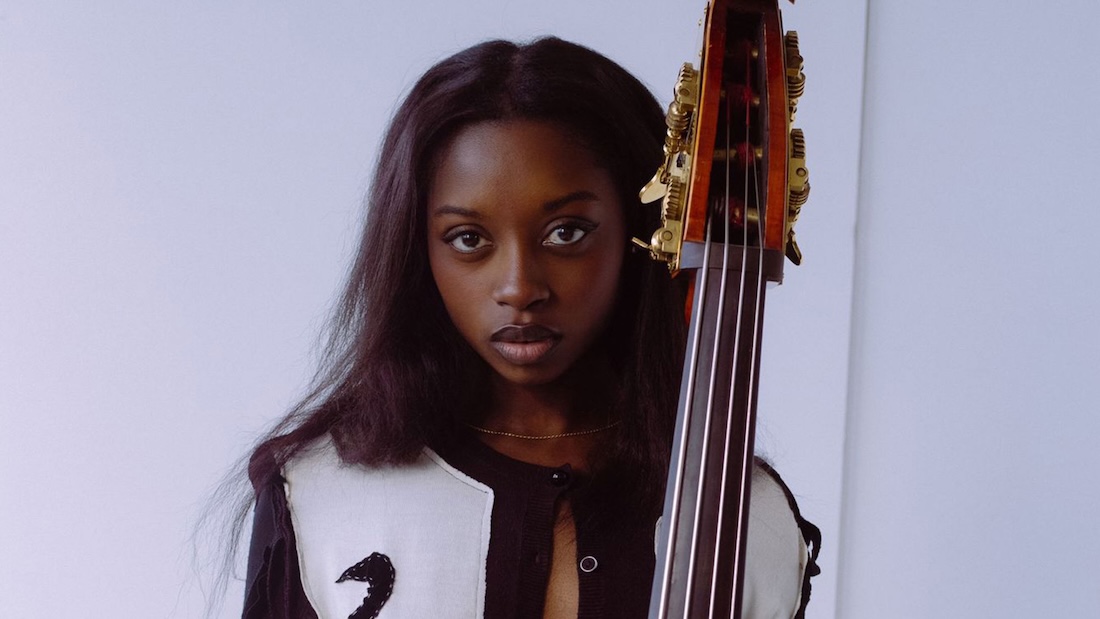
Enter Amy Gadiaga. French-speaking pockets in the crowd perked up instantly; so did anyone attuned to the current swell of women reshaping the jazz vocal landscape—Samara Joy’s recent visit still humming in local memory. The evening was oddly chilly for late November, but Biennale Director Tom Müller’s introduction warmed the air with promise: the Amy Gadiaga Trio—keys, trumpet, and Amy on double bass and vocals.
From the first bar of Everything I Do, her voice landed with startling depth: rich, velvet-smooth, and impossibly resonant for someone so physically tiny behind an instrument that dwarfed her. She accompanied herself with steadiness, Joseph Oti’s trumpet entering as a charming accent rather than a competitor. After Mitchell’s dynamism in the support set, the trio’s keys felt almost too understated—tasteful, but far too light to anchor the Arts Centre courtyard.
Barely a breath separated the opener from Bye Bye Blackbird, launched with a sudden spike of energy. The pianist swivelled enthusiastically from side to side, his playing somewhat drawing attention to a cohesive lack within the group. Amy’s scat—delivered while playing bass—was delightful, but the trio lacked that intuitive, wordless communication familiar to better-bonded ensembles. For all her individual strength, the setup felt spare and slightly clunky, especially after GunFu’s warm telepathy.
A collective clap carried the transition into Nina Simone’s Blackbird, its syncopated rhythms and foot-stomping trumpet jabs shifting the set into more contemporary territory. A shrill trumpet build flirted with dissonance before dissolving into Afro-rhythmic clapping, with Amy steering the shifts with soft humour (including a moment where Oti helped her lower her bass—“I don’t have a belt,” she laughed).
Paloma Negra followed, broken down into a near a cappella moment with keys. Amy’s tonal breadth expanded dramatically—deep, breathy lows to soaring highs—but the overt, audible cues between musicians again revealed gaps in organic flow. The intention was there; the connection wasn’t always.
Still, Amy had presence: a blend of diaspora pride, jazz lineage, and a subtle but firm feminist claim to space. The show’s through-line—voices refusing to be silenced, cultural practices resisting flattening—echoed unexpectedly against the Biennale’s recent Sanctuary Within performances by Réunion Island artists. Sanctuary as labour, as lineage, as bringing others into the warm fold, whether or not the wind chill cooperates.
Mid-set, the trio found a common pulse. A bluesy scaffold of bass and keys let the trumpet rip freely, drawing a deep “yeah” from somewhere in the crowd. Someday My Prince Will Come (Amy’s “jazz princess” moment, cliché or no) was delivered with charm, though the spoken cues continued to break the spell. A mishap shortly after—Amy misreading her vocal re-entry and dissolving into giggles—offered a youthful contrast to the maturity of her tone.
By All Black Everything, sass finally flared. Her voice shifted from whisper to punchy near-ugliness—a texture I wished she’d leaned into more often. The gentle entwining of her voice with Oti as the tune descended into quiet hinted at the trio’s potential to silence an audience with grace.
Amy Gadiaga herself was luminous: vocally stunning and able to command space with charm and earnestness. But as a trio, they still have ground to cover to forge genuine synergy. After the cohesion and dynamism of GunFu’s support set, the trio’s performance occasionally felt sparse, even hesitant. Not unskilled—simply under-integrated.
Still, there was something quietly powerful about watching a young artist with a big voice and bigger promise carve out her place in real time. And something equally moving in watching the audience meet her there.
CAT LANDRO