
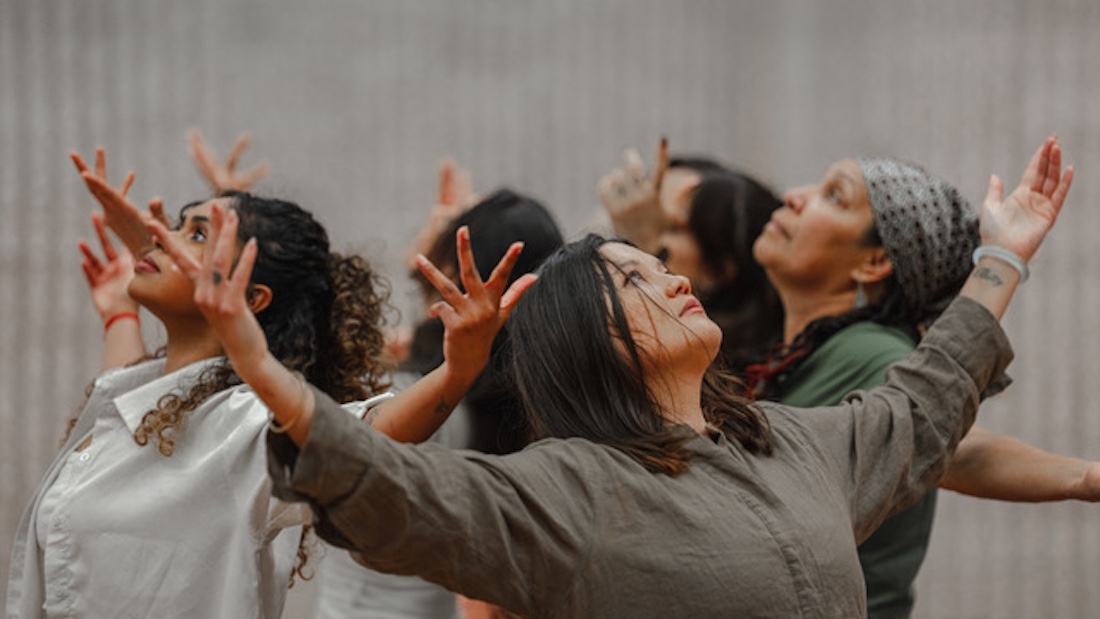
Mudh brings stories of home to life through dance
What does home mean to you? This November, a group of women from diverse cultural backgrounds will explore that question through dance, transforming Bina Parkland in Balga into a free outdoor performance space on Friday, November 13, and Saturday, November 14. Mudh (meaning ‘home’ in the language of Kala Lagaw Ya – Mabuyaagi dialect of the Western cluster of the Torres Strait Islands) is a contemporary dance by Torres Strait Islander choreographer Sonya Stephen that grew from STRUT Dance’s Locale initiative, which developed into an initial series of workshops and a showing in 2025. Now, following a further period of development, Mudh brings that creative journey into the public realm, creating space for women whose voices and experiences are often underrepresented in the arts. Ahead of November’s performances, curator Sonya Stephen spoke to BRAYDEN EDWARDS on Mudh’s origins, its success and future projects.
Firstly, what does it mean to you to bring this performance to an audience and have them witness it?
For me, bringing Mudh to an audience is about sharing something that has grown from the hearts of the women involved. This is all about community, and every story, every movement and every moment has been shaped by the generosity of women who trusted us with parts of themselves.
I hope audiences feel they are witnessing something real and honest. The work speaks about belonging, displacement, housing insecurity, resilience and identity, but underneath all of that it speaks about our shared humanity. We live in a world where there is so much division, fear and uncertainty, yet the stories within Mudh remind us that we are often more alike than different.
Through this process, we discovered that home is not always a house or a location. Home can live within us. It can be found in our memories, our culture, our families and the connections we make with others. My hope is that audiences will witness pieces of their own story in the performance, leave with a sense of hope and healing, and be reminded that community becomes stronger when we truly see and listen to one another.
Do you recall when you first thought of developing this performance? How has it changed from its early stages to what we’ll experience in Bina Parkland?
The first spark came when I applied for STRUT Dance’s Locale initiative. I wanted to create a work centred on multicultural women within the City of Stirling, a community I have lived in and cared about for many years.
There was also an image that had stayed with me for a long time. I remember seeing a migrant couple sitting together, looking ahead with what seemed like deep worry on their faces. I found myself wondering about everything they might be carrying. How do you build a new life in a place where the language, systems and culture may be unfamiliar? For some people, simply finding safety and freedom is enough, regardless of where they arrive.
Initially, I thought the project would focus on those migration experiences, but as I reflected on my own story, I realised my work was exploring something deeper. The word Mudh, meaning home, came to me just before I submitted the application. It made me think about my Torres Strait Islander heritage, my family, my connection to place, and what home means beyond geography.
What audiences will experience at Bina Parkland is far richer than my first idea. Over 18 months, the voices, stories and movements of many women have shaped it into a powerful collective work.
The work grew from STRUT Dance’s Locale initiative. How did this collaboration come about?
The collaboration grew through trust and relationship-building. During the Locale initiative I spent time getting to know STRUT, and what stood out to me immediately was the respect they showed artists and communities.
Also, Annette Carmichael is the mentor for the Locale Project, and she encourages artists to engage with their local community, fostering collaboration and creativity. Annette’s generosity with her wisdom, knowledge and time left me deeply humbled.
Respect is very important to me. Trust is something that takes time to build, but with STRUT, it developed naturally because they genuinely listened and cared. They have supported me as an artist while also respecting my cultural responsibilities and ways of working.
They understood that creating a work like Mudh requires care, flexibility and relationship-building. Throughout the process they have been generous, understanding and deeply supportive. That created the conditions for everyone involved to feel safe enough to share their stories and contribute meaningfully to the work.
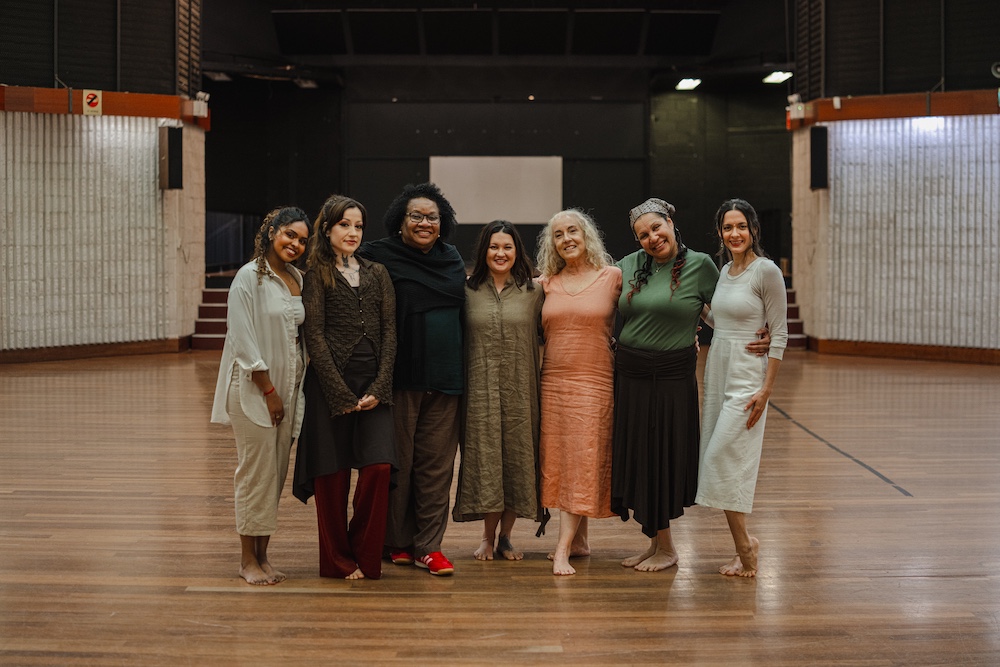
Mudh means ‘home’ in the Torres Strait Islander language of Kala Lagaw Ya. Why was this a theme you chose to be the focus of this performance project?
Kala Lagaw Ya (KLY) is the traditional language of the people of the Western and Central Torres Strait Islands. Mudh, meaning “home,” comes from the Mabuyag dialect, spoken on Mabuiag, Badu and in St Pauls Village.
Home is something every person understands, regardless of where they come from. Yet it can mean something different for every individual.
For me, Mudh is where my heart resides. It is a place of belonging, safety and connection. Through this project I realised that home is not always a physical place. It lives within us. It can be found in memory, culture, family, language and the stories we carry.
As a Torres Strait Islander woman, I was reflecting on my own connection to family and heritage while also listening to women whose experiences were very different from mine. Some had migrated, some had been displaced, and some were navigating questions about identity and belonging. Yet despite those differences, we kept returning to the same theme: everyone is searching for a place where they can be fully themselves and know they belong.
That is why home became the heart of this work. It gave us a way to honour both our unique stories and the things that connect us all.
The message and celebration, of course, extend beyond your own culture, welcoming migrants and the wider community into the performance. How does the message of ‘Mudh‘ relate to the experiences of migrants or those who are typically underrepresented in society?
This is where my heart sits. I believe we need to create opportunities to understand one another better and to recognise the humanity we all share.
The women involved in Mudh come from many different backgrounds, but through their stories we discovered common experiences of loss, hope, freedom, resilience and belonging. Some stories carry hurt and hardship. Others speak of joy and renewal. Together they create a rich picture of what it means to find your place in the world.
The process has been emotional at times, but it has also been incredibly healing. I have watched women support one another, listen deeply and build genuine friendships across cultures. What emerged was a strong sense of sisterhood.
Many people who are underrepresented in society rarely get the opportunity to tell their stories in their own way. Through Mudh, these women have found a space where their voices matter. My hope is that audiences will see their strength, recognise aspects of their own experiences, and leave with a deeper understanding of the power of compassion, acceptance and community.
And what do you want the audience to take away from this performance?
I would love audiences to leave feeling hopeful, connected and proud of who they are.
Throughout the work we acknowledge that life can leave us with scars. Many people carry experiences of loss, displacement, hardship or uncertainty. Yet those experiences do not diminish us; they help shape who we become.
A beautiful image that resonates throughout Mudh is the Japanese art of kintsugi, where broken pottery is repaired with gold. Rather than hiding the cracks, they become part of the object’s beauty. I think there is something powerful in that idea. Our scars tell stories of survival, resilience and strength.
I hope people leave celebrating their own story and the stories of others. I want them to feel the healing, hope and unity within the work and to recognise that there is beauty in our imperfections and strength in our differences.
Do you have any plans after this performance? Do you see it evolving more in any way?
This has been a big journey, and immediately after the performance, I think I need a little rest.
But yes, I would love to see Mudh continue to evolve. What we have created here feels like a framework that could be shared with other communities, allowing local women to explore their own stories of home, identity and belonging through movement and storytelling.
What I have learned from this process is that every community is different. Every group of women brings different experiences, different movements, languages and different stories. Because of that, each version of Mudh would grow in its own unique way.
I see my role not as choosing the path for others, but as creating a welcoming space where people feel heard and supported. By listening with care and responding to what unfolds in the room, we can discover the way forward together. This is the spirit in which I hope Mudh will grow in the future.
Mudh is being performed at The Beginner BMX Track, Bina Parkland, Balga, on Friday, November 13 and Saturday, November 14, 2026. Audiences are invited to arrive from 5pm to enjoy pre-show activities, and a free sausage sizzle provided by the City of Stirling, before the performance begins at 6.30pm.