
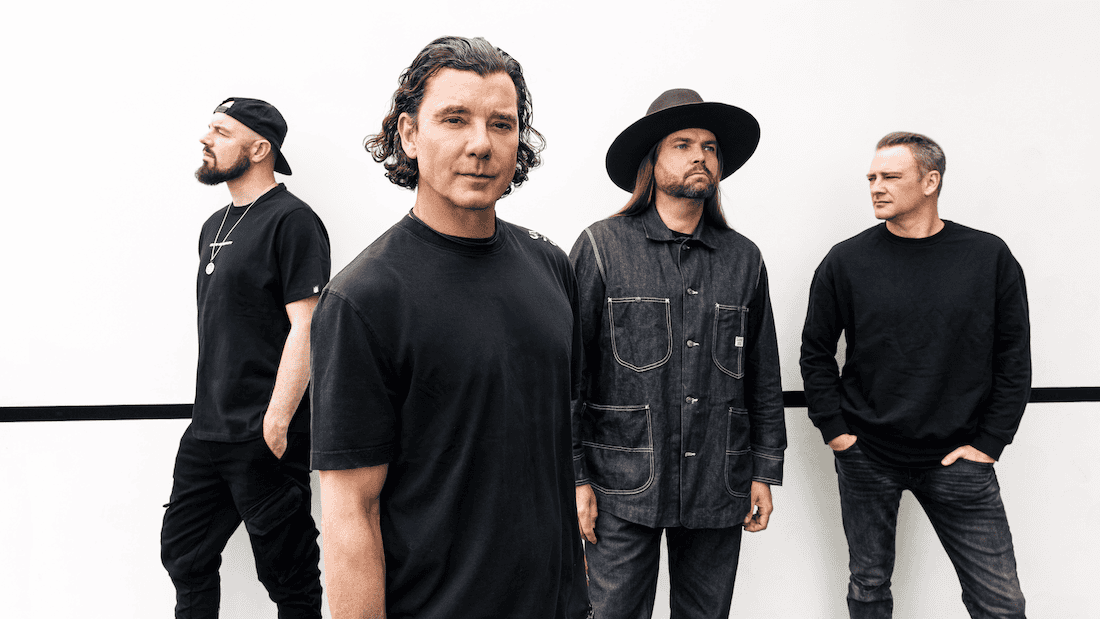
Loneliness, scars and survival with Bush’s Gavin Rossdale
Speaking from hotel room in Portland, Bush frontman Gavin Rossdale delves into the making of the group’s recently-released 10th studio album, I Beat Loneliness. In a conversation with KYRA SHENNAN, Rossdale offers insight into being an artist in an era of rapid technological advancement, starring in the new series Dinner with Gavin Rossdale, and his ongoing desire to create vital, meaningful new music.
After forming in London in 1992, Bush became one of the most commercially successful rock bands of the 1990s, selling over 20 million records propelled by their multi-platinum 1994 debut, Sixteen Stone. The group disbanded for eight years between 2002 and 2010, and today Rossdale remains the only original member, now writing and performing alongside a new lineup of Chris Traynor, Corey Britz and Nik Hughes.
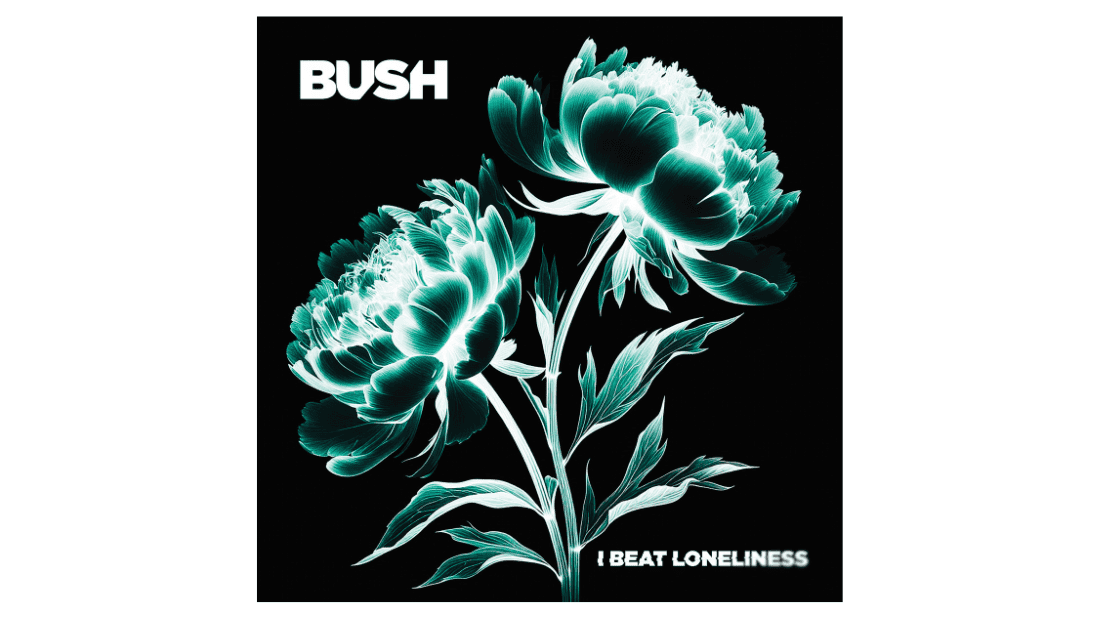
Rossdale says the new album, I Beat Loneliness, is meant to help listeners feel less alone, explaining that a desire for connection is what drives his music.
“I tried to distil everything that is good about the band,” he said. “I just really considered the songs we had done through the years, and it seems a lot of people spoke about mental health, which is a beautiful thing and long overdue but something I’ve been singing about a lot, you know? It all felt organic that this album had that sort of subject matter around it, just all very natural.”
When asked his favourite song from the album, Rossdale responds that “It changes all the time,” but I Beat Loneliness or Scars feel particularly important to him. “They’re all the product of my experiments just trying to be interesting in music, so in a way they’re survivors of my lack of complete visibility when I make music, you know, and so I think the magic comes in the bits that you don’t understand so much. Every song has a degree of experimenting in it, because I never know if a song’s going to work.”
I congratulate Rossdale on another great album and tell him it’s great for fans that Bush are still releasing music.
“Thank you. Yeah, it’s weird, an interesting process. When I have made records before, I’d write maybe 20 songs and just keep going to a degree of getting snowblinded a bit and just forging forward. And if by the end of the week I’ve got something really good, I’ll pursue that and maybe drop two songs. Whenever you do have an idea, maybe of what the record’s about or where you’re at mentally in your life, you have that conscious thing of what’s going on, and you write songs about it, and suddenly you’re choosing the best chorus; you’re not choosing the best torch-bearing song.”
Gavin has a humble approach to his band’s success, revealing with a humorous tone that Bush’s next album was intended to be a Greatest Hits compilation introducing a few new songs into the mix.
“The Art of Survival (2022) was about the fact that we all just fucking made it to this point. The Kingdom (2020) was kind of about this idealised land; there’d been lockdowns, there’s the isolation… So I was inspired by times and events, but this one in particular, all the songs came at two separate times: One bunch that I wrote before I went on my Greatest Hits tour, and I did nine songs, so I didn’t feel like a fraud, creatively bankrupt, and just sort of going on tour singing the same songs.”
“When I came back from tour, I started thinking about the record. It was the beginning of this year and the end of last year. I went to the studio with the producer with the songs that I had, which I hadn’t listened to in six or seven months since I’d written them, and we listened to them together. I was trying to do things the opposite way to how I’ve done them before, so it might elicit a different record, so we wrote three songs very quickly and very comfortably, and then I said, ‘Oh shit, I have nine songs.’”
“I only wanted, like, a 10-song record, so we cracked on with mine, and we decided to keep them all, and they were written from very specific times really close together, so thematically that’s why they fit, and because I was wondering, ‘Should I write another record?’ I had to kind of really, really put a lot of thought into it, and so what happened is about four or five songs I’ll kind of veer in and be like, ‘Oh, stop talking about yourself—this is ridiculous. Find another subject.'”
“This time I was like, ‘No! Stay navel-gazing, soul-searching, or whatever you call it. Stay where you are.’ Well, I wasn’t really searching for anything; I just kept on asking myself what I was thinking about, and then I just literally put these sonic experiments together, these songs together, and I’d say, ‘Well, what do you think right now?’ Like, I’m trying to be the best channel of myself and really open myself to bare-boned lyrics, like no artifice allowed. Not too much smoke and mirrors and clever puns. More like self-confrontational. So that’s what I did.”
“If you think about it, the best that you can be is the best version of yourself. In this world where everything is cross-referenced from everything else, the only thing we have is who we are uniquely. Outside of that, it’s a shit show because it’s all passed information, facts, figures, stuff…. I don’t have so much time; I want to make sure everything I do is high quality.”
“Like, I’m on tour now; it’s interesting. Individually, though, we work so well as a band because everyone is only interested in being excellent, or as good as they can be, as good as we can be, and then what the tour does is alleviate the daytime mindfuckery of being away from life and the sacrifices that are made to be on tour. But you know, as long as you challenge the show and you make really vital records, then you have a reason to continue because the opposite would be tragic: milking some past glory with some diminishing record of mid-tempo acoustic dirges.”
Rossdale’s self-deprecating awareness is laugh-out-loud funny, but is what he considers navel-gazing really just relatable vulnerability?
“Yeah, well, I’m being shitty towards myself as usual, and to that point, what makes me so wild about it and so proud as someone who contributes to music and creates music is being as extremely personal and as honest as possible, and you find yourself at a slightly different perspective. As for making a record that’s relatable, so much of life around us is about lives we wish were ours; they’re not really relatable, but it’s sort of this aspirational life that we live and this guilt—I don’t know if we all do, but I live under this guilt of ‘Oh, I could do better,’ ‘Am I doing alright?’”
“I think people set really difficult standards, and I think it’s really hard for young people to consider how to break out, and it’s hard for old people to integrate into the modern world, and life is amazing. I’m not a depressing person at all. I’m really good fun, really good fun. Like, I’m good at dinner, I can hang… But there’s something to be said for making music or writing songs for everyone to relate to, like with Scars, whether they’re internal or external scars; everyone is ruined by their upbringing, their circumstances, and terrible things, and everybody just magically finds their way through; you just suck it up and work your way through.”
“So really it’s a miracle that everyone gets along in their lives. I like to talk about that stuff because it’s good for people to know they’re not alone in their struggles. It’s not every day. Some days are amazing, like at the moment I’m on tour, and the shows are incredible, and then the days are quiet and sort of reflective; it’s easygoing, and it’s picking up on the duality of life, you know?”
“At the end of life, you can be sort of non-reflective, just sort of one-dimensional; it seems sort of mindless. You know, all the time I think people are dealing with stuff; people carry a lot of anxiety, so it’s good to make music that kind of speaks to that, you know. I’m not manic depressive or goth or anything like that, just human-based…”
Rossdale willingly expresses his thoughts as they come to mind, and his lack of pretension is charming. As the conversation moves onto AI, he shares his thoughts, particularly when it comes to creating music.
“I find it just staggering, AI, and it sort of feels as though it’s a question of learning how to ride that stallion and working with that stallion. I have used ChatGPT extensively for many years for a medical diagnosis. I do have a guy with me looking after my knee, and I thought, ‘fuck it.’ I told ChatGPT everything about the history of my knee. I tore my meniscus about four years ago. It’s sort of my Achilles’ heel, this fucking knee. I’ve been very fortunate; I’ve done sports my whole life and have gotten away without injuries, so I have been using ChatGPT to explain to doctors exactly what was going on with my knee and, furthermore, what I can do to help it, like exercises, and I find myself buying all these supplements on Instagram because I’m afraid I’ll wither away if I don’t have them all. That’s bogus. So I’m like rattling, rattling. So I tell ChatGPT everything I’m taking, then ask, ‘Can you find me a pill with all of these?’ because I’m sick of rattling!”
“With music I’ve asked it lyric questions; to be fair, I asked it for a lyric in the style of Gavin Rossdale, because if I asked it like that, it might be quite interesting because it might not veer away. The problem with it is it lacks that nuance; it lacks experience. It’s going to lack that human nuance, for now… By Friday I could be screwed and out of a job, so then I can’t perform. Alternatively, if I could clone myself, I could be at home and also on tour in Australia and on tour now and on a beach with my dog, alone. For me it’s about embracing everything and learning how to ride it rather than being enveloped by it, because in my line of work I don’t think you can replace human emotion, like when I had We Are of This Earth, I wrote ‘Don’t kill me slowly, kill me fast.’”
“I don’t even know why I thought of that; I was in a very melancholic state in that moment, and when I thought of that, it hurt me; it hurt me to think that that’s what I wanted to say to someone. If I had been in the studio that day and not in that melancholic state and that headspace, I probably never would have thought of it. That was a direct consequence of everything I’ve put myself through and everything I’ve experienced. So I don’t know if I’d get those lyrics if I asked ChatGPT, ‘Hey, write me something that really cuts to the core…something that’s going to really get to everyone, really emotional,’ you know what I mean?”
“So to me it’s mind-blowing, thinking, how does that work for young people? Are you not getting knowledge, or are you getting a really consolidated, succinct list of information… It’s not going to replace a human statement; it can accompany one, so I think there’s a combination of things, but I think in the next 20 years it’s just going to be mind-blowing. The rate of technological advances means we’re not going to need phones anymore; we’re going to look into the future, we’re going to look up and see a pad that’s been put in our brain. It’s just going to be something beyond the wildest imagination of today. Well, implants is the obvious thing, the idea of hands-free, and you can just access a part of your brain. Have you seen, like, the Google glasses? They’re going to figure out how to do it without the fucking glasses; we’re all going to look like maniacs. We’ll be walking around, just all watching TV that no one else can see. It’s nuts.”
”Rossdale’s animated thought stream makes me laugh. “It’s wild to think about.”
“Yeah, the acceleration of it is insane; it’s not slowing, the race is on. What I’d like to know is how to get to Australia quicker, both physically and because people want us, you know. I want planes to go faster, and the demand to go up!”
The TV series Dinner with Gavin Rossdale, in which the musician cooks for celebrity friends and guests, has recently been released. I ask Rossdale who his ideal guests would be, aside from those he has already hosted.
“Well, I’m thinking Australia, I’m thinking of Russell Crowe and Nicole Kidman, and I’m thinking of Keith Urban. They’d be separate because it’s one-on-one. You know, Guy Pearce… For me it’s really fascinating; it ties in with the record in a really unbelievably organic way, because I’m not really that smart. I’m just kind of putting one foot in front of the other, but to highlight other people’s journeys that have been kind of fraught with a quality of against all odds, remarkable stories of courage and survival, yet come through with grace, dignity, and success.”
“I think it’s a really fantastic consequence of thinking about this funny show that I would like to have people watch and listen to these great people and feel validated or like their own journey is not so in vain. That it’s appropriate that you have to work for things, and it’s appropriate that things aren’t given to you, and it makes sense that people say no to you most of the time; that message is so rarely put out there, it’s all about people’s success and the finished product, and no one sees the fucking journey and the process, and that’s where the guts lie. That’s the most interesting part, really.”
“There’s no destination; the journey is just living life in the right direction. So it turned out thematically that’s where I found myself drawn; they’re all individuals, but I felt myself drawn to how the fuck they got to where they got, because it’s really fascinating. I hate that bit in—I don’t know if you saw, there’s a Queen biopic—Freddy Mercury is singing Bohemian Rhapsody in a little house in a suburb outside of London, and he’s singing this perfect Bohemian Rhapsody thing on the piano, and I’m like, That’s such bullshit.’ Show the struggle. Show when it doesn’t sound good. It’s much more fun. It’s good to hear from people we admire, from all walks of life, with different achievements, but the central theme is that they were kind of against all odds, you know? They all had difficult lives. Because most people’s lives are difficult, because life is difficult! It’s all good. It is what it is, you know. Why shouldn’t it be like that? Imagine living in mediaeval times. Terrible Wi-Fi!”
Bush were last in Australia in 2022, and whilst they won’t be visiting for the I Beat Loneliness tour, Rossdale plans on making it over for six or seven shows in 2026 and hopes to include often-overlooked Western Australia.
“It’s on the cards for February/March, and we have an idea for a support band that we’re not sure if our management is sure about, and there’s talk of a tour with another band that we would be very close with, so there are lots of conversations bubbling. I think we do well down there, and it’s a really great time. We always want to get down to Australia. If you’re English, it just feels great. It’s got so much English about it but much better weather.”
Bush’s new album I Beat Loneliness is available to buy or stream now from bush.lnk.to