
How Jordan Arvanitakis artist Builds Character Through Animal Portraits
Animal illustrations have been around for many years, but digital illustration gives them a new life in contemporary homes and the online space. The body of work by Jordan Arvanitakis artist focuses on the concept that a portrait of an animal can communicate feelings, identity and visuals without having to narrate anything complex. An artist from Melbourne, Arvanitakis produces stylized digital illustrations which rely on the colour palette, form and expressions to transform regular animals into striking visuals.
The portfolio of the artist continues to grow and can be seen at the Jordan Arvanitakis Behance profile. Some of the projects include a tiger in a jungle scene, a peacock in a garden with rich colours, a giraffe amidst the savannah trees and the chocolate Labrador in a sunny park. All the illustrations are proof that one character can convey different emotions ranging from being alert to being relaxed.
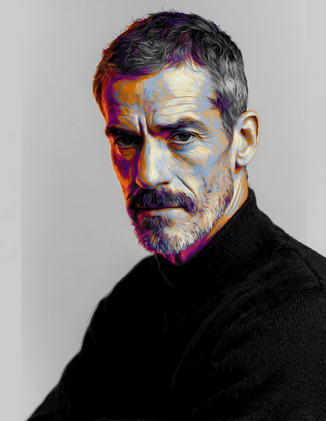
Self-portrait of Jordan Arvanitakis artist, Melbourne, Australia
The Face of an Animal Can Hold a Whole Story
Animal portraits often work quickly. A viewer recognises the species, reads the posture and begins to attach meaning within seconds. A lion may suggest confidence. A wolf can feel independent or watchful. A bird brings movement through the angle of its head, the spread of its feathers or the direction of its gaze. A dog creates a more personal response because the expression may recall an animal someone already knows.
This notion is further developed by Arvanitakis, who retains those specific characteristics of the object that he paints and reduces the rest to simple shapes, textures, and colors, enabling him to place the essence of the animal right in the focal point of his painting. Thus, the viewer’s attention gets directed to the animal’s eyes, ears, mouth, and even its moving posture.
This approach is especially effective in digital work because every visual decision can be adjusted with care. A background can become quieter so the face gains strength. A warmer colour can make a scene feel more open. Sharper contrast around the eyes can create attention and intensity. These choices help the image communicate before the viewer has time to analyse the technique.
Several elements give the portfolio its sense of consistency:
- Clear silhouettes that remain readable from a distance
- Expressive colour used to establish mood
- Simplified forms that preserve character
- Compositions designed to suit screens and physical walls
The result is accessible work with enough visual structure to reward a longer look. Someone can respond to the animal first, then notice the balance of shapes, the direction of movement and the way colour has been organised around the subject.
Digital Illustration Made for Real Rooms
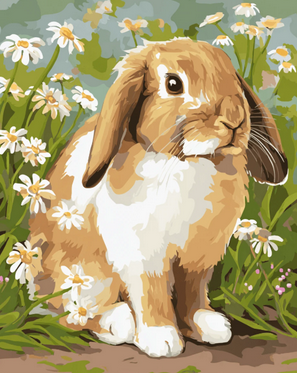
Much digital art is first encountered on a phone or laptop, though its final life may be much larger. Arvanitakis develops high-resolution work with printing and interior presentation in mind. This changes how an image is composed. An artwork that is meant to be displayed on a wall must have a definite focal point, a definite form, and a sufficient weight.
Animal portraits make perfect candidates for such a purpose since they always come with a definite focal point right from the start. A peacock can introduce colour and visual rhythm. A tiger can give a space a more focused atmosphere. A giraffe framed by trees can create a warmer and more open feeling. A portrait of a companion animal can make the room feel personal through recognition and memory.
Scale also changes the reading of an artwork. On a small screen, the viewer notices the subject and colour first. In a large print, texture, spacing and smaller transitions become more visible. A carefully placed shape around the shoulder, a quiet patch of sky or a repeated leaf form begins to influence the full composition. Digital tools support this flexibility, allowing one artwork to remain clear in several formats.
This relationship between online creation and physical display is becoming a significant part of contemporary illustration. Artists can present new projects directly to audiences, while viewers can imagine those works beyond the platform where they first appear. The screen becomes an introduction. The room gives the image duration and a different kind of presence.
A Portfolio That Develops Through Variety
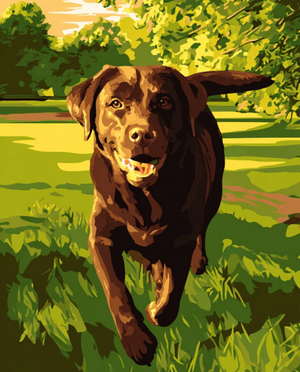
The strongest way to understand an emerging visual practice is often to view several works in sequence. A single tiger image may show strength and concentration. A Labrador scene reveals movement and familiarity. A peacock offers a more decorative rhythm through feathers and repeated patterns. A giraffe introduces height, warmth and a quieter pace. The range helps reveal which decisions belong to the subject and which belong to the artist’s wider visual language.
Behance is useful in this context because projects can be viewed as individual statements while still forming part of a growing archive. Dates, project titles and visual groupings make it possible to follow changes over time. Viewers can see how an artist handles different animals, environments and emotional qualities without reducing the work to one repeated formula.
Jordan Arvanitakis is building a portfolio around a subject that people understand instinctively. Animals communicate through posture, expression and presence, and digital illustration offers a flexible way to interpret those signals. The work gains its appeal from this directness. It welcomes viewers through recognition, then holds attention through colour and design.
As the collection expands, its value will come from the conversation between the pieces. Wildlife, birds and companion animals each bring different visual demands, yet they can share a coherent sense of character. For readers interested in contemporary Australian illustration, animal-inspired wall art or the changing role of digital portfolios, the Behance collection provides a clear place to follow that development and spend time with the work in detail.