Hot Mess Access shares the stories of disabled young people on their own terms
Following a supportive eight-week Creative Development program, five young artists hit the stage this Fringe World to share their experiences navigating the world as disabled young people on their own terms. Bringing their lived experience to the stage with humour and grit, Hot Mess Access presents the next wave of disabled stories that are bold, messy and impossible to ignore. Hot Mess Access hits Main Hall at SUBUD Perth from Friday, February 6, to Saturday, February 14. ABBY GREER sat down with Ash Morris and Rogue Artists Amy Daniel, Jess and Ruth to find out more about the bold showcase of stories.
How are you feeling about the show?
The artists have expressed excitement, nervousness and a sense of pride and vulnerability in the lead-up to the show. As described by one of the artists, Amy, “I’m nervous but very excited about this amazing opportunity. It’s a chance to show what we are capable of creating on a bigger scale than we might ordinarily.”
As Amy’s quote demonstrates, in addition to the creative development of five new works by young disabled artists, this project also supports the personal and professional growth of the artists. With financial support from Creative Australia, local government, and the National Ethnic Disability Alliance, we have been able to take our time in developing the themes of these works, to provide professional industry experience, and to pay all the artists at professional rates while doing so.
What disabled stories or themes can we expect to see in the show?
Together, the show speaks to unmasking, visible and hidden disability, lived experience, and the shared struggles that connect our entire community.
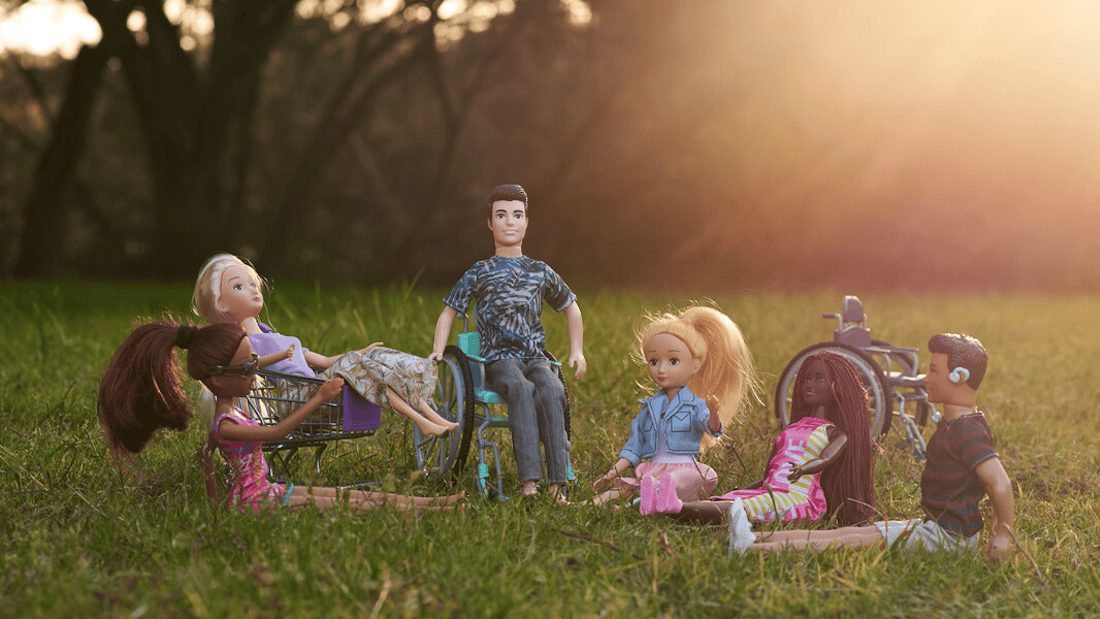
No two experiences of disability are the same, and across the works we have representation of low vision/blindness, Down syndrome, autism/ADHD, and dyspraxia, and one of the artists is an ambulatory wheelchair user who can jump out of her chair and do the splits!
In the words of the artists:
JESS: Themes in my segment include unmasking, authenticity, and refusing to shrink to make society comfortable.
AMY: I hope to highlight invisible and hidden disabilities. Often we get trapped in a societal limbo—not ‘disabled enough’ to get support, but not ‘able enough’ to do without it either.
RUTH: I want the audience to experience what it’s like to have vision loss of different sorts. I’m excited to share what I’ve written so far and about the spectrum of blindness and vision loss and the community.
DANIEL: It really comes down to the struggles people face. That could be seen as a disabled story, but it’s something anyone could face at any moment.
Can you tell us a little about the creative development process?
Across the group, the workshops have been described as safe, accessible spaces for growth, exploration, and developing creative voice. As quoted by Jess, who is an ambulatory wheelchair user, “The access measures mean I can be 100% part of the team, without guilt or worry.”
Ruth described the process as “a deep dive into who we are as artists”, and Daniel reflected, “It’s a really different process from what I’ve done in the past. It’s very structured. We try different artistic processes to get our creative flow going, and sometimes that means attempting a thought experiment you’ve never done before.”
As creative producer of this project, it’s wonderful to see how much the artists are growing throughout the creative process and to know that the artists feel safe enough to explore their lived experiences in creative, innovative ways.
As Amy describes, “The workshops have been an amazing place of idea sharing and encouragement, and a space where we are free to discuss difficulties and take the time we need to do it on our terms.”
What does it mean to present stories that are bold, messy, and impossible to ignore?
The work affirms disability pride, embraces imperfection, and honours the complexity of being a young person with a disability in today’s world. Daniel, an emerging writer, asserts, “When a story is worth saying, it isn’t simple or cut and dry.”
Amy speaks to a common shared experience within the disabled community and aims to honestly communicate that through her work: “It’s not always easy to be put together or ‘perfect’ all the time… so why should our art not reflect that?”
And Ruth honestly acknowledges, “Deep down we all want to be bold and messy, but there’s a lot of being afraid to be who we are.”
How will the audience feel watching?
The artists invite audiences to feel deeply, think critically, and take their own meaning from the work. Amy’s desire is to “provoke thought”. Jess wants the audiences to “feel valid in their own emotional and life journeys”, and Ruth hopes “the story feels very genuine”.
Overall, the work aims to encourage audiences to think about disability in new ways. Jess articulated this experience of reclaiming our disabled identities better than I ever could.
“We are here, we are disabled, and we are worthy.”
Hot Mess Access hits Main Hall at SUBUD Perth from Friday, February 6, to Saturday, February 14, 2026. For more information, visit fringeworld.com.au