
Big ideas and bigger laughs from Bright Side Productions
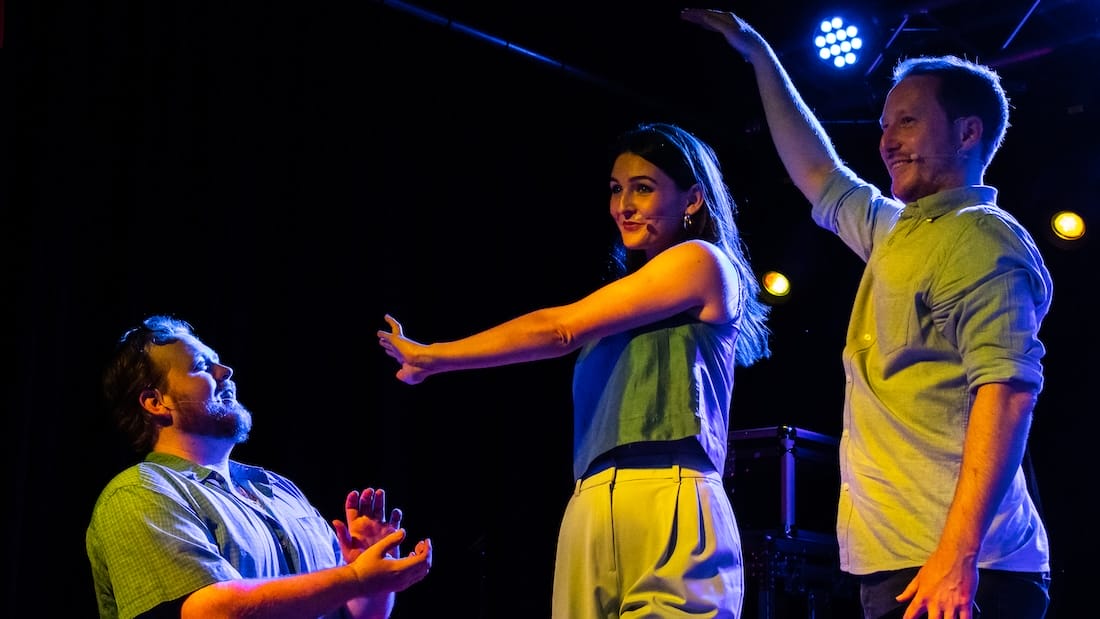
Emerging Perth theatre company Bright Side Productions is returning to the Fringe World stage with two shows fresh off their interstate and international tours. Fans of comedy with something to say will delight in the witty, thought-provoking Coded Comedy, which will play at The Red Room from Wednesday, January 21 to Friday, February 13 with tickets on sale now. Meanwhile, those with a taste for satire and rewritten fairy tales will enjoy the upbeat, offbeat Bibbity Bobbity Boorloo which will play at The Jonesway Theatre from Thursday, February 5 to Saturday, February 7 with tickets on sale now. BEC WELDON met with Amy Fortnum, Producer, Writer, Director and Performer to find out about the two shows and the upcoming Fringe season.
Hey Amy, thanks for joining us to talk about Coded Comedy and Bibbity Bobbity Boorloo! You’ve got two great, very different shows this Fringe World, both returning from interstate and international seasons. How are you feeling about being back in Perth for the 2026 Fringe World season?
We’re really excited to be back home! This is where we started all those years ago, and it’s always nice to perform in your hometown to friends, family and local supporters. We’re definitely feeling super inspired after our adventures to Adelaide and Edinburgh Fringe in 2025. It’s currently all about how to take our learnings from those seasons and bring them home to strengthen everything we’ve already got.
One of your shows, Coded Comedy, integrates artificial intelligence with live musical comedy. Tell us about the format!
Honestly, I’ve been trying to work out a simple description for this since I first put the idea into the world! If you know about musical improv or are a fan of the brilliant Impromptunes from over East, it’s basically that merged with a chatbot.
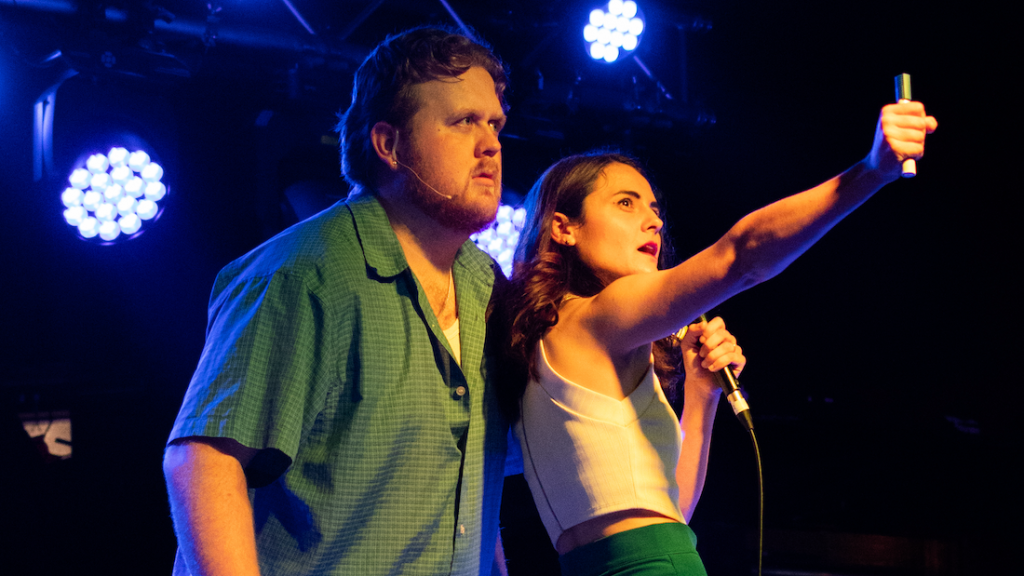
Our legendary pianist, Jackson Harper Griggs, who just worked with Black Swan Theatre Company on Carol, has coded a chatbot for us. We call her Chatalie—she’s pretty sassy—who knows we’re writing a musical on the spot and helps us along the way. We start by getting a prompt from the audience and give that, with our predetermined theme of the show, to Chatalie, who gives us a title and a little synopsis. Jackson then gives us a musical vibe, we make up the opening chorus for the musical, and then make up a ridiculous and hilarious musical that will never be seen again!
We jump back to Chatalie throughout the show for different things. Sometimes she gives us characters that we have to create in real time, sometimes she helps us solve problems…or makes more problems for us that we have to solve. We talk to her through voice-to-text, and everyone can see what she types back to us on a big projector.
You’ve described the show as intending to bring AI into conversations about technology being able to enhance, rather than overshadow, live arts. Was there a particular experience that encouraged you to explore that fearfulness?
I think everyone has thought about how AI either enhances or creates issues in their certain industry. I can’t lie. I’ve definitely used ChatGPT to help with my studies at uni, especially when it came to really complicated legal terms and things when I was doing my MBA. I was pretty impressed when I first started playing with its lyric-writing skills pre-Coded Comedy and its ability to create some pretty interesting concepts for shows. Chatbots are literally improvising based off their existing knowledge, and that’s what human improvisers do. So why shouldn’t we collaborate?
I do my best to approach scary things with curiosity, not in a defensive, fear-driven way. I find it really interesting how in the early days, we were so excited about AI, then when it started to take over, the “simple solution” was just to cancel it—which by that stage was impossible. I guess I wanted to bring something into the world that exposed AI’s flaws—there are some real duds we have to get Chatalie to rewrite—but also prove that we can collaborate with it, because if it isn’t going away, then maybe we can be better because of it, instead of just being terrified of it taking over.
Collaborating with humans can be challenging enough. What was your experience of integrating a non-human, AI component as a character in the show? Did it come with different challenges and opportunities?
Sometimes the prompts Chatalie gives us are just plain dreadful. When we first started playing, we were trying to be so specific with the outputs we wanted and tried to make the whole process feel really seamless in performances. But as time went on, we realised it was so much more fun to acknowledge when things went wrong or just weren’t up to scratch, and the audience really loves that too. Now we love it when Chatalie gives us a suggestion that’s terrible or completely off track, or even when she loses internet connection! We call it out and have a laugh with the audience. It helps us to prove that as humans, we can pick up the pieces and really are the ones with more creative control and understanding.
The show integrates ChatGPT into real-time moments in the show, shaping each performance and offering scenes, lyrics, rap battles and opportunities. Your team also worked with renowned Sydney-based theatre-maker Michael Becker to complete workshops prior to the performances. What training was important for the actors to execute the show to your vision?
Finding a flexible group of acting improvisers in Perth is hard enough. But on top of that, I had to find musically inclined improvisers that weren’t tone deaf AND a piano player that could make up pretty complex and really variable music on the spot. Improv is an art form that’s slowly growing through groups like Only The Human, but it’s still quite a mystery and unknown to a lot of audiences and creatives. And to actors that haven’t tried it before, it can be pretty scary. There also just isn’t much training available in WA, so when we could get Michael in, who just has so much knowledge, we were able to build a bigger collective toolkit. That means we have more ‘games’ we can bring into the show, which helps us structure our improv better and means we can get more silly and playful within known boundaries.
What messages do you hope audiences take away from Coded Comedy?
There’s so much sadness and fear in the world. Theatre can be really powerful in hitting deep topics and sharing knowledge, but honestly, nothing brings me more joy than when people come along to such a ridiculously playful experience like ours and complain that their cheeks hurt from laughing or their thighs hurt from the slaps. Adults don’t play enough. It’s something that everyone in our troupe values a lot—a chance to escape from the mundane and often difficulties of ‘reality’—and we hope that we can pass that joy and play onto everyone. I also hope audiences leave feeling a little less intimidated by AI and maybe even go home and play with its abilities and reveal its flaws with a curious mindset.
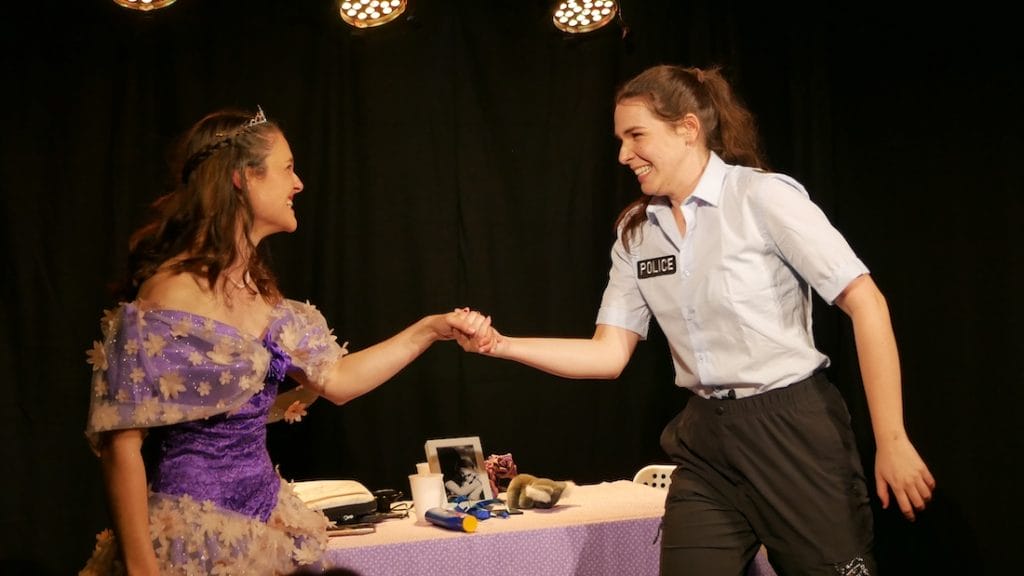
Your other show, Bibbity Bobbity Boorloo, tells the story of a princess who grapples with the stifling bureaucracy of the Australian immigration system—very different from Coded Comedy, but still with important messaging and themes. Can you tell us about that individual-versus-state dynamic and where the story drew its inspiration from?
It’s pretty common knowledge that Australian customs are some of the harshest in the world. I’ve always struggled with how over-regulated our world is and find the paperwork for things and processes behind what should be simple tasks quite ridiculous. Early last year, we found out some friends’ visas had run out, and they couldn’t get re-sponsored to stay in WA (she is the most incredible creative, and her partner is an emergency doctor), so they were getting deported back to Ireland. It was so sad for everyone, and as much as they tried to find a way to stay, in the end they had no choice. So I said, ‘Right, you’re not leaving without writing a show with me’—and writing what you know is the best way to go.
Bibbity Bobbity Boorloo is back from its global debut at the Edinburgh Fringe Festival. Did you have to tweak the content in any way to appeal to Scottish/European audiences? Were there any comparisons in people’s experiences of customs and immigration that had a sense of universality?
As Edinburgh was our debut season, we’ve now rewritten some parts of the show for Perth Fringe to include some local references and make things land more for WA audiences. Honestly though, the topics we cover aren’t limited to one place or time. We had feedback from audiences in Edinburgh of all ages from around the world—Scottish locals, Londoners, Americans, and Germans—who all told us something in the show had hit too close to home and inspired flashbacks to their travelling experiences!
We thought maybe we’d pushed things in the story too much for dramatic purposes, but clearly not! We also had three generations from one family in one night, and they all absolutely raved about the show to us afterwards; they were so excited. I had no idea that it would have such a wide reach when it was in the early days of development.
The show is the product of a powerhouse female-led team with an original concept and book by Hannah Julii Anderson, Lainey O’Sullivan and yourself, with original music by Alyona Popova and Jackson Harper Griggs. Tell us about that experience of collaboration, and how that centralisation of a female voice ultimately influenced the characters and story.
As I said earlier, it’s just so disappointing to see women represented in such a simplistic, predictable way time and time again. And you’d also be surprised how many times females’ stories are being told by men—from the writers to the directors to the bigshot producers. It was so important to me that this story was about two women, written by women, and shaped by female perspectives.
I think that’s why it relates so strongly to so many people; it’s just our truths on paper told through hilarious jokes and at a really fast pace. Actually, we wrote most of the show in my courtyard over a day, but the hardest part was then collaborating for the rest of the development when Lainey was in Ireland, Hannah was in London, I was in Sydney, and the rest of the team were in WA. Absolute beautiful chaos.
In modern times, a lot of people struggle with the morals and messaging of fairy tales and Disney-esque princess stories, the likes of which were more popular and less critically received in the 20th century. Was it a coincidence that the show integrates a fairy-tale-like princess of its own to create this ‘unapologetically feminist romp’?
Alongside immigration, the main commentary of the show is on female stereotypes and expectations. I reflect a lot on the kind of role models I had growing up—still, actually—and how they shaped me. And I still get disappointed time and time again with the kind of inspiration my female primary school students bring into the classroom—oh, I’m a primary school teacher in my “spare time”! Yes, things are changing, which is amazing, but it’s still there, and you don’t have to look hard.
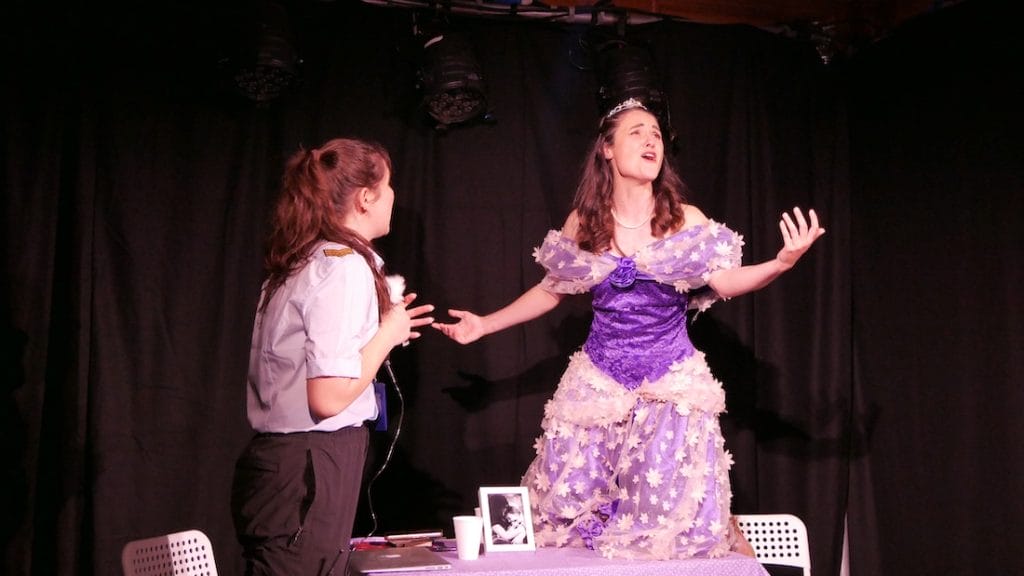
It’s so satisfying picking apart the classic Disney princess and revealing her flaws, even more so when she’s stuck in a room with a modern woman who clearly has no time for any of those stereotypes. People understand the tropes of the Princess. They get her because of the stereotype. The things she says reveal so clearly how ridiculous these kinds of characters are—you almost can’t believe you accepted them back in the day.
The fun part is pulling that all apart, surprising the audience when she does or says something unexpected and completely out of character. And the contrast between her and our gay customs officer is just so stark. It’s so exciting to play a character—I play Princess—that can realise she’s stuck in a cycle of ridiculous, unrealistic expectations and allow her to slowly break free from them.
Thank you so much for chatting to us! For a final question, your company, Bright Side Productions, through which you’re presenting your shows, is a Perth-grown company and rising influence in the industry. What awesome things can we expect to see next?
We’ll have a nice breather after Perth Fringe, I think, then get back into it! 2025 was a huge year of growth for us, so we’ll do a big debrief in March. We’ve actually got a brand new play, Recess Duty, a comedic love letter to primary school teaching on at The Blue Room Theatre, so that’s the next big focus for us. We’re in the process of scouting out some regional touring opportunities, and maybe we’ll look into Adelaide and Edinburgh again for 2027.
We also run school holiday programs for creative kids twice a year, which are growing at a crazy rate, so I’d love to spend some more time working out how kids can get the most out of those and how those kinds of programs can help Bright Side become a financially sustainable not-for-profit. My key goals are to create regular paid opportunities for all the insanely talented and passionate creatives here in WA and make the world a better place by helping everyone who comes to see our shows have a good laugh. We’re dreaming big, and we won’t stop!
Coded Comedy is showing at The Red Room from Wednesday, January 21 to Friday, February 13, 2026. Tickets are on sale now from fringeworld.com.au. Bibbity Bobbity Boorloo is showing at The Jonesway Theatre from Thursday, February 5 to Saturday, February 7, 2026. Tickets are on sale now from fringeworld.com.au